 YardMate


Field Bindweed
Convolvulus arvensis
Easy · Beginner friendlyAbout Field Bindweed
Field Bindweed is a Eurasian perennial vine with creeping and climbing stems, arrow-shaped leaves, and small white-pink trumpet flowers, one of the most destructive agricultural weeds worldwide. Deep taproots reach 20 feet and lateral roots spread 10 feet per year, making it virtually impossible to eradicate. Listed as noxious in nearly every US state and a catastrophic weed of American gardens, row crops, and perennial plantings.
- Climbing
How to care for Field Bindweed
Watering
- Springevery 14 days
- Summerevery 10 days
- Fallevery 14 days
- Winterevery 30 days
Soil · Well-draining
- Top dressingPine bark mulch10%
- Main mixPotting soil + perlite 2:170%
- DrainageLECA / gravel20%
Never skip the drainage layer — standing water is the top cause of root rot.
FERTILIZER
This plant needs little to no feeding.
At a Glance
- NativeEurope, Africa, Western Asia
- Height0.5–1 ft (0.2–0.3 m)
- Spread3–6 ft (0.9–1.8 m)
- Flower colorWhite, Pink
- Foliage colorGreen
- SoilLoamy, Well-drained
- LocationsYard
Bloom time
BLOOM CYCLE
Peak bloom
Jun–Aug
Small white or pink morning-glory-like flowers summer
Fragrance
LIGHT FRAGRANCE
Light sweet scent in morning.
Toxicity
Humans Slight · Pets Moderate
tropane alkaloids and resin glycosides
Slight
- Leaf
- Seed
- Root
- Ingestion
EXPOSURE Eating leaves, seeds, and roots.
EFFECT Digestive upset and diarrhea.
NOTE Mildly toxic to livestock; horses especially susceptible to colic.
Moderate
- Leaf
- Seed
- Root
- Ingestion
EXPOSURE Eating leaves, seeds, and roots.
EFFECT Vomiting, diarrhea, and colic.
NOTE Mildly toxic to livestock; horses especially susceptible to colic.
Moderate
- Leaf
- Seed
- Root
- Ingestion
EXPOSURE Eating leaves, seeds, and roots.
EFFECT Vomiting and diarrhea.
NOTE Mildly toxic to livestock; horses especially susceptible to colic.
Educational information, not medical or veterinary advice. If exposure is suspected, contact a doctor or veterinarian.
DISTRIBUTION

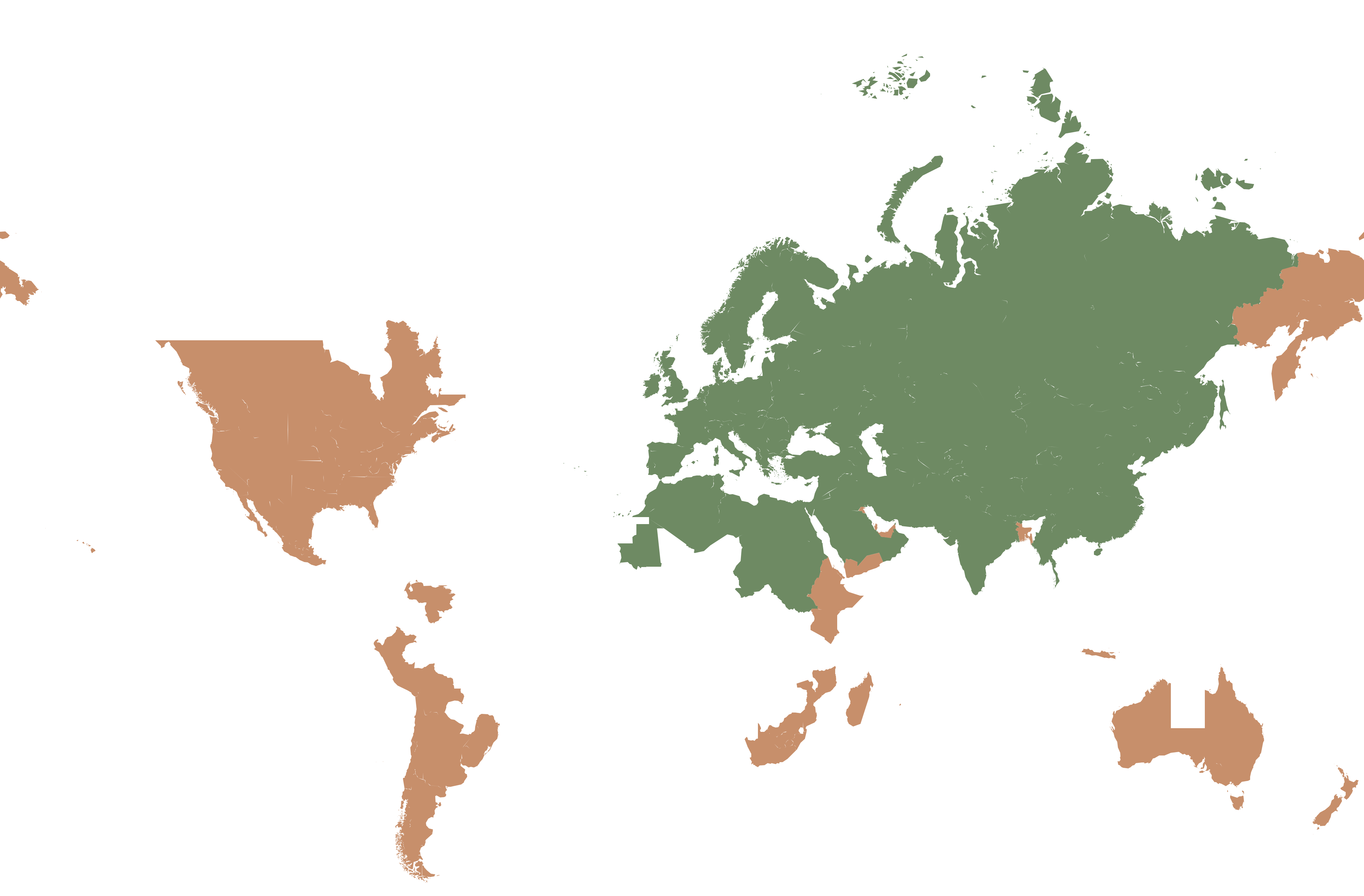
- Native
- Introduced
- Europe
- Africa
- Western Asia
History

Convolvulus arvensis, field bindweed, is a wiry perennial vine in the morning glory family native to Europe, North Africa, and western Asia. Ancient Greek and Roman writers noted its tenacity, and European settlers carried it worldwide in contaminated grain, where it is now one of the most serious agricultural weeds on every inhabited continent. The species combines prodigious seed longevity (up to fifty years in soil) with a taproot that penetrates six meters or more, branching laterally just below cultivation depth to send up new shoots from every fragment left by tillage.
Its delicate pink-and-white funnel flowers open in morning sun and close by afternoon, and the plant contains mildly toxic tropane and resinous glycosides that cause digestive upset in livestock. Biological control with gall mites has had partial success.
Native to Europe and Asia, Field Bindweed arrived in North America in the 1700s and is now one of the most widespread and destructive weeds in the US, listed noxious in nearly every state. Seeds remain viable in soil for 60 years, and deep perennial roots survive tilling, herbicide, and drought, making eradication virtually impossible once established.
Symbolism & meaning
What It Symbolizes
Field Bindweed is the patron of suffocating persistence, twining over crops and gardens with relentless grace. Its trumpets are pretty, but its true power lies underground in roots that descend twenty feet and sprawl ten feet outward each year. For farmers and gardeners across temperate continents, bindweed has become a humbling lesson in how a single rooted intruder can refuse, with quiet stubbornness, ever to be conquered.
- Suffocating persistence — smothers crops and gardens
- Unconquerable root — roots 20 feet deep, lateral spread 10ft/yr
Where the Name Comes From
'Convolvulus' from Latin 'convolvere' meaning to entwine, for the climbing habit; 'arvensis' means of fields.
Uses & Fun Facts
- Flowers feed small bees, though the vine is often a serious weed
Related plants
Plants with similar care
 Chinese AbeliaAbelia chinensis
 Fragrant AbeliaAbelia mosanensis
 Large-Flowered AbeliaAbelia uniflora
 Glossy AbeliaAbelia x grandiflora
Frequently asked questions
How often should I water Field Bindweed?
In summer, water about every 10 days; in winter, about every 30 days. Adjust for heat, pot size and drainage.
How much light does Field Bindweed need?
Full sun: 6+ hrs direct. Watch the leaves — scorching or stretching means the light needs adjusting.
Is Field Bindweed toxic to cats or dogs?
Pets Moderate (Dogs Moderate · Cats Moderate) Educational information, not medical or veterinary advice. If exposure is suspected, contact a doctor or veterinarian.
Is Field Bindweed easy to grow?
Yes — it is considered an easy, beginner-friendly plant.
When does Field Bindweed bloom?
It typically blooms Jun–Aug in the Northern Hemisphere.
YardMate
Identify any plant in seconds
Snap a photo — YardMate names the plant, diagnoses problems, and reminds you when to water.
Download on the App Store