 YardMate


Pampas Grass
Cortaderia selloana
Easy · Beginner friendlyAbout Pampas Grass
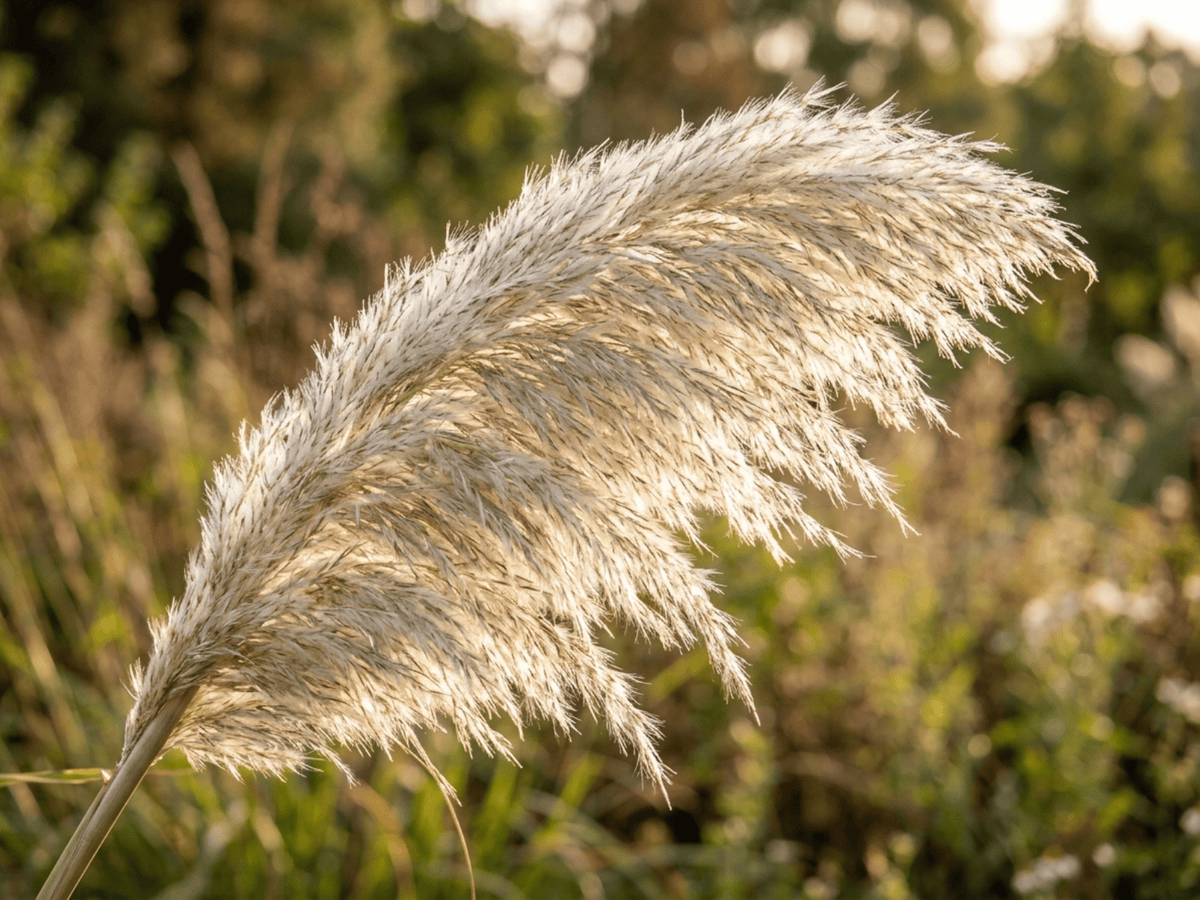
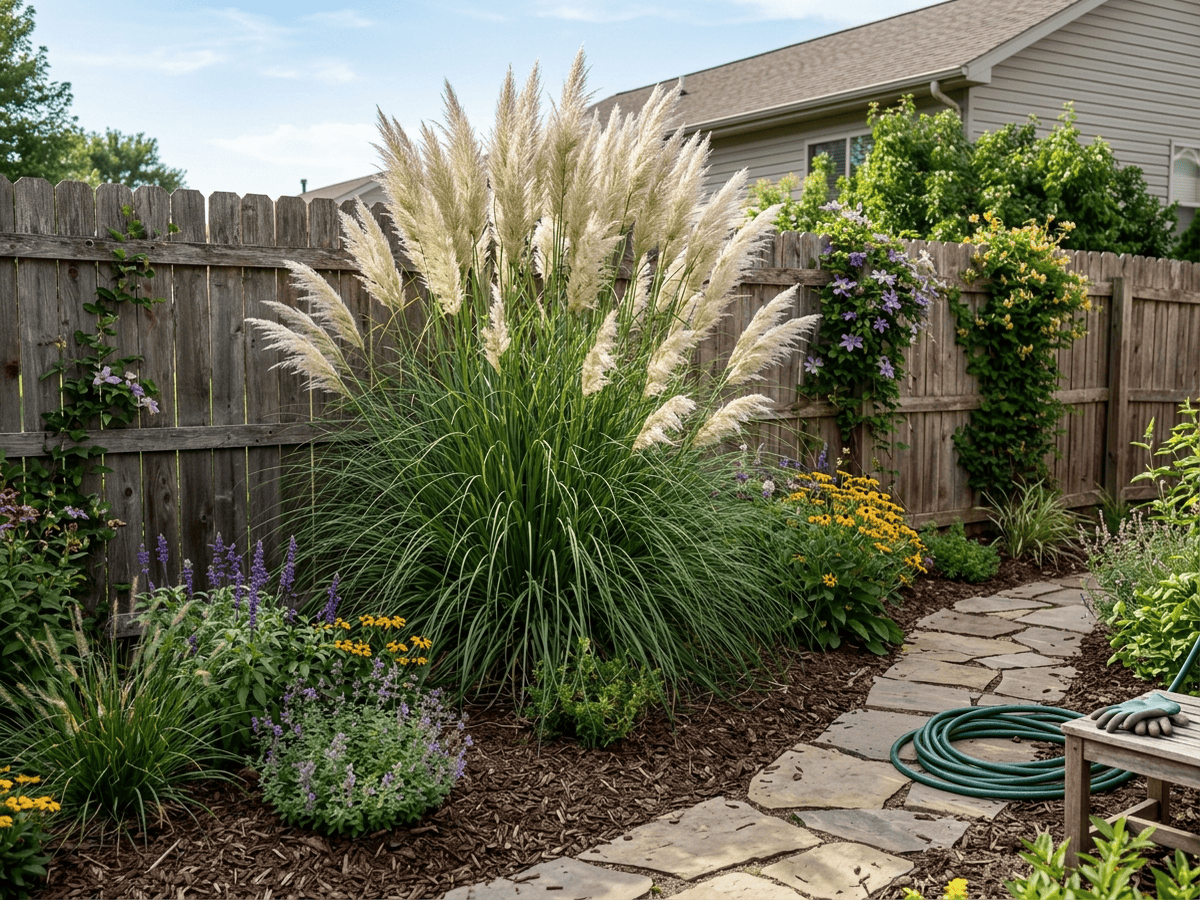
Cortaderia selloana, commonly known as pampas grass, is a majestic ornamental grass native to the grasslands of South America, particularly Argentina, Brazil, and Uruguay. It forms enormous clumps up to 3 meters tall, crowned by feathery plumes that can reach an additional meter in height. The plumes appear in late summer and persist through winter, ranging from creamy white to soft pink depending on the cultivar. Female plants produce the showiest, fullest plumes. The arching, razor-sharp leaf blades form dense fountains of blue-green foliage. Pampas grass became a landscaping icon in the 1970s and has recently surged in popularity as a dried floral arrangement staple. It is drought-tolerant once established and thrives in coastal conditions. In some regions it can self-seed aggressively, so deadheading spent plumes before seed dispersal is advisable. Despite its beauty, the leaves have serrated edges that can cut skin, so gloves are essential when handling.
- Drought-tolerant
- Evergreen
How to care for Pampas Grass
Watering
- Springevery 10 days
- Summerevery 7 days
- Fallevery 14 days
- Winterevery 30 days
Soil · Well-draining
- Top dressingPine bark mulch10%
- Main mixPotting soil + perlite 2:170%
- DrainageLECA / gravel20%
Never skip the drainage layer — standing water is the top cause of root rot.
FERTILIZER
Balanced Feed 14-14-14
An even feed covers all three needs at once, keeping leaves, roots and blooms moving together with nothing pushed out of balance.
- Nitrogen · Leaves
- Phosphorus · Roots + Blooms
- Potassium · Strength
- Springevery 60 days
At a Glance
- NativeSouth America
- Height8–12 ft (2.4–3.7 m)
- Spread6–8 ft (1.8–2.4 m)
- Flower colorWhite, Pink, Cream
- Foliage colorGreen, Blue-green, Variegated
- SoilLoamy, Well-drained
- LocationsYard
Bloom time
BLOOM CYCLE
Peak bloom
Aug–Nov
Feathery plumes late summer to fall; cut before seeds scatter
Fragrance
NO FRAGRANCE
No notable fragrance.
Toxicity
No toxicity has been reported for this plant. Still, it is wise to keep pets from chewing on any houseplant.
Educational information, not medical or veterinary advice. If exposure is suspected, contact a doctor or veterinarian.
DISTRIBUTION

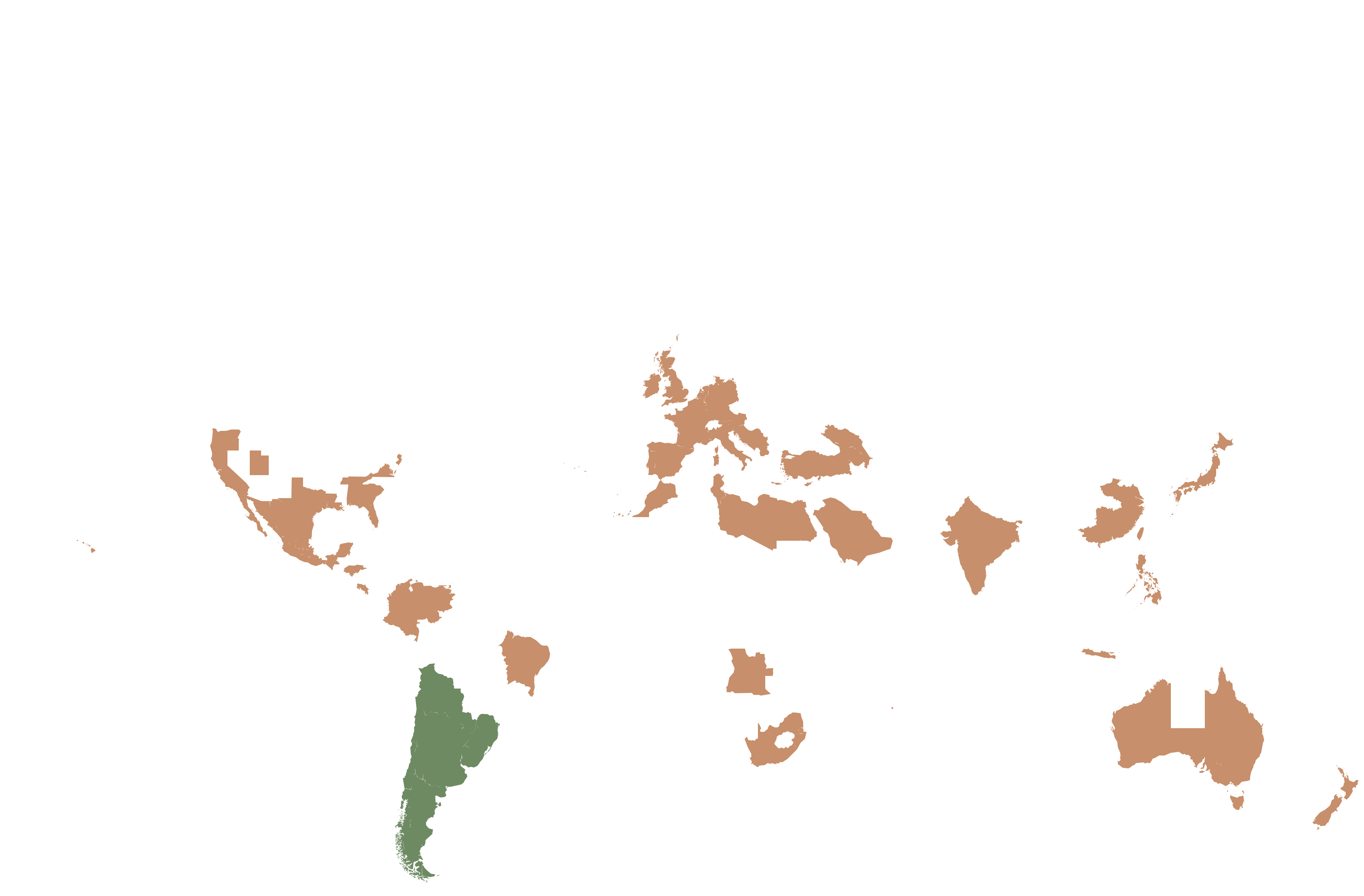
- Native
- Introduced
- South America
History
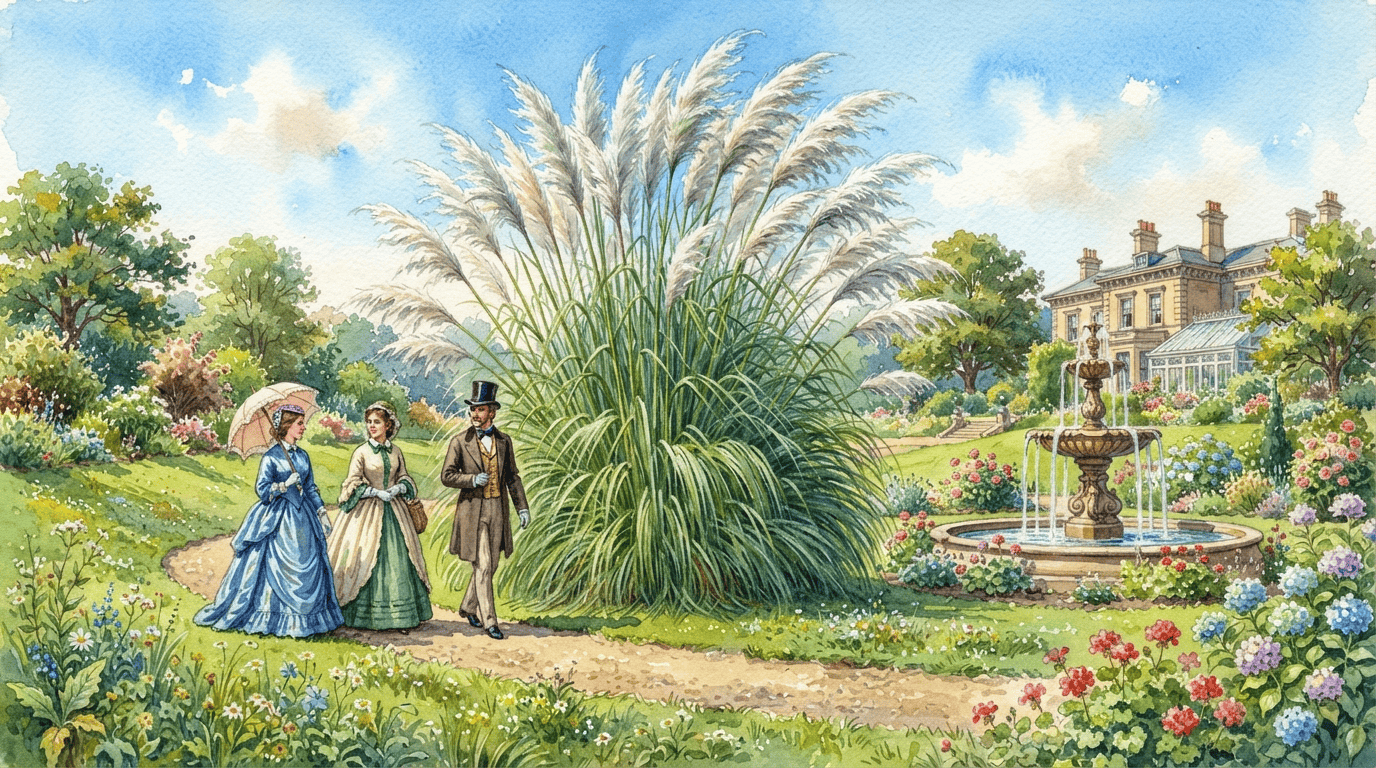
Cortaderia selloana is native to the pampas grasslands of Argentina, Uruguay, Chile, and southern Brazil — the species epithet honors 19th-century German botanist Friedrich Sellow, who explored southern Brazil. In its native range the grass forms massive tussocks to 3-4 m tall with dramatic silvery-white (occasionally pink, as in the cultivar "Rosea") feathery plumes in late summer and autumn. Introduced to European horticulture in 1843, it became one of the iconic Victorian "exotic" ornamental plants — Victorian estates and 19th-century American cemeteries and parks often featured solitary pampas grass specimens as focal points.
Its plumes were harvested for Victorian home decoration ("dried flower" arrangements), a practice that revived in the 2020s as part of the bohemian/dried-flower interior-design trend. However, the species' enormous seed production, wind-dispersed seeds, and vigorous dry-tolerant growth have made it an extremely serious invasive in several Mediterranean-climate regions outside its native range: California's central coast (where it has transformed coastal bluff and dune ecosystems), South Africa, southern Spain (particularly Cantabria and Asturias), Australia, New Zealand, and southern France.
The razor-sharp leaf edges are a physical hazard — the "selloana" leaves can inflict severe paper-cut-like slashes on skin. Named after German botanist Friedrich Sellow who collected extensively in South America in the early 1800s.
Symbolism & meaning
What It Symbolizes
Pampas Grass embodies elegance through its tall silken plumes that sway with every breeze, an effortless beauty that has graced gardens and dried arrangements for over a century. It also carries freedom, evoking the vast open pampas grasslands of South America where its ancestors moved with the wind across horizons. It is often read as a flower of expansive gestures, refinement that still remembers the wild.
- Elegance — The graceful plumes swaying in the wind represent effortless beauty
- Freedom — Evokes the vast open pampas grasslands of South America
Where the Name Comes From
The name Pampas Grass describes its grasslike foliage. 'Cortaderia' derives from Spanish 'cortadera' meaning 'cutter,' referring to the sharp leaf margins. 'Selloana' honors Friedrich Sellow, the German-born explorer-botanist.
Uses & Fun Facts
- Towering silver plumes anchor large landscapes
- Plumes harvested fresh or dried for arrangements
- Massive fountain clumps make bold focal points
Related plants
Plants with similar care
 Chinese AbeliaAbelia chinensis
 Fragrant AbeliaAbelia mosanensis
 Large-Flowered AbeliaAbelia uniflora
 Glossy AbeliaAbelia x grandiflora
Frequently asked questions
How often should I water Pampas Grass?
In summer, water about every 7 days; in winter, about every 30 days. Adjust for heat, pot size and drainage.
How much light does Pampas Grass need?
Full sun: 6+ hrs direct. Watch the leaves — scorching or stretching means the light needs adjusting.
Is Pampas Grass toxic to cats or dogs?
No toxicity has been reported for this plant. Still, it is wise to keep pets from chewing on any houseplant. Educational information, not medical or veterinary advice. If exposure is suspected, contact a doctor or veterinarian.
Is Pampas Grass easy to grow?
Yes — it is considered an easy, beginner-friendly plant.
When does Pampas Grass bloom?
It typically blooms Aug–Nov in the Northern Hemisphere.
YardMate
Identify any plant in seconds
Snap a photo — YardMate names the plant, diagnoses problems, and reminds you when to water.
Download on the App Store