 YardMate


Crêpe Ginger
Costus speciosus
Medium · Some experienceAbout Crêpe Ginger
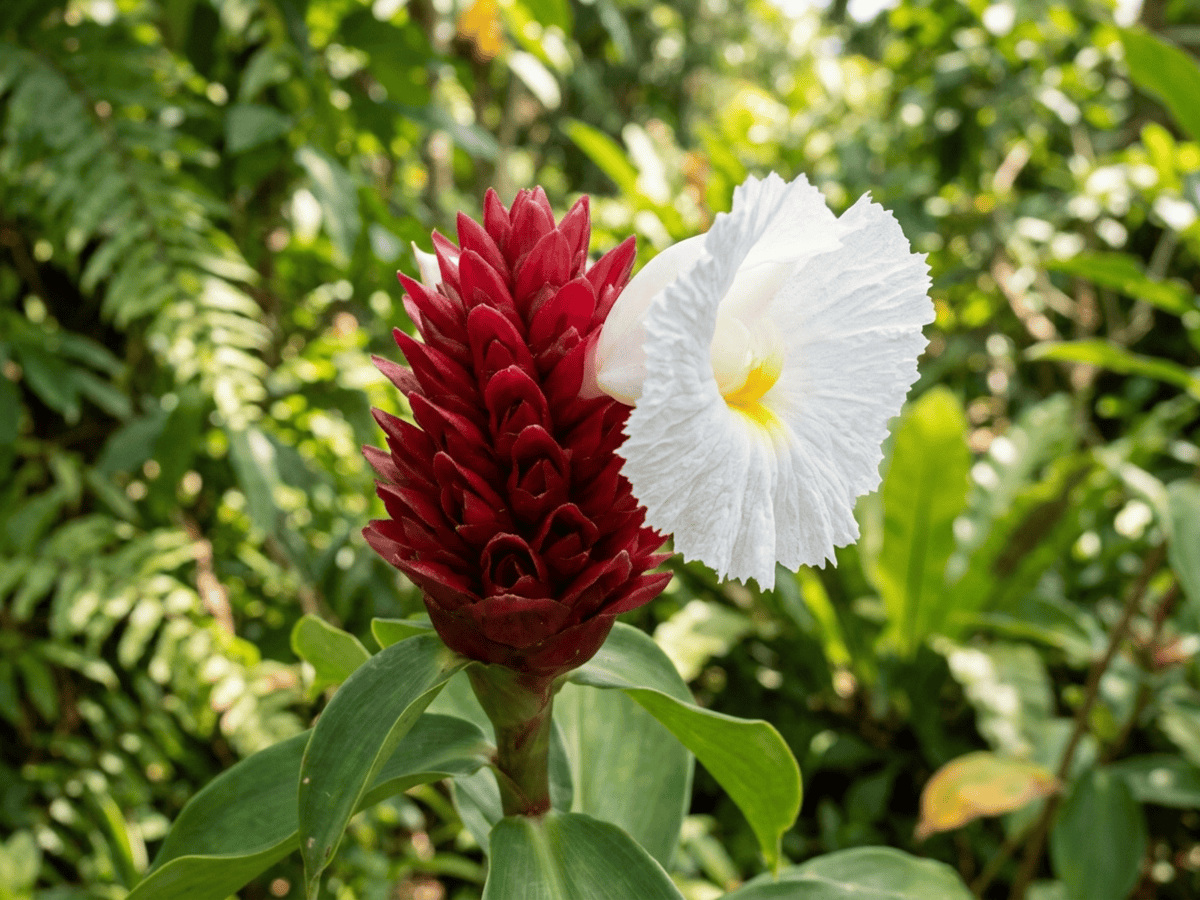
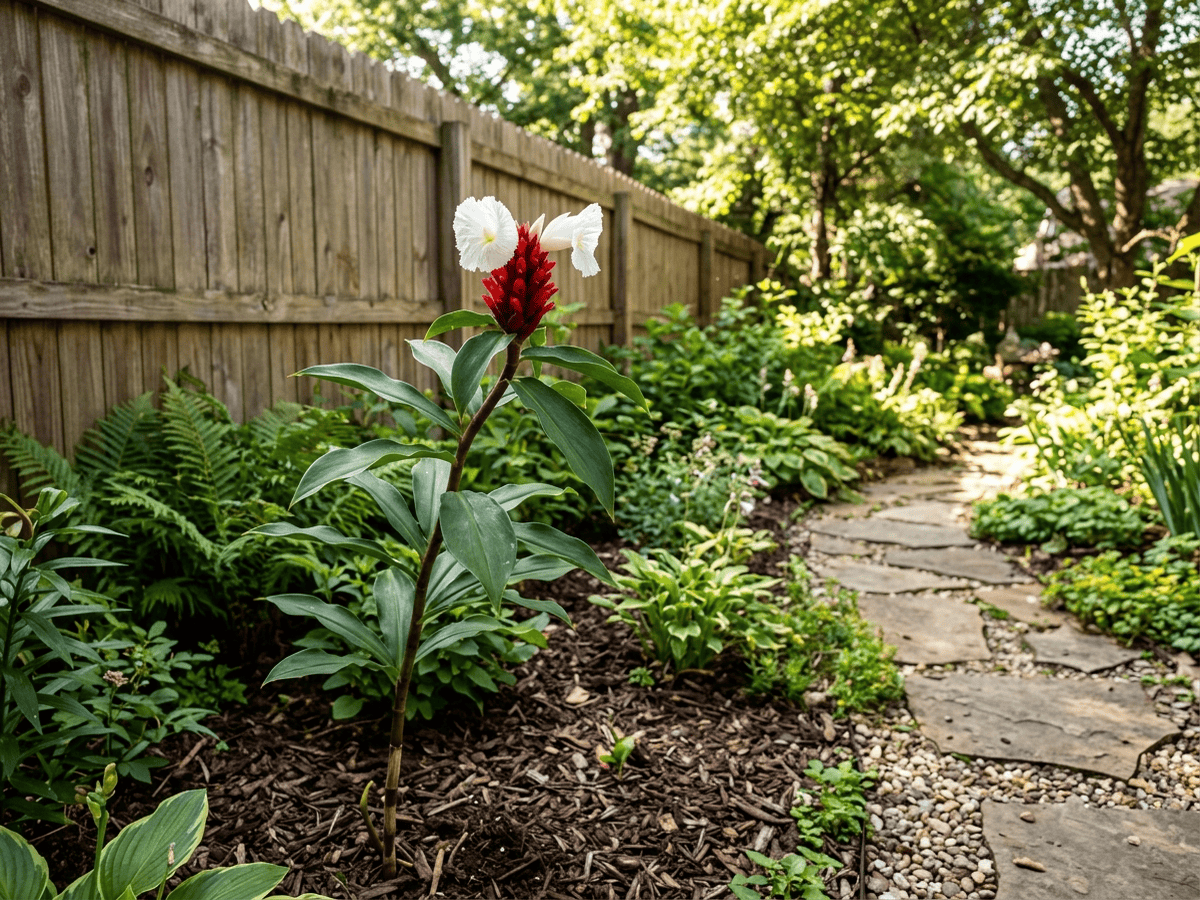
Crepe ginger, Costus speciosus, is a tropical rhizomatous perennial with spiraling stems, broad green leaves, and white crinkled flowers emerging from red cone-like bracts. Native across South and Southeast Asia, it brings strong architectural rhythm to humid gardens, where stems can rise 1-3 meters. The flowers appear successively, giving the plant a long season of interest, and the red bracts remain decorative after individual blooms fade. Its rhizomes have a place in Ayurvedic and regional herbal traditions, but ornamental gardeners value it for bold foliage, sculptural bracts, and the contrast of white petals against red. It prefers rich moist soil, partial shade, and frost-free conditions.
- Medicinal
- Tropical
How to care for Crêpe Ginger
Watering
- Springevery 2 days
- Summerevery 2 days
- Fallevery 3 days
- Winterevery 7 days
Soil · Moisture-retentive
- Top dressingSphagnum moss10%
- Main mixPeat + coco coir 1:180%
- DrainagePerlite / gravel10%
Keep it evenly moist — but the drainage layer still matters.
FERTILIZER
Balanced Feed 14-14-14
An even feed covers all three needs at once, keeping leaves, roots and blooms moving together with nothing pushed out of balance.
- Nitrogen · Leaves
- Phosphorus · Roots + Blooms
- Potassium · Strength
- Springevery 30 days
- Summerevery 30 days
- Fallevery 30 days
At a Glance
- NativeSouth Asia, East Asia
- Height6–10 ft (1.8–3 m)
- Spread3–6 ft (0.9–1.8 m)
- Flower colorWhite
- Foliage colorGreen, Variegated
- SoilMoisture-retentive, Rich, Loamy
- LocationsYard
Bloom time
BLOOM CYCLE
Peak bloom
Jun–Aug
Ruffled white crepe-like flowers emerge from red cone bracts in summer
Fragrance
LIGHT FRAGRANCE
The flowers have a light fresh scent.
Toxicity
Humans Slight · Pets Slight
diosgenin and steroidal saponins
Slight
- Root
- Ingestion
EXPOSURE Eating roots.
EFFECT Traditional medicinal use and rhizomes contain steroidal saponins that can cause GI upset in quantity.
NOTE Documented concern for humans: Traditional medicinal use and rhizomes contain steroidal saponins that can cause GI upset in quantity.
Slight
- Root
- Ingestion
EXPOSURE Eating roots.
EFFECT Mild GI upset possible from rhizome consumption.
NOTE Not listed by ASPCA. Traditional medicinal plant; low-moderate toxicity at ornamental exposure levels.
Slight
- Root
- Ingestion
EXPOSURE Eating roots.
EFFECT Same as dogs.
NOTE Not listed by ASPCA. Traditional medicinal plant; low-moderate toxicity at ornamental exposure levels.
Educational information, not medical or veterinary advice. If exposure is suspected, contact a doctor or veterinarian.
DISTRIBUTION

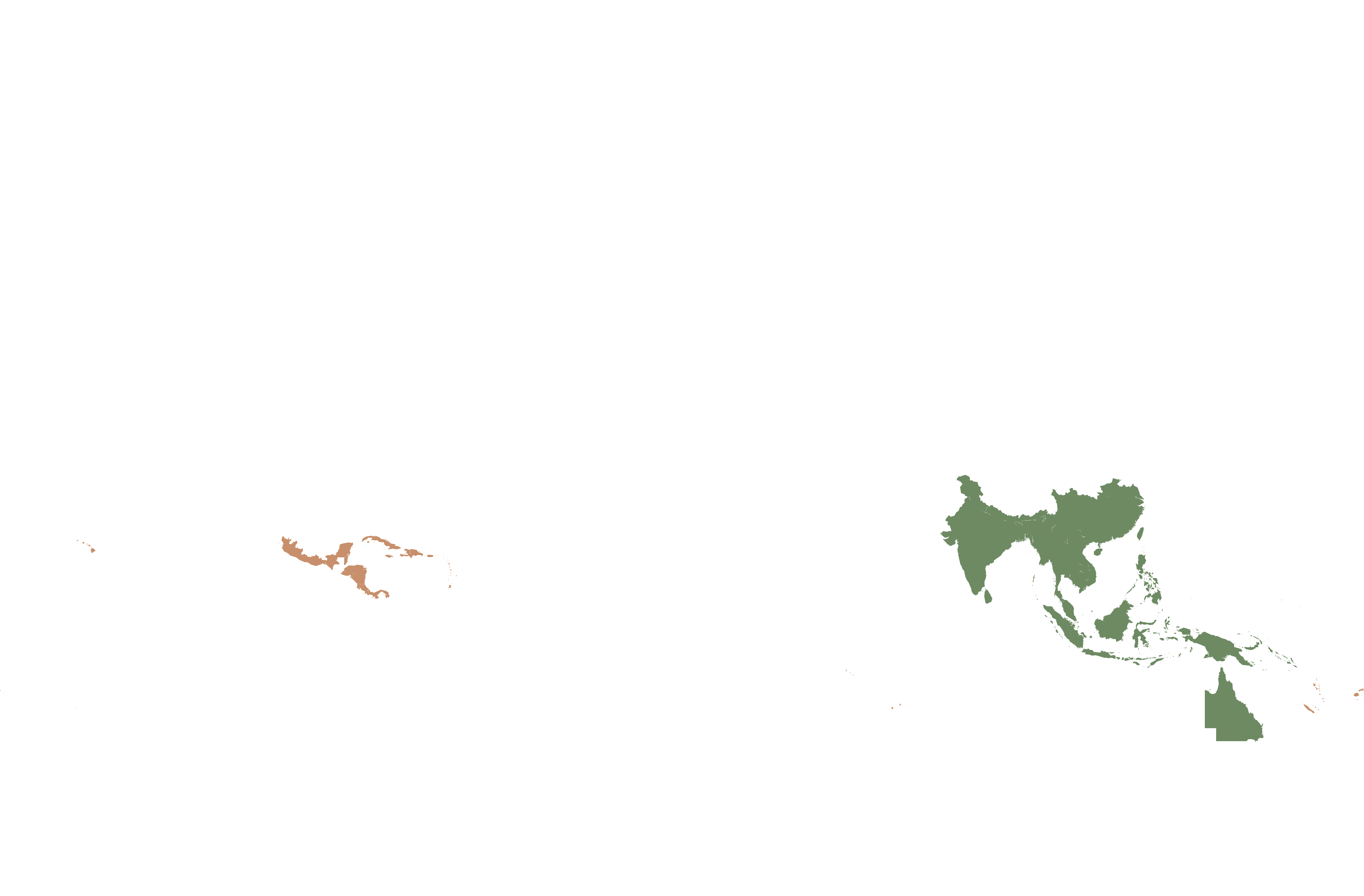
- Native
- Introduced
- South Asia
- East Asia
History

Costus speciosus (current accepted name Cheilocostus speciosus, though the older Costus name remains dominant in horticulture) is native to South and Southeast Asia — India, Sri Lanka, Bangladesh, Nepal, southern China, mainland Southeast Asia, and the Malay Archipelago. The plant grows 2-3 meters tall with distinctive stems that coil in a visible spiral pattern, giving it the common names "spiral ginger" and "spiral flag." Despite its superficial resemblance to true gingers (Zingiberaceae), molecular studies place Costus and its relatives in a separate family (Costaceae) — the spiral stem arrangement and other features distinguish Costaceae from true Zingiberaceae. The flowers emerge at the stem tips from bright red cone-like inflorescences (the red "cone" is actually overlapping colorful bracts); individual flowers are large (5-7 cm), pure white, with crepe-papery texture and a yellow center.
The plant has been used for more than 2,000 years in traditional South Asian medicine: in Ayurveda it is called "kemuka" or "keukand"; in Indian folk medicine its rhizome (containing diosgenin, a steroid precursor) is used for skin conditions, inflammation, and as an antifertility agent. Modern pharmacological research confirms the rhizome's diosgenin content, which has been studied as a source material for industrial steroid synthesis. Costus speciosus has deep roots in Indian traditional medicine, mentioned in ancient Ayurvedic texts for treating diabetes and inflammation.
The genus Costus contains over 100 species found across tropical regions worldwide. European botanists first described this species in the 18th century. In Hindu mythology, the plant is associated with Lord Shiva, and its flowers are used in temple rituals.
Symbolism & meaning
What It Symbolizes
Crepe Ginger weaves elegance from spiral stems and white flowers crinkled like fine paper. Across South and Southeast Asia it has belonged to regional household traditions, but in the garden its symbolism is more visual: order unfolding, one bract and one bloom at a time, from a lush tropical rhythm.
- Elegance — the spiraling stems and delicate crepe flowers embody refined beauty
- Healing — centuries of medicinal use symbolize restoration and wellness
Where the Name Comes From
'Costus' derives from Arabic 'qust,' the name for a prized aromatic root. 'Speciosus' is Latin for showy or beautiful, referring to the striking flowers.
Uses & Fun Facts
- Spiraled foliage and red bracts add tropical texture
- Rhizomes used in Ayurvedic preparations for various ailments
- Bold accent for shaded subtropical garden corners
Related plants
Plants with similar care
 Japanese MapleAcer palmatum
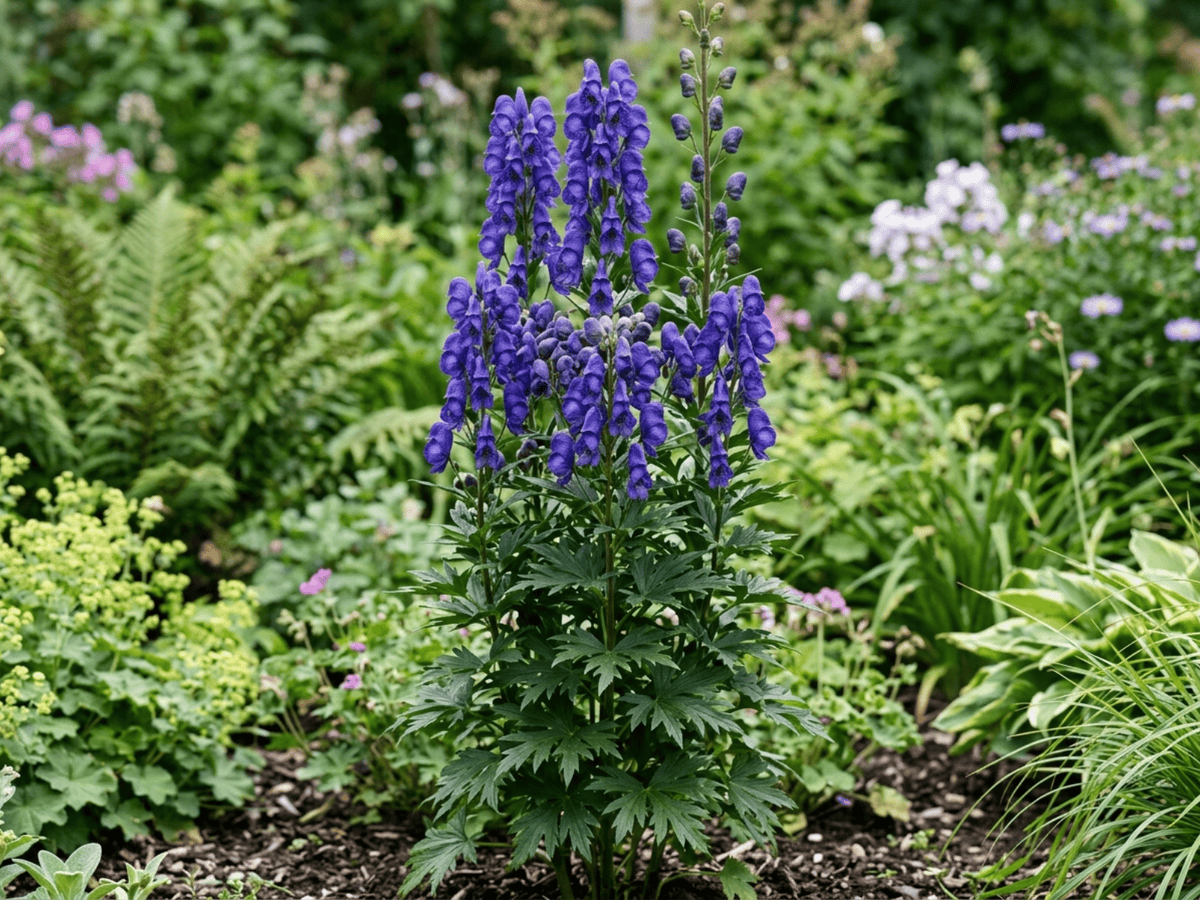 Azure MonkshoodAconitum carmichaelii
 Florida HobblebushAgarista populifolia
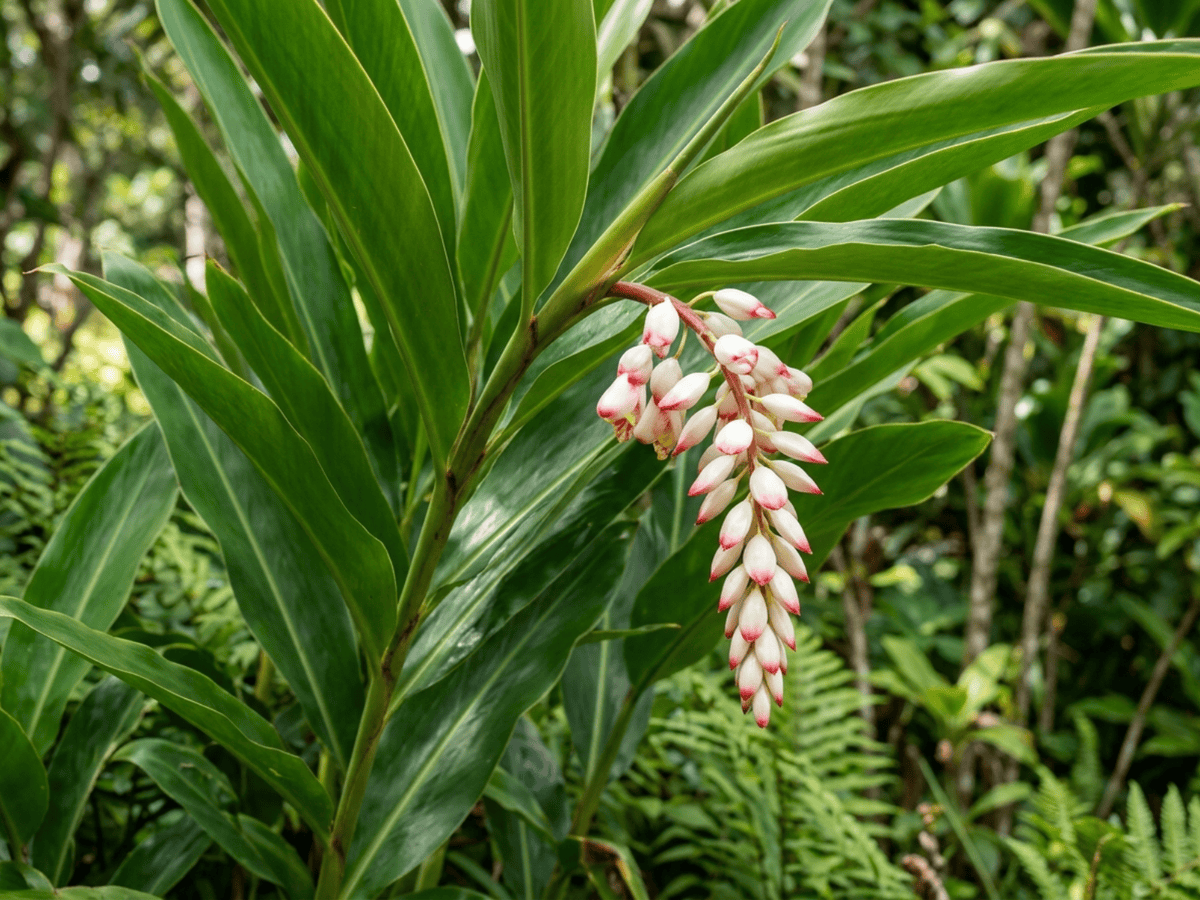 Shell GingerAlpinia zerumbet
Frequently asked questions
How often should I water Crêpe Ginger?
In summer, water about every 2 days; in winter, about every 7 days. Adjust for heat, pot size and drainage.
How much light does Crêpe Ginger need?
Part shade: 2–4 hrs direct. Watch the leaves — scorching or stretching means the light needs adjusting.
Is Crêpe Ginger toxic to cats or dogs?
Pets Slight (Dogs Slight · Cats Slight) Educational information, not medical or veterinary advice. If exposure is suspected, contact a doctor or veterinarian.
Is Crêpe Ginger easy to grow?
It is moderately demanding: a good choice once you have a little experience.
When does Crêpe Ginger bloom?
It typically blooms Jun–Aug in the Northern Hemisphere.
YardMate
Identify any plant in seconds
Snap a photo — YardMate names the plant, diagnoses problems, and reminds you when to water.
Download on the App Store