 YardMate
Cannonball Tree
Couroupita guianensis
Hard · Experienced growersAbout Cannonball Tree
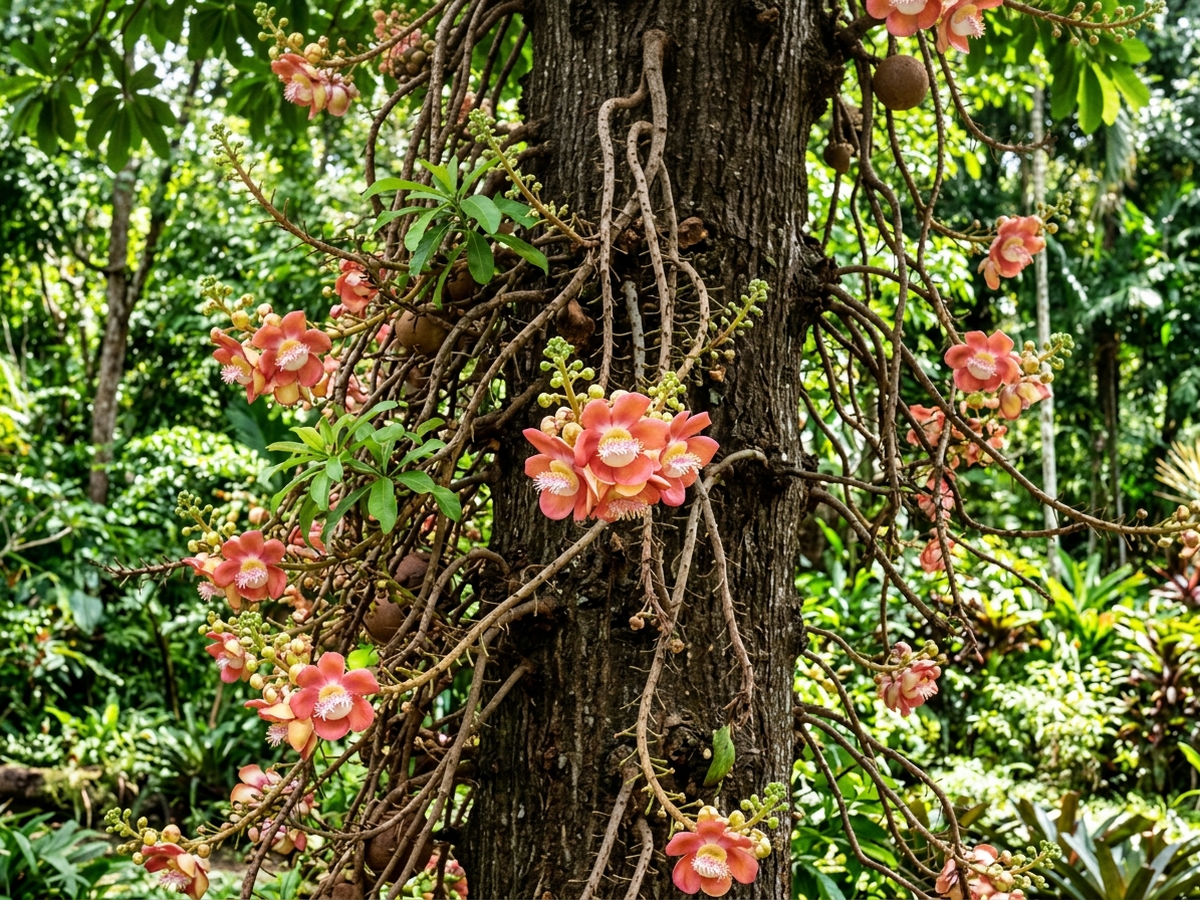
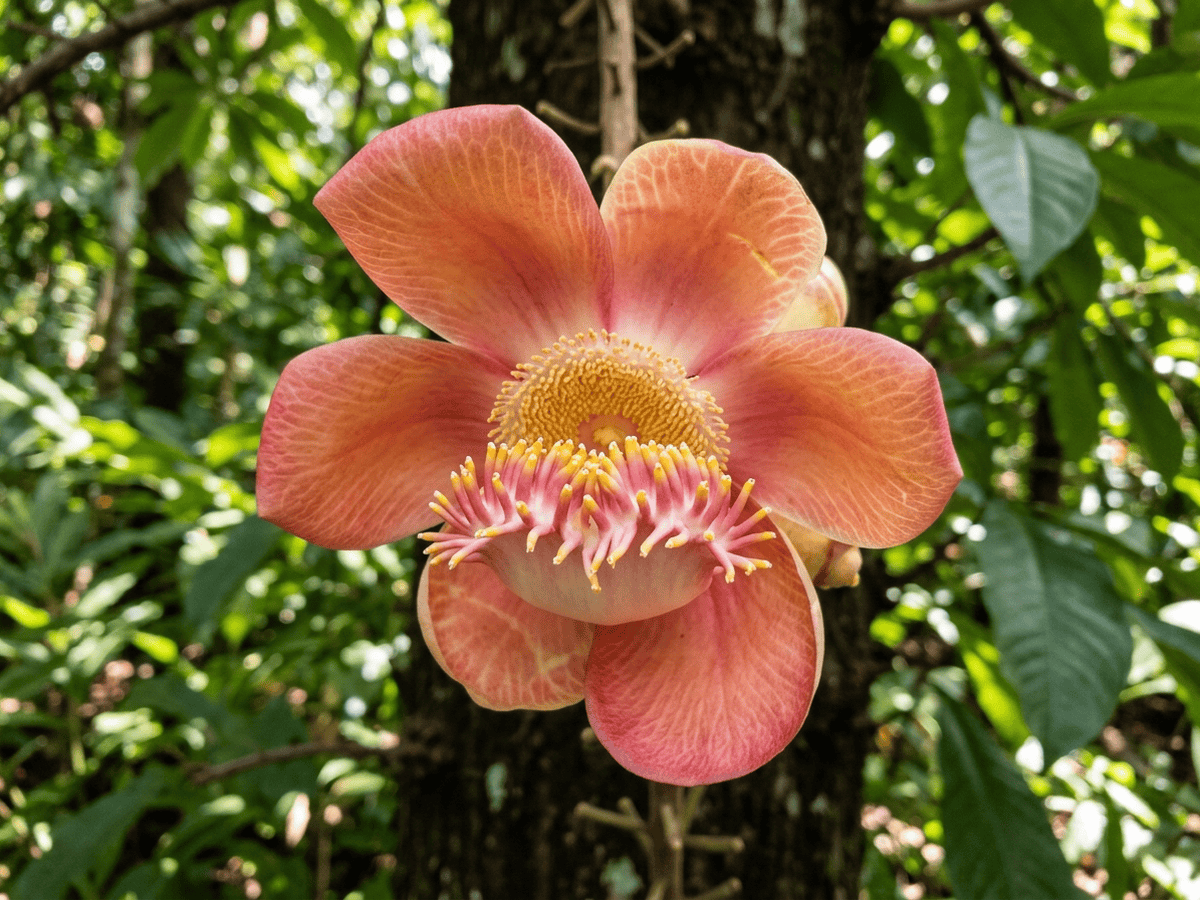
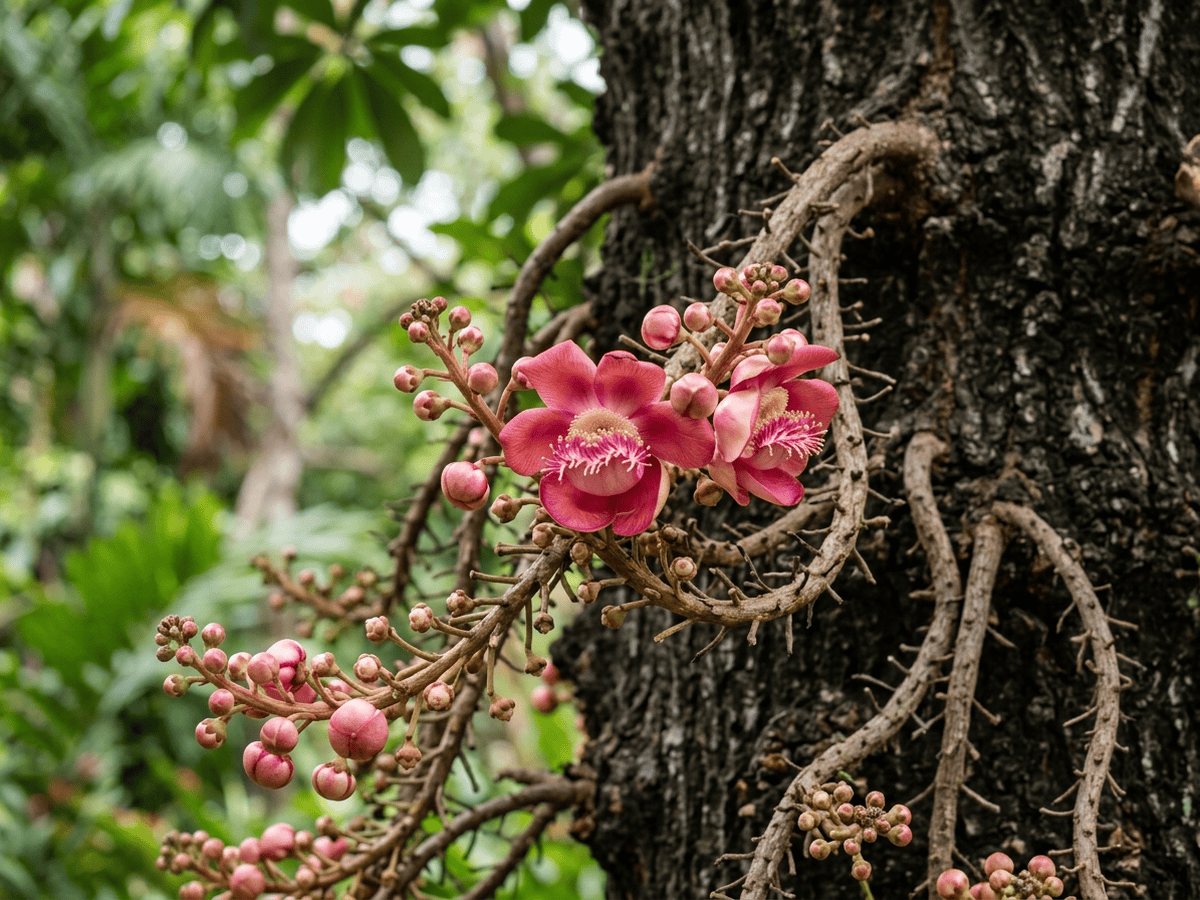
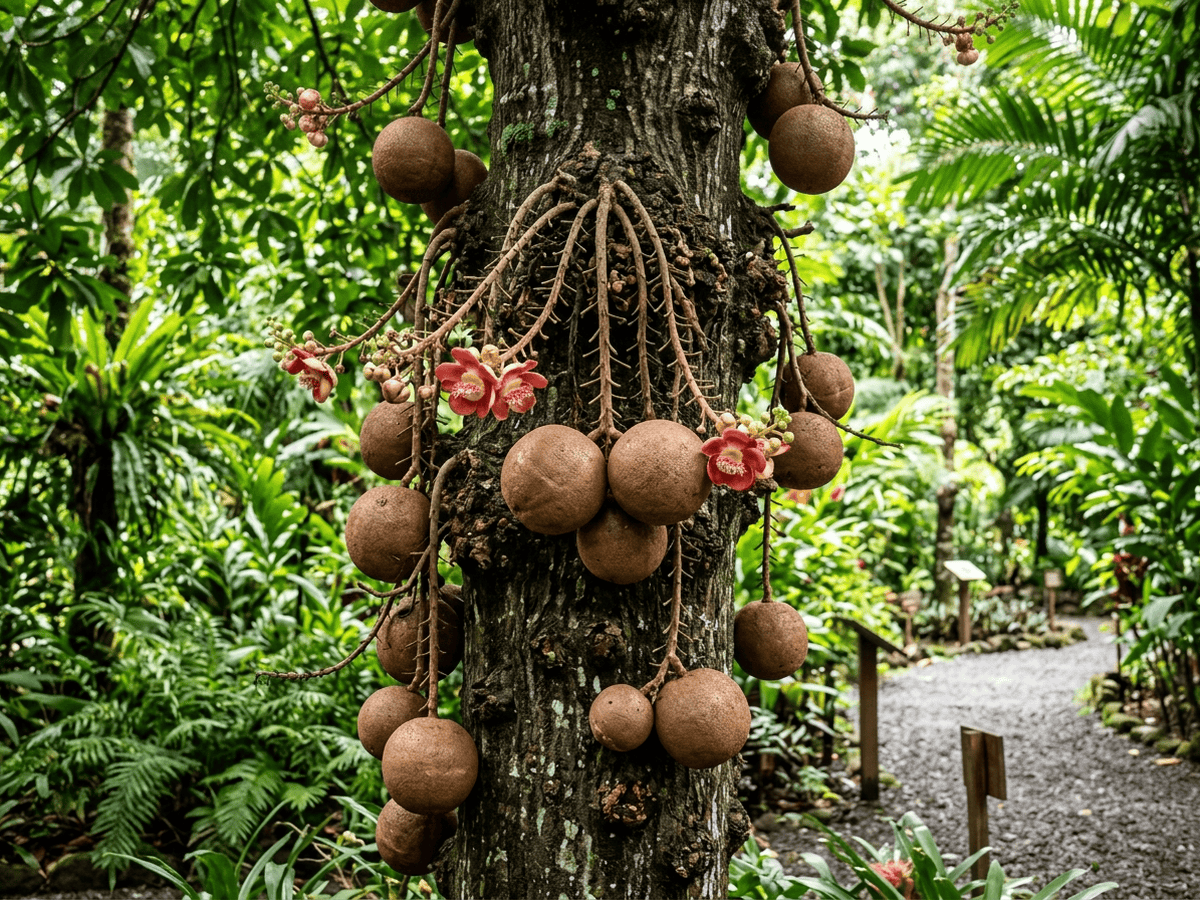
Couroupita guianensis, the Cannonball Tree, is one of the world's most spectacular tropical trees. Thick flower-laden ropes erupt directly from its trunk, bearing waxy pink and salmon blooms with a heady, sweet fragrance. After flowering, enormous round woody fruits up to 25 cm across develop—crashing to the ground like namesake cannonballs. Native to the Amazon basin, it can reach 60 feet and is a prized spectacle at botanical gardens and Hindu temples across tropical Asia, where its blooms are sacred offerings.
- Showy-fruit
- Fragrant
- Deciduous
- Fast-growing
- Pollinator-friendly
How to care for Cannonball Tree
Watering
- Springevery 10 days
- Summerevery 7 days
- Fallevery 15 days
- Winterpause watering
Soil · Well-draining
- Top dressingPine bark mulch10%
- Main mixPotting soil + perlite 2:170%
- DrainageLECA / gravel20%
Never skip the drainage layer — standing water is the top cause of root rot.
FERTILIZER
Bloom Booster 10-52-10
A phosphorus-forward feed fuels abundant blooms, with just enough nitrogen and potassium to keep foliage and roots steady.
- Nitrogen · Leaves
- Phosphorus · Roots + Blooms
- Potassium · Strength
- Springevery 30 days
- Summerevery 30 days
- Fallevery 30 days
At a Glance
- NativeSouth America
- Height30–60 ft (9.1–18.3 m)
- Spread30–40 ft (9.1–12.2 m)
- Flower colorPink, White
- Foliage colorGreen
- Fruit colorBrown
- SoilWell-drained, Moist
- LocationsYard · Balcony
Bloom time
BLOOM CYCLE
Peak bloom
Mar–May
The Cannonball Tree produces large, fragrant flowers in spring.
Fragrance
STRONG FRAGRANCE
Intensely sweet, heady scent from the waxy pink and salmon blooms.
Toxicity
No toxicity has been reported for this plant. Still, it is wise to keep pets from chewing on any houseplant.
Educational information, not medical or veterinary advice. If exposure is suspected, contact a doctor or veterinarian.
DISTRIBUTION


- Native
- Introduced
- South America
History
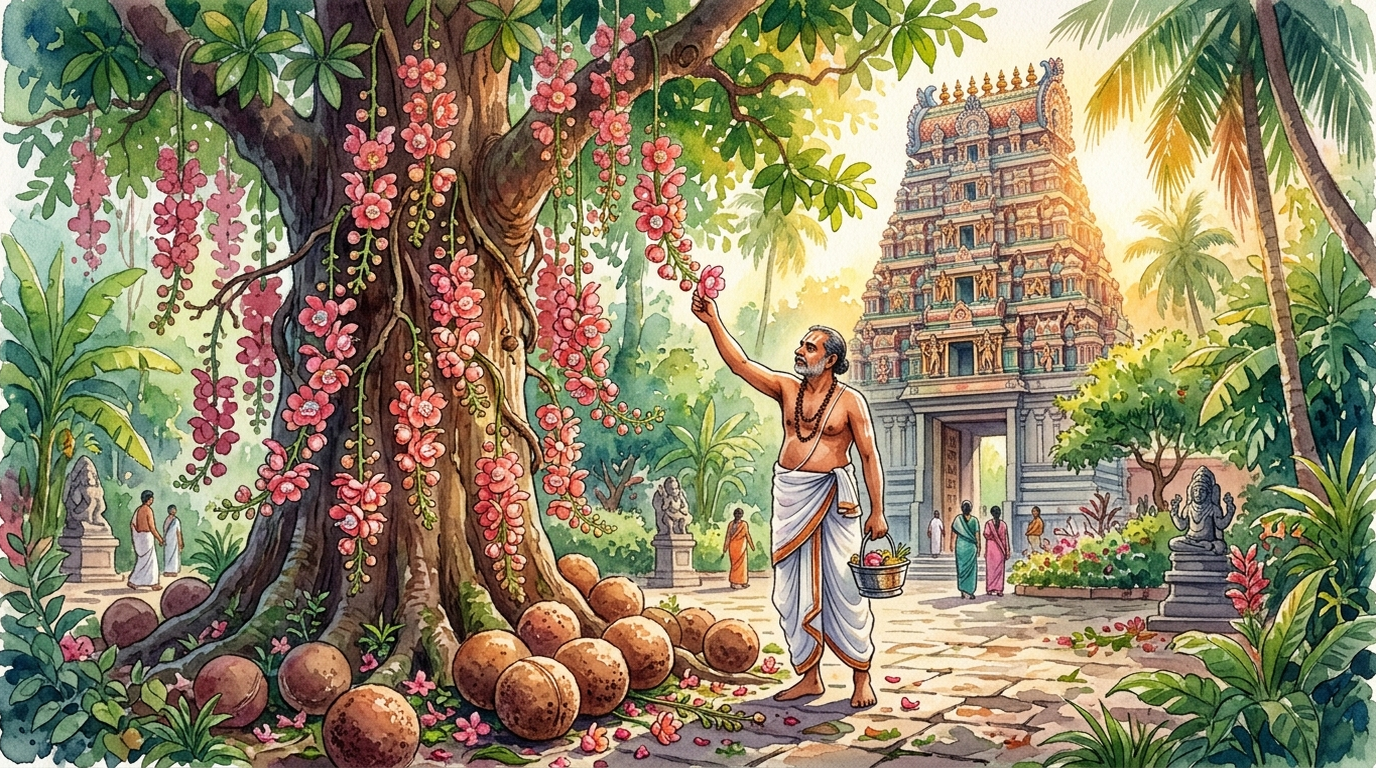
Couroupita guianensis is native to the tropical forests of the Amazon basin, where indigenous peoples used its hard woody fruits as water vessels and ground its bark and leaves into traditional antiseptic remedies for wounds and skin ailments.
When Portuguese and Spanish explorers encountered the tree in the 16th century, they were astonished by the spectacle: thick, rope-like stems erupting directly from the trunk, each bearing clusters of waxy blooms in salmon, pink, and deep rose, releasing a heady perfume. The spherical fruits—averaging the size of a bowling ball and weighing several kilograms—gave the tree its unforgettable common name.
Daniel Solander, botanist on Captain Cook's first voyage, formally described the tree in 1775. It was soon transported across British and Dutch colonial networks to botanical gardens in India and Southeast Asia. There it found a remarkable second life: Hindu priests noticed that the flower's inner structure—a distinctive pink hood over a central column—resembled the divine cobra Naga arching over Shiva's lingam. The tree was consecrated as Nagalingam, planted at temples across Tamil Nadu and Sri Lanka, its fresh flowers offered daily on Shiva altars by millions of pilgrims.
Today Couroupita guianensis is more abundant in Indian and Thai temple gardens than in its native Amazon forests, having completed one of botany's most extraordinary reverse migrations from South American forest giant to sacred icon of South and Southeast Asia.
Symbolism & meaning
What It Symbolizes
In the temple gardens of Tamil Nadu, pilgrims daily lift fallen pink blossoms of the Cannonball Tree and carry them to stone altars. To them, it is Nagalingam—cobra and Shiva's symbol fused into one extraordinary flower. This Amazon giant traveled from equatorial forests to become one of Asia's most venerated sacred trees, its story an improbable arc from forest fruit bowl to divine offering.
- divine protection — Sacred to Shiva in Hindu tradition—its cobra-hood flowers are offered on altars as Nagalingam across South and Southeast Asia.
- wonder — Blossoms erupting from bare bark and bowling-ball fruits crashing to earth embody nature's capacity to astonish.
Where the Name Comes From
The genus name Couroupita derives from the Tupi indigenous word 'couroupiti,' the name for the large spherical fruits. The species epithet guianensis refers to Guiana in northeastern South America, part of the tree's native range.
Uses & Fun Facts
- Spectacular trunk-flowering spectacle prized at tropical botanical gardens worldwide
- Intensely perfumed blooms used as sacred offerings in Hindu temples
- Bark, flowers, and leaves used in traditional medicine as antiseptics and wound treatments
- Large flowers attract bats and bees; fallen fruits feed forest mammals
Related plants
Plants with similar care
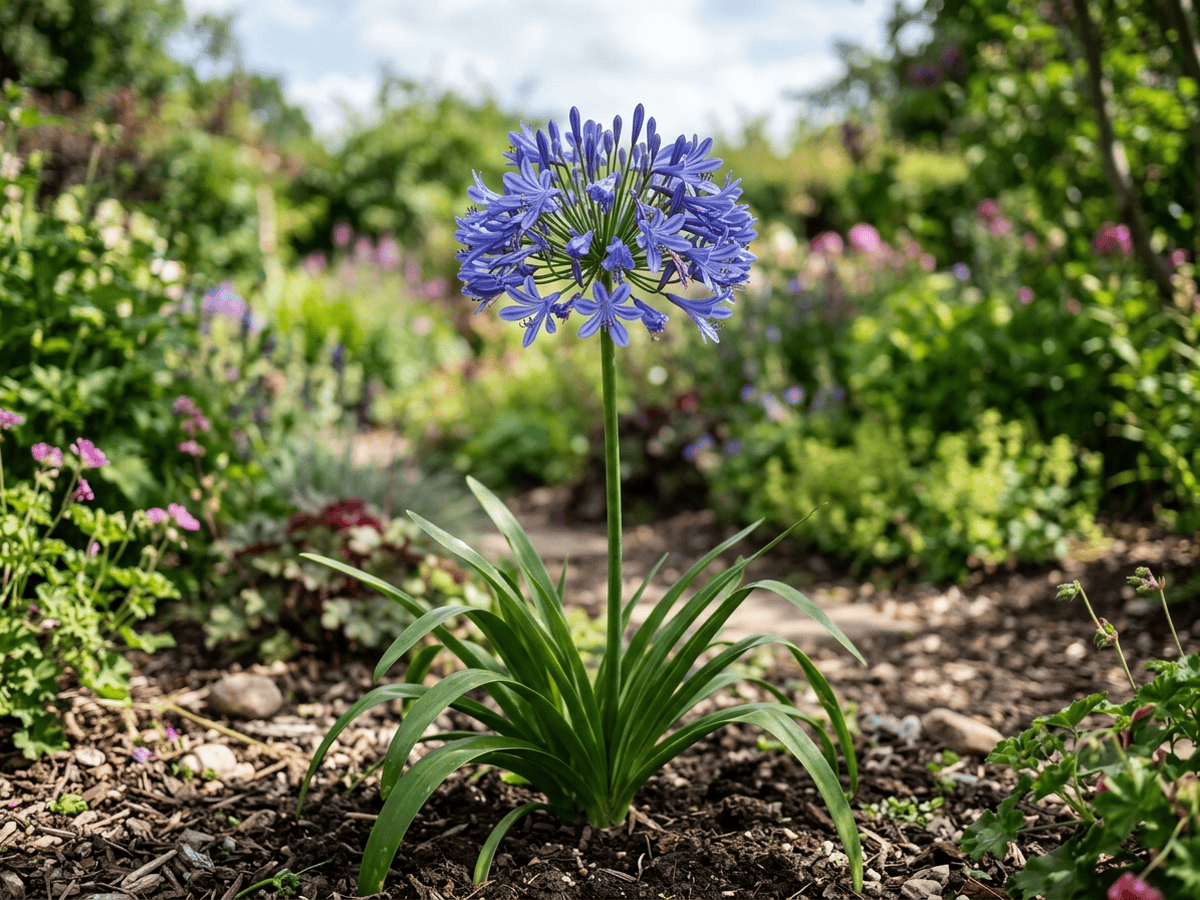 African LilyAgapanthus africanus
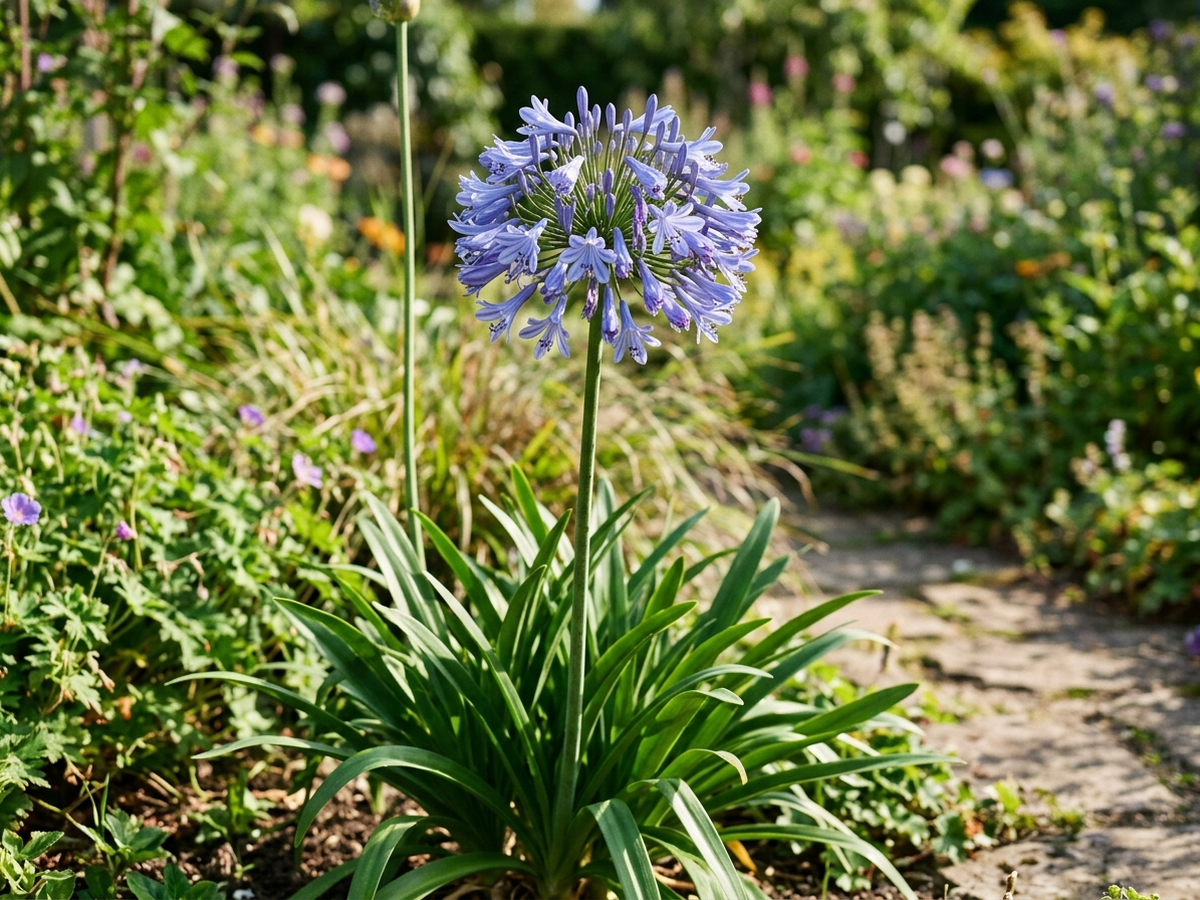 Bell AgapanthusAgapanthus campanulatus
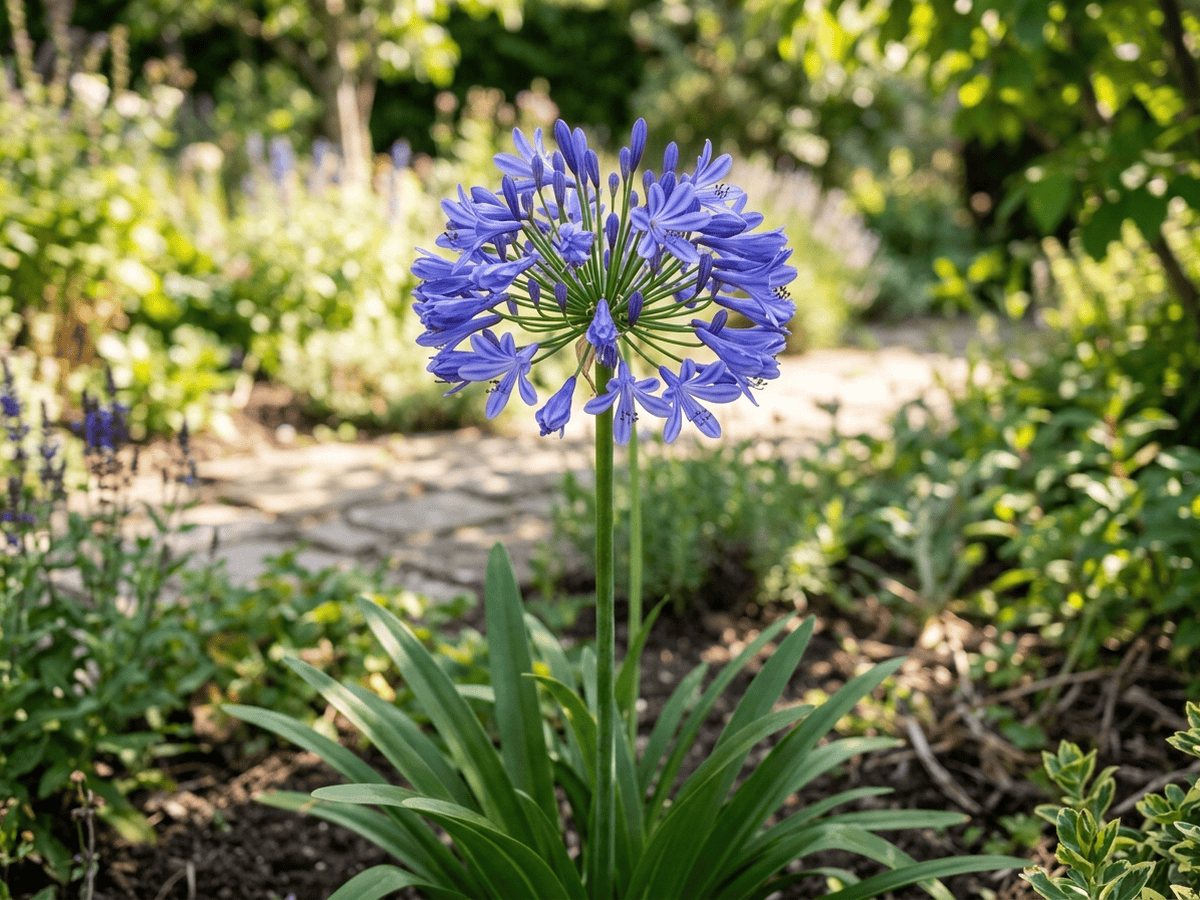 Common AgapanthusAgapanthus praecox
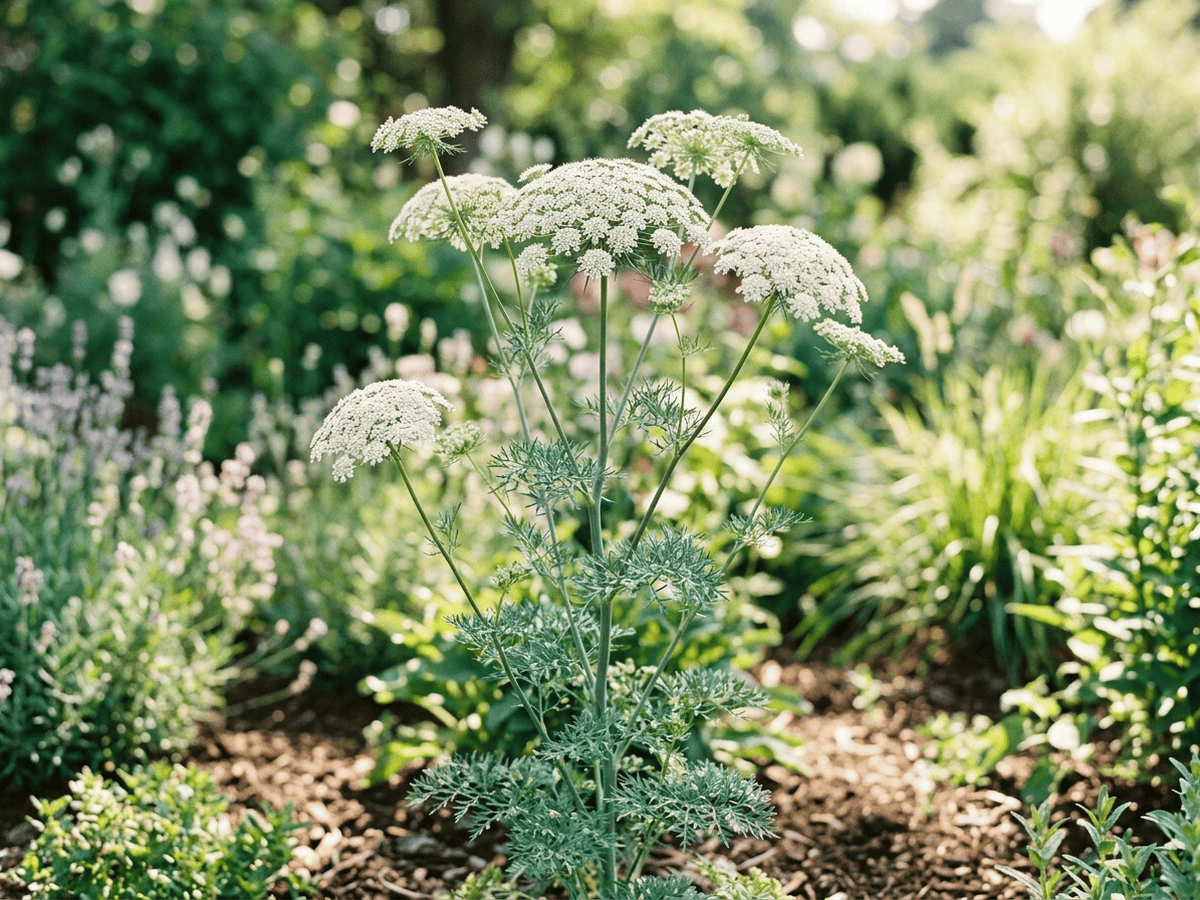 False Queen Anne's LaceAmmi majus glaucifolium
Frequently asked questions
How often should I water Cannonball Tree?
Water about every 10 days during the growing season, and always let excess water drain away.
How much light does Cannonball Tree need?
Part sun: 4–6 hrs direct. Watch the leaves — scorching or stretching means the light needs adjusting.
Is Cannonball Tree toxic to cats or dogs?
No toxicity has been reported for this plant. Still, it is wise to keep pets from chewing on any houseplant. Educational information, not medical or veterinary advice. If exposure is suspected, contact a doctor or veterinarian.
Is Cannonball Tree easy to grow?
It is considered challenging and rewards experienced growers.
When does Cannonball Tree bloom?
It typically blooms Mar–May in the Northern Hemisphere.
YardMate
Identify any plant in seconds
Snap a photo — YardMate names the plant, diagnoses problems, and reminds you when to water.
Download on the App Store