 YardMate
Bell Agapanthus
Agapanthus campanulatus
Hard · Experienced growersAbout Bell Agapanthus
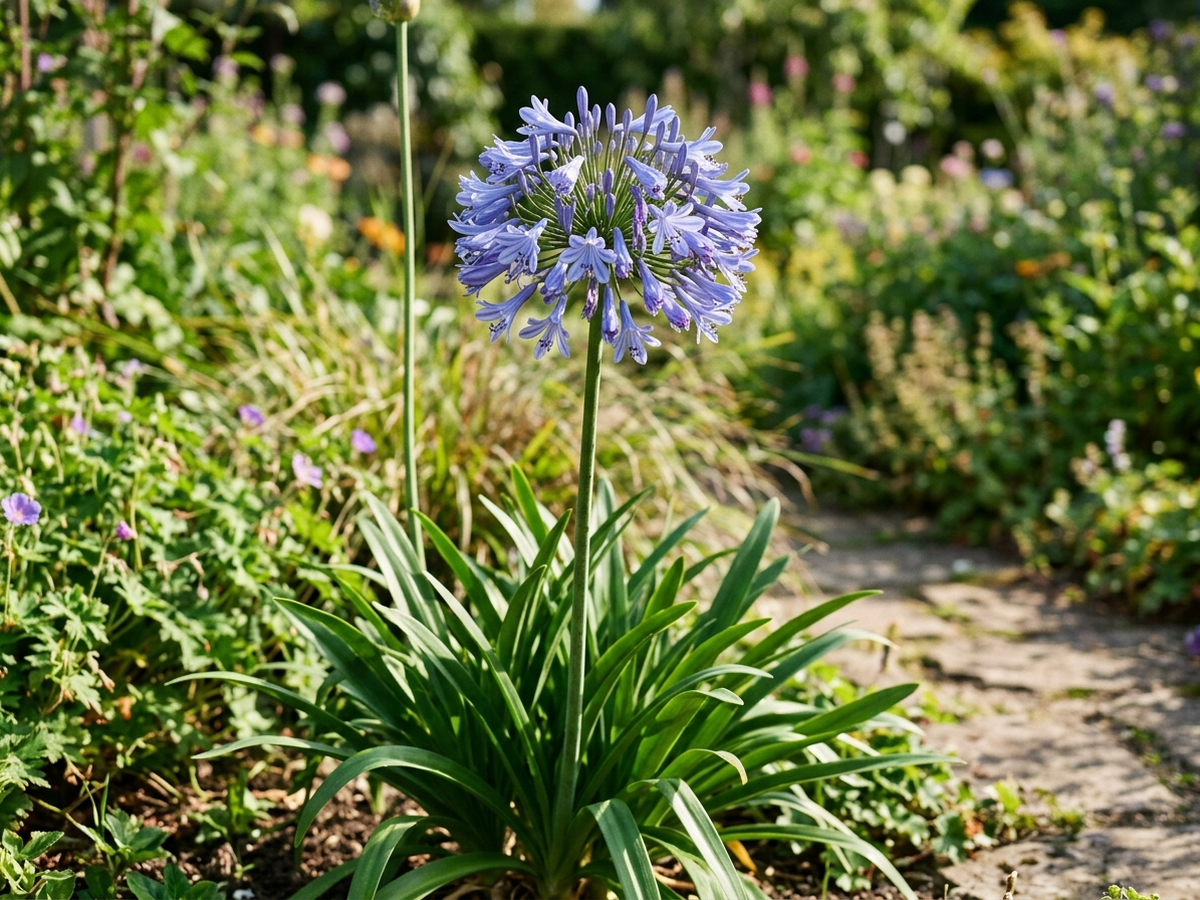
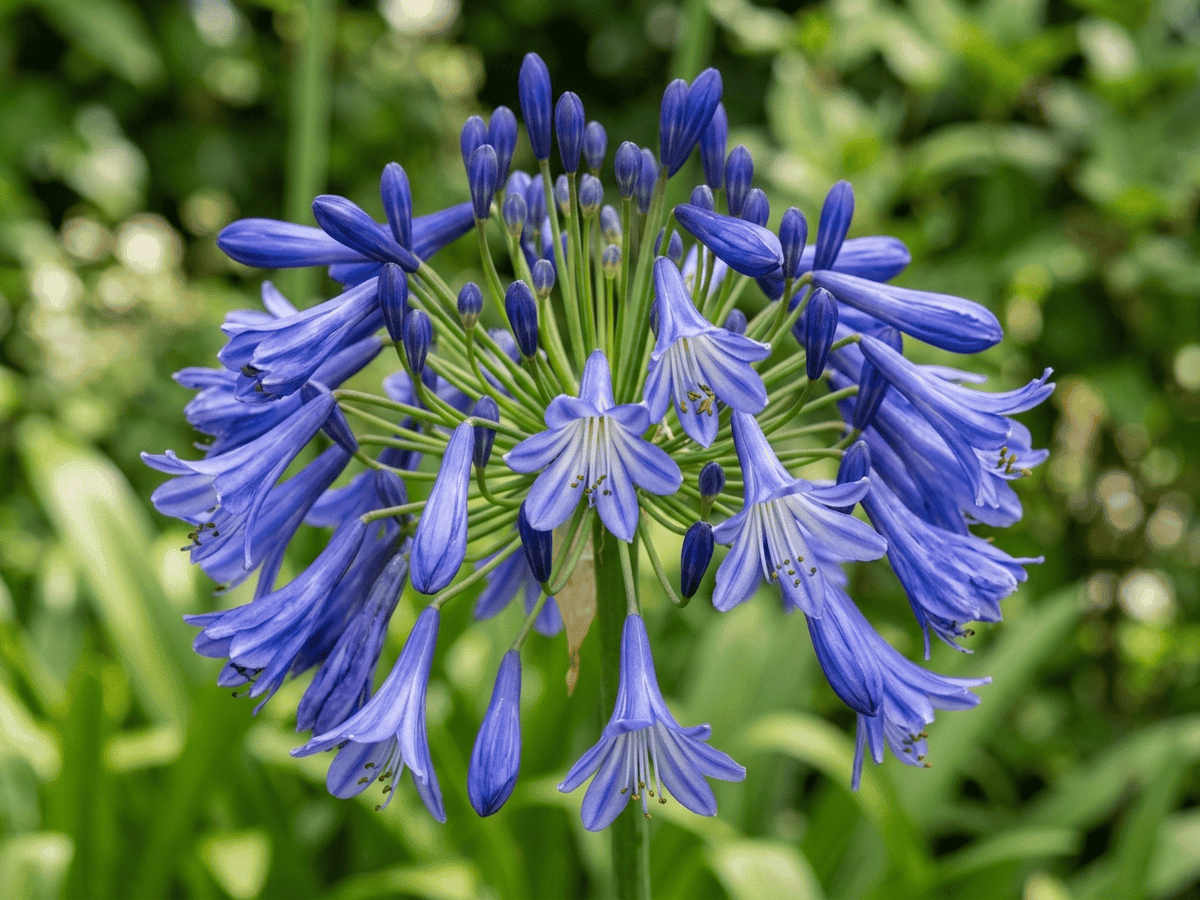
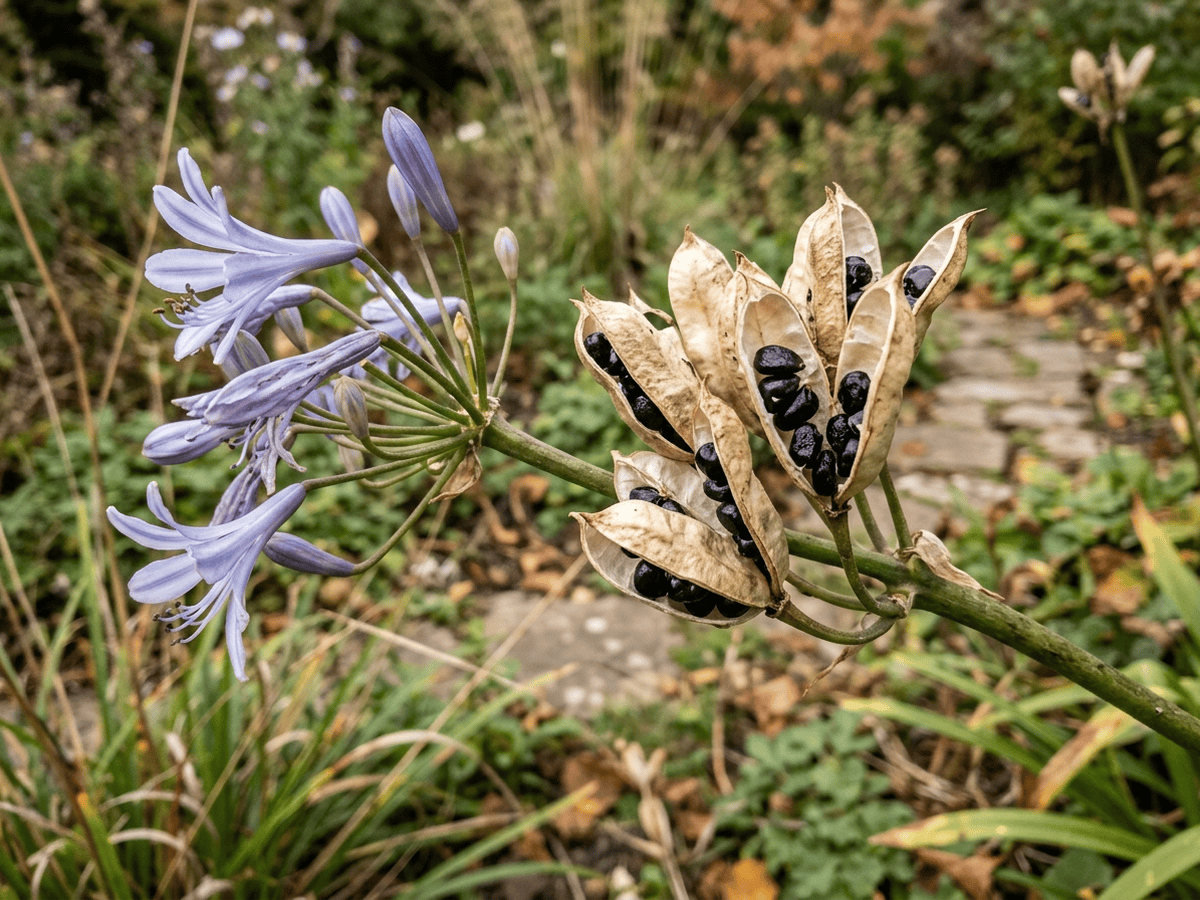
Agapanthus campanulatus, Bell Agapanthus, is a deciduous perennial from South Africa's KwaZulu-Natal and Eastern Cape, distinguished from its evergreen relatives by its cold-hardiness and distinctly bell-shaped tubular flowers. Strap-like leaves emerge in spring, followed by tall stems 2–3 feet high bearing rounded umbels of pendant blue to pale blue flowers in summer. The most frost-tolerant agapanthus species, it dies back to rhizomes in winter and is reliably perennial into zone 7. Showy seed pods that split to reveal black seeds extend the ornamental interest well into autumn.
- Deciduous
- Pollinator-friendly
- Showy-fruit
- Drought-tolerant
- Container-friendly
How to care for Bell Agapanthus
Watering
- Springevery 7 days
- Summerevery 5 days
- Fallevery 14 days
- Winterevery 30 days
Soil · Well-draining
- Main mixLoam + coarse sand 3:175%
- DrainageGravel25%
Sharp drainage matters most — bulbs rot in wet soil while dormant.
FERTILIZER
Bloom Booster 10-52-10
A phosphorus-forward feed fuels abundant blooms, with just enough nitrogen and potassium to keep foliage and roots steady.
- Nitrogen · Leaves
- Phosphorus · Roots + Blooms
- Potassium · Strength
- Springevery 30 days
- Summerevery 30 days
- Fallevery 30 days
At a Glance
- NativeSouth Africa
- Height2–3 ft (0.6–0.9 m)
- Spread2–3 ft (0.6–0.9 m)
- Flower colorBlue
- Foliage colorGreen
- SoilWell-drained, Moist
- LocationsYard · Balcony
Bloom time
BLOOM CYCLE
Peak bloom
Nov–Jun
This plant features vibrant blue flowers from late autumn to early summer.
Fragrance
NO FRAGRANCE
Unscented flowers.
Toxicity
Humans Slight
agapanthin and saponins
Slight
- Root
- Sap
- Ingestion
- Contact
EXPOSURE Eating roots and sap. Touching roots and sap.
EFFECT Nausea, vomiting, skin irritation, and mucous membrane irritation.
NOTE Toxic to dogs and cats per ASPCA; causes vomiting, diarrhea, and nausea. Sap can cause skin and eye irritation in humans. Roots most concentrated in toxic saponins.
Unknown
EXPOSURE No exposure route is reported.
EFFECT No toxic effect is reported.
NOTE Toxicity for dogs is not well documented; use caution until verified.
Unknown
EXPOSURE No exposure route is reported.
EFFECT No toxic effect is reported.
NOTE Toxicity for cats is not well documented; use caution until verified.
Educational information, not medical or veterinary advice. If exposure is suspected, contact a doctor or veterinarian.
DISTRIBUTION


- Native
- South Africa
History
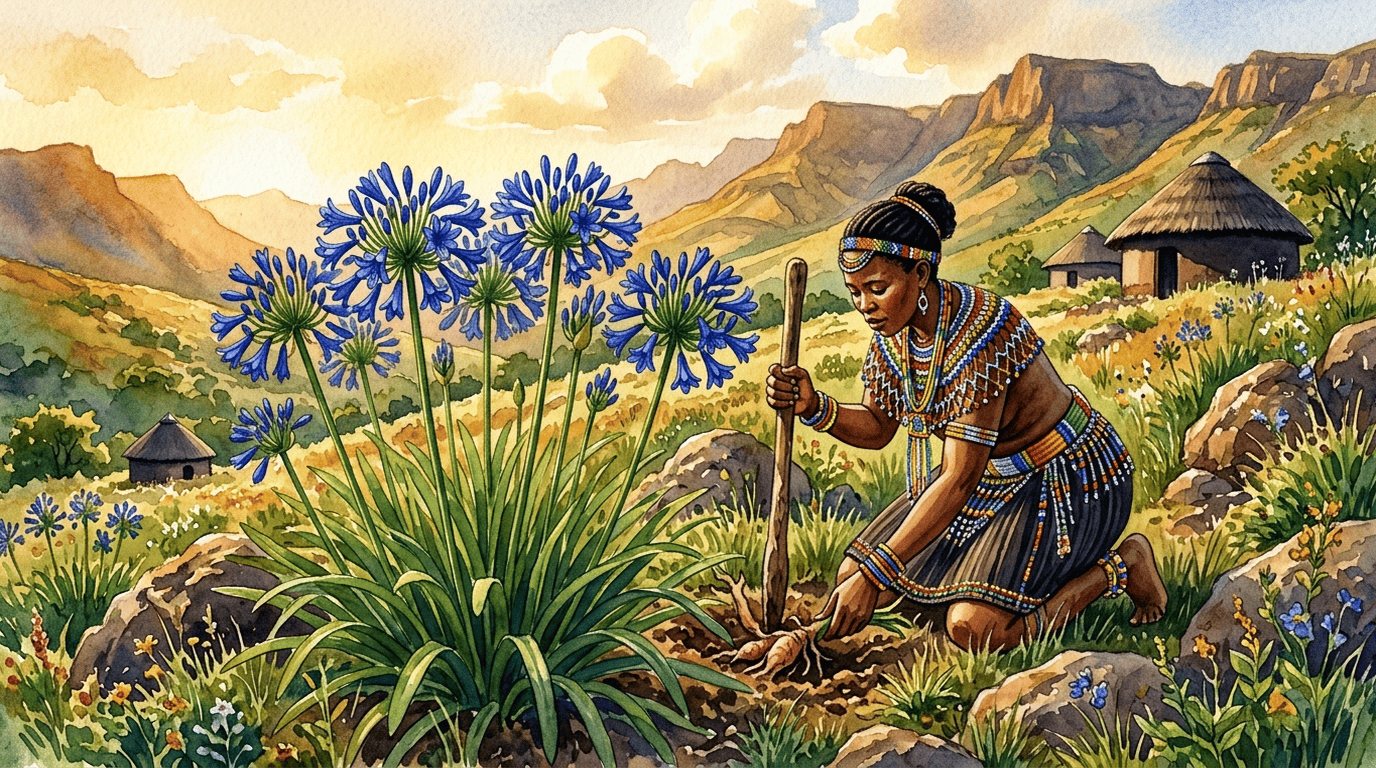
Agapanthus campanulatus is native to the high-altitude grasslands, rocky slopes, and forest margins of KwaZulu-Natal and the Eastern Cape in South Africa. Among the most cold-hardy members of the genus, it evolved at elevations where winter frost is regular—an adaptation that later made it invaluable in temperate-climate gardens worldwide.
In Zulu and Xhosa traditional medicine, agapanthus held significant importance. Roots and rhizomes of Agapanthus species were prepared as decoctions used during pregnancy and childbirth—believed to promote easy delivery and strengthen the unborn child. The plant was also used for heart complaints, coughs, and as a charm worn around the neck to protect against thunder. Traditional healers (izinyanga and izangoma) maintained knowledge of its preparation across generations.
European collectors first encountered agapanthus at the Cape in the seventeenth century. Agapanthus africanus was brought to the Netherlands around 1679, becoming one of the earliest African ornamentals cultivated in European glasshouses. A. campanulatus, being a highland species, arrived somewhat later but proved far more adaptable to British and northern European gardens—its deciduous habit allowed it to survive hard winters that killed the evergreen Cape species.
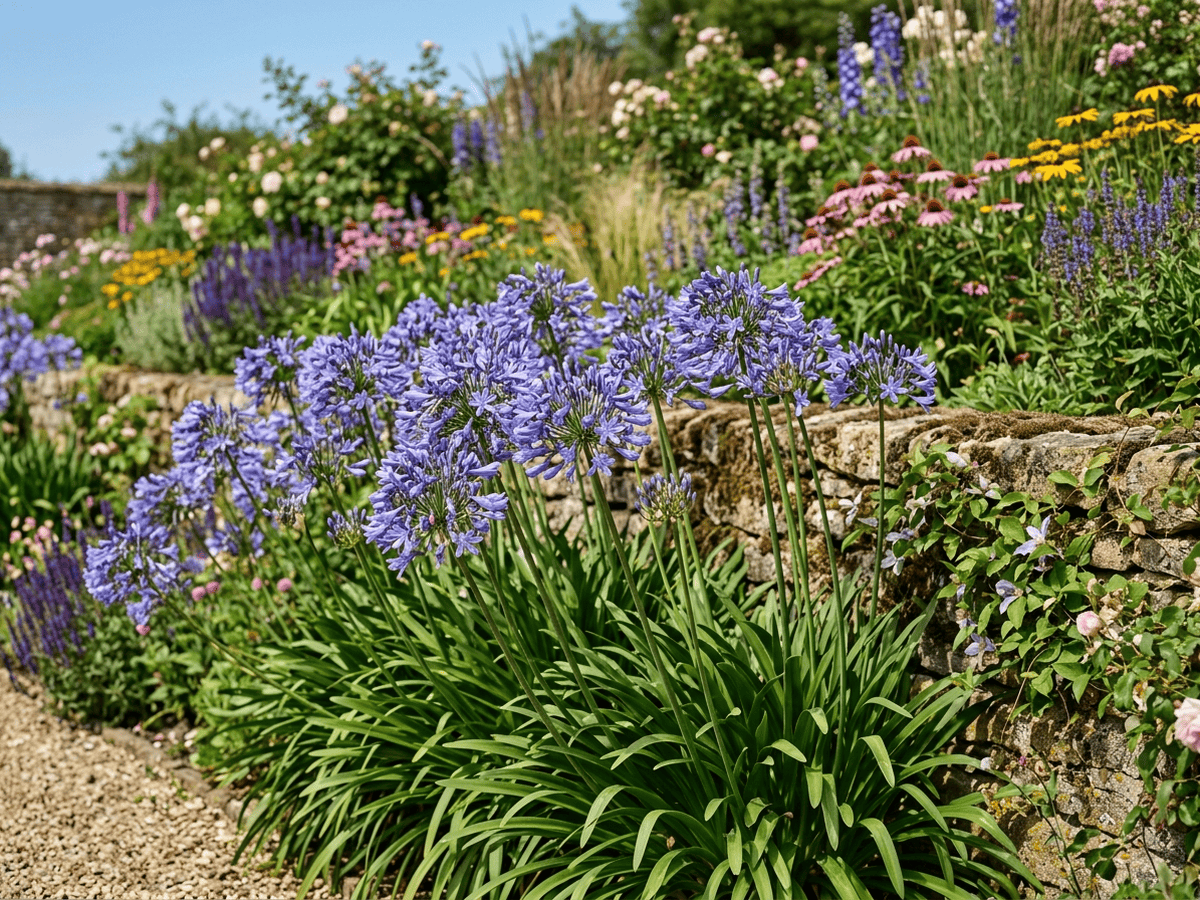
By the Victorian era, agapanthus in pots lined the terraces of English country houses each summer, their blue flowers complementing stone balustrades. This image became so associated with English garden style that the plant is sometimes called 'African lily' yet seems quintessentially English in use. Modern breeding has produced dozens of cultivars in shades from white to deep violet, compact and giant forms, and even double-flowered selections—all derived from the wild South African species.
Symbolism & meaning
What It Symbolizes
The name means love flower in Greek. Every summer it earns it—tall stems carrying those perfect blue rounds, the kind of blue that registers even from a distance across a garden. You don't have to know what it's called to notice it's there.
- love flower — Its Greek name means 'love flower'—and its blue summer umbels have that quality of generosity: abundant, reliable, asking nothing, and somehow making a garden look complete.
- hidden strength — Dies back completely in winter, invisible for months, then returns exactly as before—the cold-hardiest of its genus, its resilience hidden underground until spring.
Where the Name Comes From
Agapanthus derives from Greek agape (love) and anthos (flower)—'love flower'—reflecting its ornamental beauty. The species epithet campanulatus is Latin for 'bell-shaped,' describing the distinctive pendant tubular bell-shaped flowers that distinguish this species from the wider-opening flowers of related agapanthus.
Uses & Fun Facts
- Tall rounded umbels of bell-shaped blue flowers make striking garden accents; seed pods dry attractively for autumn and winter interest; excellent in containers and borders
- Blue tubular flowers attract bumblebees and hoverflies throughout summer; a long-flowering nectar source in perennial borders
- Roots used in Zulu traditional medicine for pregnancy, childbirth, and heart conditions; culturally significant to Zulu and Xhosa healers though roots are toxic if improperly prepared
Related plants
More Agapanthus plants
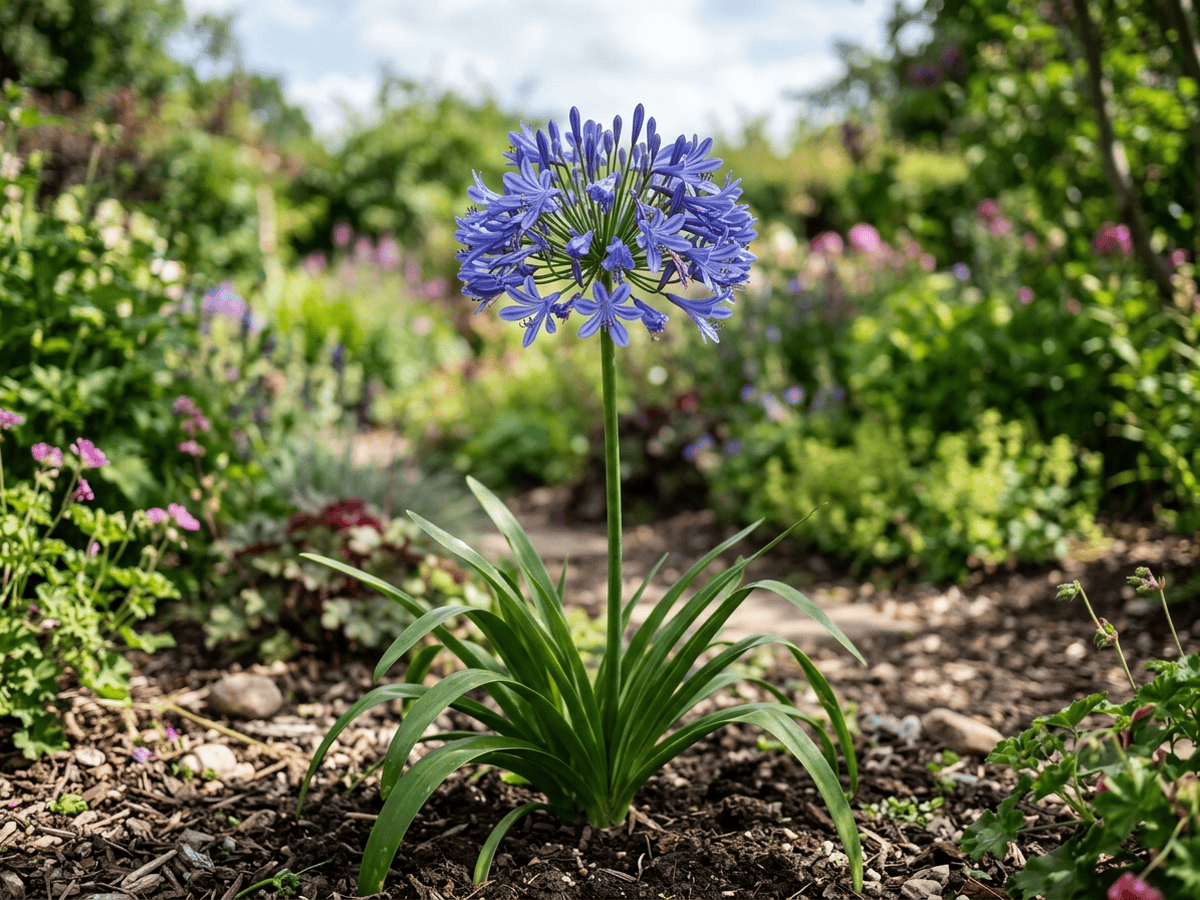 African LilyAgapanthus africanus
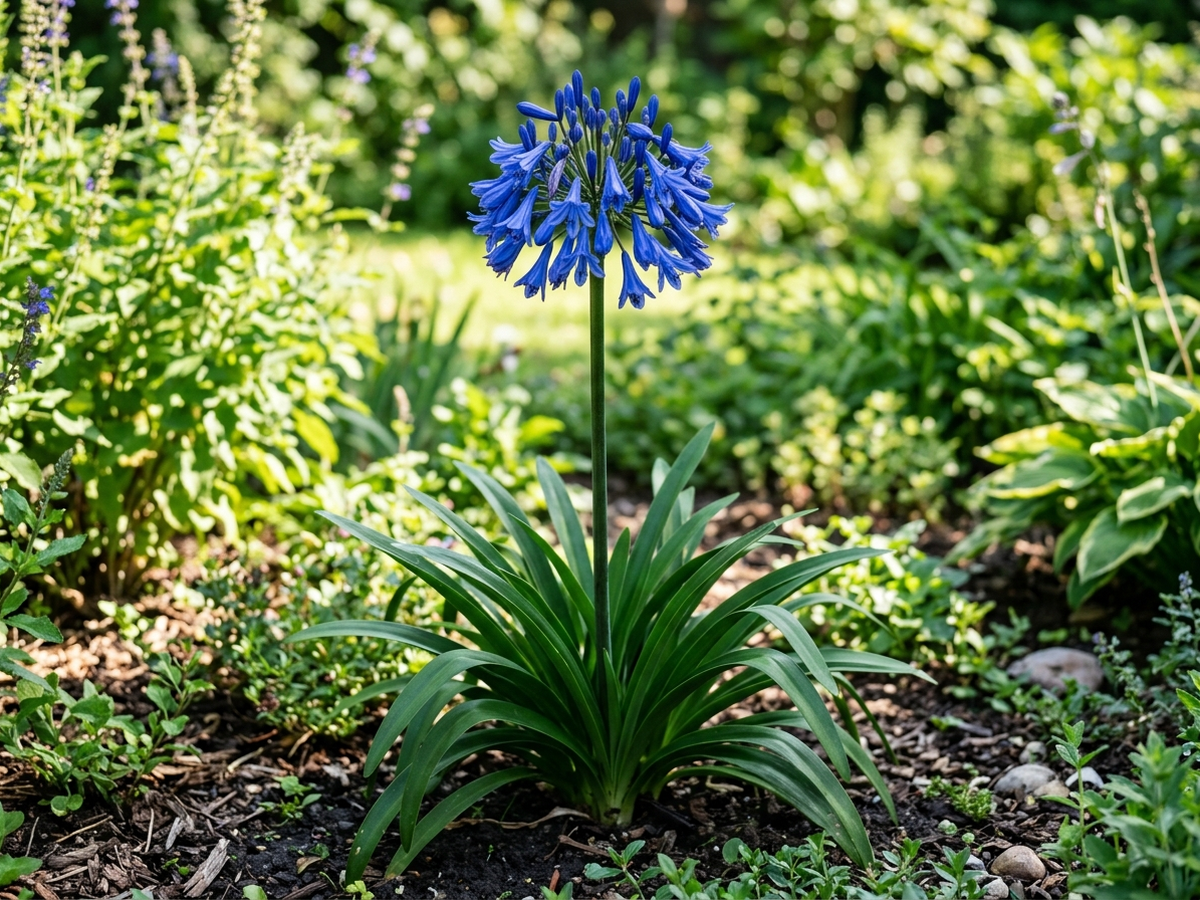 Drooping AgapanthusAgapanthus inapertus
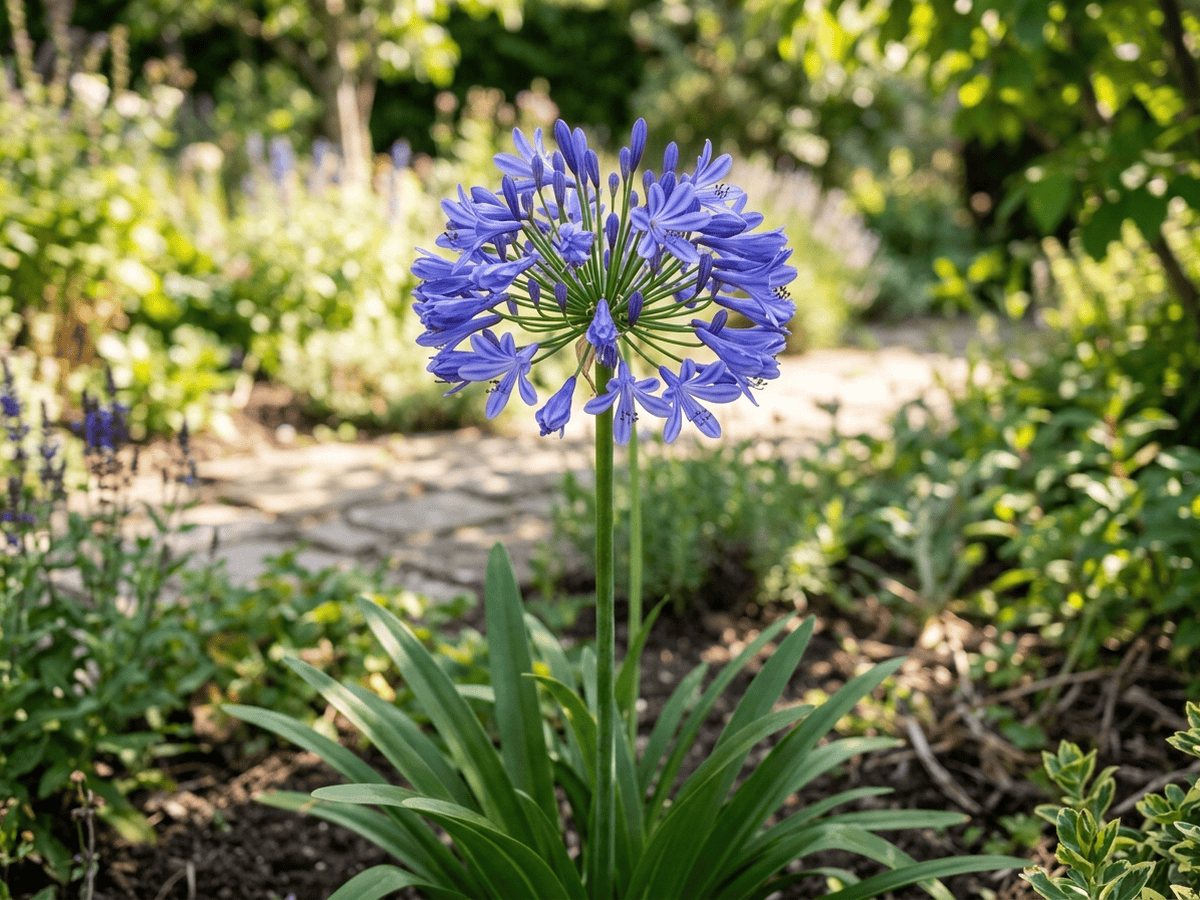 Common AgapanthusAgapanthus praecox
Plants with similar care
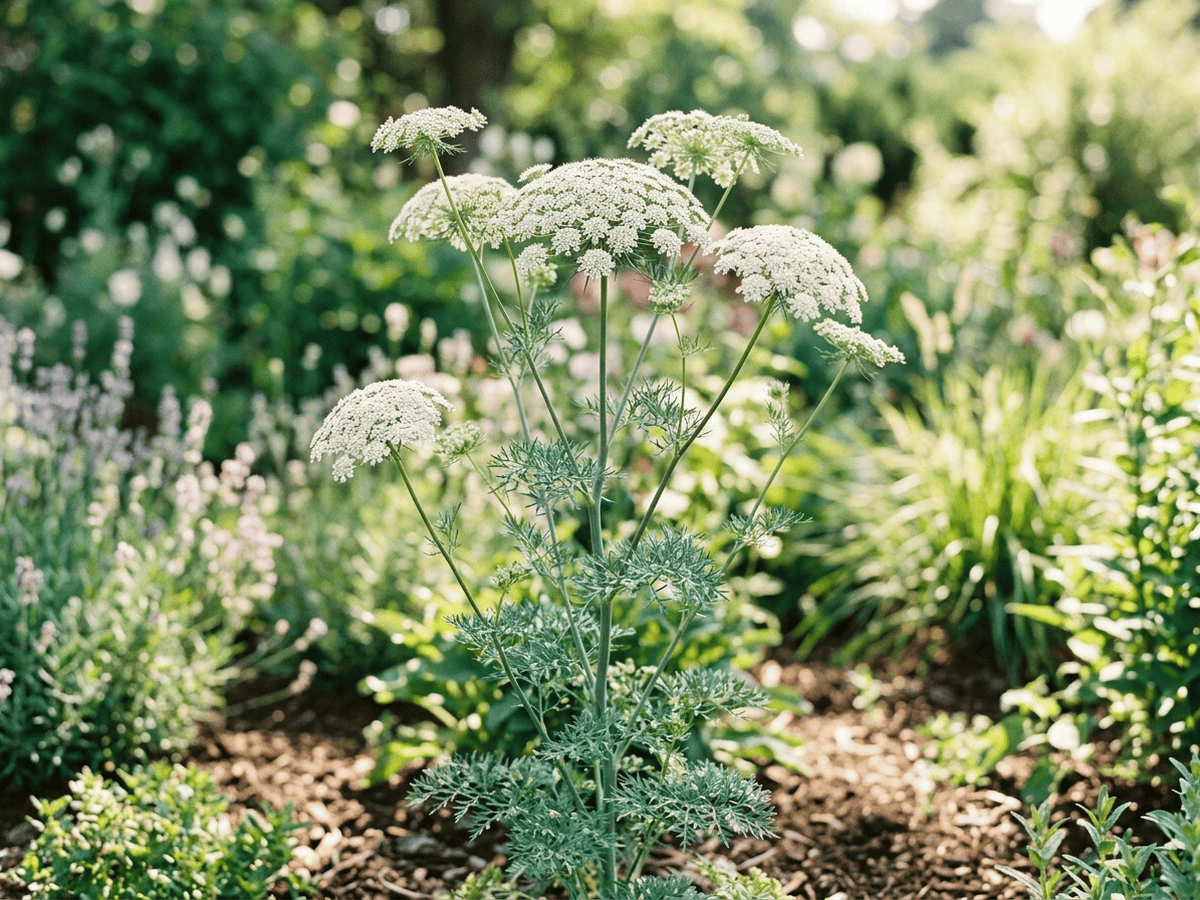 False Queen Anne's LaceAmmi majus glaucifolium
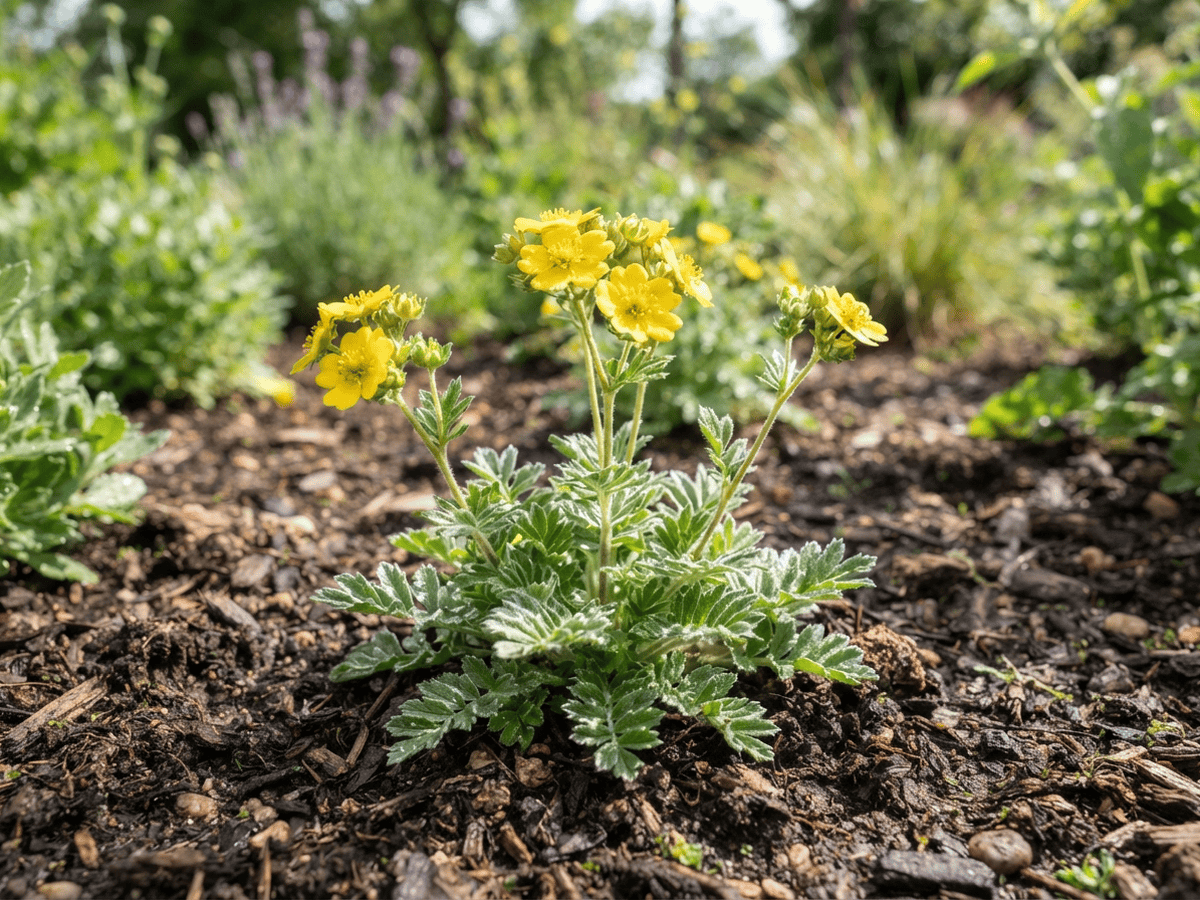 SilverweedArgentina anserina
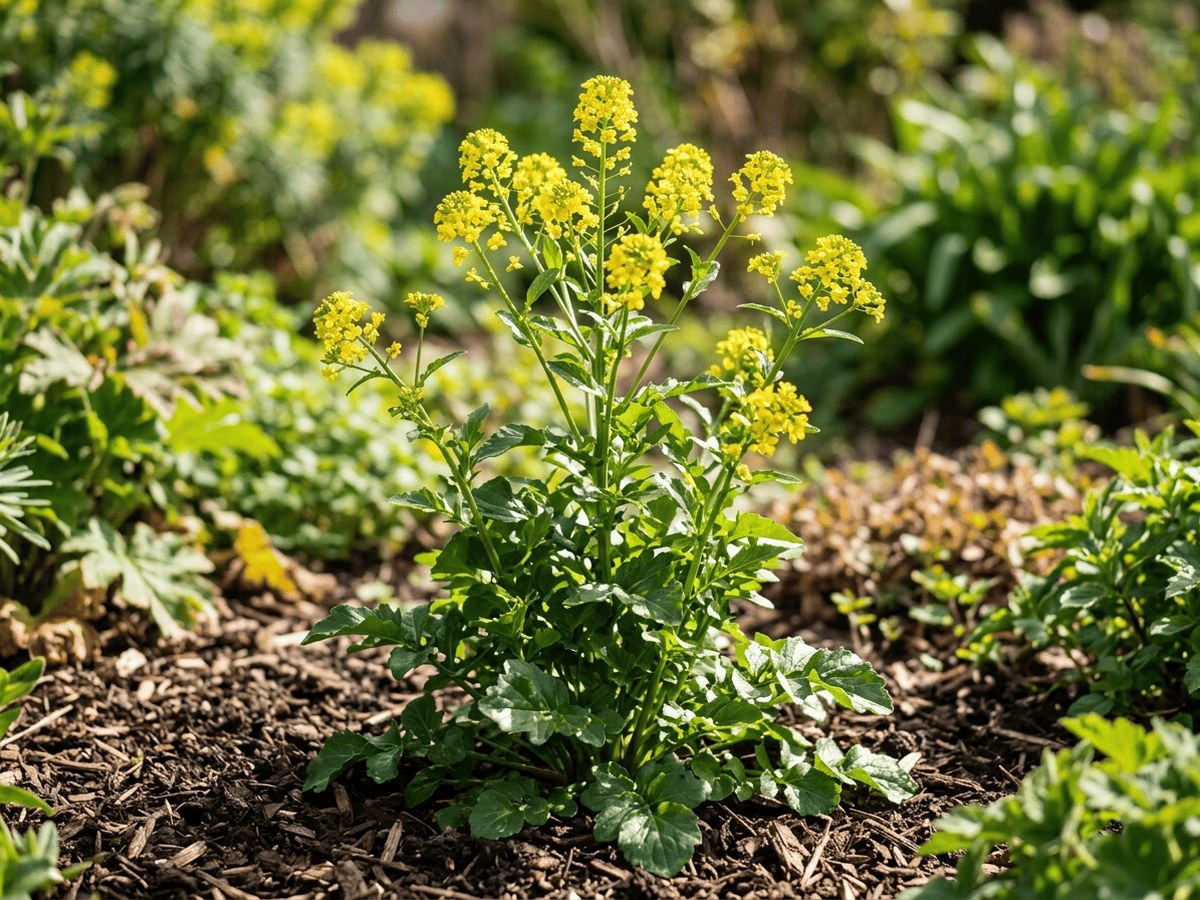 Land CressBarbarea verna
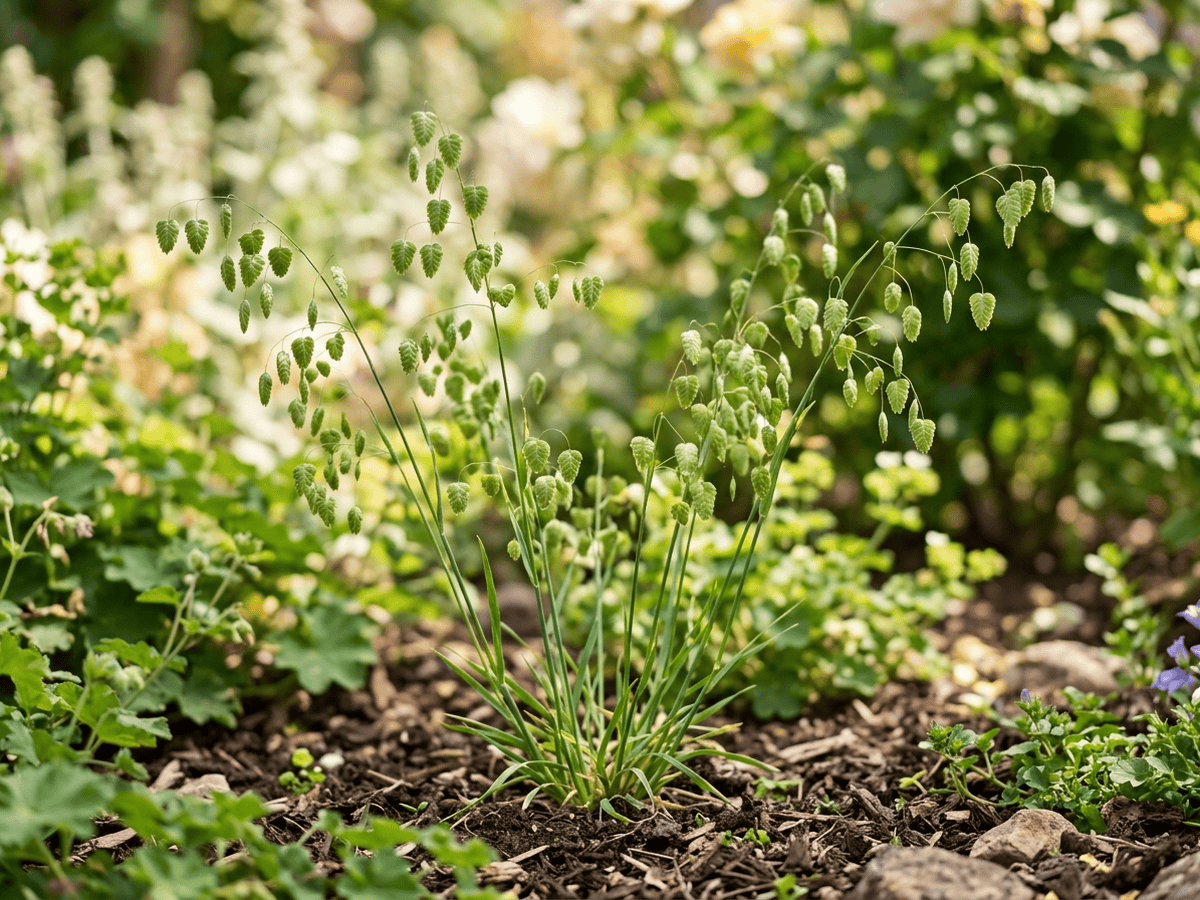 Greater Quaking GrassBriza maxima
Frequently asked questions
How often should I water Bell Agapanthus?
In summer, water about every 5 days; in winter, about every 30 days. Adjust for heat, pot size and drainage.
How much light does Bell Agapanthus need?
Part sun: 4–6 hrs direct. Watch the leaves — scorching or stretching means the light needs adjusting.
Is Bell Agapanthus toxic to cats or dogs?
Pets Unknown (Dogs Unknown · Cats Unknown) Educational information, not medical or veterinary advice. If exposure is suspected, contact a doctor or veterinarian.
Is Bell Agapanthus easy to grow?
It is considered challenging and rewards experienced growers.
When does Bell Agapanthus bloom?
It typically blooms Nov–Jun in the Northern Hemisphere.
YardMate
Identify any plant in seconds
Snap a photo — YardMate names the plant, diagnoses problems, and reminds you when to water.
Download on the App Store