 YardMate

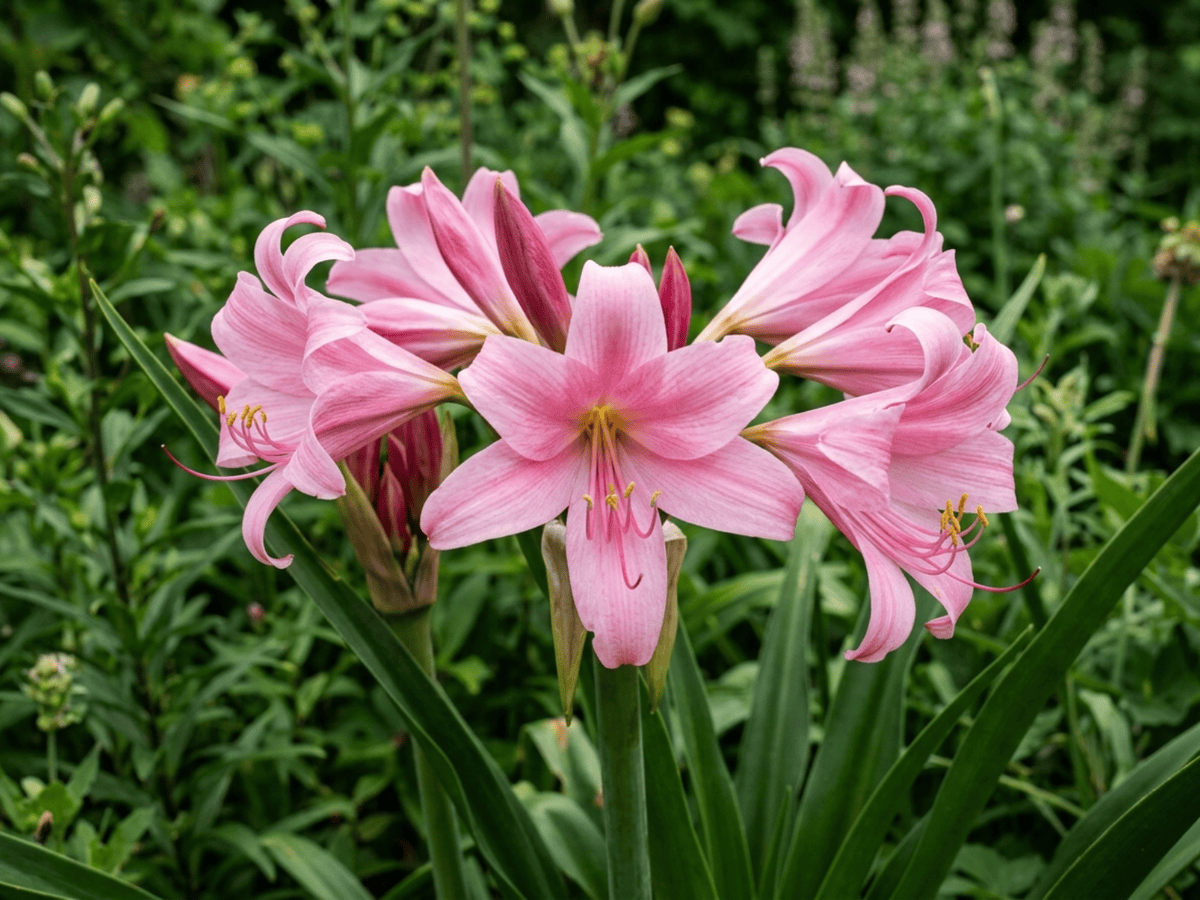


Powell's Cape-Lily
Crinum x powellii
Easy · Beginner friendlyAbout Powell's Cape-Lily
Powell's Crinum is a robust long-lived bulb hybrid producing large clusters of fragrant pink or white trumpet-shaped flowers on stout stems above broad strap-like evergreen leaves. Reaching 2-3 feet tall, it blooms in mid to late summer and is among the hardiest crinums, surviving USDA zones 6-10. A beloved Southern American heirloom often called 'cemetery lily' for its persistence around old homesteads and graveyards throughout the South.
- Fragrant
- Pollinator-friendly
How to care for Powell's Cape-Lily
Watering
- Springevery 4 days
- Summerevery 3 days
- Fallevery 5 days
- Winterpause watering
Soil · Well-draining
- Main mixLoam + coarse sand 3:175%
- DrainageGravel25%
Sharp drainage matters most — bulbs rot in wet soil while dormant.
FERTILIZER
Balanced Feed 14-14-14
An even feed covers all three needs at once, keeping leaves, roots and blooms moving together with nothing pushed out of balance.
- Nitrogen · Leaves
- Phosphorus · Roots + Blooms
- Potassium · Strength
- Springevery 30 days
- Summerevery 30 days
At a Glance
- Height3–4 ft (0.9–1.2 m)
- Spread2–3 ft (0.6–0.9 m)
- Flower colorPink, White
- Foliage colorGreen
- SoilLoamy, Well-drained, Rich
- LocationsYard
Bloom time
BLOOM CYCLE
Peak bloom
Jul–Sep
Pink or white trumpets July to September
Fragrance
MODERATE FRAGRANCE
The flowers have a sweet, vanilla-like scent.
Toxicity
Humans Moderate · Pets Moderate
lycorine and crinine alkaloids
Moderate
- Bulb
- All
- Ingestion
EXPOSURE Eating bulbs and any part of the plant.
EFFECT Nausea, vomiting, and diarrhea.
NOTE Documented concern for humans: Nausea, vomiting, and diarrhea.
Moderate
- Bulb
- Ingestion
EXPOSURE Eating bulbs.
EFFECT Vomiting, diarrhea, and tremors.
NOTE ASPCA lists Crinum as toxic to dogs and cats; bulbs most concentrated.
Moderate
- Bulb
- Ingestion
EXPOSURE Eating bulbs.
EFFECT Vomiting, diarrhea, and tremors.
NOTE ASPCA lists Crinum as toxic to dogs and cats; bulbs most concentrated.
Educational information, not medical or veterinary advice. If exposure is suspected, contact a doctor or veterinarian.
History
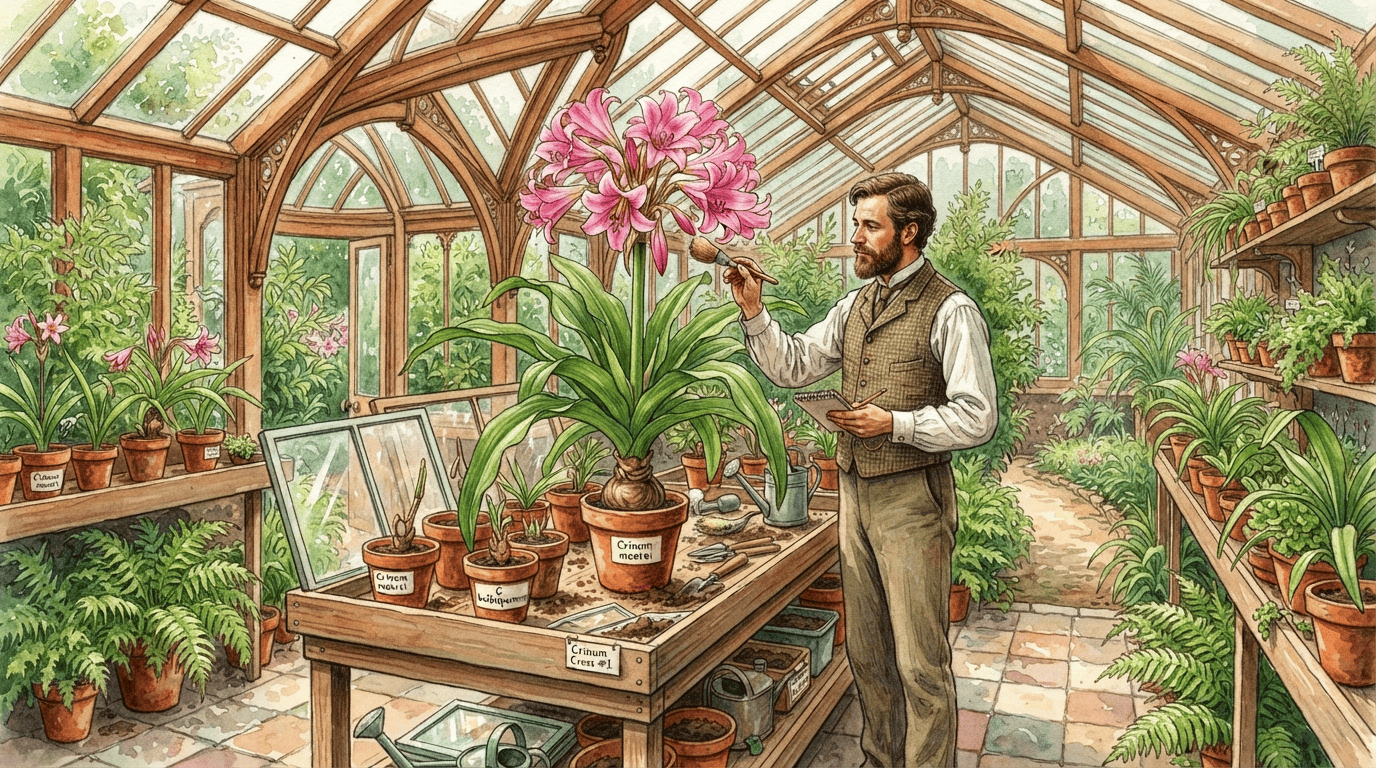
Crinum x powellii is a hybrid between two South African Crinum species—C. bulbispermum (hardier but smaller) and C. moorei (larger but tender). The cross was first produced by English amateur Charles Baden Powell (uncle of Boy Scouts founder Robert Baden-Powell) in the 1880s, and the offspring showed unexpected cold hardiness—surviving to USDA zone 6—combined with the large showy flowers of moorei. John Gilbert Baker at Kew formally described the hybrid in 1888.
It became the standard garden crinum across Southern Europe and the American South from the late 19th century, where enormous bulbs persist in old homestead gardens for generations. Classic cultivars include 'Album' (white), 'Roseum' (rich pink), and 'Ellen Bosanquet' (deeper pink, actually a different cross but often marketed alongside).
A hybrid between Crinum moorei and Crinum bulbispermum bred by C.B. Powell and introduced in 1888. Iconic in the American South, where bulbs pass down through generations and persist for decades. Scott Ogden's influential book 'Garden Bulbs for the South' elevated the crinum to deserved American horticultural status.
Symbolism & meaning
What It Symbolizes
Powell's Cape-Lily stands for faithfulness, persisting in a single garden spot for generations, often outliving the homes it was first planted beside. Across the American South it has become a heritage bulb passed through families like a recipe or a quilt. To inherit a Crinum clump is to inherit somebody else's patience and somebody else's love of pink.
- Faithfulness — persists for generations in one spot
- Heritage — Southern heirloom passed through families
Where the Name Comes From
The name Powell's Cape-Lily describes its lily-like flowers. 'Crinum' from Greek 'krinon' (lily); 'x powellii' honors C.B. Powell, who created the hybrid.
Uses & Fun Facts
- Trumpet-shaped pink lilies release rich evening fragrance
- Massive strappy bulb as bold late-summer border accent
- Hardy crinum naturalizes in warm Southern gardens
Related plants
Plants with similar care
 Chinese AbeliaAbelia chinensis
 Fragrant AbeliaAbelia mosanensis
 Large-Flowered AbeliaAbelia uniflora
 Glossy AbeliaAbelia x grandiflora
Frequently asked questions
How often should I water Powell's Cape-Lily?
Water about every 4 days during the growing season, and always let excess water drain away.
How much light does Powell's Cape-Lily need?
Full sun: 6+ hrs direct. Watch the leaves — scorching or stretching means the light needs adjusting.
Is Powell's Cape-Lily toxic to cats or dogs?
Pets Moderate (Dogs Moderate · Cats Moderate) Educational information, not medical or veterinary advice. If exposure is suspected, contact a doctor or veterinarian.
Is Powell's Cape-Lily easy to grow?
Yes — it is considered an easy, beginner-friendly plant.
When does Powell's Cape-Lily bloom?
It typically blooms Jul–Sep in the Northern Hemisphere.
YardMate
Identify any plant in seconds
Snap a photo — YardMate names the plant, diagnoses problems, and reminds you when to water.
Download on the App Store