 YardMate


Falling Stars
Crocosmia aurea
Easy · Beginner friendlyAbout Falling Stars
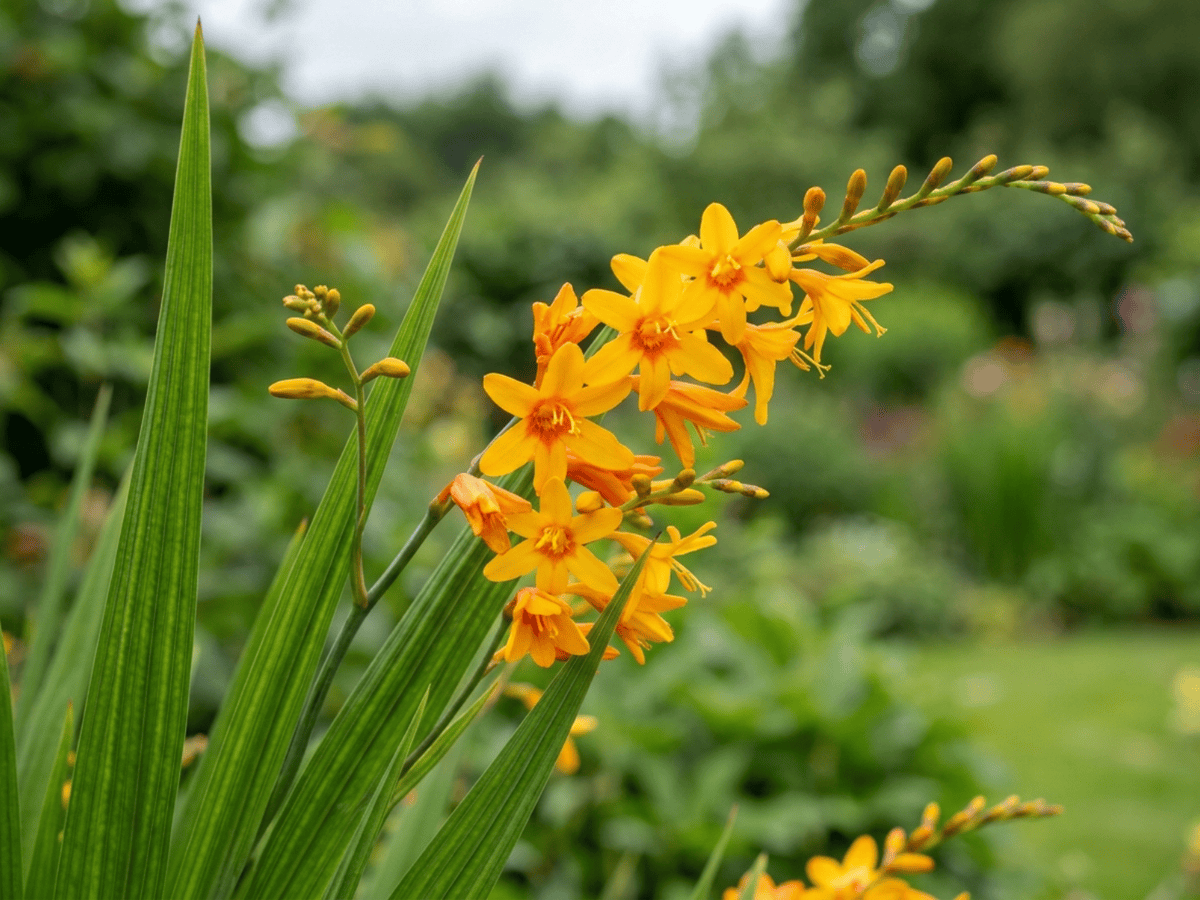
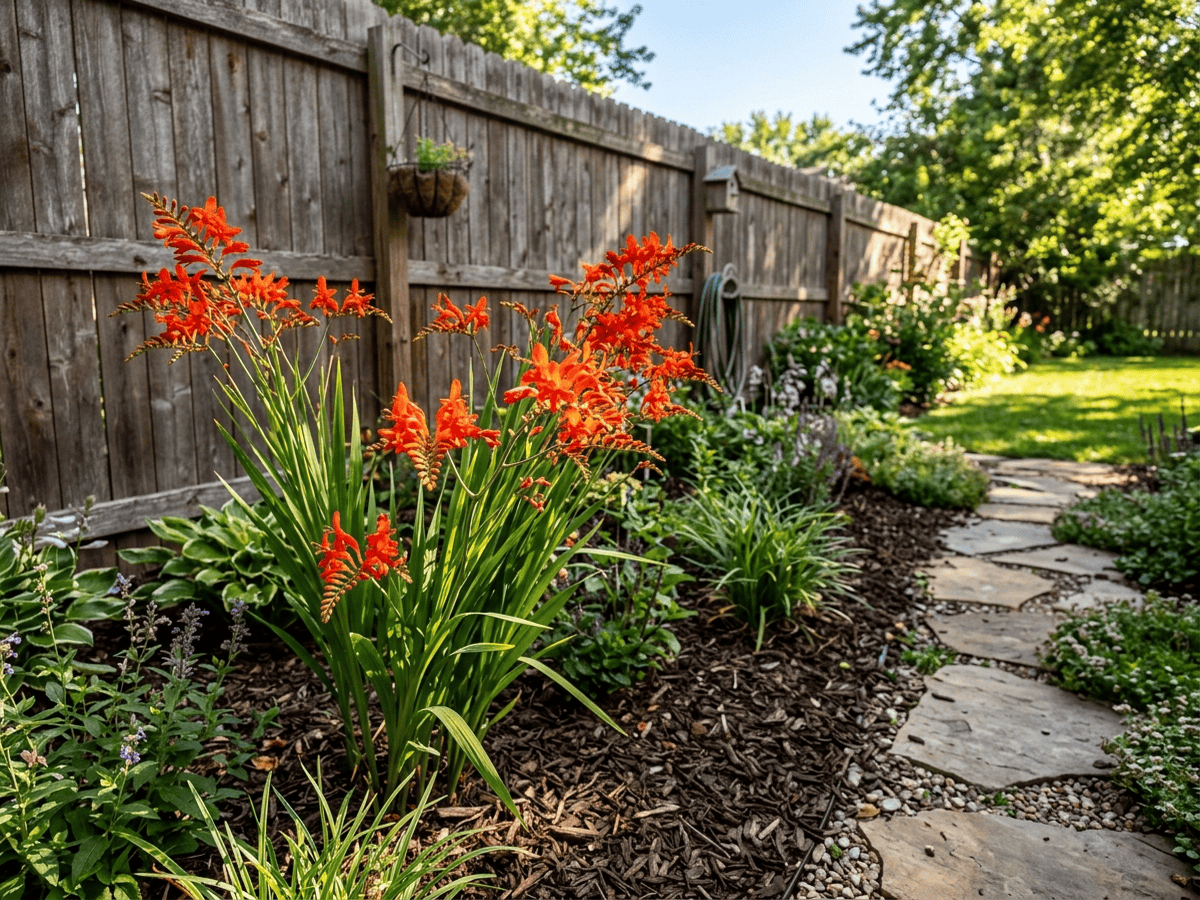
Golden Crocosmia is a South African corm-forming perennial prized for its slender arching sword-shaped leaves and one-sided sprays of brilliant golden-orange tubular flowers on wiry stems. Reaching 24-36 inches tall, it blooms from midsummer into autumn and attracts hummingbirds eagerly in American gardens. Less cold-hardy than its hybrid relatives (USDA 7-10), it thrives along the Pacific coast and in the Southeast.
- Pollinator-friendly
How to care for Falling Stars
Watering
- Springevery 4 days
- Summerevery 3 days
- Fallevery 5 days
- Winterpause watering
Soil · Well-draining
- Main mixLoam + coarse sand 3:175%
- DrainageGravel25%
Sharp drainage matters most — bulbs rot in wet soil while dormant.
FERTILIZER
Balanced Feed 14-14-14
An even feed covers all three needs at once, keeping leaves, roots and blooms moving together with nothing pushed out of balance.
- Nitrogen · Leaves
- Phosphorus · Roots + Blooms
- Potassium · Strength
- Springevery 30 days
- Summerevery 30 days
At a Glance
- NativeAfrica
- Height2–4 ft (0.6–1.2 m)
- Spread1–1.5 ft (0.3–0.5 m)
- Flower colorOrange, Yellow
- Foliage colorGreen
- SoilWell-drained, Loamy
- LocationsYard
Bloom time
BLOOM CYCLE
Peak bloom
Jul–Sep
Golden-orange sprays July to September
Fragrance
LIGHT FRAGRANCE
The flowers have a mild saffron-like when dried scent.
Toxicity
No toxicity has been reported for this plant. Still, it is wise to keep pets from chewing on any houseplant.
Educational information, not medical or veterinary advice. If exposure is suspected, contact a doctor or veterinarian.
DISTRIBUTION


- Native
- Introduced
- Africa
History
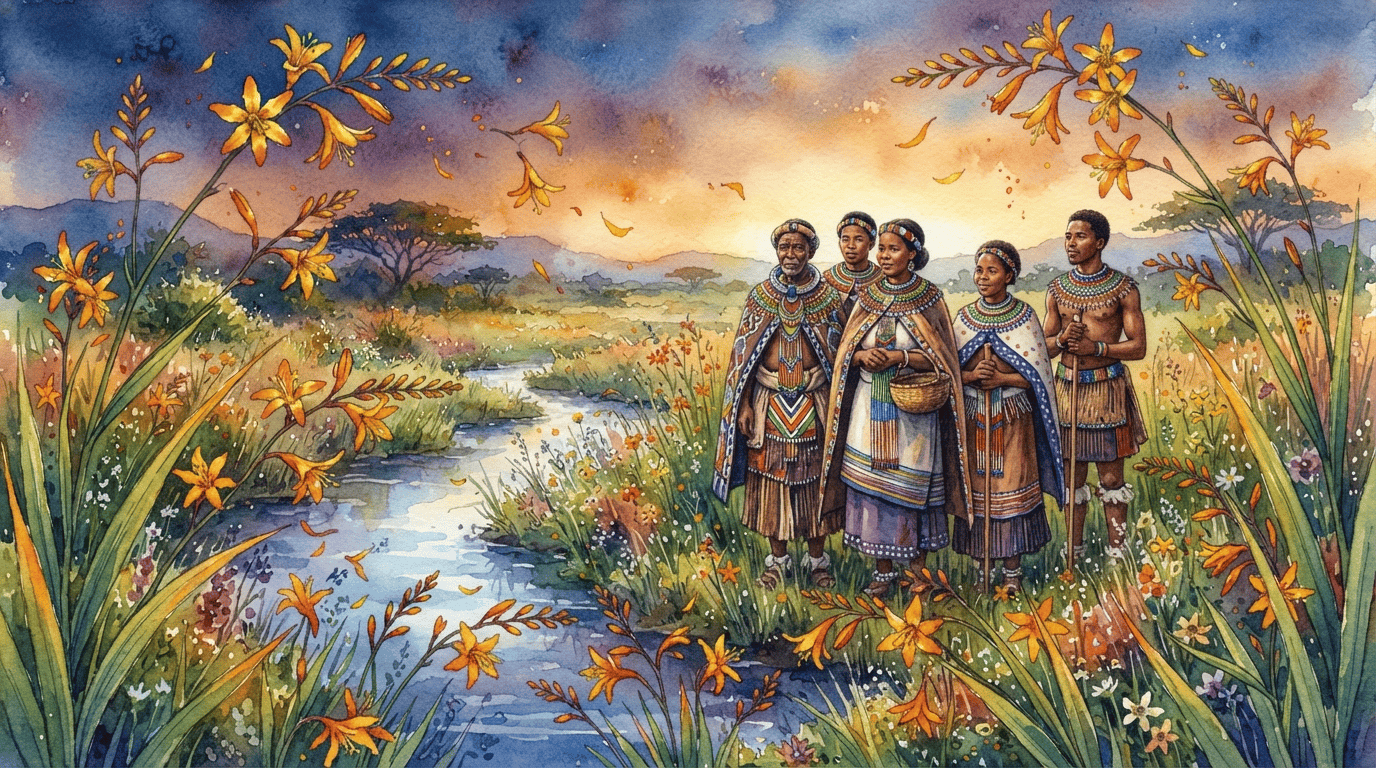
Crocosmia aurea is native to forest margins and damp grasslands across southern and tropical Africa, from South Africa's Eastern Cape northward. German botanist Constantin von Ettingshausen described it in 1841 after it reached European cultivation through colonial expeditions. In 1880 French nurseryman Victor Lemoine crossed C. aurea with C. pottsii to create Crocosmia x crocosmiiflora (common montbretia), which rapidly naturalized across temperate regions worldwide and became invasive in some.
The species's tropical warmth requirement makes it less hardy than its hybrids. British plantsman Alan Bloom at Bressingham Gardens used it in breeding to produce 'Lucifer' in 1966, featuring intense scarlet flowers and superior hardiness. 'Lucifer' remains one of the most recognizable perennials in Western gardens.
Native to South Africa and introduced to Europe in 1846. Parent of the popular hybrid Crocosmia x crocosmiiflora. The specific epithet 'aurea' (golden) refers to the flower color. Used by Zulu people for ritual bathing, and seeds carried by the South African military during the Boer War reputedly introduced it worldwide.
Symbolism & meaning
What It Symbolizes
Falling Stars draws hummingbirds with irresistible attraction, its arching stems hung with fiery golden trumpets. The vitality in its color seems to gather summer's heat and pour it forth in slow-motion sparks. Its meaning is the magnetism of warmth — a flower that calls bright wings to itself the way a fire calls hands at dusk.
- Attraction — irresistible to hummingbirds
- Vitality — fiery golden blooms
Where the Name Comes From
'Crocosmia' from Greek 'krokos' (saffron) and 'osme' (smell), referring to the saffron scent of dried flowers when moistened.
Uses & Fun Facts
- Arching orange spikes prized in late-summer arrangements
- Tubular flowers attract hummingbirds and large bees
Related plants
Plants with similar care
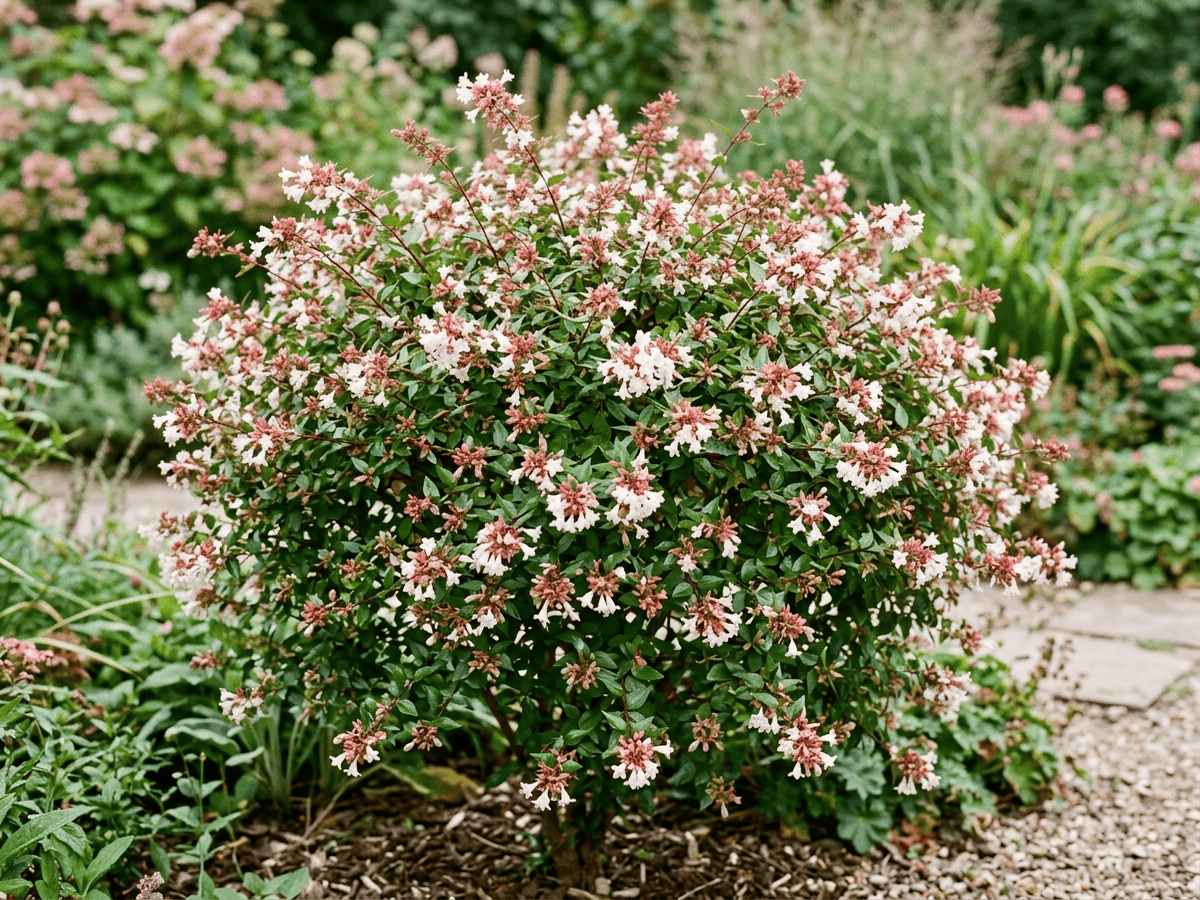 Chinese AbeliaAbelia chinensis
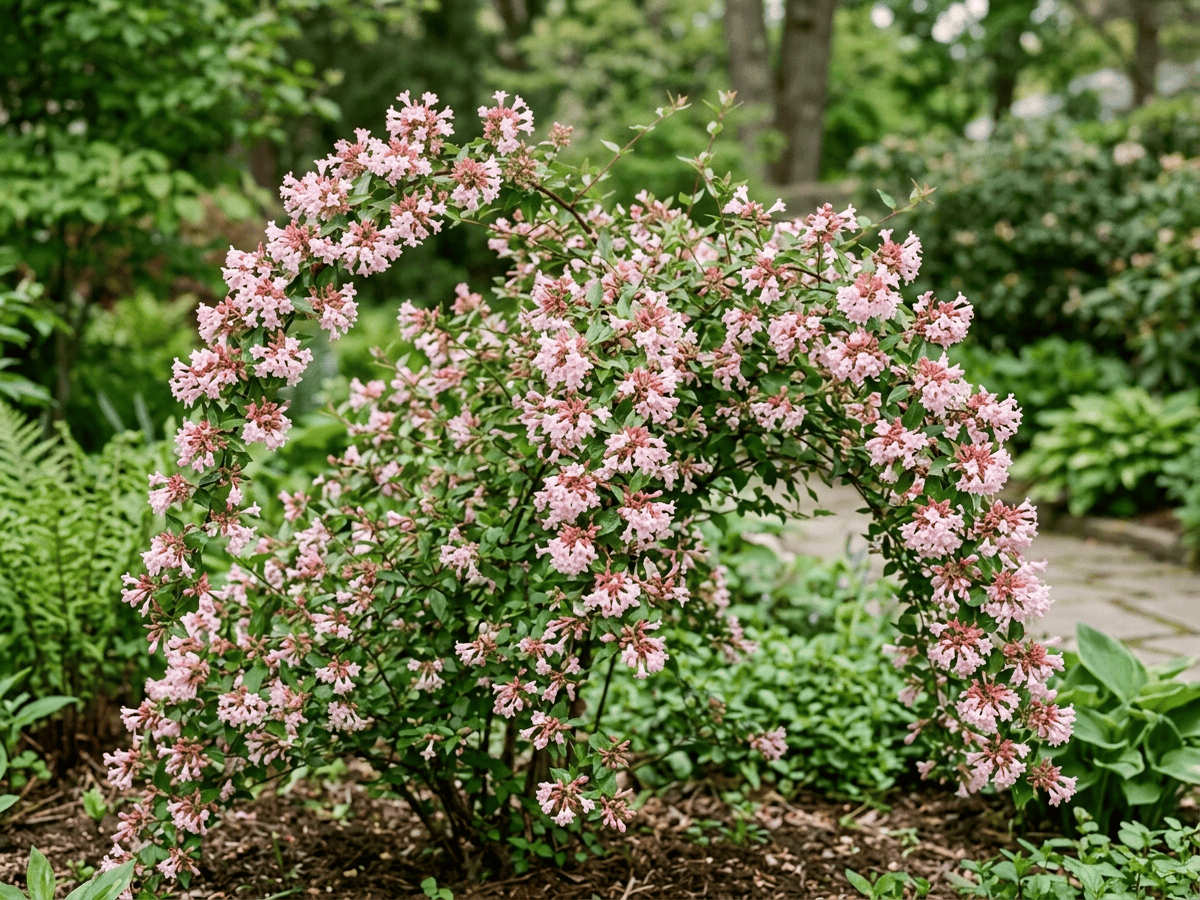 Fragrant AbeliaAbelia mosanensis
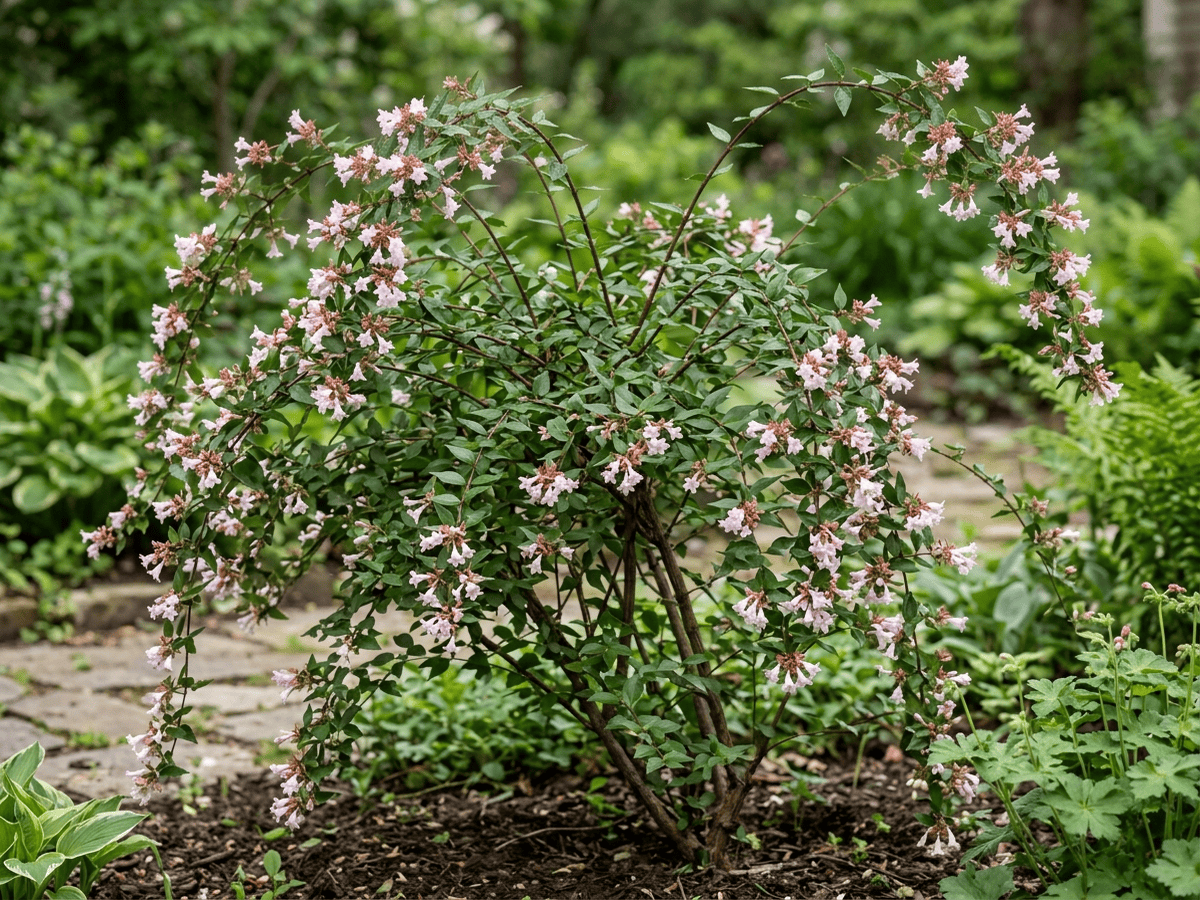 Large-Flowered AbeliaAbelia uniflora
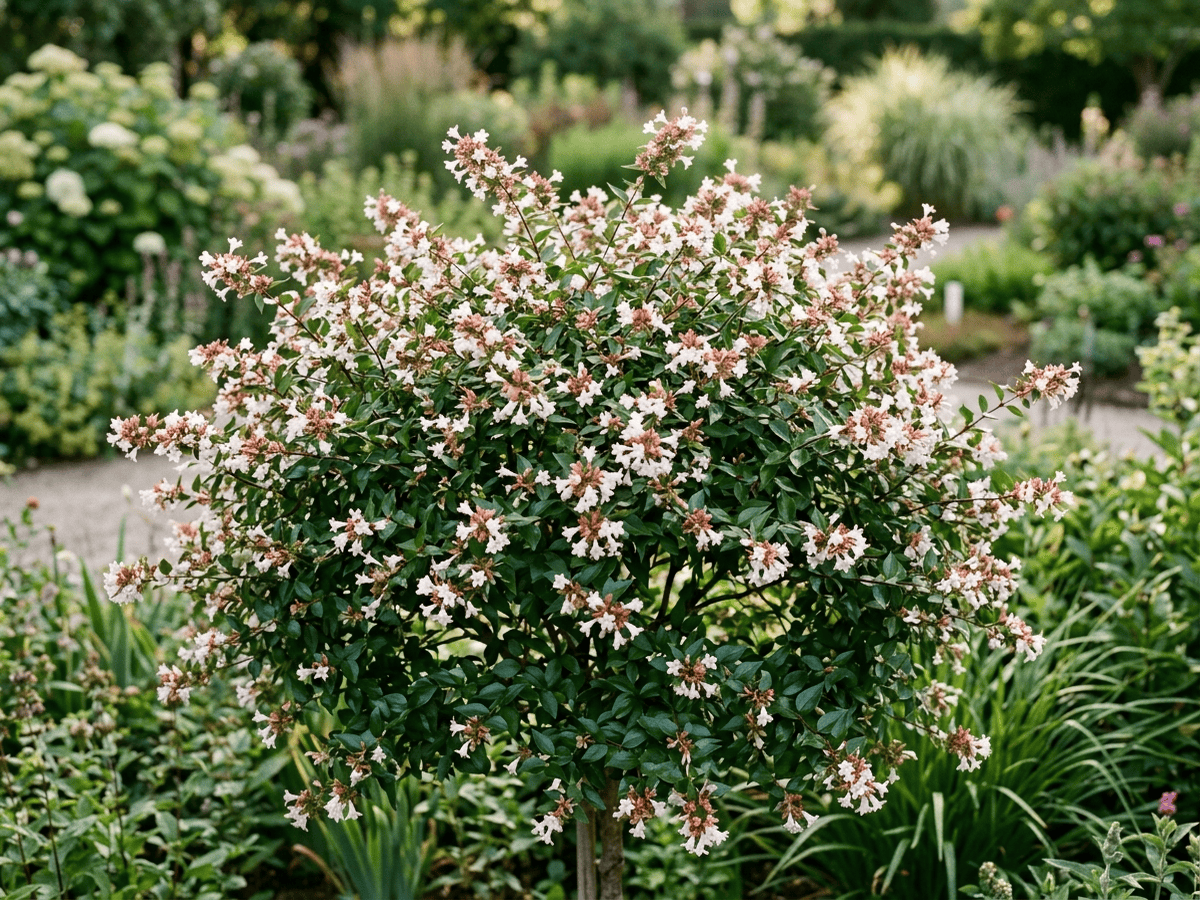 Glossy AbeliaAbelia x grandiflora
Frequently asked questions
How often should I water Falling Stars?
Water about every 4 days during the growing season, and always let excess water drain away.
How much light does Falling Stars need?
Full sun: 6+ hrs direct. Watch the leaves — scorching or stretching means the light needs adjusting.
Is Falling Stars toxic to cats or dogs?
No toxicity has been reported for this plant. Still, it is wise to keep pets from chewing on any houseplant. Educational information, not medical or veterinary advice. If exposure is suspected, contact a doctor or veterinarian.
Is Falling Stars easy to grow?
Yes — it is considered an easy, beginner-friendly plant.
When does Falling Stars bloom?
It typically blooms Jul–Sep in the Northern Hemisphere.
YardMate
Identify any plant in seconds
Snap a photo — YardMate names the plant, diagnoses problems, and reminds you when to water.
Download on the App Store