 YardMate



Swamp Titi
Cyrilla racemiflora
Easy · Beginner friendlyAbout Swamp Titi
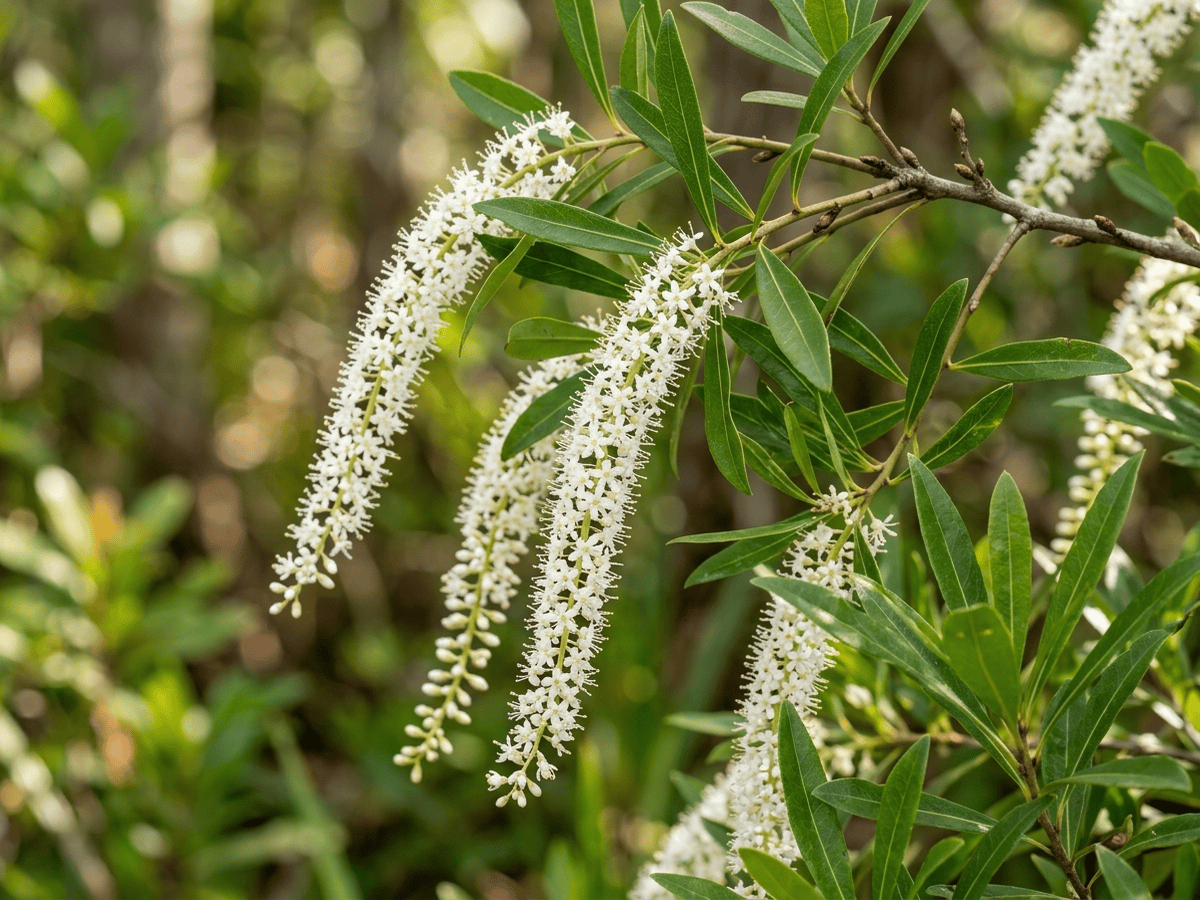
Titi or Swamp Cyrilla is a Southeastern American native semi-evergreen shrub or small tree reaching 10-25 feet, with glossy green leaves that turn vivid red and orange in fall and produces spectacular drooping racemes of small fragrant white flowers in summer. A defining understory plant of Southeastern wetland forests and pocosins. Provides one of the most important nectar sources for Southern beekeepers—'titi honey' is a regional specialty.
- Evergreen
- Fall-color
- Native
How to care for Swamp Titi
Watering
- Springevery 5 days
- Summerevery 4 days
- Fallevery 10 days
- Winterevery 14 days
Soil · Acidic · pH 4.5–6
- Top dressingPine needle mulch10%
- Main mixAcid-lover mix + peat 3:175%
- DrainageGravel15%
Never add lime or wood ash — it cancels out the acidity.
FERTILIZER
- Springevery 120 days
At a Glance
- NativeNorth America, Central America, South America
- Height10–20 ft (3–6.1 m)
- Spread8–15 ft (2.4–4.6 m)
- Flower colorWhite
- Foliage colorGreen, Red, Bronze
- SoilMoisture-retentive, Acidic, Loamy
- LocationsYard
Bloom time
BLOOM CYCLE
Peak bloom
Jun–Aug
Drooping racemes of fragrant white flowers in summer
Fragrance
MODERATE FRAGRANCE
The flowers have a sweet honey-like floral fragrance.
Toxicity
Toxicity unknown
None reported
Unknown
EXPOSURE Unspecified plant material.
EFFECT Toxic effects are not specified.
NOTE Toxicity for humans is not well documented; use caution until verified.
Unknown
EXPOSURE Unspecified plant material.
EFFECT Toxic effects are not specified.
NOTE Toxicity for dogs is not well documented; use caution until verified.
Unknown
EXPOSURE Unspecified plant material.
EFFECT Toxic effects are not specified.
NOTE Toxicity for cats is not well documented; use caution until verified.
Educational information, not medical or veterinary advice. If exposure is suspected, contact a doctor or veterinarian.
DISTRIBUTION


- Native
- North America
- Central America
- South America
History
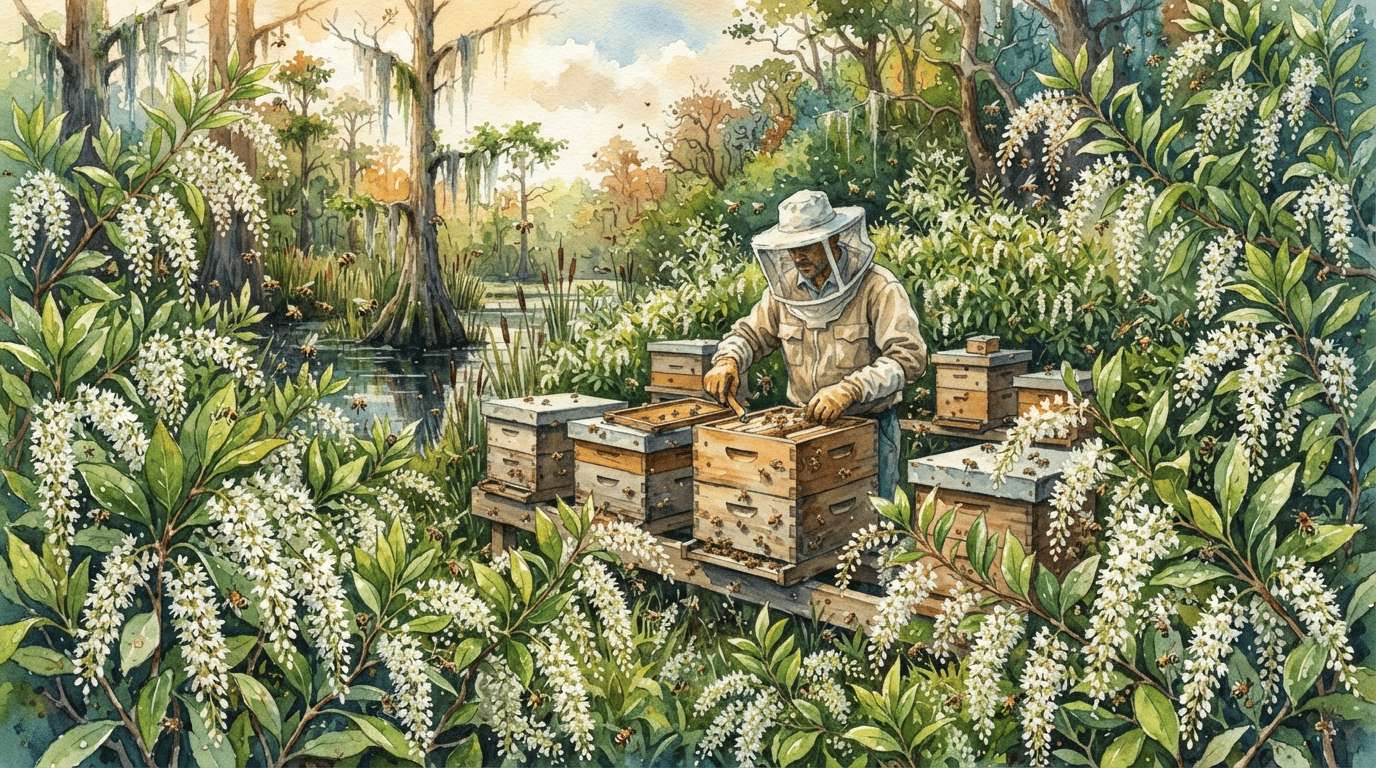
Cyrilla racemiflora, commonly called swamp titi, leatherwood, or ironwood, is a semi-evergreen shrub or small tree native to acidic bogs, streamheads, and pocosins from Virginia through Florida and west to Texas, with disjunct populations in the Caribbean and South America. Italian botanist Domenico Cirillo lent his Latinized name Cyrilla to the genus. The plant produces elongated racemes of small fragrant white flowers in summer that are an important honey source for southeastern beekeepers, yielding a distinctive amber honey.
Leaves turn orange and red in fall on exposed sites. Titi thickets dominate many Florida and Gulf Coast pocosin and bay swamp communities, where their interwoven branches historically made human passage difficult and influenced logging access routes.
Native to the Southeastern coastal plain from Virginia to Texas and into the Caribbean. The summer flowers are one of the most important nectar sources for Southern honey production, yielding the regionally famous 'titi honey'. A foundational species of Southeastern wetland ecosystems.
Symbolism & meaning
What It Symbolizes
Swamp Titi offers sweetness through its long racemes of tiny white flowers, the source of a distinctive regional honey prized across the southeastern coastal plain. As an iconic plant of Southern wetlands, it carries the heritage of pocosins and acid bogs into cultivated landscapes. To plant it is to bring a little of the South's wild edges home.
- Sweetness — source of regional Southern honey
- Heritage — signature flowering shrub of Southern bogs and swamp margins
Where the Name Comes From
The name Swamp Titi points to wetland habitats. 'Cyrilla' honors Italian botanist Domenico Cyrillo (1739-1799); 'racemiflora' refers to the raceme-shaped flower clusters.
Uses & Fun Facts
- Drooping white flower racemes carry a soft honey scent
- Long bloom racemes feed honeybees making prized titi honey
- Wetland shrub providing cover for songbirds and waterfowl
Related plants
Plants with similar care
 Chinese AbeliaAbelia chinensis
 Fragrant AbeliaAbelia mosanensis
 Large-Flowered AbeliaAbelia uniflora
 Glossy AbeliaAbelia x grandiflora
Frequently asked questions
How often should I water Swamp Titi?
In summer, water about every 4 days; in winter, about every 14 days. Adjust for heat, pot size and drainage.
How much light does Swamp Titi need?
Full sun: 6+ hrs direct. Watch the leaves — scorching or stretching means the light needs adjusting.
Is Swamp Titi toxic to cats or dogs?
Pets Unknown (Dogs Unknown · Cats Unknown) Educational information, not medical or veterinary advice. If exposure is suspected, contact a doctor or veterinarian.
Is Swamp Titi easy to grow?
Yes — it is considered an easy, beginner-friendly plant.
When does Swamp Titi bloom?
It typically blooms Jun–Aug in the Northern Hemisphere.
YardMate
Identify any plant in seconds
Snap a photo — YardMate names the plant, diagnoses problems, and reminds you when to water.
Download on the App Store