 YardMate


Noble Dendrobium
Dendrobium nobile
Medium · Some experienceAbout Noble Dendrobium
Dendrobium nobile, the noble dendrobium, is an epiphytic orchid of Himalayan and Southeast Asian highlands, famous for flowering along bare cane-like pseudobulbs after a cool, dry winter rest. Mature canes reach about 30-60 cm and carry clusters of fragrant flowers at the nodes, usually white to lavender with a rich purple throat, though modern hybrids broaden the palette. Its seasonal rhythm is part of the pleasure: withhold warmth and heavy watering in winter, and the sleeping canes can wake in a line of blossoms. In East Asian herbal tradition the dried stems are known as shi hu and have been highly valued for centuries, but in the home it is primarily an orchid of patience, light, and timing.
- Medicinal
- Fragrant
How to care for Noble Dendrobium
Watering
- Springevery 5 days
- Summerevery 3 days
- Fallevery 7 days
- Winterevery 14 days
Soil · Airy & open
- Single layerOrchid bark + charcoal100%
No soil at all — orchid roots need air moving around them.
FERTILIZER
Balanced Feed 14-14-14
An even feed covers all three needs at once, keeping leaves, roots and blooms moving together with nothing pushed out of balance.
- Nitrogen · Leaves
- Phosphorus · Roots + Blooms
- Potassium · Strength
- Springevery 14 days
- Summerevery 14 days
At a Glance
- NativeSouth Asia, East Asia
- Height1–2 ft (0.3–0.6 m)
- Spread0.5–1 ft (0.2–0.3 m)
- Flower colorPink, White, Purple
- Foliage colorGreen
- SoilWell-drained
- LocationsIndoor · Yard
Bloom time
BLOOM CYCLE
Peak bloom
Dec–May
Flowers along mature canes in spring; must have cool dry rest (10–13°C, reduced watering) in winter to bloom
Fragrance
MODERATE FRAGRANCE
Sweet honey-like fragrance, strongest in morning.
Toxicity
No toxicity has been reported for this plant. Still, it is wise to keep pets from chewing on any houseplant.
Educational information, not medical or veterinary advice. If exposure is suspected, contact a doctor or veterinarian.
DISTRIBUTION


- Native
- Introduced
- South Asia
- East Asia
History
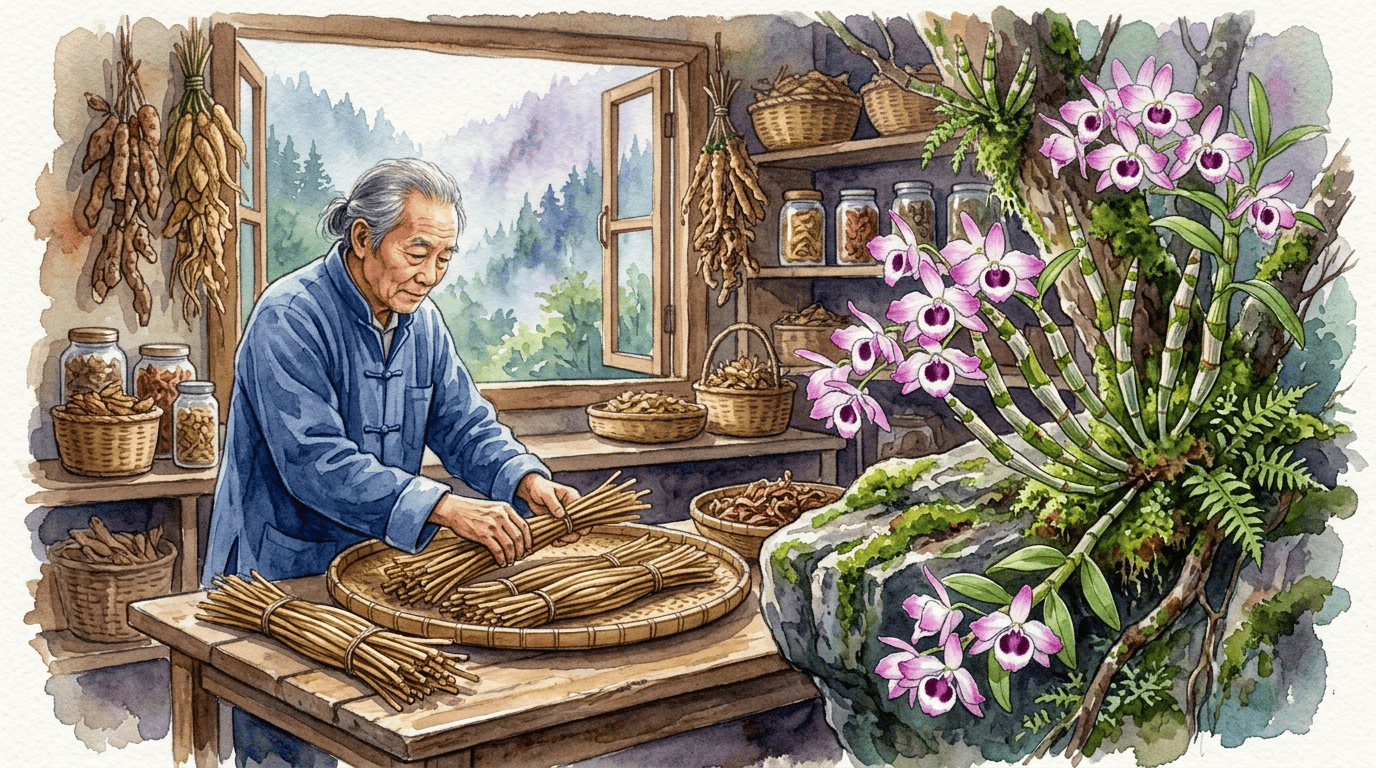
Dendrobium nobile is an epiphytic orchid of Himalayan, southern Chinese, and Southeast Asian montane forests, where wet summers and dry winters shape its growth. It forms upright cane-like pseudobulbs that drop their leaves, then flower directly from the bare canes in late winter with clusters of fragrant pink-and-white blooms marked by a deep purple throat. The dried stems are known in Chinese medicine as shi hu, or stone orchid stem, and have been valued for more than a millennium in tonic formulas.
Heavy wild collection caused serious declines in parts of its range, leading to cultivation industries in Yunnan, Guizhou, and other regions. Western growers received the species in the 1830s, and it became the parent of Nobile-type dendrobium hybrids, among the most beloved cool-intermediate orchids for windowsill culture.
Its story joins medicine, conservation pressure, and the winter drama of flowers opening on leafless canes.
Symbolism & meaning
What It Symbolizes
Noble Dendrobium evokes generosity through abundance. Flowers crowd the nodes of bare cane-like stems after a cool rest, transforming what looked dormant into a line of perfume and color. Its East Asian cultural history adds depth, but the orchid's clearest message is patience rewarded all at once.
- Generosity — its abundant flowers along every node represent bountiful giving
- Vitality — prized in medicine for restoring health and sustaining life force
Where the Name Comes From
'Dendrobium' from Greek 'dendron' (tree) and 'bios' (life), meaning 'living on trees' — describing its epiphytic habit. 'Nobile' is Latin for 'noble' or 'noteworthy.'
Uses & Fun Facts
- Stems used in traditional Chinese medicine as Shi Hu tonic
- Honey-scented purple-tipped blooms perfume cool indoor spaces
- Long-lasting orchid sprays prized for corsages and arrangements
- Cane-type orchid grown in bark-filled pots on bright windowsills
Related plants
Plants with similar care
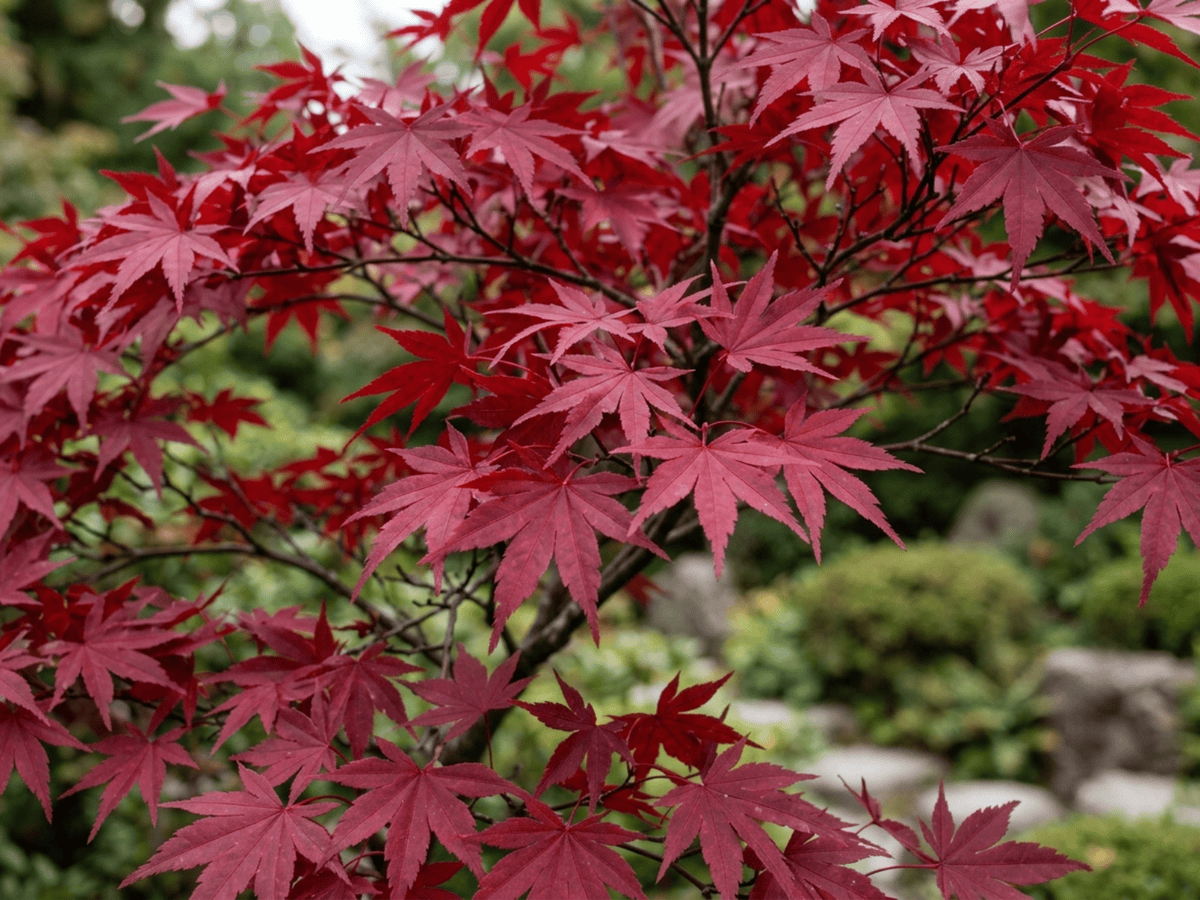 Japanese MapleAcer palmatum
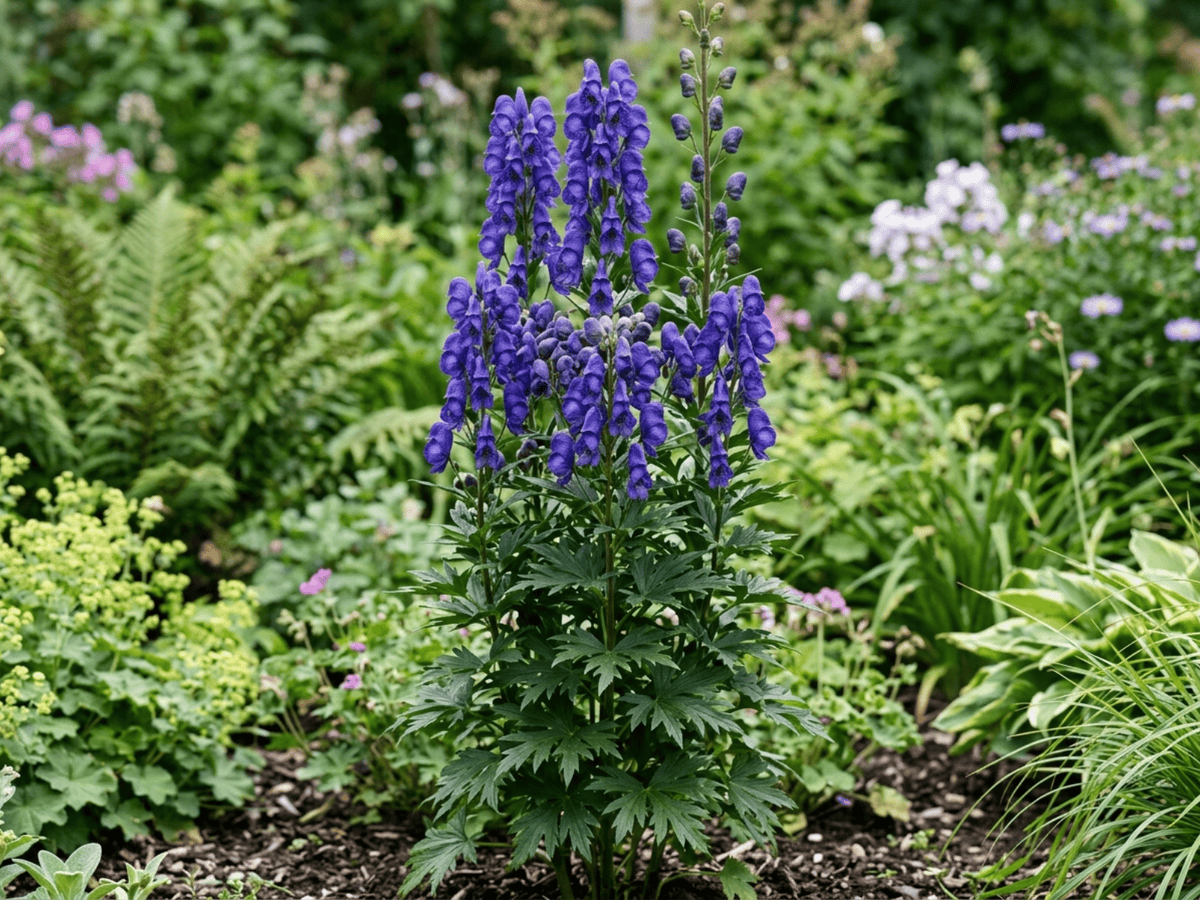 Azure MonkshoodAconitum carmichaelii
 Florida HobblebushAgarista populifolia
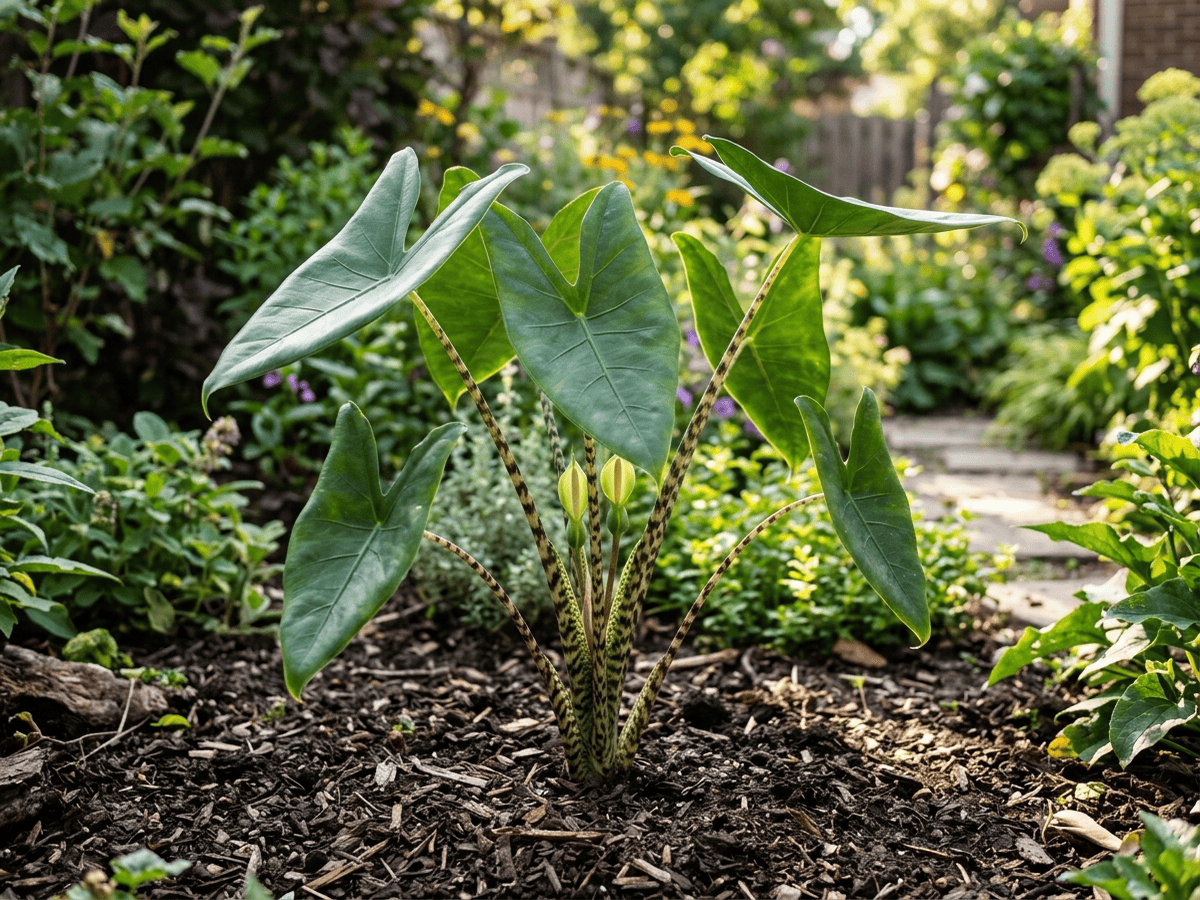 Alocasia zebrinaAlocasia zebrina
Frequently asked questions
How often should I water Noble Dendrobium?
In summer, water about every 3 days; in winter, about every 14 days. Adjust for heat, pot size and drainage.
How much light does Noble Dendrobium need?
Part shade: 2–4 hrs direct. Watch the leaves — scorching or stretching means the light needs adjusting.
Is Noble Dendrobium toxic to cats or dogs?
No toxicity has been reported for this plant. Still, it is wise to keep pets from chewing on any houseplant. Educational information, not medical or veterinary advice. If exposure is suspected, contact a doctor or veterinarian.
Is Noble Dendrobium easy to grow?
It is moderately demanding: a good choice once you have a little experience.
Can Noble Dendrobium be grown indoors?
Yes, it adapts well to indoor growing given the right light.
When does Noble Dendrobium bloom?
It typically blooms Dec–May in the Northern Hemisphere.
YardMate
Identify any plant in seconds
Snap a photo — YardMate names the plant, diagnoses problems, and reminds you when to water.
Download on the App Store