 YardMate
Panicled Ticktrefoil
Desmodium paniculatum
Hard · Experienced growersAbout Panicled Ticktrefoil
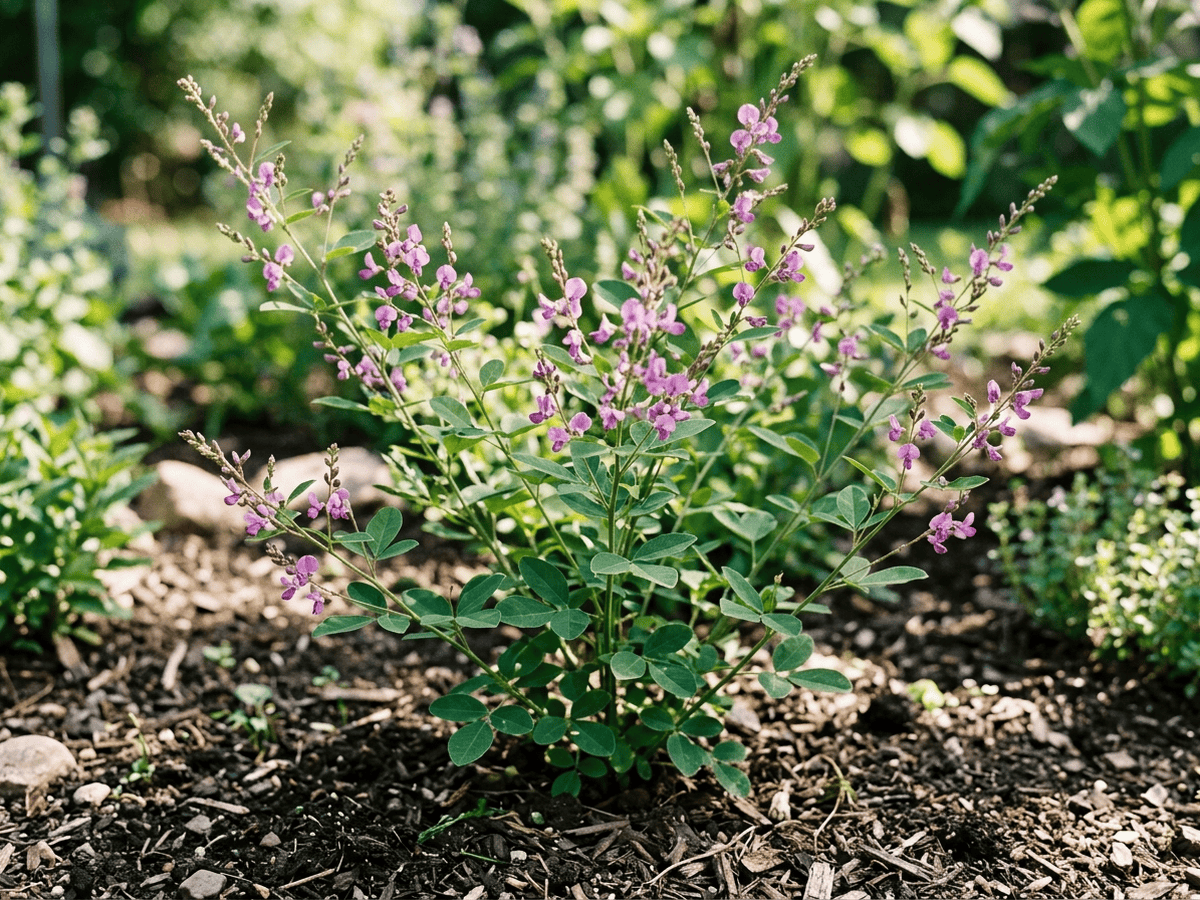
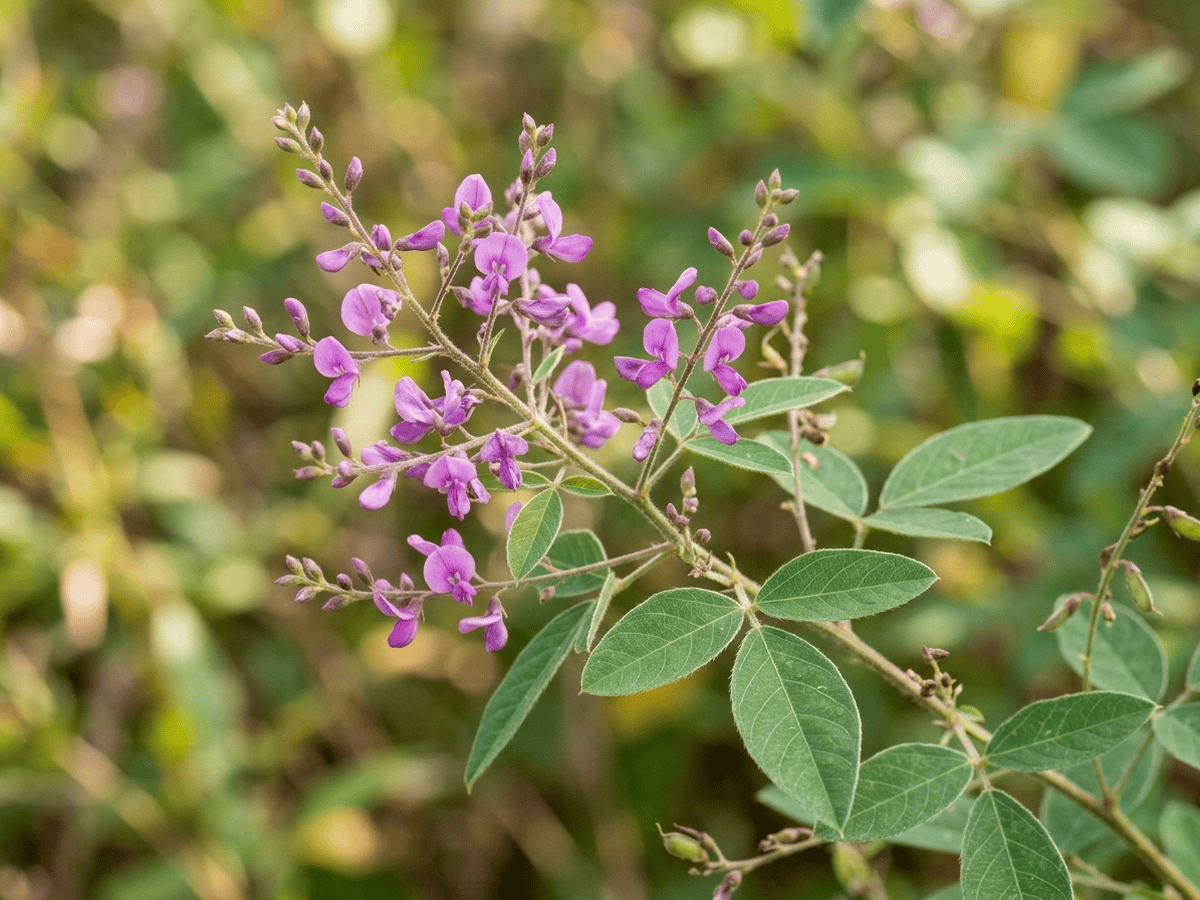
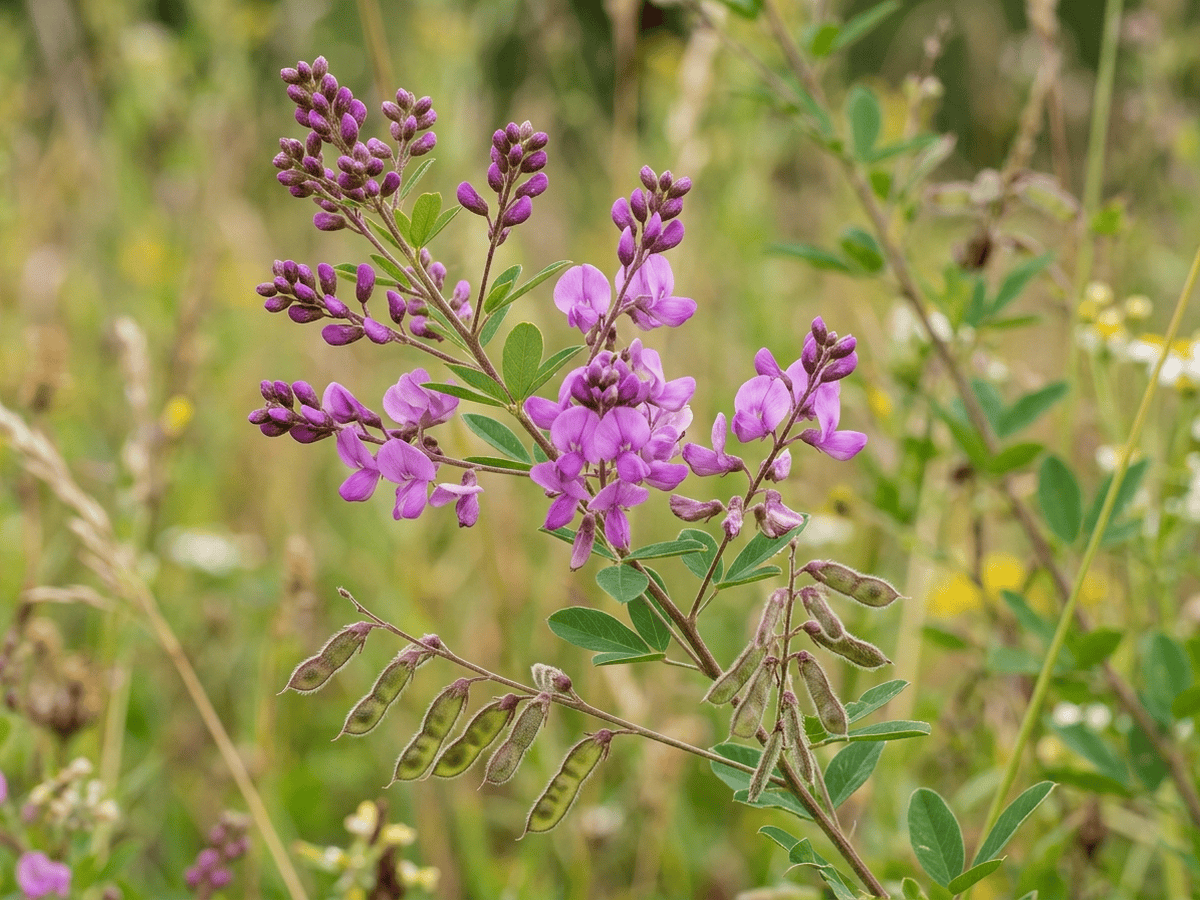
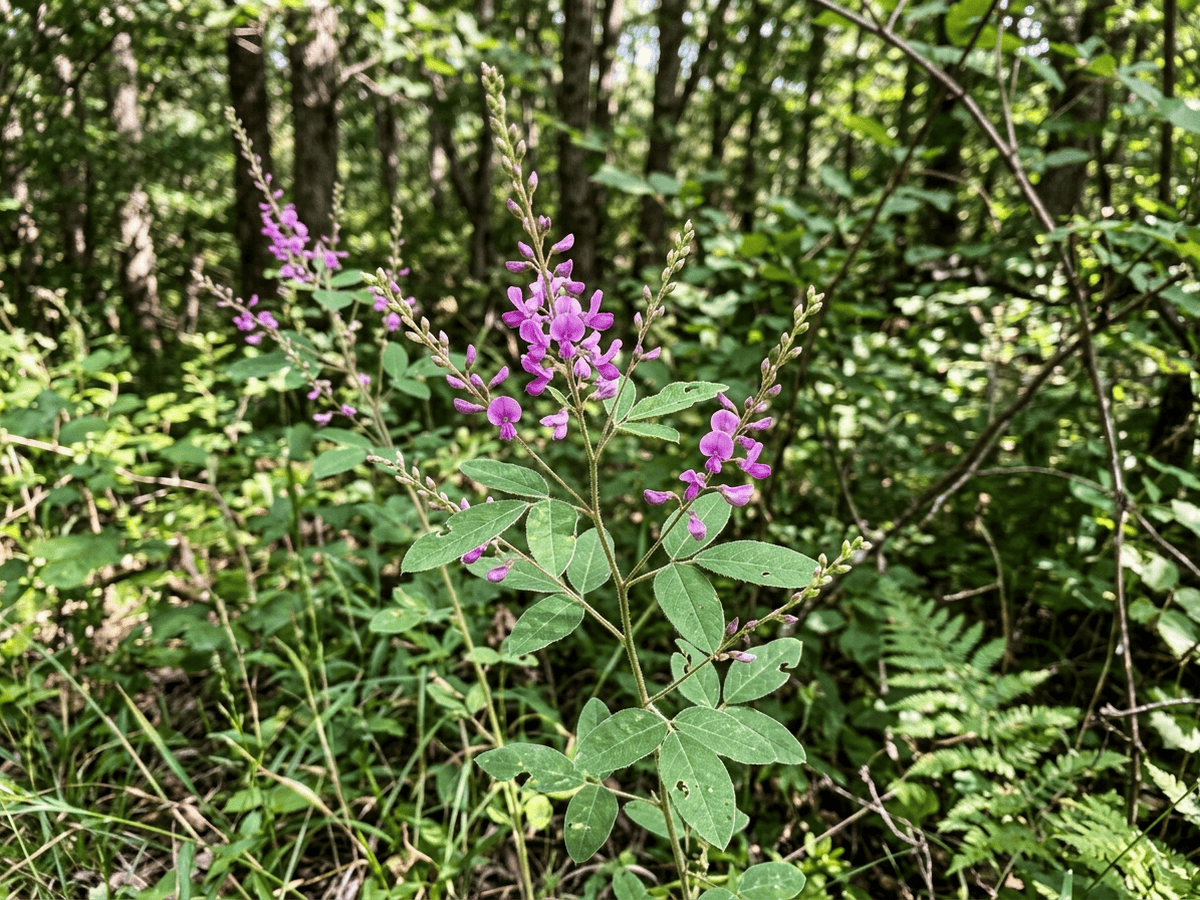
Desmodium paniculatum, Panicled Ticktrefoil, is a slender native perennial wildflower of eastern North America's open woodlands and forest edges. Growing 1–3 feet tall, it bears loose branching panicles of small pea-like flowers in purple-pink from June through August, followed by distinctive jointed seed pods that cling by hooked hairs to fur and clothing—the hitchhiking mechanism that spreads the species across landscapes. A nitrogen-fixer and specialist bee host, it thrives in well-drained soils in part shade to full sun with minimal care.
- Deciduous
- Fast-growing
- Pollinator-friendly
- Shade-tolerant
How to care for Panicled Ticktrefoil
Watering
- Springevery 10 days
- Summerevery 7 days
- Fallevery 15 days
- Winterpause watering
Soil · Well-draining
- Top dressingPine bark mulch10%
- Main mixPotting soil + perlite 2:170%
- DrainageLECA / gravel20%
Never skip the drainage layer — standing water is the top cause of root rot.
FERTILIZER
- Springevery 30 days
- Summerevery 30 days
- Fallevery 30 days
At a Glance
- NativeNorth America
- Height1–3 ft (0.3–0.9 m)
- Spread2–3 ft (0.6–0.9 m)
- Flower colorPurple, Pink
- Foliage colorGreen
- SoilWell-drained, Moist, Loamy
- LocationsYard · Balcony
Bloom time
BLOOM CYCLE
Peak bloom
Jun–Aug
Flowers appear in loose clusters predominantly in summer.
Toxicity
No toxicity has been reported for this plant. Still, it is wise to keep pets from chewing on any houseplant.
Educational information, not medical or veterinary advice. If exposure is suspected, contact a doctor or veterinarian.
DISTRIBUTION


- Native
- North America
History

Desmodium paniculatum is one of roughly 20 Desmodium species native to eastern North America, ranging from southern New England west to the Great Plains and south to Florida and Texas. The genus is enormous globally—over 400 species—but in North America it fills a distinctive niche as a native legume of open woods, forest edges, and old fields on well-drained soils.
The common name 'ticktrefoil' reflects the plant's most distinctive feature: its seed pods break apart into small flat segments covered in hooked hairs that attach to fur and clothing with remarkable tenacity. This mechanism makes the plant an accidental hitchhiker—seeds travel attached to deer, foxes, dogs, and the trouser legs of anyone walking through late-summer fields. The 'panicled' part of the name distinguishes it from other ticktrefoils by its branching, open flower clusters.
Ecologically, D. paniculatum fixes nitrogen through root symbiosis, improving soils in the open woodland habitats it colonizes. It serves as a larval host for several specialist native bees—particularly long-horned bees in the genus Melissodes and Peponapis—as well as butterflies including Eastern Tailed-Blue and several skipper species that use Desmodium specifically as larval food. Nectar-rich flowers attract a wide range of generalist pollinators throughout summer.
In the native plant movement, ticktrefoils have gained recognition as underused wildflowers providing layered ecological value—nitrogen fixation, specialist bee support, butterfly hosting—while requiring minimal care in naturalistic plantings and meadow gardens.
Symbolism & meaning
What It Symbolizes
Panicled Ticktrefoil doesn't ask permission to go somewhere new. Its seeds latch onto whatever passes—deer flank, dog coat, a naturalist's field trousers—and ride until they find ground. The plant is easy to overlook, easy to pull off your clothes and discard. But it fixed the nitrogen, hosted the bee, fed the caterpillar, and sent its seeds on with the next creature who walked through.
- persistence — The hooked seed pods cling to everything that passes—fur, feathers, fabric—traveling far from the parent plant before finally letting go.
- quiet utility — Unremarkable at a distance, but fixing nitrogen in the soil, hosting specialist bees, and feeding butterfly larvae all at once—the kind of plant that holds an ecosystem together without being noticed.
Where the Name Comes From
Desmodium derives from Greek desmos (bond, chain), referring to the jointed chain-like seed pods that break into adhesive segments. The species epithet paniculatum is Latin for 'panicled,' describing the plant's loose branching flower clusters.
Uses & Fun Facts
- Larval host for specialist long-horned bees (Melissodes) and several butterfly species including Eastern Tailed-Blue; nectar source for generalist pollinators throughout summer
- Jointed seed pods disperse by clinging to fur and clothing, supporting wildlife movement; nitrogen-fixing roots improve soil for neighboring plants
Related plants
Plants with similar care
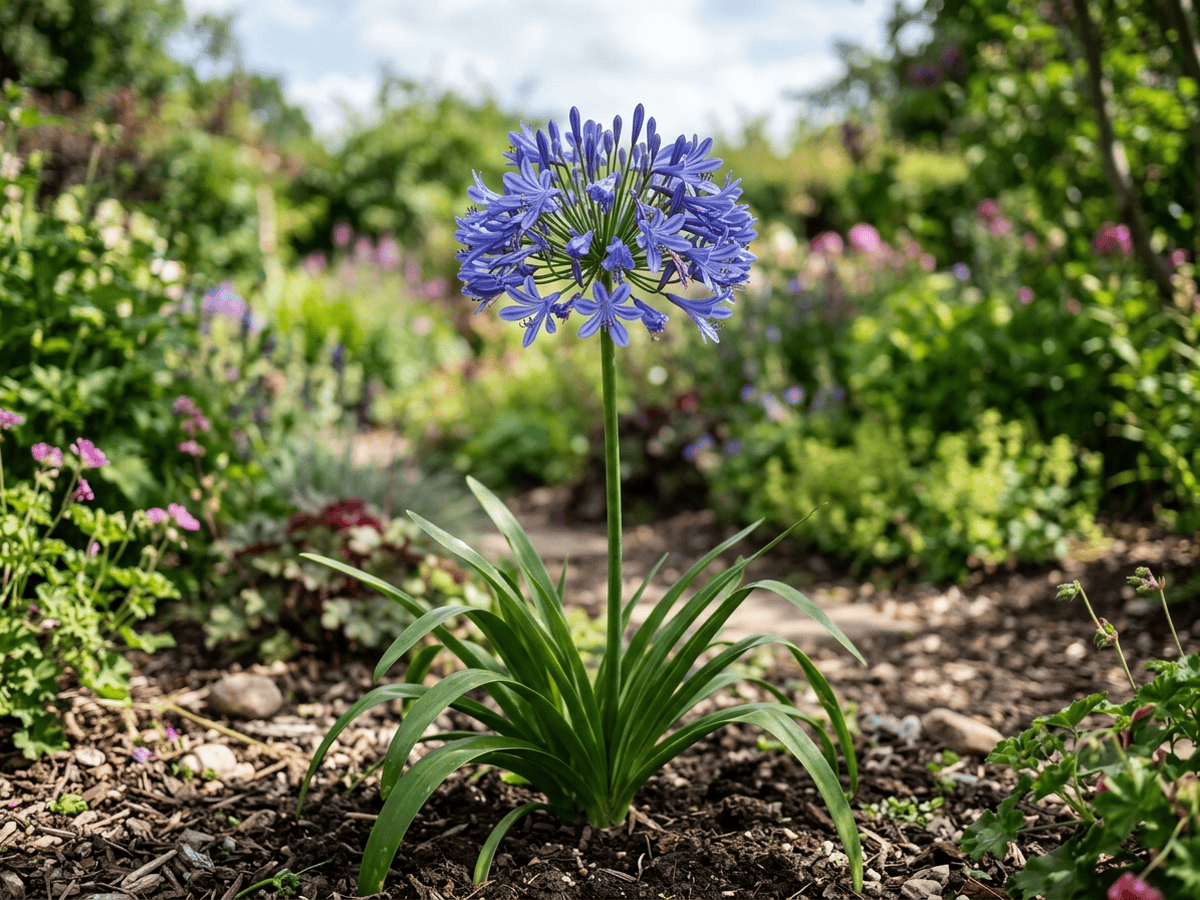 African LilyAgapanthus africanus
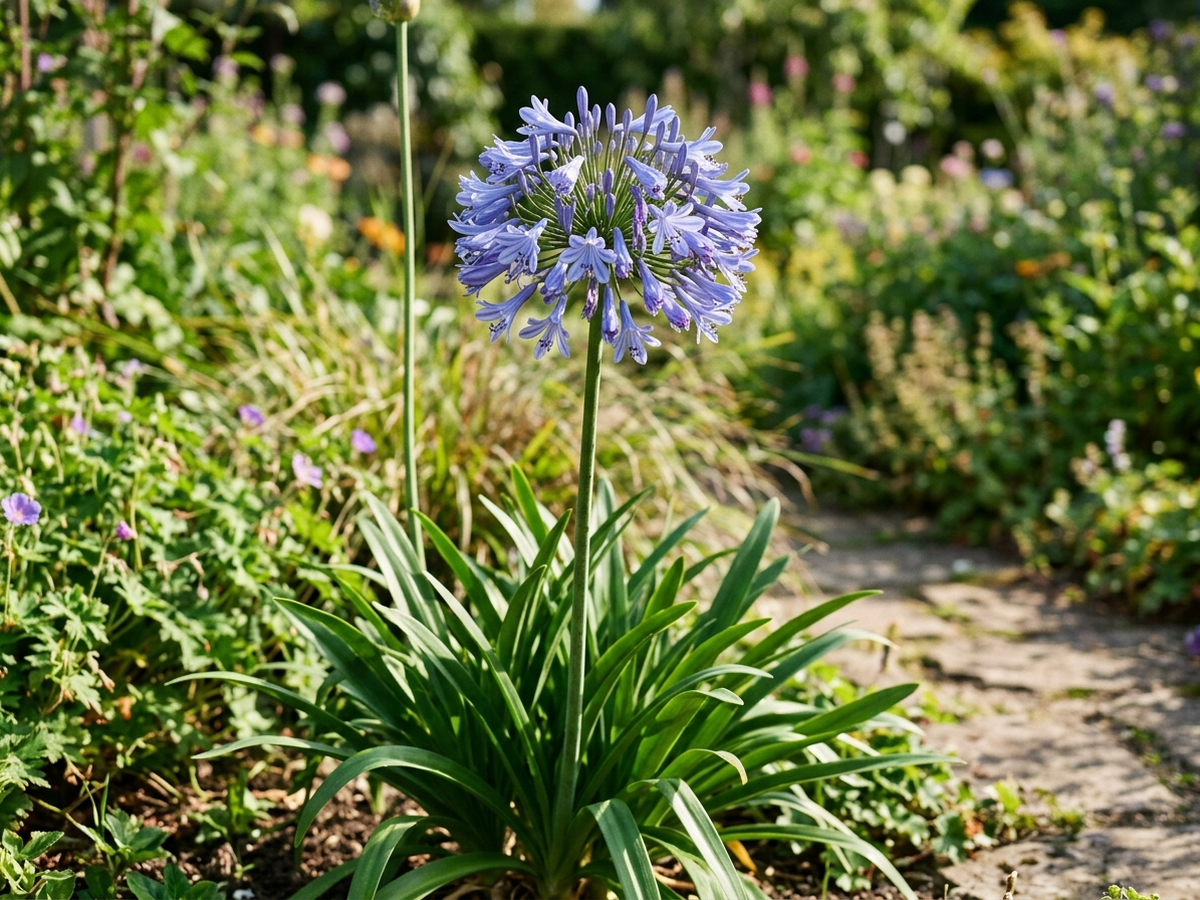 Bell AgapanthusAgapanthus campanulatus
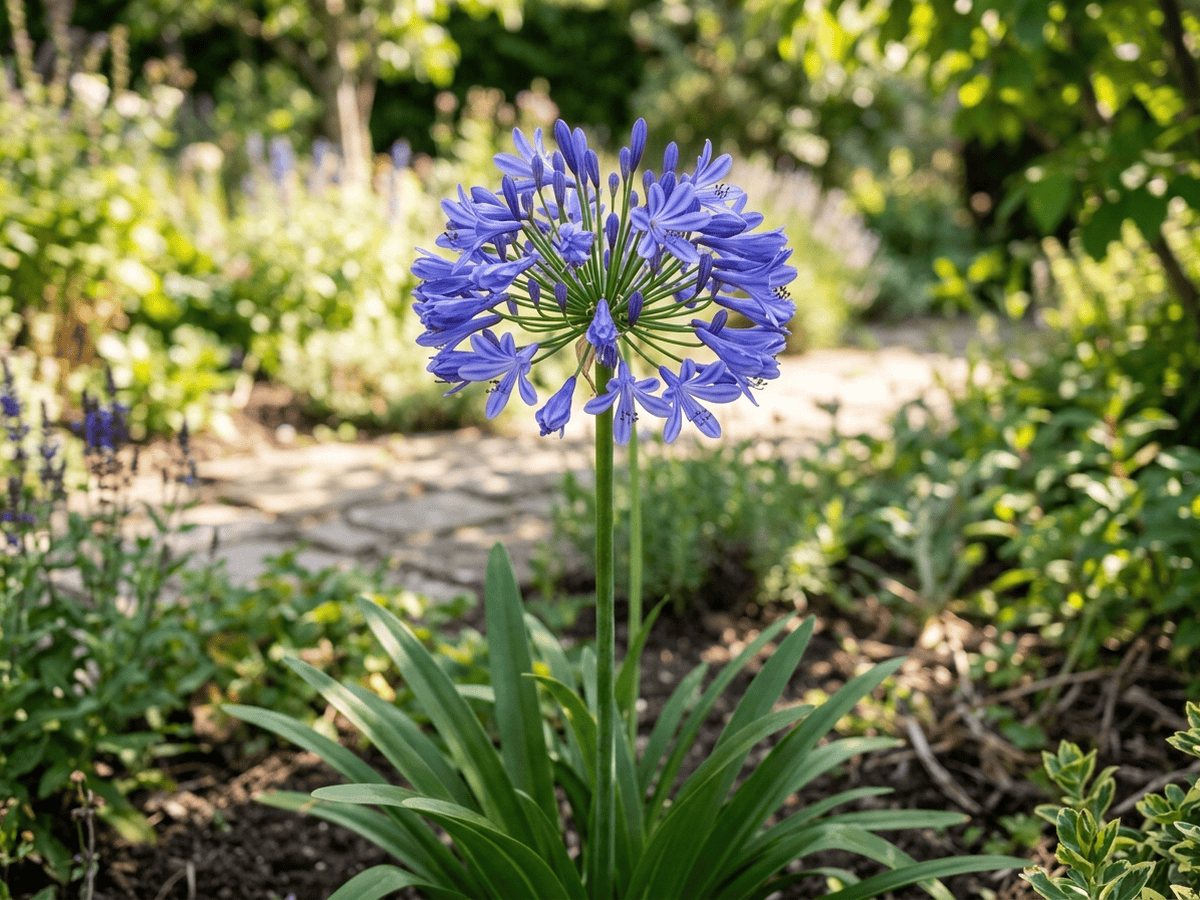 Common AgapanthusAgapanthus praecox
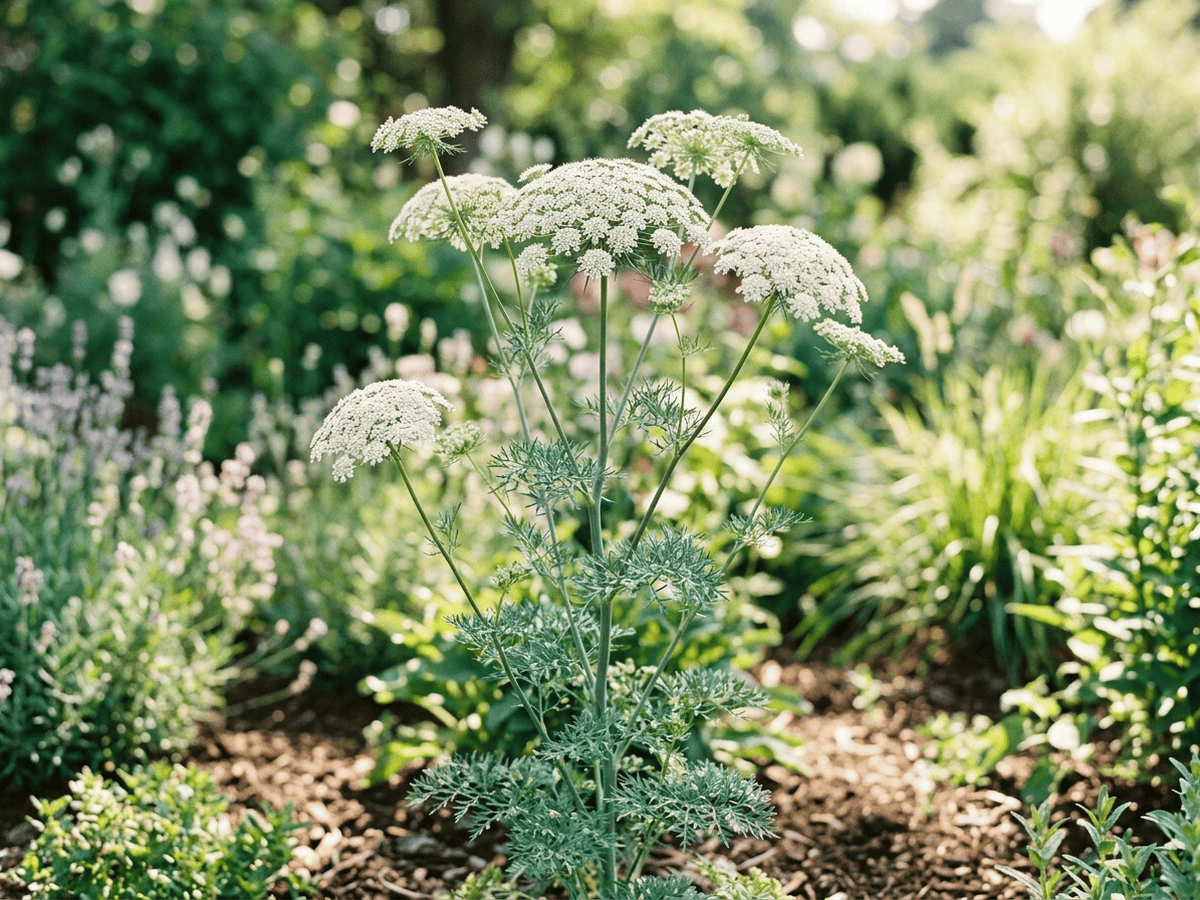 False Queen Anne's LaceAmmi majus glaucifolium
Frequently asked questions
How often should I water Panicled Ticktrefoil?
Water about every 10 days during the growing season, and always let excess water drain away.
How much light does Panicled Ticktrefoil need?
Part sun: 4–6 hrs direct. Watch the leaves — scorching or stretching means the light needs adjusting.
Is Panicled Ticktrefoil toxic to cats or dogs?
No toxicity has been reported for this plant. Still, it is wise to keep pets from chewing on any houseplant. Educational information, not medical or veterinary advice. If exposure is suspected, contact a doctor or veterinarian.
Is Panicled Ticktrefoil easy to grow?
It is considered challenging and rewards experienced growers.
When does Panicled Ticktrefoil bloom?
It typically blooms Jun–Aug in the Northern Hemisphere.
YardMate
Identify any plant in seconds
Snap a photo — YardMate names the plant, diagnoses problems, and reminds you when to water.
Download on the App Store