 YardMate


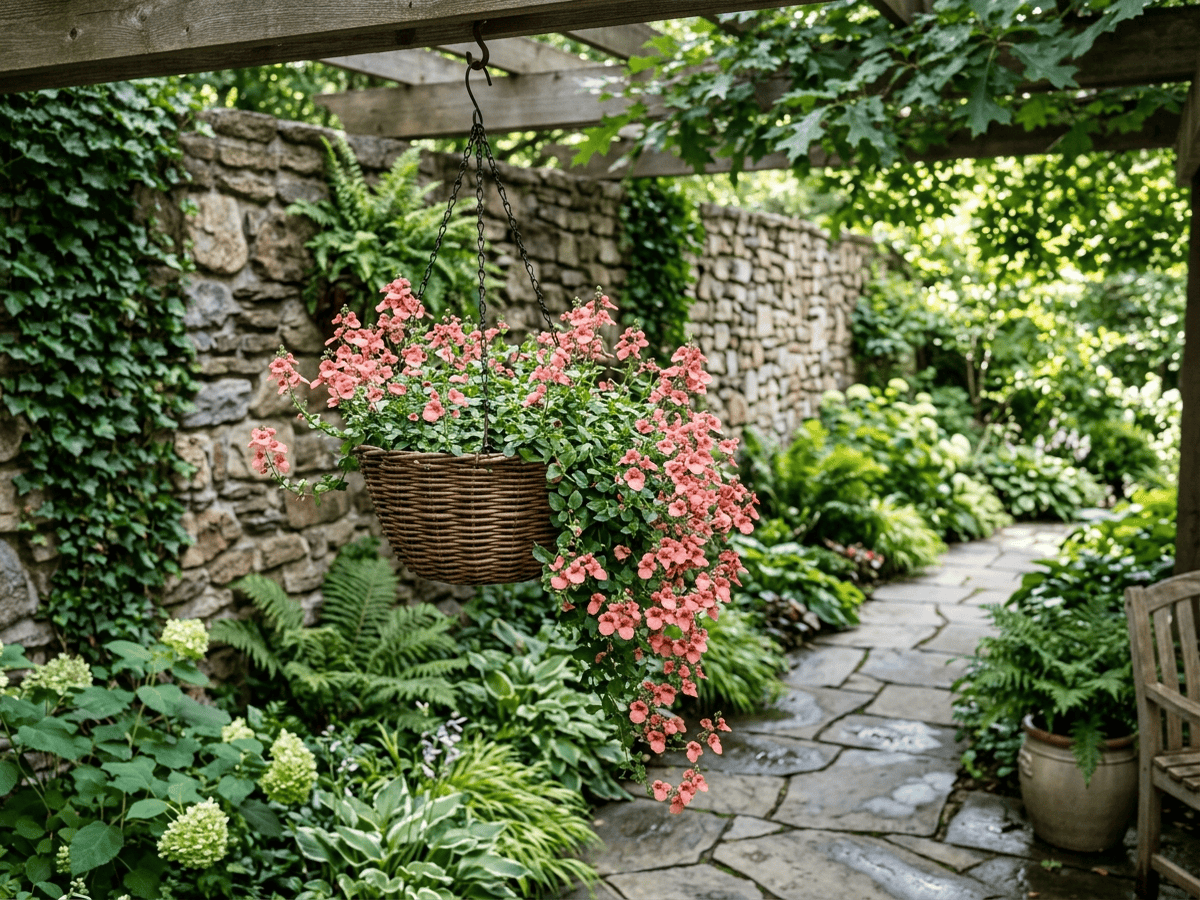
Twinspur
Diascia barberae
Medium · Some experienceAbout Twinspur
Twinspur is a South African tender perennial grown as a cool-season annual in American containers, producing dense spikes of 1-inch two-spurred flowers in coral, pink, salmon, and apricot. Growing 6 to 12 inches tall with trailing stems, it blooms heaviest in spring and fall when temperatures are cool, pausing in summer heat. A signature spring container plant at American garden centers since the 1990s.
- Trailing
- Container-friendly
- Long-blooming
- Pollinator-friendly
How to care for Twinspur
Watering
- Springevery 3 days
- Summerevery 3 days
- Fallevery 5 days
- Winterevery 7 days
Soil · Well-draining
- Top dressingPine bark mulch10%
- Main mixPotting soil + perlite 2:170%
- DrainageLECA / gravel20%
Never skip the drainage layer — standing water is the top cause of root rot.
FERTILIZER
Balanced Feed 14-14-14
An even feed covers all three needs at once, keeping leaves, roots and blooms moving together with nothing pushed out of balance.
- Nitrogen · Leaves
- Phosphorus · Roots + Blooms
- Potassium · Strength
- Springevery 14 days
- Summerevery 21 days
- Fallevery 21 days
At a Glance
- NativeAfrica
- Height0.5–1 ft (0.2–0.3 m)
- Spread1–1.5 ft (0.3–0.5 m)
- Flower colorPink, Coral, Orange, White
- Foliage colorGreen
- SoilLoamy, Well-drained
- LocationsBalcony · Yard
Bloom time
BLOOM CYCLE
Peak bloom
Mar, Apr, May, Sep, Oct, Nov
Twin-spurred flowers heavy in spring and fall
Toxicity
Toxicity unknown
None reported
Unknown
EXPOSURE Unspecified plant material.
EFFECT Toxic effects are not specified.
NOTE Toxicity for humans is not well documented; use caution until verified.
Unknown
EXPOSURE Unspecified plant material.
EFFECT Toxic effects are not specified.
NOTE Toxicity for dogs is not well documented; use caution until verified.
Unknown
EXPOSURE Unspecified plant material.
EFFECT Toxic effects are not specified.
NOTE Toxicity for cats is not well documented; use caution until verified.
Educational information, not medical or veterinary advice. If exposure is suspected, contact a doctor or veterinarian.
DISTRIBUTION


- Native
- Africa
History

Diascia barberae, commonly called twinspur or Barber's twinspur, is a low-growing tender perennial native to moist cliffs and stream banks of KwaZulu-Natal, South Africa. English botanist Joseph Dalton Hooker described the species in 1870, honoring Mary Elizabeth Barber, an important 19th-century Cape botanist and collector. Each two-lipped pink to coral flower bears a pair of small spurs at the back that secrete oil, harvested exclusively by specialized African Rediviva bees whose females have unusually elongated forelegs to reach the oils.
English cottage gardener Hector Harrison and South African breeders including Hans Verboom developed the first hardy compact twinspurs in the 1980s, and today Diascia cultivars from Proven Winners, Ball, and Syngenta, such as the Flirtation, Genta, Darla, and Wink series, dominate spring and fall container horticulture worldwide. Native to South Africa's Drakensberg Mountains, introduced to British horticulture in the late 1800s and to American gardens in the 1990s.
Proven Winners' Flying Colors series opened the modern era of heat-tolerant Diascia hybrids beloved for their coral spring color.
Symbolism & meaning
What It Symbolizes
Twinspur can symbolize spring coral, its distinctive soft pink flowers bringing a particular shade unmatched in the early season garden. Its name comes from the paired spurs at the back of each bloom, a paired grace that gives it flowers a delicate, almost insectine architecture. It is often read as a flower of doubled gestures, where small details create a charm larger than its modest scale suggests.
- Spring coral — distinctive coral-pink spring color
- Paired grace — twin spurs give flowers unique form
Where the Name Comes From
'Diascia' from Greek 'di-askos' meaning two sacs, for the paired spurs at the back of each flower; 'barberae' honors Mary Barber (1818-1899), South African naturalist.
Uses & Fun Facts
- Coral spurred flowers cascade from cool-season hanging baskets
- Trailing bedding plant for spring and fall containers
- Long bloom feeds bees during cool shoulder seasons
Related plants
Plants with similar care
 Japanese MapleAcer palmatum
 Azure MonkshoodAconitum carmichaelii
 Florida HobblebushAgarista populifolia
 Shell GingerAlpinia zerumbet
Frequently asked questions
How often should I water Twinspur?
In summer, water about every 3 days; in winter, about every 7 days. Adjust for heat, pot size and drainage.
How much light does Twinspur need?
Part shade: 2–4 hrs direct. Watch the leaves — scorching or stretching means the light needs adjusting.
Is Twinspur toxic to cats or dogs?
Pets Unknown (Dogs Unknown · Cats Unknown) Educational information, not medical or veterinary advice. If exposure is suspected, contact a doctor or veterinarian.
Is Twinspur easy to grow?
It is moderately demanding: a good choice once you have a little experience.
When does Twinspur bloom?
It typically blooms Mar, Apr, May, Sep, Oct, Nov in the Northern Hemisphere.
YardMate
Identify any plant in seconds
Snap a photo — YardMate names the plant, diagnoses problems, and reminds you when to water.
Download on the App Store