 YardMate



Man Fern
Dicksonia antarctica
Medium · Some experienceAbout Man Fern
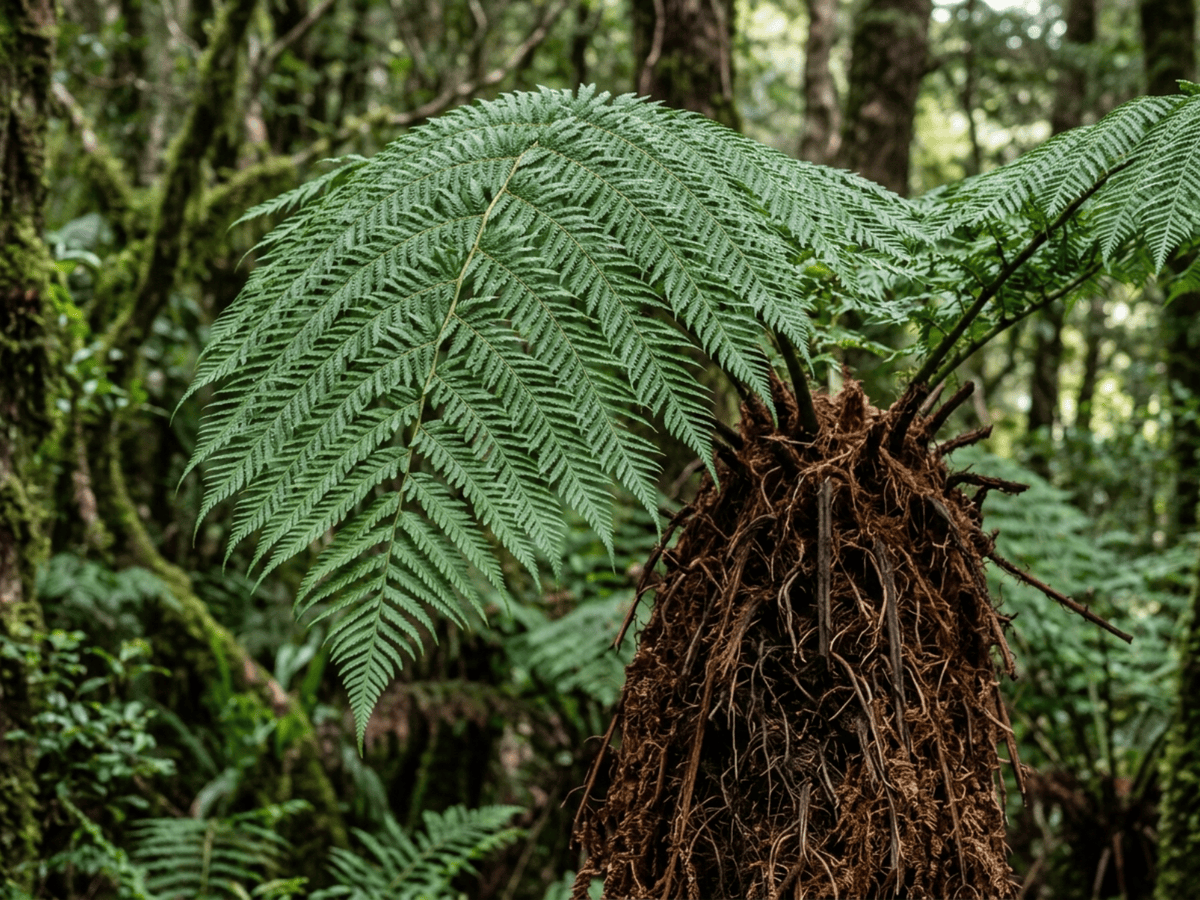
Dicksonia antarctica, the soft tree fern, is a slow-growing, long-lived tree fern native to the cool temperate rainforests of southeastern Australia and Tasmania. It develops a thick, fibrous trunk covered in a mat of brown rootlets, topped by a spreading crown of dark green, finely divided fronds reaching 2–4 meters long. The trunk grows very slowly — only about 2.5 cm per year — but mature specimens can reach 15 meters over centuries. It is remarkably cold-hardy for a tree fern, tolerating temperatures down to minus 10 degrees Celsius, making it popular in British and European gardens. The trunk must be kept moist, and gardeners often water directly into the crown. It prefers sheltered woodland settings with high humidity and protection from drying winds. In its native habitat, the trunk hosts a rich ecosystem of mosses, lichens, and epiphytic ferns.
- Cold-hardy
- Architectural
How to care for Man Fern
Watering
- Springevery 3 days
- Summerevery 2 days
- Fallevery 7 days
- Winterevery 21 days
Soil · Moisture-retentive
- Top dressingSphagnum moss10%
- Main mixPeat + coco coir 1:180%
- DrainagePerlite / gravel10%
Keep it evenly moist — but the drainage layer still matters.
FERTILIZER
Balanced Feed 14-14-14
An even feed covers all three needs at once, keeping leaves, roots and blooms moving together with nothing pushed out of balance.
- Nitrogen · Leaves
- Phosphorus · Roots + Blooms
- Potassium · Strength
- Springevery 45 days
- Summerevery 45 days
At a Glance
- NativeAustralasia
- Height10–20 ft (3–6.1 m)
- Spread6–12 ft (1.8–3.7 m)
- Foliage colorGreen
- SoilLoamy, Moisture-retentive, Acidic
- LocationsYard
Bloom time
BLOOM CYCLE
Non-flowering; reproduces by spores
Fragrance
NO FRAGRANCE
No notable fragrance.
Toxicity
No toxicity has been reported for this plant. Still, it is wise to keep pets from chewing on any houseplant.
Educational information, not medical or veterinary advice. If exposure is suspected, contact a doctor or veterinarian.
DISTRIBUTION


- Native
- Introduced
- Australasia
History
Dicksonia antarctica is a slow-growing tree fern native to the cool-temperate rainforests of southeastern Australia (including Victoria and Tasmania) and New Zealand. The species epithet "antarctica" is misleading — it reflects the plant's far-southern (southern-hemisphere) distribution, not actual Antarctic habitat; true Antarctica has no vascular plants in its interior. Mature specimens reach 5-15 meters tall with a stout fibrous trunk 25-35 cm diameter, topped by a crown of soft broad bipinnate fronds 2-3 meters long. Unlike Cyathea cooperi, D. antarctica is exceptionally cold-tolerant — established specimens tolerate brief frosts to -7°C or lower, making it the only tree fern commonly grown outdoors in milder parts of the UK (particularly Cornwall, Devon, Isle of Scilly, and southwestern Ireland), coastal British Columbia, and parts of the US Pacific Northwest.
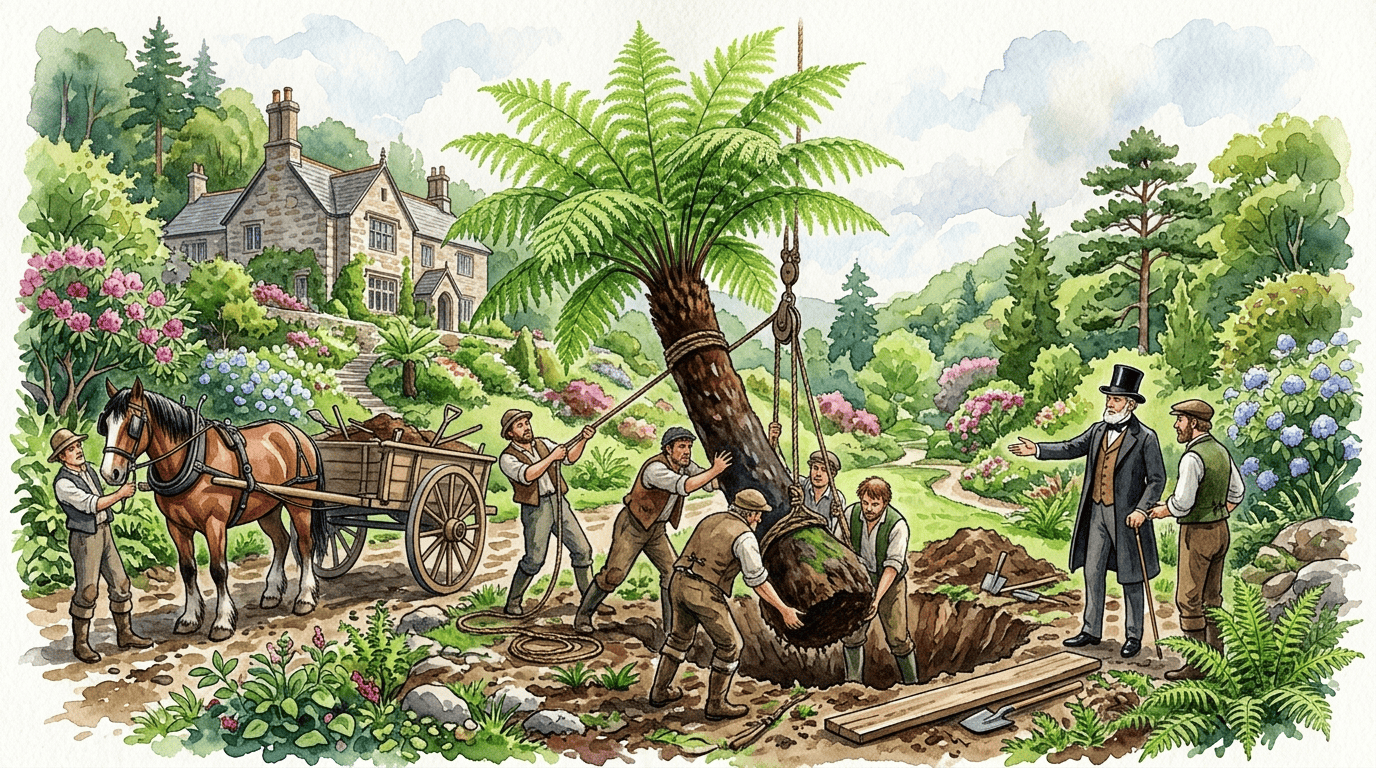
From the 19th century through the late 20th century, enormous numbers of mature trunks were salvaged from logging operations in Tasmanian and Victorian forest clearance and shipped internationally as landscape specimens — a trade that raised conservation concerns and is now regulated under Australian Environment Protection legislation and CITES Appendix II listing. Modern UK nursery-sold trunks must carry Australian export tags. The species regrows rapidly from the apex of the trunk if damaged, but salvage harvest is slow to replace in the wild.
Dicksonia antarctica has been growing in Australian forests for at least 65 million years, predating the rise of mammals. The Tasmanian Aboriginal people used the starchy pith as food. European collectors became fascinated with it during the 19th century, shipping entire trunks to England where many survived, establishing a tradition of tree fern gardening in the British Isles. In Tasmania, it is now protected, and wild collection is regulated. The species played a role in understanding continental drift — fossils of Dicksonia appear across former Gondwanan landmasses.
Symbolism & meaning
What It Symbolizes
The Man Fern is resilience and heritage living together in one slow, dinosaur-aged trunk. A relic of the supercontinent Gondwana, it has weathered ice ages and centuries of forest fires, returning each spring with new fronds unfurling from its mossy crown. To stand beside one is to keep company with a lineage that watched the world rearrange itself and quietly carried on.
- Resilience — Survives frost and centuries of growth, symbolizing endurance through adversity
- Heritage — A Gondwanan relic representing ancient lineage and deep natural history
Where the Name Comes From
The name Man Fern describes its fernlike fronds. Dicksonia honors James Dickson, a Scottish nurseryman and botanist. Antarctica refers not to the continent but to the 'anti-Arctic' — the southern hemisphere.
Uses & Fun Facts
- Fibrous trunk and arching fronds create dramatic woodland focal point
- Cool-climate tree fern adds prehistoric texture to shade gardens
Related plants
Plants with similar care
 Japanese MapleAcer palmatum
 Azure MonkshoodAconitum carmichaelii
 Florida HobblebushAgarista populifolia
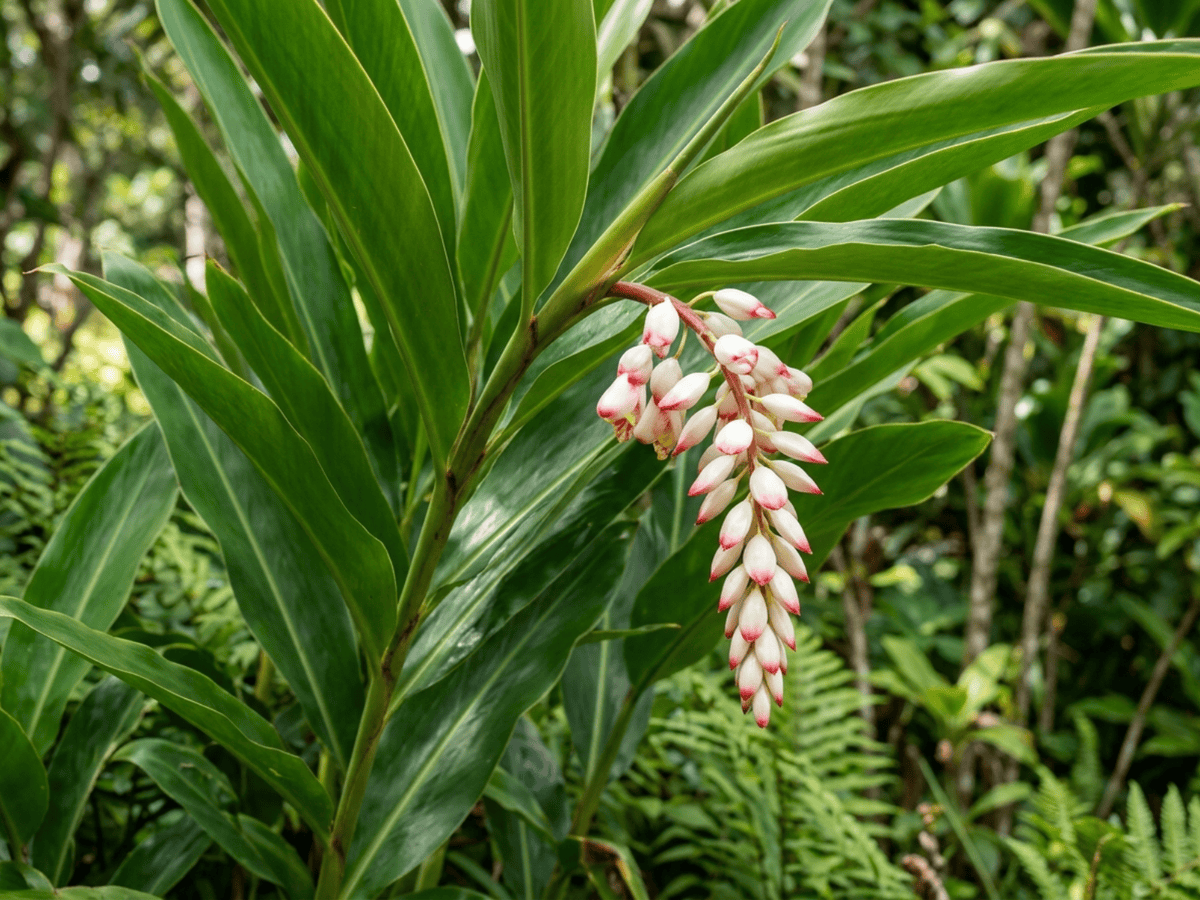 Shell GingerAlpinia zerumbet
Frequently asked questions
How often should I water Man Fern?
In summer, water about every 2 days; in winter, about every 21 days. Adjust for heat, pot size and drainage.
How much light does Man Fern need?
Part shade: 2–4 hrs direct. Watch the leaves — scorching or stretching means the light needs adjusting.
Is Man Fern toxic to cats or dogs?
No toxicity has been reported for this plant. Still, it is wise to keep pets from chewing on any houseplant. Educational information, not medical or veterinary advice. If exposure is suspected, contact a doctor or veterinarian.
Is Man Fern easy to grow?
It is moderately demanding: a good choice once you have a little experience.
YardMate
Identify any plant in seconds
Snap a photo — YardMate names the plant, diagnoses problems, and reminds you when to water.
Download on the App Store