 YardMate


Cape Marigold
Dimorphotheca sinuata
Easy · Beginner friendlyAbout Cape Marigold
Cape Marigold or Namaqualand Daisy is a South African annual famous for blanketing vast desert spring bloom displays with masses of orange, yellow, white, or salmon daisy flowers. Growing 8 to 12 inches tall with toothed leaves, the 2-inch flowers open only in bright sun and close at night. A favorite in American wildflower seed mixes and xeric spring gardens from California through the Southwest.
- Drought-tolerant
- Heat-tolerant
- Pollinator-friendly
How to care for Cape Marigold
Watering
- Springevery 7 days
- Summerevery 10 days
- Fallevery 10 days
- Winterevery 7 days
Soil · Well-draining
- Top dressingPine bark mulch10%
- Main mixPotting soil + perlite 2:170%
- DrainageLECA / gravel20%
Never skip the drainage layer — standing water is the top cause of root rot.
FERTILIZER
- Springevery 30 days
- Fallevery 30 days
At a Glance
- NativeAfrica
- Height0.5–1.5 ft (0.2–0.5 m)
- Spread0.5–1 ft (0.2–0.3 m)
- Flower colorOrange, Yellow, White
- Foliage colorGreen
- SoilSandy, Well-drained
- LocationsYard
Bloom time
BLOOM CYCLE
Peak bloom
Mar–Jun
Orange daisies open in sun, March to June
Toxicity
Toxicity unknown
None reported
Unknown
EXPOSURE Unspecified plant material.
EFFECT Toxic effects are not specified.
NOTE Toxicity for humans is not well documented; use caution until verified.
Unknown
EXPOSURE Unspecified plant material.
EFFECT Toxic effects are not specified.
NOTE Toxicity for dogs is not well documented; use caution until verified.
Unknown
EXPOSURE Unspecified plant material.
EFFECT Toxic effects are not specified.
NOTE Toxicity for cats is not well documented; use caution until verified.
Educational information, not medical or veterinary advice. If exposure is suspected, contact a doctor or veterinarian.
DISTRIBUTION

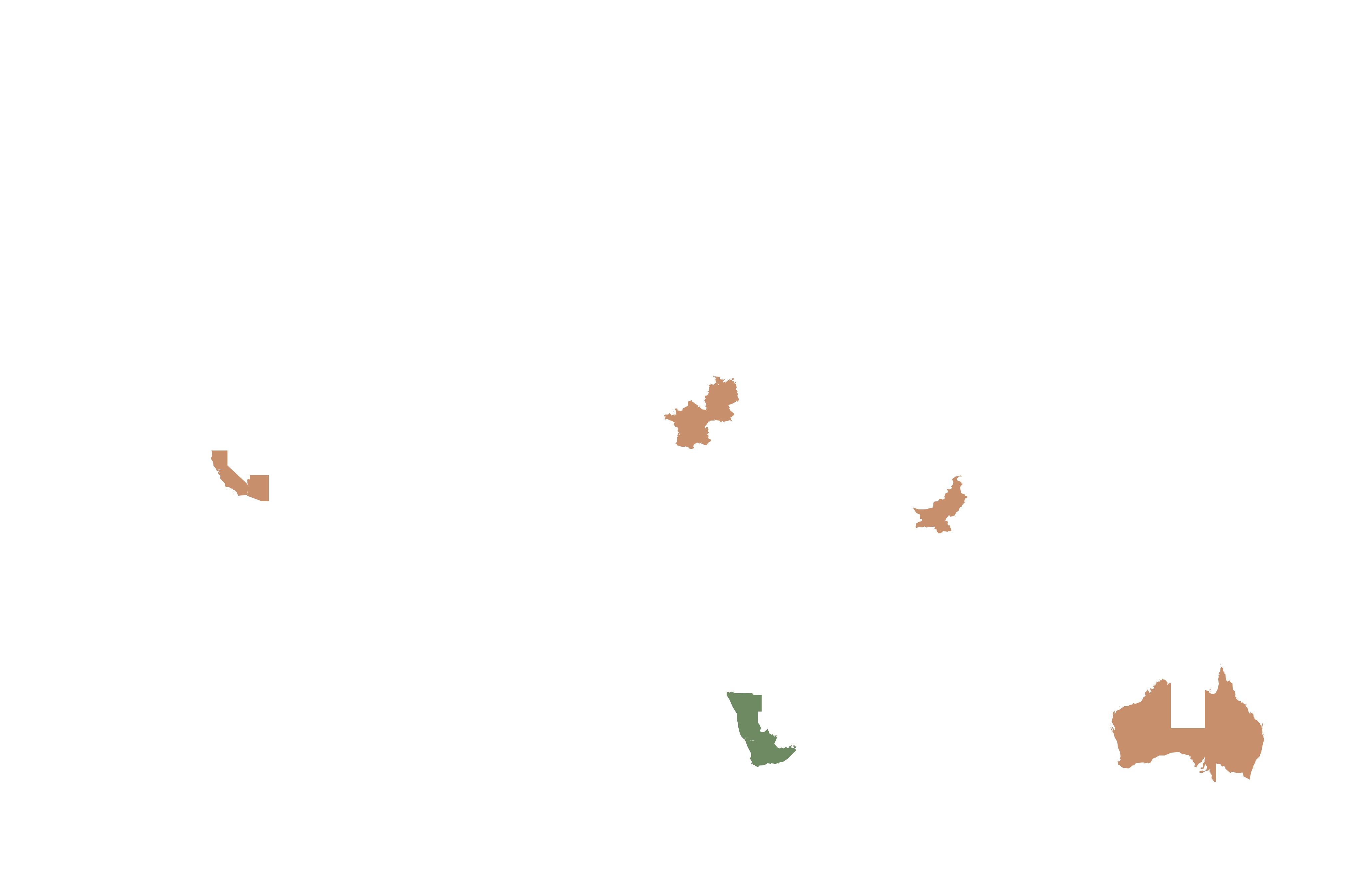
- Native
- Introduced
- Africa
History

Dimorphotheca sinuata, the Cape marigold, Namaqualand daisy, or glossy-eyed parachute daisy, is a fast-growing annual native to semi-arid Namaqualand and the Cape west coast of South Africa and southern Namibia. Swedish botanist Carl Peter Thunberg described it in the 18th century, and the current name was established by German botanist Augustin Augusta de Candolle in 1838. After winter rains, vast orange and yellow carpets of the species light up the Namaqualand landscape each August and September, drawing flower tourism to towns such as Springbok and Nieuwoudtville.
European seed houses brought it into garden cultivation in the early 20th century, and it is now a classic cool-season bedding annual in Mediterranean climates. It self-seeds freely and naturalizes in parts of California and Australia.
A signature annual of South Africa's legendary Namaqualand spring wildflower bloom. Introduced to California horticulture in the early 1900s, now a reliable self-sowing spring annual in Mediterranean climate regions across the American Southwest.
Symbolism & meaning
What It Symbolizes
Cape Marigold makes visible desert spring, heralding the brief flush of color that turns arid regions briefly into wildflower fields. It is also a flower of sun worship, opening its petals only in bright light and closing them tight against cloud or evening. It is the bloom of conditional joy, present only when the sky cooperates, teaching that some flowers reward us only by demanding we meet them at noon.
- Desert spring — heralds spring in arid regions
- Sun worship — sun-responsive daisies open wide in clear bright weather
Where the Name Comes From
The name Cape Marigold points to South Africa's Cape region. 'Dimorphotheca' from Greek means 'two-shaped fruit' for dimorphic seed shapes; 'sinuata' refers to wavy-edged leaves.
Uses & Fun Facts
- Daisies blanket xeric meadows in spring color
- Open daisy flowers feed bees in dry climates
- Low annual mats for rock gardens and Southwest beds
Related plants
Plants with similar care
 Chinese AbeliaAbelia chinensis
 Fragrant AbeliaAbelia mosanensis
 Large-Flowered AbeliaAbelia uniflora
 Glossy AbeliaAbelia x grandiflora
Frequently asked questions
How often should I water Cape Marigold?
In summer, water about every 10 days; in winter, about every 7 days. Adjust for heat, pot size and drainage.
How much light does Cape Marigold need?
Full sun: 6+ hrs direct. Watch the leaves — scorching or stretching means the light needs adjusting.
Is Cape Marigold toxic to cats or dogs?
Pets Unknown (Dogs Unknown · Cats Unknown) Educational information, not medical or veterinary advice. If exposure is suspected, contact a doctor or veterinarian.
Is Cape Marigold easy to grow?
Yes — it is considered an easy, beginner-friendly plant.
When does Cape Marigold bloom?
It typically blooms Mar–Jun in the Northern Hemisphere.
YardMate
Identify any plant in seconds
Snap a photo — YardMate names the plant, diagnoses problems, and reminds you when to water.
Download on the App Store