 YardMate


Orange Bush Monkeyflower
Diplacus aurantiacus
Easy · Beginner friendlyAbout Orange Bush Monkeyflower
Sticky Monkeyflower is one of the most common and adaptable California native shrubs, producing cheerful orange-yellow (occasionally red, pink, or cream) tubular flowers from early spring through summer. Native throughout California and Baja California from coastal scrub to inland foothills, it grows 2-4 feet tall with glossy sticky leaves that trap small insects. An invaluable plant for dry California gardens, it blooms for months, attracts hummingbirds and bumblebees, and tolerates challenging conditions.
- Drought-tolerant
- Evergreen
- Native
- Pollinator-friendly
How to care for Orange Bush Monkeyflower
Watering
- Springevery 10 days
- Summerevery 14 days
- Fallevery 21 days
- Winterpause watering
Soil · Well-draining
- Top dressingPine bark mulch10%
- Main mixPotting soil + perlite 2:170%
- DrainageLECA / gravel20%
Never skip the drainage layer — standing water is the top cause of root rot.
FERTILIZER
This plant needs little to no feeding.
At a Glance
- NativeNorth America
- Height2–4 ft (0.6–1.2 m)
- Spread2–4 ft (0.6–1.2 m)
- Flower colorOrange, Yellow, Red, Cream
- Foliage colorGreen
- SoilSandy, Well-drained
- LocationsYard
Bloom time
BLOOM CYCLE
Peak bloom
Mar–Aug
Orange-yellow flowers March to August
Fragrance
NO FRAGRANCE
No notable fragrance.
Toxicity
No toxicity has been reported for this plant. Still, it is wise to keep pets from chewing on any houseplant.
Educational information, not medical or veterinary advice. If exposure is suspected, contact a doctor or veterinarian.
DISTRIBUTION


- Native
- North America
History
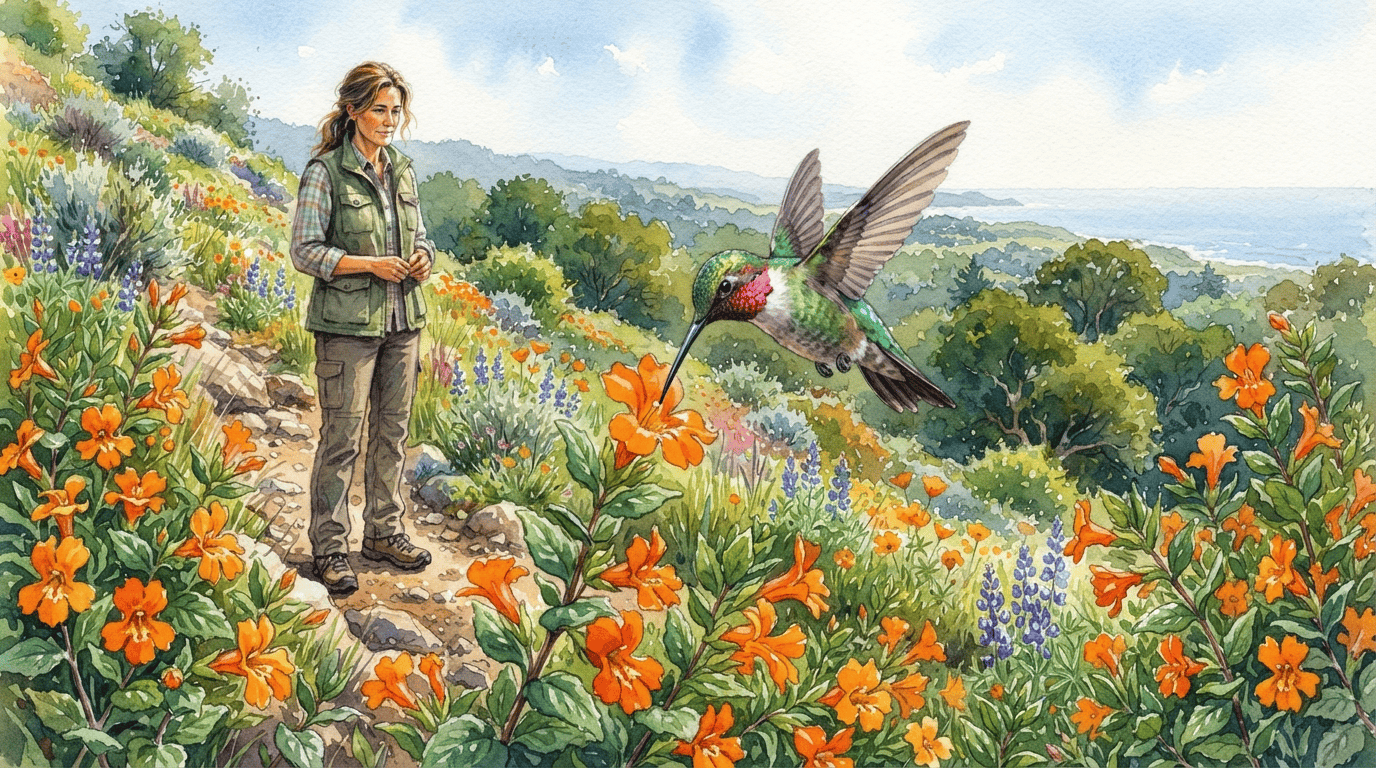
Diplacus aurantiacus (formerly and widely still referred to as Mimulus aurantiacus) is native to California and southwestern Oregon, growing in chaparral, coastal scrub, oak woodland, and rocky slope habitats from sea level to 1600 meters elevation. Modern phylogenetic work in the early 2000s moved most of the North American shrubby monkeyflowers from Mimulus to the resurrected genus Diplacus, though many references and gardeners still use the older Mimulus name. The plant is a small evergreen shrub 60-120 cm tall with distinctive sticky resinous dark-green narrow leaves (the sticky glandular trichomes are diagnostic to the touch) and, from late spring through summer, produces bright orange to orange-yellow two-lipped tubular flowers 3-4 cm long that are among the most important hummingbird-pollinated plants of California coastal chaparral. Anna's hummingbird, Allen's hummingbird, and rufous hummingbird all heavily visit the species during spring migration and breeding.
Modern California-native horticultural breeding has produced dozens of named cultivars with flower colors extending from pale cream and yellow through orange, peach, red, and magenta, with particularly active breeding from UC Santa Cruz Arboretum and private California specialists. Cultivars like "Jelly Bean" series, "Sam" (bright red), "Georgie" (peach), and "Eleanor" (white) are widely available. Hardy to approximately USDA zone 8, summer-dry adapted, and relatively short-lived (3-5 years) but easily renewed from seed or cuttings.
Formerly classified as Mimulus aurantiacus and moved to Diplacus in recent reclassification. One of California's most variable native species, with numerous color forms across its range—yellow along the coast, deep orange inland, red in the mountains. Studies show that hummingbirds preferentially visit the red-flowered forms while bumblebees favor yellow ones, driving population divergence.
Symbolism & meaning
What It Symbolizes
Orange Bush Monkeyflower brings laughter with cheerful, smiling apricot blooms that brighten any California hillside or garden. Beyond the joke of its name lies real adaptability — it thrives across coastal scrub, chaparral, and mountain slopes, refusing to specialize in just one habitat. A native shrub that reminds us cheerfulness can be both temperamental tolerance and a sense of humor.
- Laughter — cheerful flowers brighten any garden
- Adaptability — thrives in coastal scrub to mountain slopes
Where the Name Comes From
'Diplacus' from Greek 'diplax' (doubled cloak), referring to a flower structure feature; 'aurantiacus' means 'orange-colored'.
Uses & Fun Facts
- Tubular orange flowers favored by Anna's and Allen's hummingbirds
- Sticky-leaved California native for dry chaparral gardens
Related plants
Plants with similar care
 Chinese AbeliaAbelia chinensis
 Fragrant AbeliaAbelia mosanensis
 Large-Flowered AbeliaAbelia uniflora
 Glossy AbeliaAbelia x grandiflora
Frequently asked questions
How often should I water Orange Bush Monkeyflower?
Water about every 10 days during the growing season, and always let excess water drain away.
How much light does Orange Bush Monkeyflower need?
Full sun: 6+ hrs direct. Watch the leaves — scorching or stretching means the light needs adjusting.
Is Orange Bush Monkeyflower toxic to cats or dogs?
No toxicity has been reported for this plant. Still, it is wise to keep pets from chewing on any houseplant. Educational information, not medical or veterinary advice. If exposure is suspected, contact a doctor or veterinarian.
Is Orange Bush Monkeyflower easy to grow?
Yes — it is considered an easy, beginner-friendly plant.
When does Orange Bush Monkeyflower bloom?
It typically blooms Mar–Aug in the Northern Hemisphere.
YardMate
Identify any plant in seconds
Snap a photo — YardMate names the plant, diagnoses problems, and reminds you when to water.
Download on the App Store