 YardMate


Livingstone Daisy
Dorotheanthus bellidiformis
Easy · Beginner friendlyAbout Livingstone Daisy
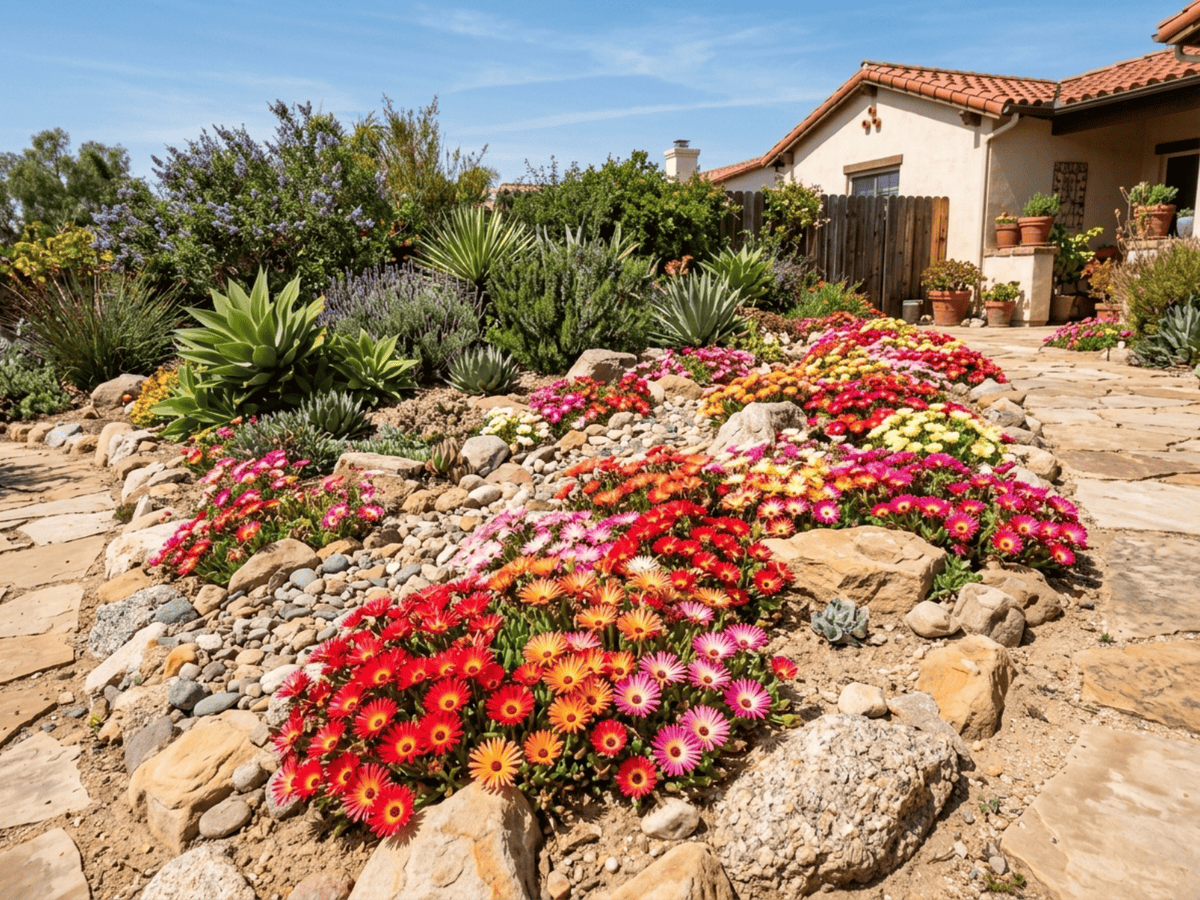
Livingstone Daisy is a low-growing South African annual, 4–6 inches tall and spreading 12–18 inches, with succulent leaves and gleaming daisy-like flowers in electric pink, magenta, orange, yellow, and white. Flowers open only in bright sun. Excellent for hot, dry, well-drained sites—popular in Southern California coastal gardens, Southwestern xeric plantings, and as a groundcover along dry walls. Self-seeds freely in mild zones.
- Drought-tolerant
- Heat-tolerant
- Groundcover
- Pollinator-friendly
How to care for Livingstone Daisy
Watering
- Springevery 7 days
- Summerevery 10 days
- Fallevery 10 days
- Winterpause watering
Soil · Fast-draining
- Main mixSand + pumice + soil 1:1:150%
- DrainagePumice / gravel50%
Keep grit at half the mix or more — this soil is meant to dry out fast.
FERTILIZER
This plant needs little to no feeding.
At a Glance
- NativeAfrica
- Height0.3–0.5 ft (0.1–0.2 m)
- Spread1–1.5 ft (0.3–0.5 m)
- Flower colorPink, Purple, Orange, Yellow
- Foliage colorGreen
- SoilSandy, Well-drained
- LocationsYard · Balcony
Bloom time
BLOOM CYCLE
Peak bloom
Mar–Aug
Gleaming daisies open in sun, spring to summer
Fragrance
NO FRAGRANCE
No notable fragrance.
Toxicity
No toxicity has been reported for this plant. Still, it is wise to keep pets from chewing on any houseplant.
Educational information, not medical or veterinary advice. If exposure is suspected, contact a doctor or veterinarian.
DISTRIBUTION


- Native
- Africa
History

Dorotheanthus bellidiformis (sometimes classified as Mesembryanthemum criniflorum or Cleretum bellidiforme) is native to coastal western South Africa, particularly the Cape region and southern Namaqualand, where it grows as a winter-spring annual in sandy coastal soils and is one of the defining component plants of the spectacular Namaqualand spring wildflower displays. It is a small low-spreading annual succulent 8-15 cm tall with flat fleshy ovate leaves covered in tiny glistening papillae ("ice crystals") that catch sunlight and give the common name "ice plant." From mid-spring through early summer it produces masses of brilliantly iridescent daisy-form flowers 3-5 cm across in vivid shades of magenta-pink, pure pink, salmon, orange, gold, pure yellow, crimson-red, and white — frequently with contrasting centers in darker or lighter tones. The flowers have a distinctive metallic iridescent quality that is particularly vivid in direct sunlight, and the mass-bloom color effect has been described as "technicolor glowing carpets."
Flowers close at night and in cloudy or shaded conditions, requiring bright direct sunshine to open fully. In cultivation it is grown as a cool-season annual bedding plant in Mediterranean, California, Australian, and South African gardens, sown directly from seed in late winter or early spring for spring bloom. In cooler-summer climates like coastal California and the Pacific Northwest, it can also function as a summer bedding annual.
Modern mixed-seed commercial cultivars include the "Gelato," "Magic Carpet," and "Harlequin" series. A classic coastal and xeric-garden plant in Southern California and a component of California wildflower seed mixes, widely planted as a colorful groundcover along freeways and in public landscaping.
Symbolism & meaning
What It Symbolizes
The Livingstone Daisy is pure Vibrance — petals that look enameled in fluorescent magenta, orange, and yellow, opening only in full sun. Its resilience is South African in origin, a flower built for blazing heat and parched coastal soils. A small mat that turns the hottest corner of the garden into something approaching joyful neon.
- Vibrance — electric colors in blazing sun
- Resilience — ice-plant flowers sparkle through dry coastal heat
Where the Name Comes From
Genus honors Dorothea Schwantes; 'bellidiformis' means 'daisy-shaped'.
Uses & Fun Facts
- Sparkling daisy flowers blanket sunny banks in spring
- Succulent annual creates colorful low carpet
- Open blooms attract bees and beneficial flies
Related plants
Plants with similar care
 Chinese AbeliaAbelia chinensis
 Fragrant AbeliaAbelia mosanensis
 Large-Flowered AbeliaAbelia uniflora
 Glossy AbeliaAbelia x grandiflora
Frequently asked questions
How often should I water Livingstone Daisy?
Water about every 7 days during the growing season, and always let excess water drain away.
How much light does Livingstone Daisy need?
Full sun: 6+ hrs direct. Watch the leaves — scorching or stretching means the light needs adjusting.
Is Livingstone Daisy toxic to cats or dogs?
No toxicity has been reported for this plant. Still, it is wise to keep pets from chewing on any houseplant. Educational information, not medical or veterinary advice. If exposure is suspected, contact a doctor or veterinarian.
Is Livingstone Daisy easy to grow?
Yes — it is considered an easy, beginner-friendly plant.
When does Livingstone Daisy bloom?
It typically blooms Mar–Aug in the Northern Hemisphere.
YardMate
Identify any plant in seconds
Snap a photo — YardMate names the plant, diagnoses problems, and reminds you when to water.
Download on the App Store