 YardMate


Rosea Ice Plant
Drosanthemum hispidum
Easy · Beginner friendlyAbout Rosea Ice Plant
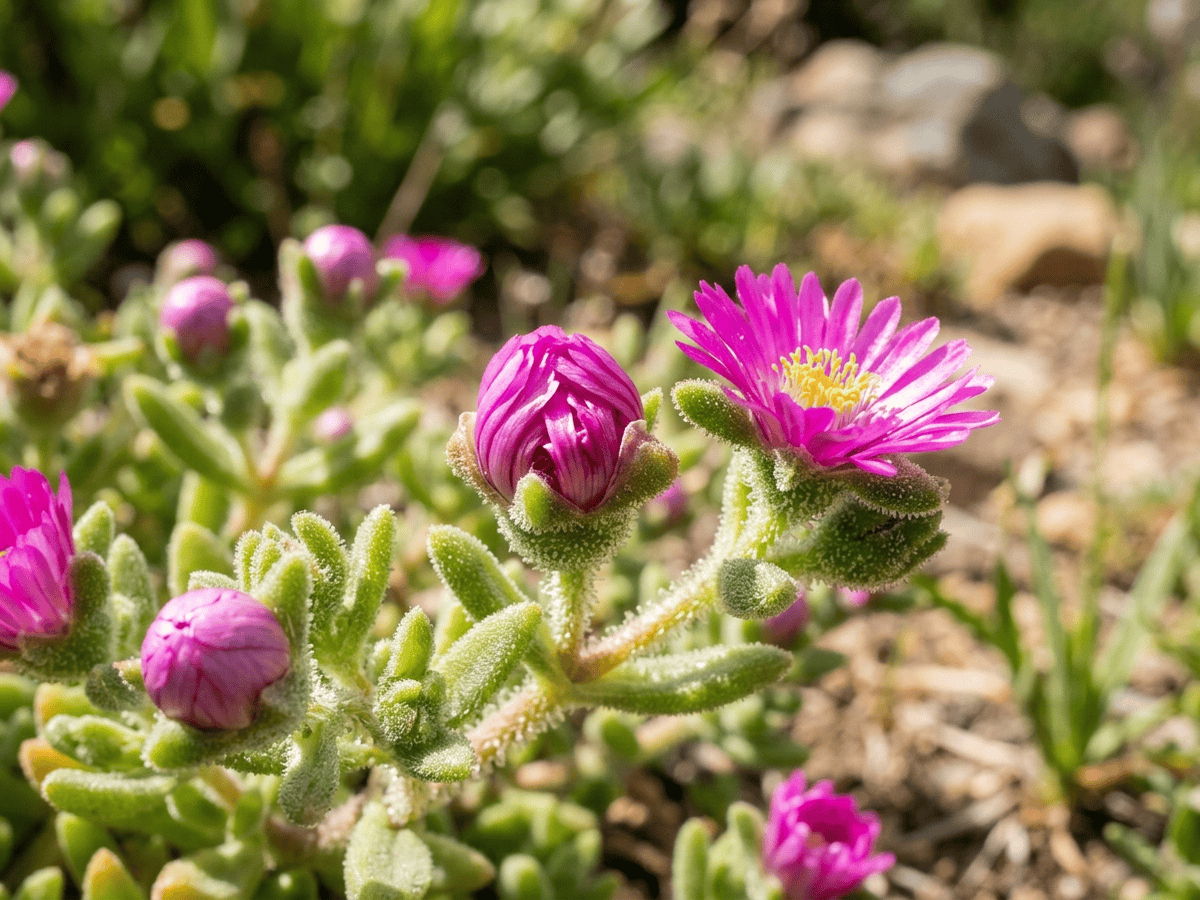
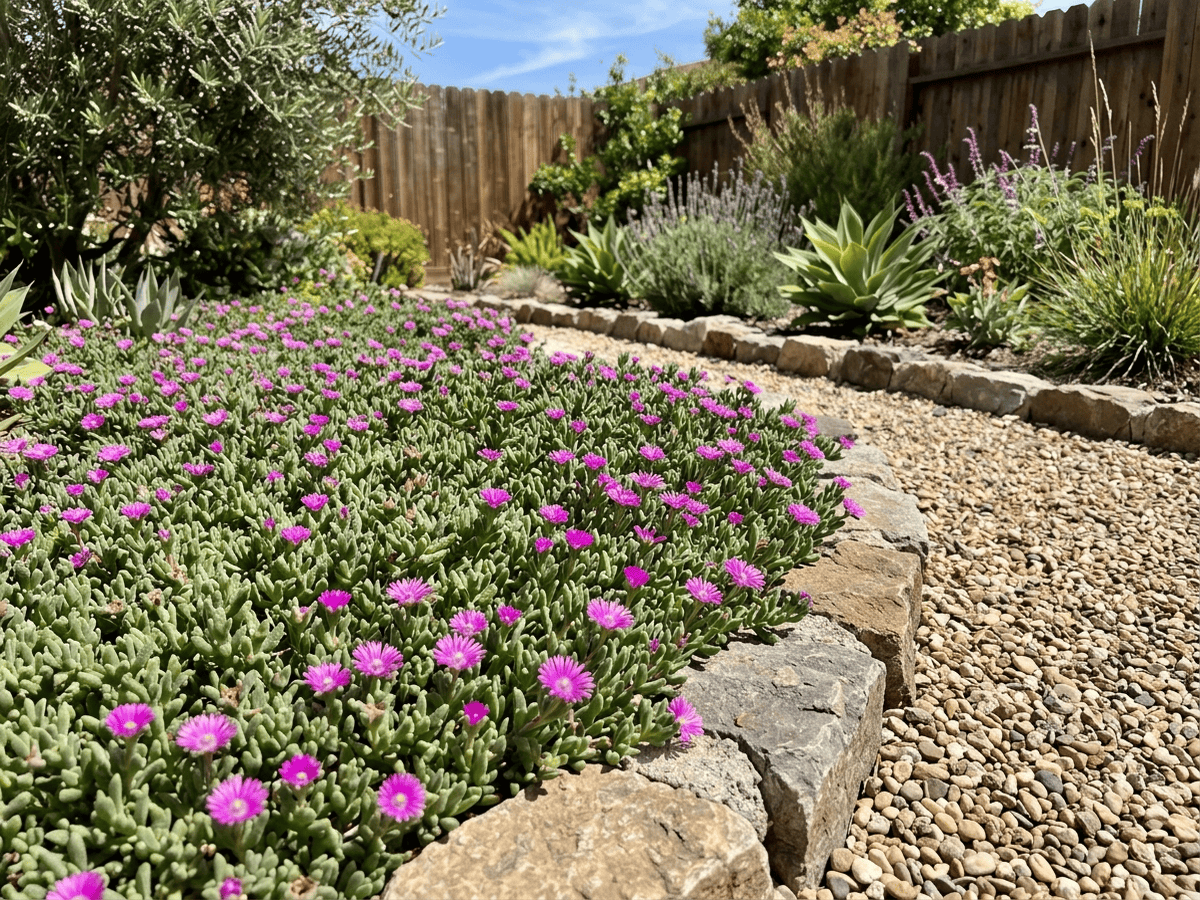
Rosea Ice Plant is a South African succulent perennial forming low semi-upright mounds to about 12 inches tall. Its cylindrical fleshy leaves are covered in tiny glistening vesicles that sparkle like ice crystals in sunlight, giving the plant its common name. In late spring it produces masses of brilliant pink-purple flowers about 1.5 inches across that close at night. Outstanding drainage and full sun are essential; it excels in coastal and Mediterranean-climate gardens.
- Drought-tolerant
- Groundcover
How to care for Rosea Ice Plant
Watering
- Springevery 14 days
- Summerevery 14 days
- Fallevery 21 days
- Winterevery 30 days
Soil · Fast-draining
- Main mixSand + pumice + soil 1:1:150%
- DrainagePumice / gravel50%
Keep grit at half the mix or more — this soil is meant to dry out fast.
FERTILIZER
Balanced Feed 14-14-14
An even feed covers all three needs at once, keeping leaves, roots and blooms moving together with nothing pushed out of balance.
- Nitrogen · Leaves
- Phosphorus · Roots + Blooms
- Potassium · Strength
This plant needs little to no feeding.
At a Glance
- NativeAfrica
- Height0.5–1 ft (0.2–0.3 m)
- Spread2–3 ft (0.6–0.9 m)
- Flower colorPink, Purple
- Foliage colorGreen
- SoilSandy, Well-drained
- LocationsYard
Bloom time
BLOOM CYCLE
Peak bloom
Jun–Aug
Flowers open only in full sun; close at night and on overcast days
Toxicity
Humans Safe · Pets Safe
None reported
Safe
EXPOSURE No exposure route is reported.
EFFECT No toxic effect is reported.
NOTE Listed as non-toxic for humans; avoid eating ornamental plants unless confirmed edible.
Safe
EXPOSURE No exposure route is reported.
EFFECT No toxic effect is reported.
NOTE Listed as non-toxic for dogs; avoid eating ornamental plants unless confirmed edible.
Safe
EXPOSURE No exposure route is reported.
EFFECT No toxic effect is reported.
NOTE Listed as non-toxic for cats; avoid eating ornamental plants unless confirmed edible.
Educational information, not medical or veterinary advice. If exposure is suspected, contact a doctor or veterinarian.
DISTRIBUTION


- Native
- Introduced
- Africa
History

Drosanthemum hispidum, rosy dewplant or hairy dewflower, is a small mat-forming succulent in the Aizoaceae family native to the Cape region of South Africa. The plant forms a dense low mat of short succulent finger-like leaves that are densely covered in bladder-like crystalline surface cells, giving the foliage a sparkling wet appearance in sunlight and the family its common English name ice plant. From late spring through early summer the mats are completely covered with small bright magenta-pink daisy-like flowers, about two centimeters across, each open in sun and closed at night.
The species entered Mediterranean and California horticulture in the twentieth century as a drought-tolerant groundcover, tolerating intense heat, poor sandy soil, and coastal salt spray. Widely used on slopes, rock gardens, green roofs, and mass plantings where flashes of bright color are wanted.
Drosanthemum hispidum is native to the Western Cape of South Africa, particularly the Succulent Karoo biome, one of the world's biodiversity hotspots. The genus Drosanthemum, established by Schwantes in 1927, takes its name from the Greek drosos (dew) and anthos (flower), referring to the dew-like sparkle of the crystalline cells covering the leaves and stems. These epidermal bladder cells are a specialized adaptation for water storage and light reflection.
Symbolism & meaning
What It Symbolizes
Rosea Ice Plant carries sparkling beauty, its glistening ice-crystal cells catching sunlight so dramatically its petals seem dusted with sugar. Beneath that delicate appearance lies remarkable endurance, surviving extreme drought without supplemental water and returning each spring in waves of magenta. It is often read as a flower of misleading fragility, jewel-like beauty rooted in a constitution far tougher than its shimmer suggests.
- Sparkling beauty — glistening ice-crystal cells catch sunlight dramatically
- Endurance — survives extreme drought with no supplemental water
Where the Name Comes From
The name Rosea Ice Plant describes its rose-like blooms. Drosanthemum derives from Greek drosos (dew) and anthos (flower), describing the dewy sparkle of its leaf surface. Hispidum is Latin for 'bristly' or 'hairy', referring to the texture of the crystalline leaf cells.
Uses & Fun Facts
- Sparkling succulent mat blankets dry slopes and rock gardens
- Bright flowers cover plants in spring desert color
Related plants
Plants with similar care
 Chinese AbeliaAbelia chinensis
 Fragrant AbeliaAbelia mosanensis
 Large-Flowered AbeliaAbelia uniflora
 Glossy AbeliaAbelia x grandiflora
Frequently asked questions
How often should I water Rosea Ice Plant?
In summer, water about every 14 days; in winter, about every 30 days. Adjust for heat, pot size and drainage.
How much light does Rosea Ice Plant need?
Full sun: 6+ hrs direct. Watch the leaves — scorching or stretching means the light needs adjusting.
Is Rosea Ice Plant toxic to cats or dogs?
Pets Safe (Dogs Safe · Cats Safe) Educational information, not medical or veterinary advice. If exposure is suspected, contact a doctor or veterinarian.
Is Rosea Ice Plant easy to grow?
Yes — it is considered an easy, beginner-friendly plant.
When does Rosea Ice Plant bloom?
It typically blooms Jun–Aug in the Northern Hemisphere.
YardMate
Identify any plant in seconds
Snap a photo — YardMate names the plant, diagnoses problems, and reminds you when to water.
Download on the App Store