 YardMate


Carpet Daisy
Dymondia margaretae
Medium · Some experienceAbout Carpet Daisy
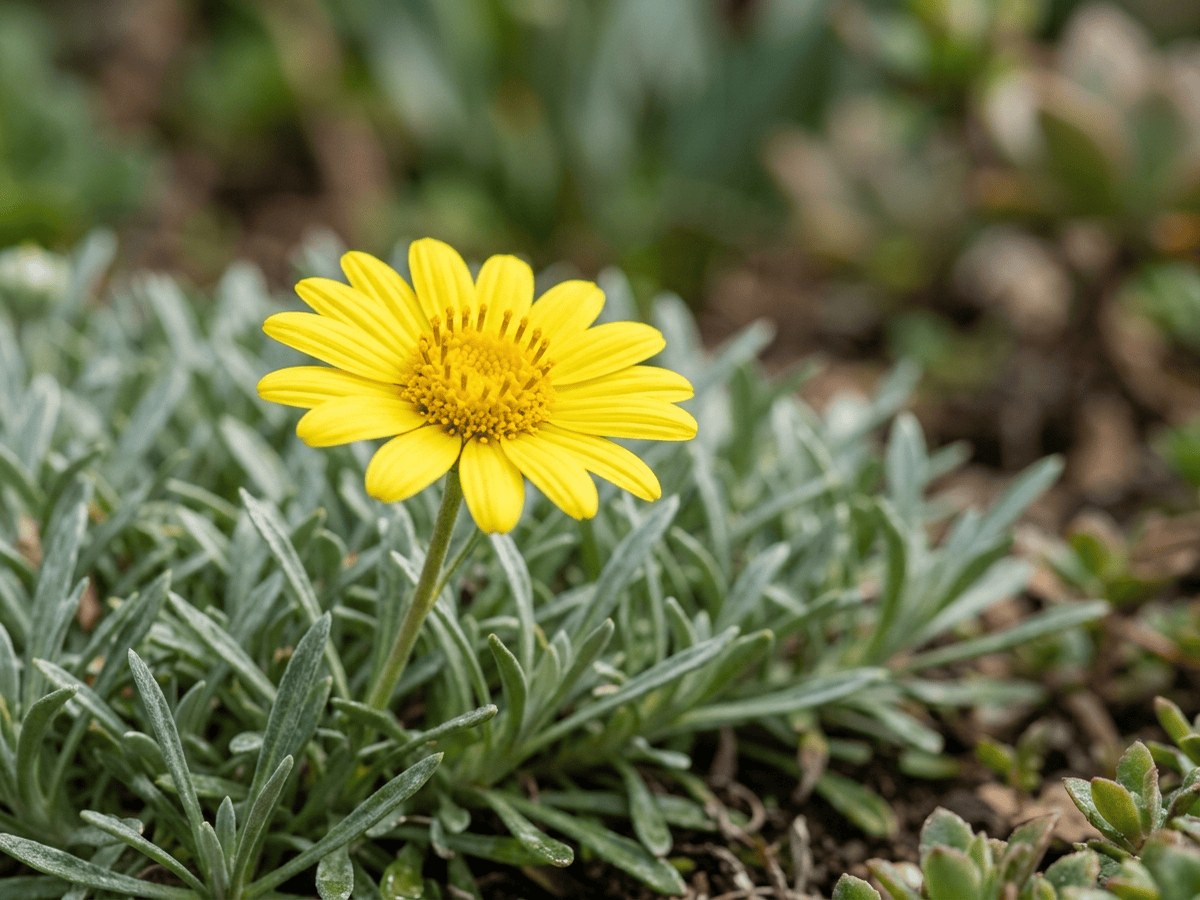
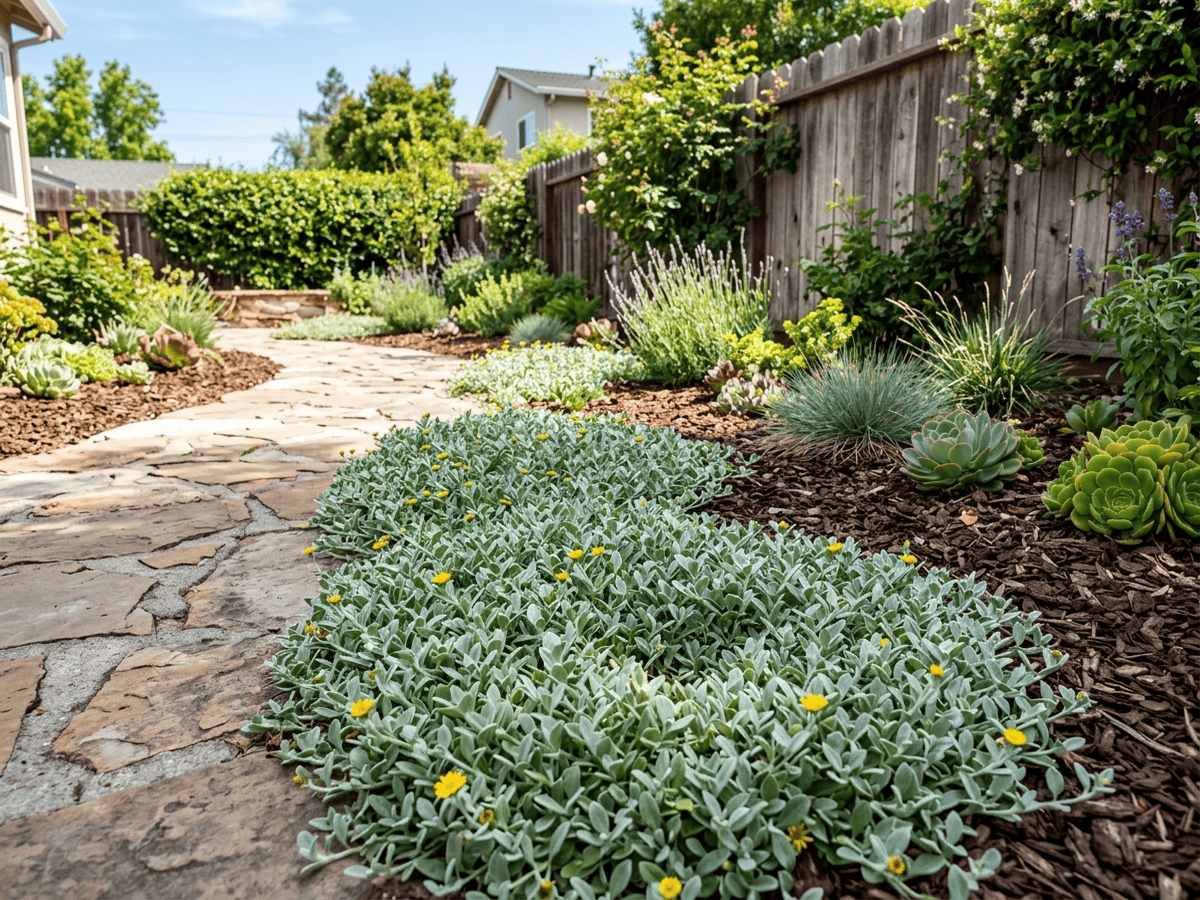
Silver Carpet is a South African native groundcover reaching only 1-2 inches tall, forming a tight silver-gray mat of narrow fuzzy leaves with white undersides that curl in drought. Small yellow daisy flowers appear in summer. Exceptionally drought-tolerant and walkable, it is a premier xeric groundcover for Southern California, Arizona, and Mediterranean climate US gardens seeking to replace thirsty lawns.
- Drought-tolerant
- Groundcover
How to care for Carpet Daisy
Watering
- Springevery 14 days
- Summerevery 21 days
- Fallevery 21 days
- Winterevery 30 days
Soil · Well-draining
- Top dressingPine bark mulch10%
- Main mixPotting soil + perlite 2:170%
- DrainageLECA / gravel20%
Never skip the drainage layer — standing water is the top cause of root rot.
FERTILIZER
This plant needs little to no feeding.
At a Glance
- NativeAfrica
- Height0.1–0.3 ft (0–0.1 m)
- Spread1–2 ft (0.3–0.6 m)
- Flower colorYellow
- Foliage colorSilver, Dark-green
- SoilSandy, Well-drained
- LocationsYard
Bloom time
BLOOM CYCLE
Peak bloom
Jun–Aug
Small yellow daisy flowers June to August
Toxicity
No toxicity has been reported for this plant. Still, it is wise to keep pets from chewing on any houseplant.
Educational information, not medical or veterinary advice. If exposure is suspected, contact a doctor or veterinarian.
DISTRIBUTION


- Native
- Africa
History
Dymondia margaretae, silver carpet, is the sole species in its genus—a monotypic endemic to a small coastal strip of the Western Cape of South Africa between Hermanus and Mossel Bay. South African botanist Robert Harold Compton described both the genus and species in 1953 in the Journal of South African Botany, naming the genus after English gardener A.V. Dymond and the species after his wife Margaret, who collected the type specimen. The plant forms extremely flat 2-3 cm tall mats of narrow dark green leaves that are brilliantly silver-white tomentose on the undersides and curl to expose the silver undersurface during dry periods.
Tiny bright yellow 1 cm daisy flowers appear sparsely in summer but are not the main ornamental feature. Since the 1990s dymondia has become a premium lawn substitute in California and Mediterranean-climate landscapes, tolerating light foot traffic and extreme drought once established, though it is slow to establish and requires good drainage.
Introduced to California horticulture and celebrated as one of the most drought-tolerant walkable groundcovers available. A signature plant of Southern California waterwise garden renovations replacing turf grass.
Symbolism & meaning
What It Symbolizes
Carpet Daisy embodies Adaptive beauty — leaves curling silver-side-up when drought arrives, then unfurling green again with rain, a living drought gauge underfoot. It has become an icon of Water wisdom, a small mat plant carrying the ethic of California xeriscape gardens. Each tiny rosette is a quiet lesson in matching plant to climate.
- Adaptive beauty — leaves curl silver in drought, green when watered
- Water wisdom — icon of xeriscape movement
Where the Name Comes From
The name Carpet Daisy describes its daisy-like flower heads. Genus honors Margarethe Dymond, 20th-century South African botanical collector.
Uses & Fun Facts
- Silver-green mat tolerates light foot traffic between pavers
- Yellow daisy flowers dot drought-tolerant carpet
Related plants
Plants with similar care
 Mexican AbeliaAbelia floribunda
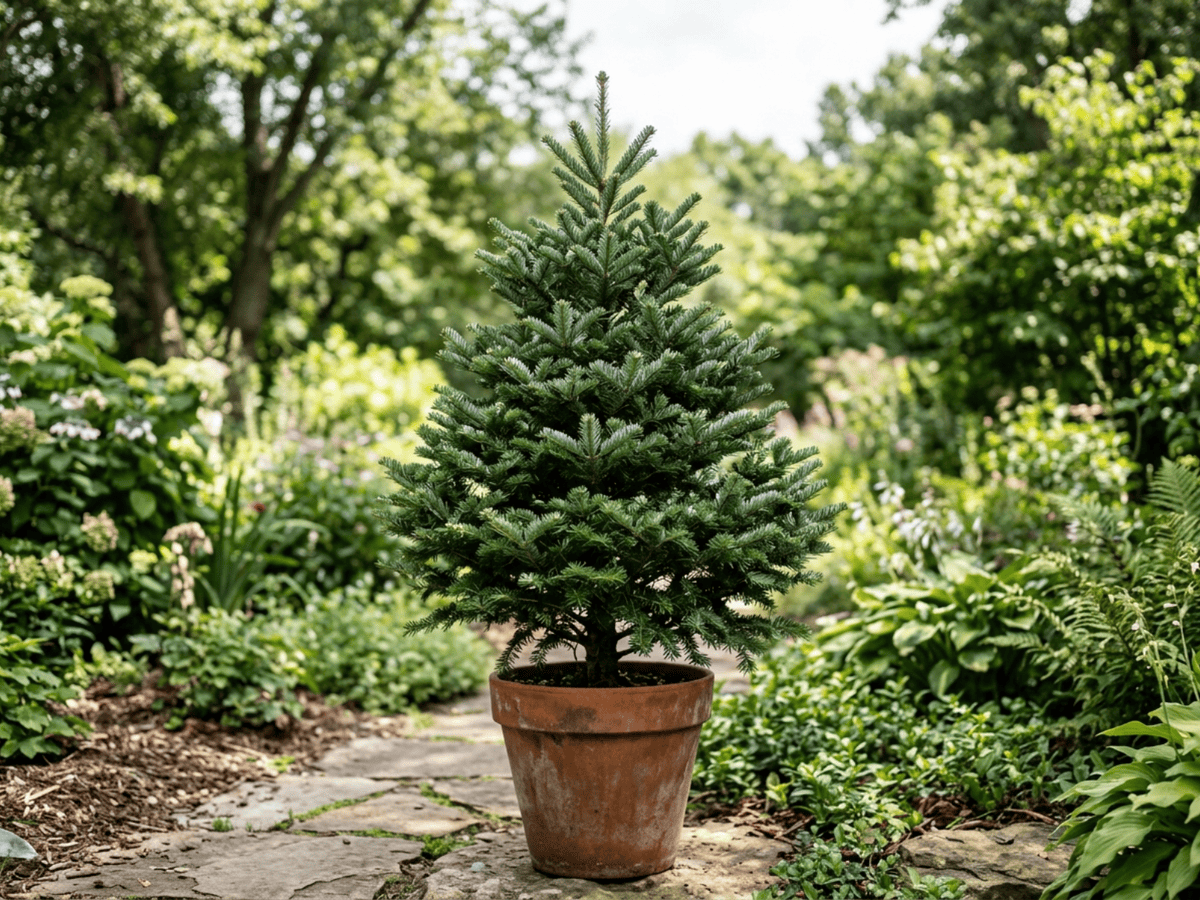 Fraser FirAbies fraseri
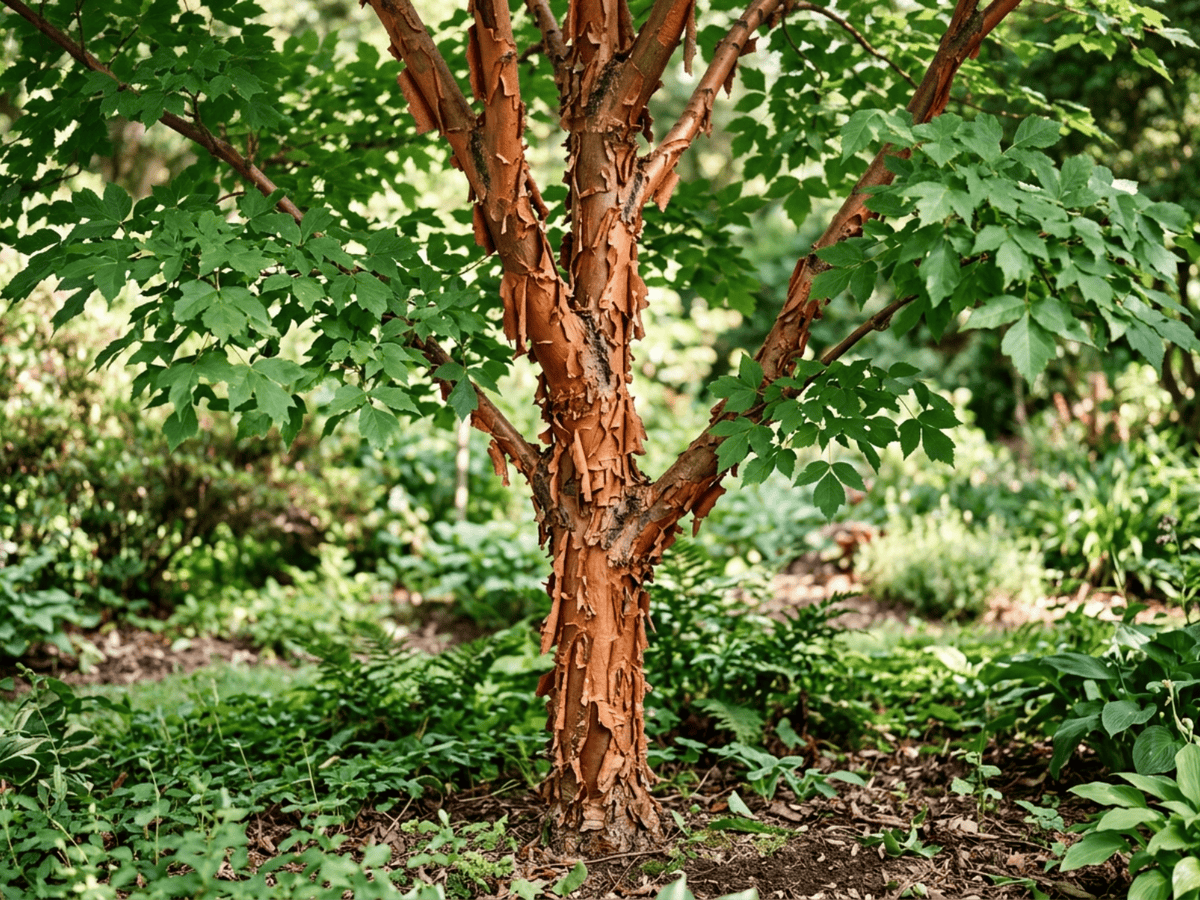 Paperbark MapleAcer griseum
 Sugar MapleAcer saccharum
Frequently asked questions
How often should I water Carpet Daisy?
In summer, water about every 21 days; in winter, about every 30 days. Adjust for heat, pot size and drainage.
How much light does Carpet Daisy need?
Full sun: 6+ hrs direct. Watch the leaves — scorching or stretching means the light needs adjusting.
Is Carpet Daisy toxic to cats or dogs?
No toxicity has been reported for this plant. Still, it is wise to keep pets from chewing on any houseplant. Educational information, not medical or veterinary advice. If exposure is suspected, contact a doctor or veterinarian.
Is Carpet Daisy easy to grow?
It is moderately demanding: a good choice once you have a little experience.
When does Carpet Daisy bloom?
It typically blooms Jun–Aug in the Northern Hemisphere.
YardMate
Identify any plant in seconds
Snap a photo — YardMate names the plant, diagnoses problems, and reminds you when to water.
Download on the App Store