 YardMate


Golden Barrel Cactus
Echinocactus grusonii
Easy · Beginner friendlyAbout Golden Barrel Cactus
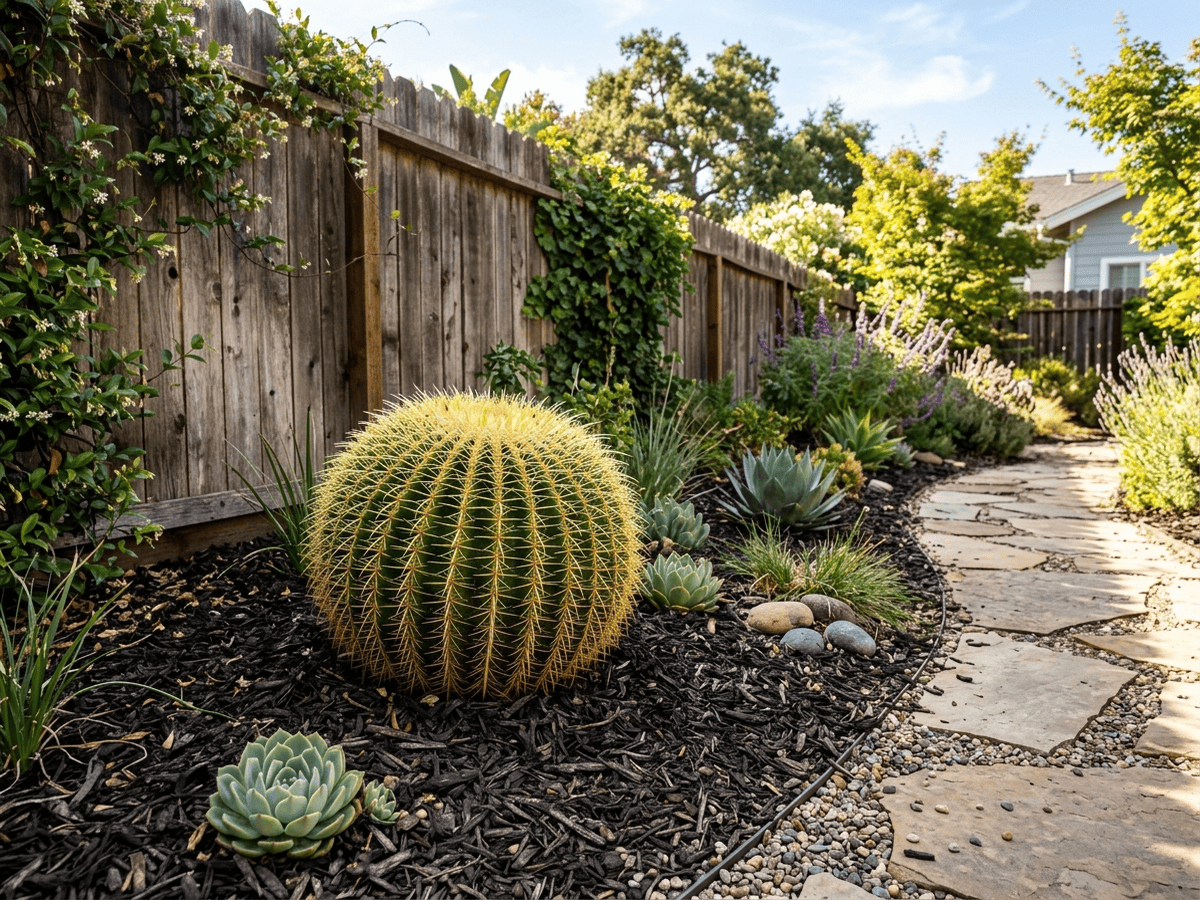
The Golden Barrel Cactus is a striking spherical cactus from east-central Mexico, famous for its perfect globe shape and dense covering of golden-yellow spines. In the wild it grows slowly to about three feet in diameter, often forming dramatic clusters on volcanic hillsides. Sadly, it is critically endangered in its native habitat due to dam construction flooding its primary habitat in Querétaro and Hidalgo. Fortunately, it is one of the most widely cultivated cacti in the world, found in botanical gardens and desert landscapes everywhere. Its symmetrical form and radiant golden spines make it an architectural favorite in modern landscaping. It can live for over a hundred years, gradually elongating into a barrel shape with age. Small yellow flowers crown the apex of mature specimens in summer, though plants rarely bloom before age twenty. It requires full sun, excellent drainage, and protection from frost.
- Low-maintenance
- Drought-tolerant
- Architectural
How to care for Golden Barrel Cactus
Watering
- Springevery 14 days
- Summerevery 10 days
- Fallevery 21 days
- Winterevery 45 days
Soil · Fast-draining
- Main mixSand + pumice + soil 1:1:150%
- DrainagePumice / gravel50%
Keep grit at half the mix or more — this soil is meant to dry out fast.
FERTILIZER
Cactus & Succulent Feed 2-7-7
Hold the nitrogen back and growth stays compact instead of soft and stretched. Phosphorus and potassium carry the roots and the flowering.
- Nitrogen · Leaves
- Phosphorus · Roots + Blooms
- Potassium · Strength
- Springevery 45 days
- Summerevery 45 days
- Fallevery 60 days
At a Glance
- NativeNorth America
- Height1–3 ft (0.3–0.9 m)
- Spread1–2 ft (0.3–0.6 m)
- Flower colorYellow
- Foliage colorGreen
- SoilSandy, Well-drained
- LocationsYard · Indoor
Bloom time
BLOOM CYCLE
Peak bloom
Jun–Aug
Yellow crown of flowers in summer on specimens over 20 years old
Fragrance
NO FRAGRANCE
No notable fragrance.
Toxicity
Humans Slight
Unknown toxic principle
Slight
- Stem
- Contact
EXPOSURE Touching stems.
EFFECT Mechanical injury from long spines.
NOTE Non-toxic chemically; spine injury primary hazard.
Safe
EXPOSURE No exposure route is reported.
EFFECT Not chemically toxic.
NOTE Listed as non-toxic for dogs; avoid eating ornamental plants unless confirmed edible.
Safe
EXPOSURE No exposure route is reported.
EFFECT Not chemically toxic.
NOTE Listed as non-toxic for cats; avoid eating ornamental plants unless confirmed edible.
Educational information, not medical or veterinary advice. If exposure is suspected, contact a doctor or veterinarian.
DISTRIBUTION


- Native
- North America
History
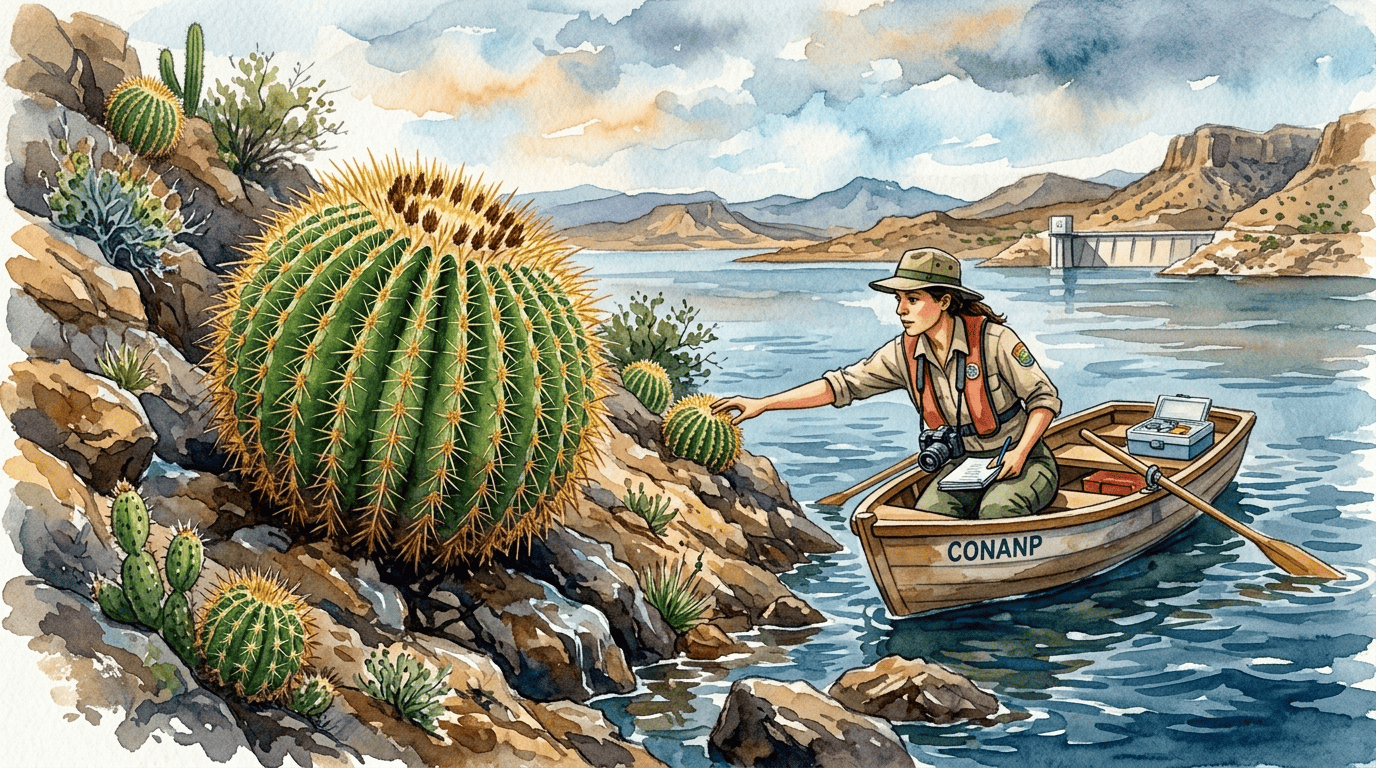
Echinocactus grusonii is native to a small area of central Mexico, primarily the canyons of the Moctezuma River in Hidalgo and Querétaro. It was described by Friedrich Hildmann in 1891 and named for German industrialist and cactus collector Hermann Gruson. Despite millions of cultivated plants in horticulture worldwide, the wild population is critically endangered (IUCN): construction of the Zimapán Dam in 1995 flooded a substantial portion of its native range, and the species is protected under Mexican law and CITES.
The contrast between its cultivation ubiquity — it is one of the most recognizable and mass-produced ornamental cacti, planted in public spaces, hotels, and gardens globally — and its precarious wild status makes it a frequently cited conservation paradox. Plants live for decades and only flower after reaching about 20 years old and 40 centimeters in diameter. Named in 1891 by Heinrich Hildmann in honor of Hermann Gruson, a German inventor and avid cactus collector from Magdeburg.
Gruson's massive cactus collection later became the foundation of the Gruson Greenhouses, a botanical attraction that still exists today. In the wild, the species is confined to a tiny area in Querétaro, Mexico, where dam construction in the 1990s destroyed much of its habitat. It is now listed as Critically Endangered by IUCN, yet paradoxically remains one of the most commonly grown cacti in cultivation worldwide.
Symbolism & meaning
What It Symbolizes
The Golden Barrel Cactus radiates inner light, its spiraling crown of golden spines catching the desert sun like a small, fierce halo. Growing only millimeters each year, it quietly teaches patience — a meditation in slow brilliance carried out across decades. In its perfect sphere, radiance and stillness become the same virtue.
- Radiance — golden spines glow in sunlight, symbolizing inner light
- Patience — its extremely slow growth represents the virtue of waiting
Where the Name Comes From
'Echinocactus' from Greek 'echinos' (hedgehog) and 'cactus,' describing its spiny ball shape. 'Grusonii' honors Hermann Gruson, the German cactus enthusiast.
Uses & Fun Facts
- Perfect golden-spined globe anchors Mexican-modern xeric landscapes
- Slow-growing barrel cactus thrives in patio pots for decades
- Sculptural form brings desert drama to gravel gardens
Related plants
Plants with similar care
 Chinese AbeliaAbelia chinensis
 Fragrant AbeliaAbelia mosanensis
 Large-Flowered AbeliaAbelia uniflora
 Glossy AbeliaAbelia x grandiflora
Frequently asked questions
How often should I water Golden Barrel Cactus?
In summer, water about every 10 days; in winter, about every 45 days. Adjust for heat, pot size and drainage.
How much light does Golden Barrel Cactus need?
Full sun: 6+ hrs direct. Watch the leaves — scorching or stretching means the light needs adjusting.
Is Golden Barrel Cactus toxic to cats or dogs?
Pets Safe (Dogs Safe · Cats Safe) Educational information, not medical or veterinary advice. If exposure is suspected, contact a doctor or veterinarian.
Is Golden Barrel Cactus easy to grow?
Yes — it is considered an easy, beginner-friendly plant.
Can Golden Barrel Cactus be grown indoors?
Yes, it adapts well to indoor growing given the right light.
When does Golden Barrel Cactus bloom?
It typically blooms Jun–Aug in the Northern Hemisphere.
YardMate
Identify any plant in seconds
Snap a photo — YardMate names the plant, diagnoses problems, and reminds you when to water.
Download on the App Store