 YardMate


California Fuchsia
Epilobium canum
Easy · Beginner friendlyAbout California Fuchsia
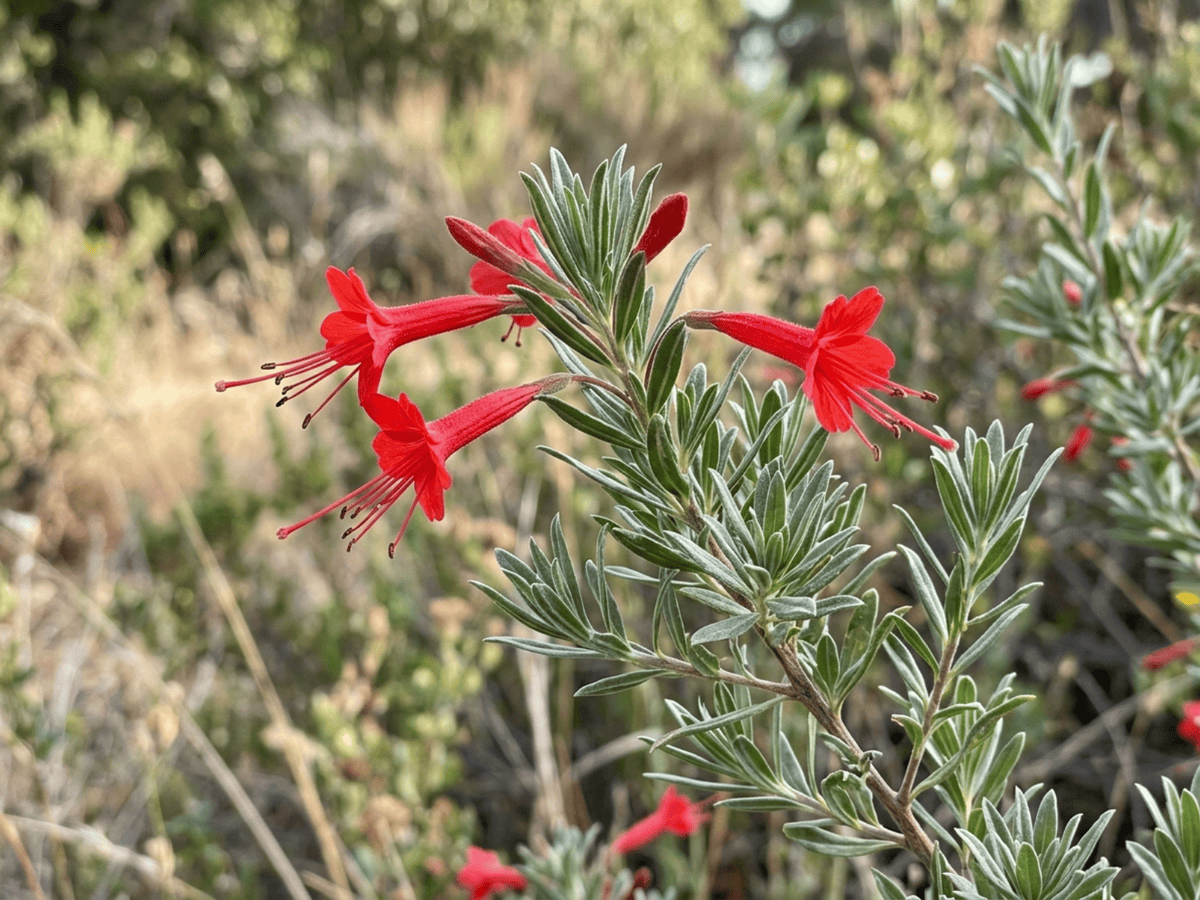
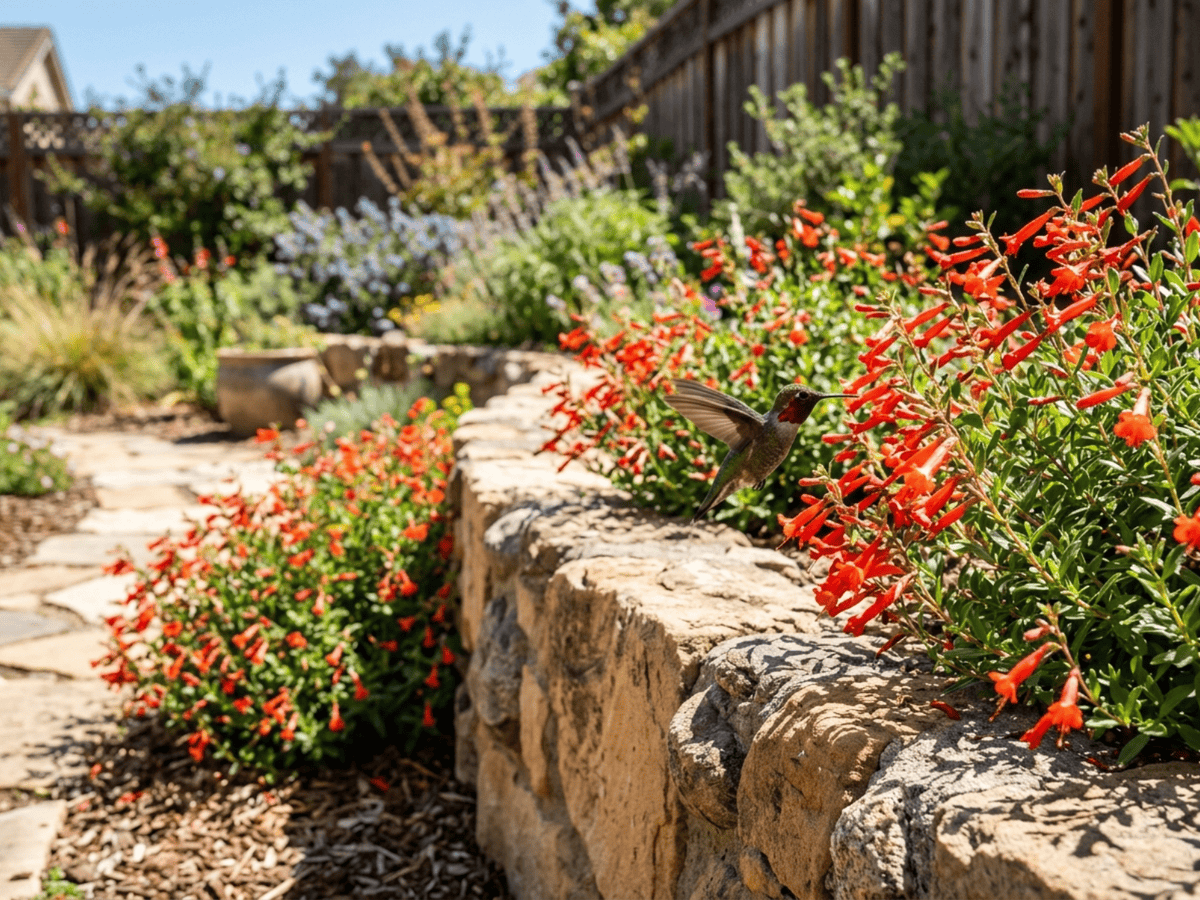
California Fuchsia is a superb California and Baja California native perennial subshrub producing brilliant red-orange tubular flowers from late summer through autumn, exactly when migrating hummingbirds need nectar. Growing 1-3 feet tall with gray-green foliage, it spreads by rhizomes to form a robust colony. One of the most valuable plants in the California native garden for its spectacular late-season bloom when few other natives flower.
- Drought-tolerant
- Groundcover
- Native
- Wildlife-friendly
How to care for California Fuchsia
Watering
- Springevery 14 days
- Summerevery 14 days
- Fallevery 14 days
- Winterpause watering
Soil · Well-draining
- Top dressingPine bark mulch10%
- Main mixPotting soil + perlite 2:170%
- DrainageLECA / gravel20%
Never skip the drainage layer — standing water is the top cause of root rot.
FERTILIZER
This plant needs little to no feeding.
At a Glance
- NativeNorth America
- Height1–2 ft (0.3–0.6 m)
- Spread1–3 ft (0.3–0.9 m)
- Flower colorRed, Orange, Pink
- Foliage colorGreen, Silver
- SoilSandy, Well-drained
- LocationsYard
Bloom time
BLOOM CYCLE
Peak bloom
Aug–Nov
Brilliant red-orange tubular flowers August to November
Fragrance
NO FRAGRANCE
No notable fragrance.
Toxicity
No toxicity has been reported for this plant. Still, it is wise to keep pets from chewing on any houseplant.
Educational information, not medical or veterinary advice. If exposure is suspected, contact a doctor or veterinarian.
DISTRIBUTION


- Native
- Introduced
- North America
History
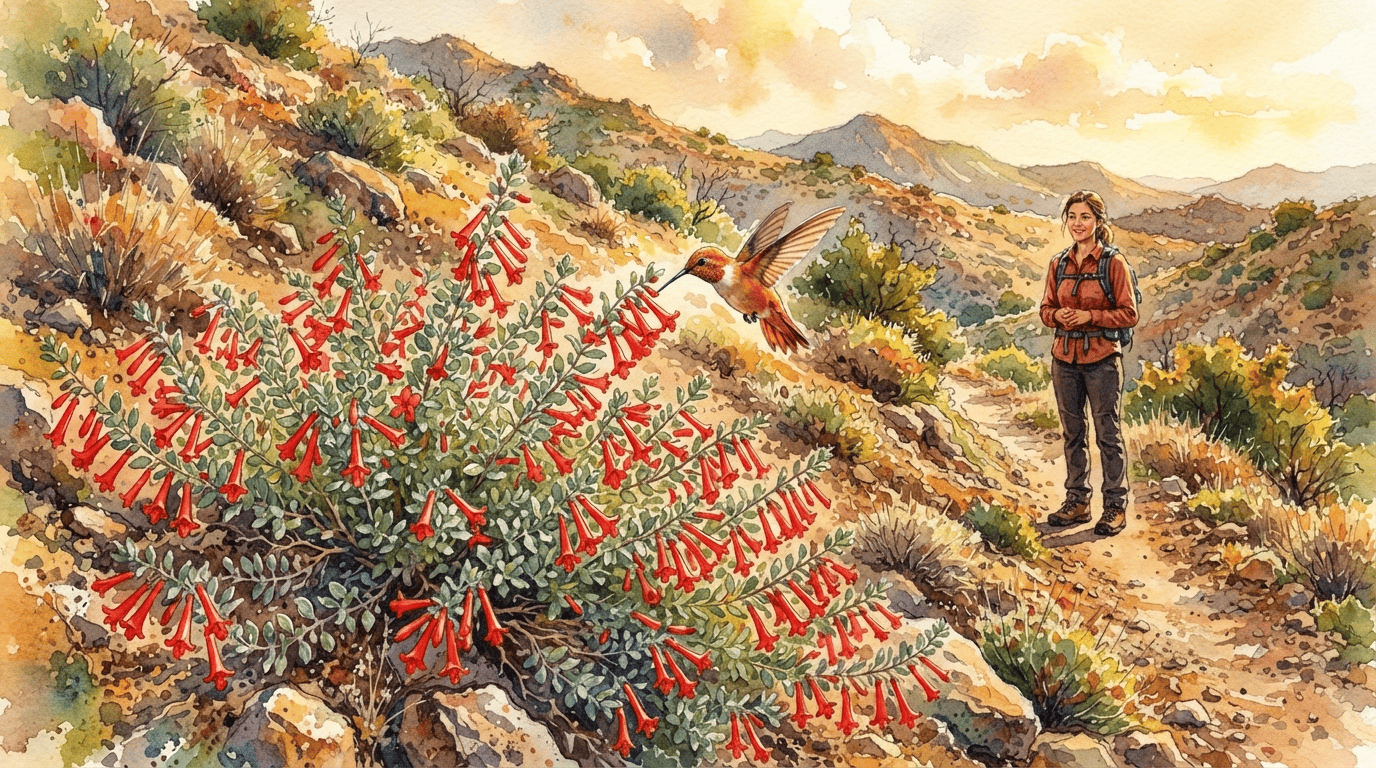
Epilobium canum (formerly and often still Zauschneria californica) is native to California and adjacent southern Oregon, western Nevada, and southwestern Idaho, growing in dry rocky slopes, chaparral, and open coniferous forests from sea level to over 3000 meters elevation. It is a low spreading perennial 30-60 cm tall with narrow gray-green to green leaves and, in August through October — the very end of the Western summer and well into early autumn — produces dense spikes of tubular bright-scarlet to orange-red trumpet-shaped flowers 3-4 cm long that are one of the most attractive hummingbird plants of California natives. Because of the late bloom timing (continuing into October in most of its range), the species is the single most important late-summer and fall hummingbird nectar plant of California-native horticulture, providing critical fuel for Anna's, Allen's, and rufous hummingbirds during autumn migration and for overwintering Anna's hummingbirds along the California coast.
The species has been split into multiple subspecies reflecting natural variation across its geographic range — ssp. canum (the typical coastal form), ssp. latifolium (Sierra Nevada), ssp. garrettii, and others — and horticultural selection has produced dozens of named cultivars including "Everett's Choice," "Catalina," "Marin Pink" (pink-flowered), "Silver Select" (silvery foliage), and "Hurricane Point" (spreading groundcover form). Grows best in well-drained soil with full sun and summer-dry adaptation.
Native California tribes used the plant medicinally. The 'Catalina' and 'Calistoga' cultivars are particularly popular for garden use.
Symbolism & meaning
What It Symbolizes
California Fuchsia bursts into fiery scarlet bloom just as the rest of the late-season garden begins to fade, and so its meaning is vitality, an unexpected surge of energy when other plants are winding down. Another layer is perseverance, the willingness to flower when conditions seem to argue for rest. To plant epilobium is to keep a small late summer in the autumn garden, a plant that hummingbirds and gardeners alike turn to when everything else has begun to brown.
- Vitality — fiery late-season blooms burst with energy
- Perseverance — blooms when other plants are winding down
Where the Name Comes From
The name California Fuchsia points to California. 'Epilobium' from Greek 'epi' (upon) and 'lobos' (pod), referring to flower placement above the capsule; 'canum' means 'gray-white'.
Uses & Fun Facts
- Tubular orange-red flowers feed migrating hummingbirds
- Spreads as drought-tough mat on dry slopes
- California fuchsia lights up late-summer xeric beds
Related plants
Plants with similar care
 Chinese AbeliaAbelia chinensis
 Fragrant AbeliaAbelia mosanensis
 Large-Flowered AbeliaAbelia uniflora
 Glossy AbeliaAbelia x grandiflora
Frequently asked questions
How often should I water California Fuchsia?
Water about every 14 days during the growing season, and always let excess water drain away.
How much light does California Fuchsia need?
Full sun: 6+ hrs direct. Watch the leaves — scorching or stretching means the light needs adjusting.
Is California Fuchsia toxic to cats or dogs?
No toxicity has been reported for this plant. Still, it is wise to keep pets from chewing on any houseplant. Educational information, not medical or veterinary advice. If exposure is suspected, contact a doctor or veterinarian.
Is California Fuchsia easy to grow?
Yes — it is considered an easy, beginner-friendly plant.
When does California Fuchsia bloom?
It typically blooms Aug–Nov in the Northern Hemisphere.
YardMate
Identify any plant in seconds
Snap a photo — YardMate names the plant, diagnoses problems, and reminds you when to water.
Download on the App Store