 YardMate


Queen Of The Night
Epiphyllum oxypetalum
Medium · Some experienceAbout Queen Of The Night
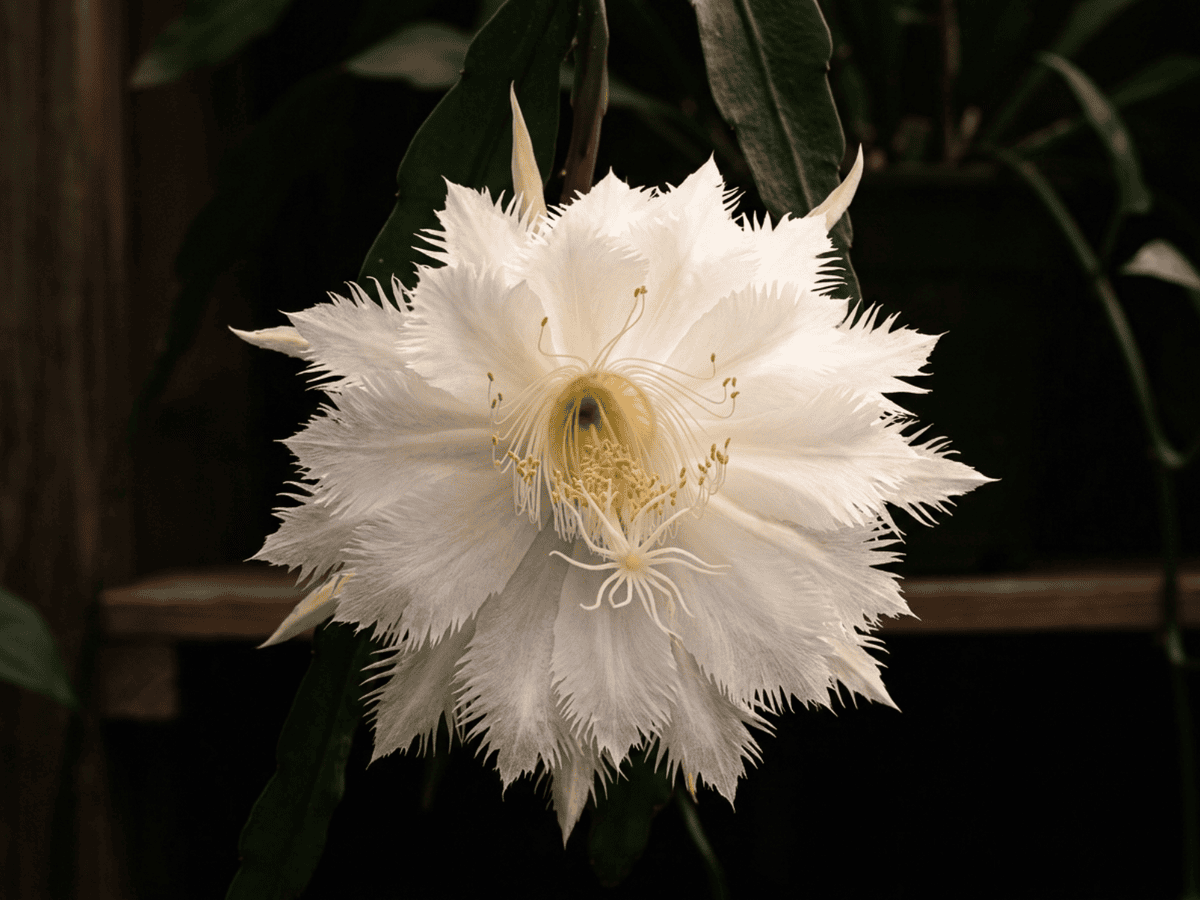
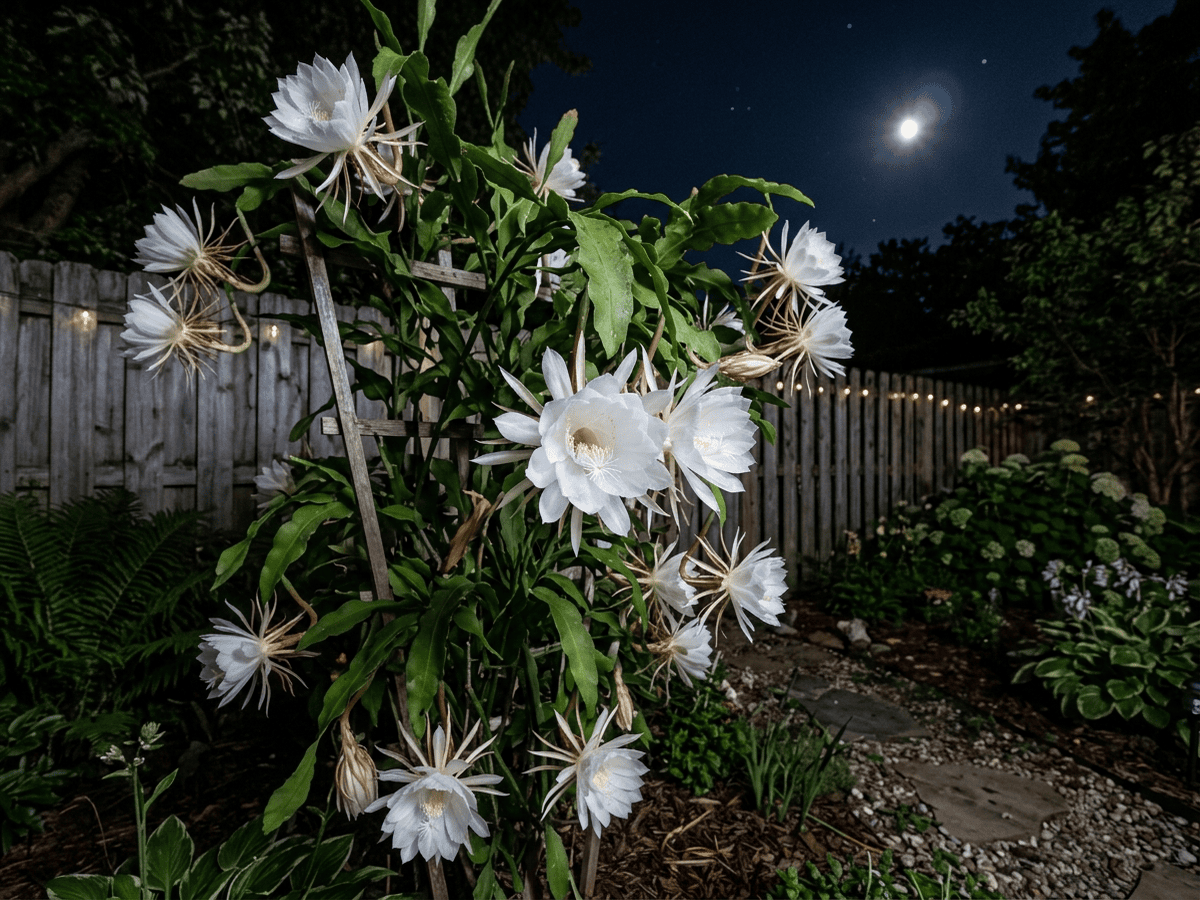
Queen of the Night is a jungle cactus from Mexico and Central America that turns flowering into an event. Its long, flat, leaf-like stems grow as epiphytes in the wild, while mature plants can sprawl or cascade dramatically in cultivation. The enormous white flowers, sometimes dinner-plate sized, open after dusk with a rich perfume and collapse by morning. That single-night bloom has made the plant a symbol of fleeting beauty across many Asian diaspora households, where families often gather to watch the buds unfold. Easy in bright indirect light and fast-draining soil, it asks mostly for patience: months of green stems, then one unforgettable night.
- Fragrant
How to care for Queen Of The Night
Watering
- Springevery 5 days
- Summerevery 4 days
- Fallevery 10 days
- Winterevery 21 days
Soil · Fast-draining
- Main mixSand + pumice + soil 1:1:150%
- DrainagePumice / gravel50%
Keep grit at half the mix or more — this soil is meant to dry out fast.
FERTILIZER
Bloom Booster 10-52-10
A phosphorus-forward feed fuels abundant blooms, with just enough nitrogen and potassium to keep foliage and roots steady.
- Nitrogen · Leaves
- Phosphorus · Roots + Blooms
- Potassium · Strength
- Springevery 30 days
- Summerevery 30 days
At a Glance
- NativeNorth America, Central America
- Height6–10 ft (1.8–3 m)
- Spread3–5 ft (0.9–1.5 m)
- Flower colorWhite
- Foliage colorGreen
- SoilLoamy, Well-drained
- LocationsIndoor · Yard
Bloom time
BLOOM CYCLE
Peak bloom
Jun–Aug
Enormous fragrant white flowers open for one night only in summer; watch for swelling buds
Fragrance
STRONG FRAGRANCE
Intensely sweet and complex nocturnal fragrance; one of the most prized night-blooming scents.
Toxicity
No toxicity has been reported for this plant. Still, it is wise to keep pets from chewing on any houseplant.
Educational information, not medical or veterinary advice. If exposure is suspected, contact a doctor or veterinarian.
DISTRIBUTION


- Native
- Introduced
- North America
- Central America
History

Epiphyllum oxypetalum is an epiphytic cactus native to tropical Mexico and Central America. It grows on tree branches with flat leaf-like stems, then produces enormous white flowers that open after dusk, reach full bloom at night, and collapse by dawn. That one-night performance gave the plant its aura.
Cuttings traveled widely through Chinese, Filipino, Indian, Sri Lankan, and Southeast Asian diaspora communities, where a bloom became a family event: people stayed awake to watch it open, take photos, and mark the brief spectacle as good fortune. In Sri Lankan Buddhist tradition it is associated with the kadupul flower and rare offerings; in Chinese-influenced culture it became a symbol of fleeting brilliance, the kind of beauty that appears once and vanishes.
Because the flowers cannot be harvested or shipped, the plant resists ordinary commerce. Its value is the shared night of waiting.
Symbolism & meaning
What It Symbolizes
Queen of the night expresses transience in a single, unforgettable evening. Once a year, on a chosen midsummer night, its enormous white blossoms open — perfume the air for a few hours — and are spent by dawn. Its rarity makes the moment sacred; in many Asian households, friends are summoned to witness the bloom together. The flower teaches that what is most beautiful is often what cannot be repeated.
- Transience — the one-night bloom represents the fleeting beauty of life
- Rarity — the elusive flowering symbolizes precious, unrepeatable moments
Where the Name Comes From
'Epiphyllum' comes from Greek 'epi' (upon) and 'phyllon' (leaf), as the flowers appear to grow upon the leaf-like stems. 'Oxypetalum' means sharp-petaled, from Greek 'oxys' (sharp) and 'petalon' (petal).
Uses & Fun Facts
- Enormous white blossoms open one summer night with intense perfume
- Trailing forest cactus grown in hanging pots indoors
- Celebrated in East Asia as the symbolic Queen of the Night
Related plants
Plants with similar care
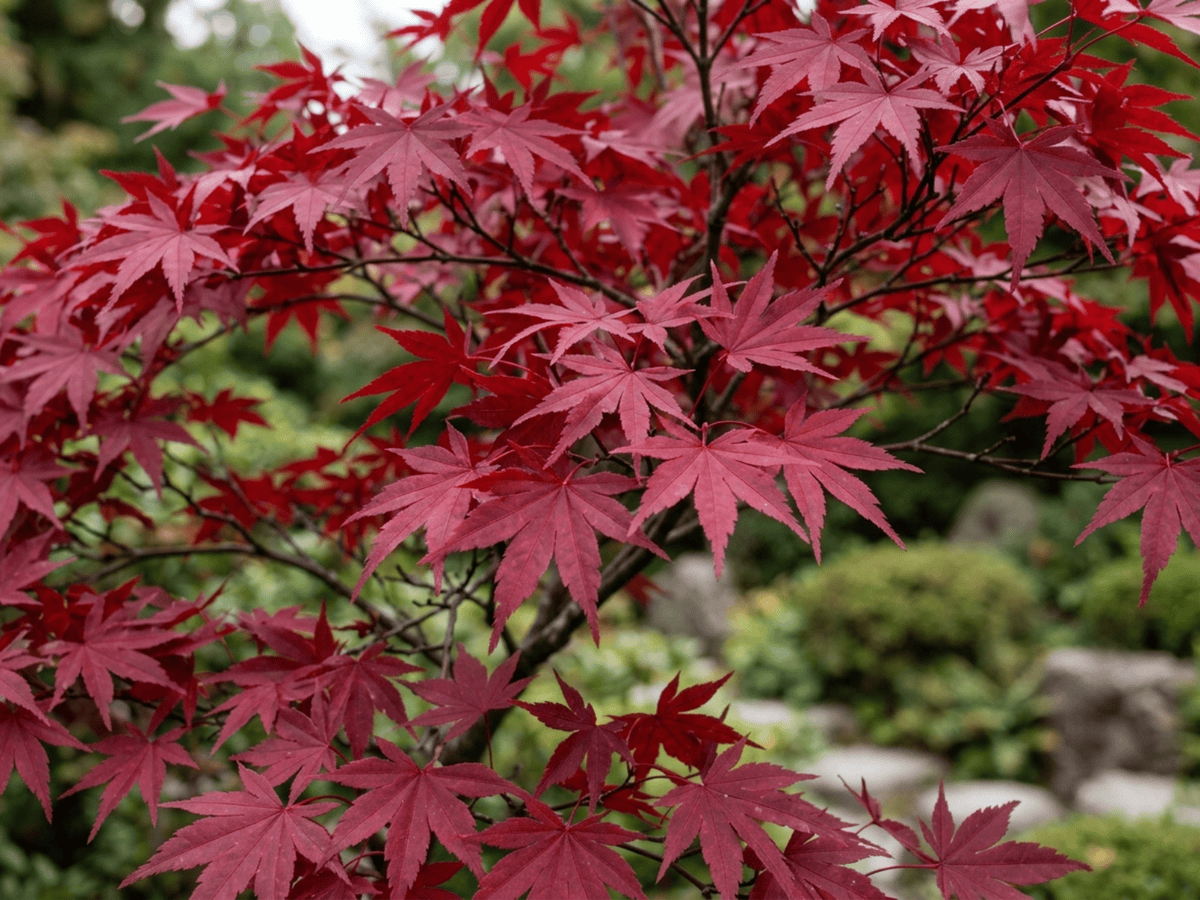 Japanese MapleAcer palmatum
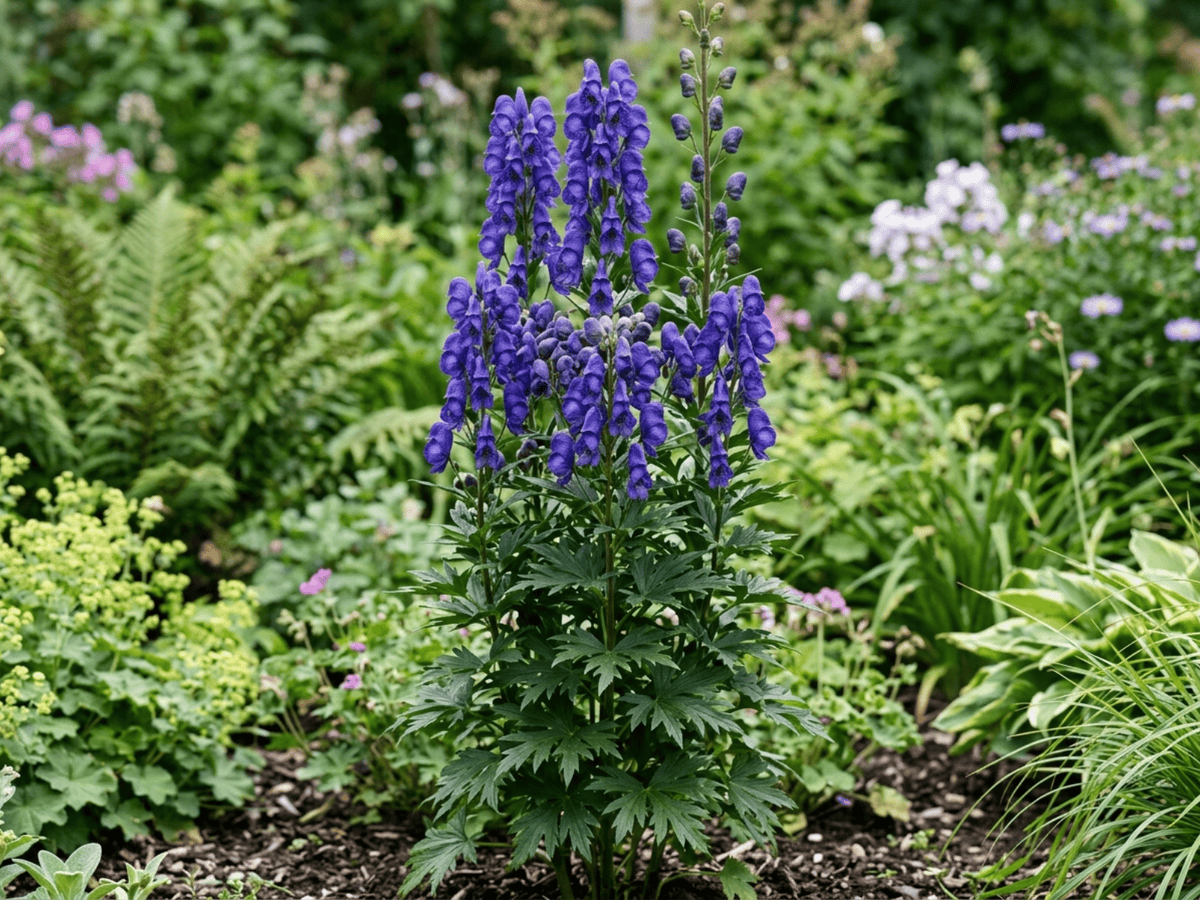 Azure MonkshoodAconitum carmichaelii
 Florida HobblebushAgarista populifolia
 Alocasia zebrinaAlocasia zebrina
Frequently asked questions
How often should I water Queen Of The Night?
In summer, water about every 4 days; in winter, about every 21 days. Adjust for heat, pot size and drainage.
How much light does Queen Of The Night need?
Part shade: 2–4 hrs direct. Watch the leaves — scorching or stretching means the light needs adjusting.
Is Queen Of The Night toxic to cats or dogs?
No toxicity has been reported for this plant. Still, it is wise to keep pets from chewing on any houseplant. Educational information, not medical or veterinary advice. If exposure is suspected, contact a doctor or veterinarian.
Is Queen Of The Night easy to grow?
It is moderately demanding: a good choice once you have a little experience.
Can Queen Of The Night be grown indoors?
Yes, it adapts well to indoor growing given the right light.
When does Queen Of The Night bloom?
It typically blooms Jun–Aug in the Northern Hemisphere.
YardMate
Identify any plant in seconds
Snap a photo — YardMate names the plant, diagnoses problems, and reminds you when to water.
Download on the App Store