 YardMate


Rough Horsetail
Equisetum hyemale
Easy · Beginner friendlyAbout Rough Horsetail
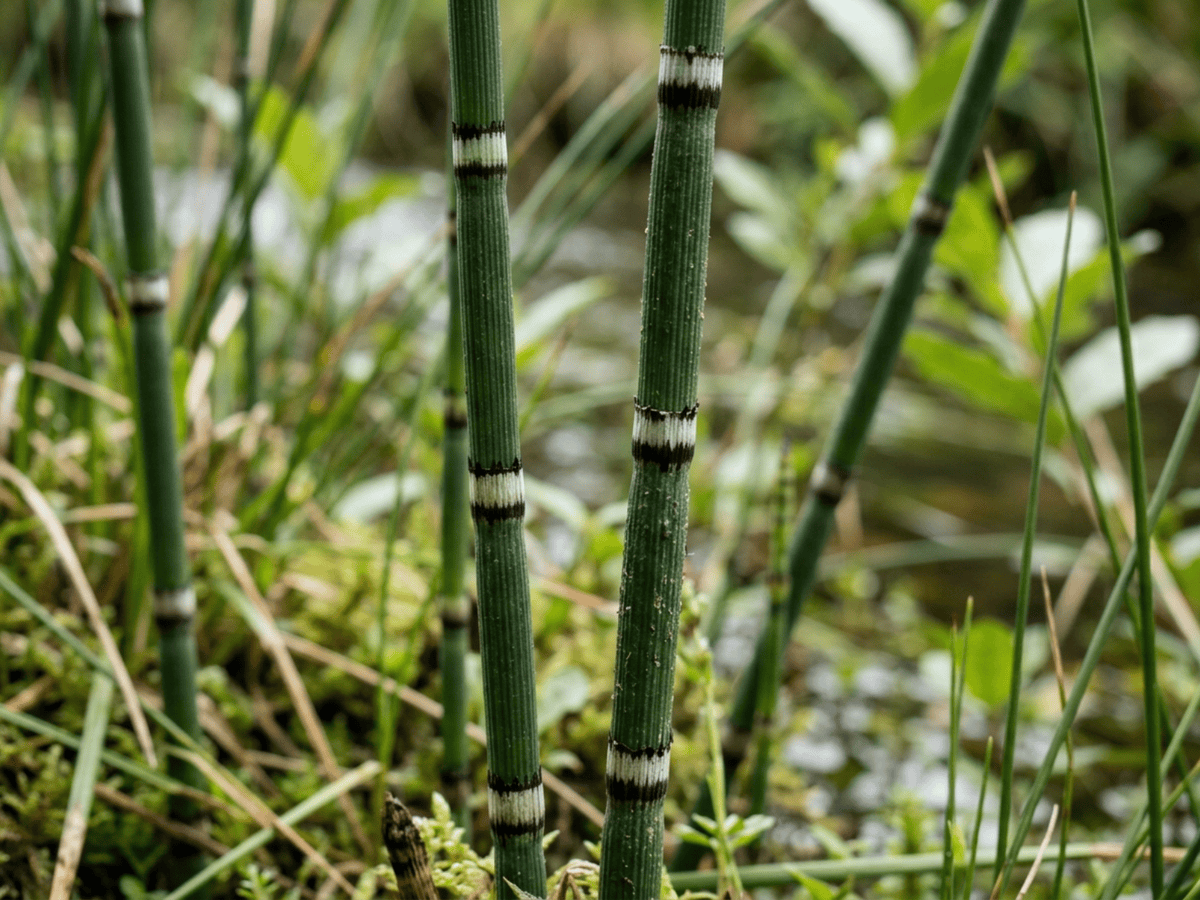
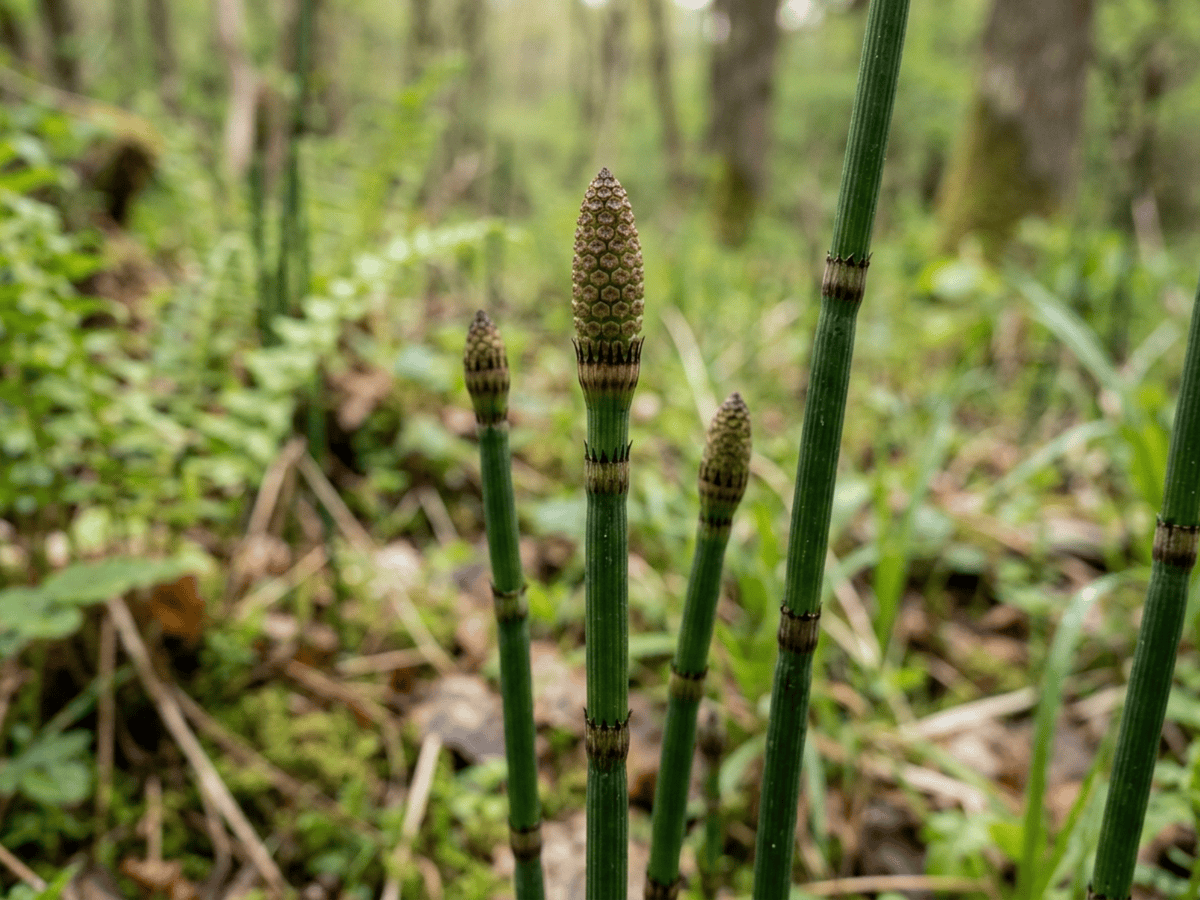
Equisetum hyemale, the scouring rush or rough horsetail, is a striking, evergreen, rush-like plant native to North America, Europe, and northern Asia. It produces upright, unbranched, dark green stems segmented by distinctive black-and-white banded nodes, growing 60–120 cm tall. The stems contain silica, giving them a rough, sandpaper-like texture that was historically used for polishing metal and scouring pots. It is a living fossil — horsetails dominated the landscape during the Carboniferous period 350 million years ago, with some ancient species reaching tree-like proportions. In the garden, it provides a bold, architectural, vertical accent. It spreads aggressively by rhizomes and is best contained in pots or bounded beds to prevent invasive spread. It thrives in wet to boggy soil and full sun to partial shade, and is virtually pest-free.
- Architectural
- Evergreen
How to care for Rough Horsetail
Watering
- Springevery 1 days
- Summerevery 1 days
- Fallevery 2 days
- Winterevery 7 days
Soil · Moisture-retentive
- Top dressingSphagnum moss10%
- Main mixPeat + coco coir 1:180%
- DrainagePerlite / gravel10%
Keep it evenly moist — but the drainage layer still matters.
FERTILIZER
This plant needs little to no feeding.
At a Glance
- NativeNorth America
- Height2–4 ft (0.6–1.2 m)
- Spread2–4 ft (0.6–1.2 m)
- Foliage colorGreen
- SoilMoisture-retentive, Loamy
- LocationsYard · Indoor · Balcony
Bloom time
BLOOM CYCLE
Non-flowering; produces spore cones at stem tips in spring
Fragrance
NO FRAGRANCE
No notable fragrance.
Toxicity
Humans Moderate · Pets Moderate
thiaminase, silica, trace alkaloids, and equisetonin
Moderate
- All
- Ingestion
EXPOSURE Eating any part of the plant.
EFFECT Contains thiaminase (B1-destroying enzyme) and trace nicotine-like alkaloids and livestock exposure causes weight loss, weakness, staggers.
NOTE Horsetails are toxic to horses ("equisetosis") and cattle grazing on contaminated hay; veterinary concern with livestock.
Moderate
- All
- Ingestion
EXPOSURE Eating any part of the plant.
EFFECT Thiaminase exposure, gastrointestinal upset.
NOTE Horsetails are toxic to horses ("equisetosis") and cattle grazing on contaminated hay; veterinary concern with livestock.
Moderate
- All
- Ingestion
EXPOSURE Eating any part of the plant.
EFFECT Same as dogs.
NOTE Horsetails are toxic to horses ("equisetosis") and cattle grazing on contaminated hay; veterinary concern with livestock.
Educational information, not medical or veterinary advice. If exposure is suspected, contact a doctor or veterinarian.
DISTRIBUTION


- Native
- Introduced
- North America
History

Equisetum hyemale is a spore-reproducing vascular plant in the Equisetaceae family — the sole modern family of an extremely ancient plant lineage. Equisetophytes (horsetails and their extinct relatives) dominated Carboniferous swamp forests 350-300 million years ago alongside tree-sized lycophytes, and giant horsetails (Calamites) reached 20 meters tall; modern Equisetum species are the sole surviving genus of this lineage, making living horsetails true evolutionary relics. E. hyemale is circumboreal, native across temperate North America, Europe, and Asia, and produces upright unbranched cylindrical dark-green stems 60-120 cm tall with characteristic dark-banded nodes.
Its very high silica content — the stem walls are essentially glass-embedded cellulose — made horsetails traditionally useful as scouring and polishing material: Indigenous North American peoples and colonial Americans used horsetails to scour wooden ware and cooking pots, clockmakers used them to polish brass gearwork, and Japanese artisans use horsetail ("tokusa") to polish fine wood. The common names "scouring rush" and "pewterwort" reflect these uses.
Horsetails are invasive in moist garden soils — their rhizomes are virtually impossible to eradicate — and are primarily used as architectural aquatic or marginal plants in contained water garden installations. Horsetails are among the oldest living plant genera, with a fossil record stretching back over 350 million years.
Symbolism & meaning
What It Symbolizes
Rough Horsetail embodies discipline through its rigid, jointed stems, an architecture of order, precision, and self-control standing upright in still water. As a member of a 350-million-year-old lineage, it also carries endurance on a geologic scale, its ancestors having watched dinosaurs rise and fall. It is often read as a flower of unbroken continuity, a living fossil whose form is a lesson in how little needs to change to last.
- Discipline — Its rigid, upright stems evoke order, precision, and self-control
- Endurance — As a 350-million-year-old lineage, it represents timeless persistence
Where the Name Comes From
Equisetum from Latin 'equus' (horse) and 'seta' (bristle), meaning horse bristle. Hyemale means 'of winter,' as the stems persist through cold months.
Uses & Fun Facts
- Silica-rich stems traditionally used for scouring and sanding wood
- Banded vertical stems anchor modern water gardens
- Architectural living-fossil accent in container or pond
Related plants
Plants with similar care
 Chinese AbeliaAbelia chinensis
 Fragrant AbeliaAbelia mosanensis
 Large-Flowered AbeliaAbelia uniflora
 Glossy AbeliaAbelia x grandiflora
Frequently asked questions
How often should I water Rough Horsetail?
In summer, water about every 1 days; in winter, about every 7 days. Adjust for heat, pot size and drainage.
How much light does Rough Horsetail need?
Full sun: 6+ hrs direct. Watch the leaves — scorching or stretching means the light needs adjusting.
Is Rough Horsetail toxic to cats or dogs?
Pets Moderate (Dogs Moderate · Cats Moderate) Educational information, not medical or veterinary advice. If exposure is suspected, contact a doctor or veterinarian.
Is Rough Horsetail easy to grow?
Yes — it is considered an easy, beginner-friendly plant.
Can Rough Horsetail be grown indoors?
Yes, it adapts well to indoor growing given the right light.
YardMate
Identify any plant in seconds
Snap a photo — YardMate names the plant, diagnoses problems, and reminds you when to water.
Download on the App Store