 YardMate


Horseweed
Erigeron canadensis
Easy · Beginner friendlyAbout Horseweed
Horseweed or Canadian Fleabane is a tall native North American annual now naturalized worldwide as a major agricultural weed. Growing 3 to 6 feet tall on upright leafy stems, it produces thousands of tiny greenish-white daisy flowers in terminal plume-like clusters in late summer, each producing wind-carried seeds. The first weed to evolve glyphosate (Roundup) resistance in the US, now a major no-till agricultural problem nationwide.
- Native
How to care for Horseweed
Watering
- Springevery 14 days
- Summerevery 7 days
- Fallevery 14 days
- Winterevery 21 days
Soil · Well-draining
- Top dressingPine bark mulch10%
- Main mixPotting soil + perlite 2:170%
- DrainageLECA / gravel20%
Never skip the drainage layer — standing water is the top cause of root rot.
FERTILIZER
This plant needs little to no feeding.
At a Glance
- NativeNorth America
- Height3–6 ft (0.9–1.8 m)
- Spread1–2 ft (0.3–0.6 m)
- Flower colorWhite, Cream
- Foliage colorGreen
- Fruit colorBrown
- SoilWell-drained, Sandy, Loamy
- LocationsYard
Bloom time
BLOOM CYCLE
Peak bloom
Jul–Oct
Tiny greenish-white plume flowers July through October
Fragrance
LIGHT FRAGRANCE
Foliage faintly aromatic when crushed.
Toxicity
Humans Slight
limonene, terpenes, and essential oil
Slight
- Leaf
- Contact
EXPOSURE Touching leaves.
EFFECT Contact dermatitis in sensitive people.
NOTE Documented concern for humans: Contact dermatitis in sensitive people.
Not reported
EXPOSURE No exposure route is reported.
EFFECT No toxic effect is reported.
NOTE No toxicity is reported for dogs in this catalog; this is not evidence that the plant is edible or harmless.
Not reported
EXPOSURE No exposure route is reported.
EFFECT No toxic effect is reported.
NOTE No toxicity is reported for cats in this catalog; this is not evidence that the plant is edible or harmless.
Educational information, not medical or veterinary advice. If exposure is suspected, contact a doctor or veterinarian.
DISTRIBUTION

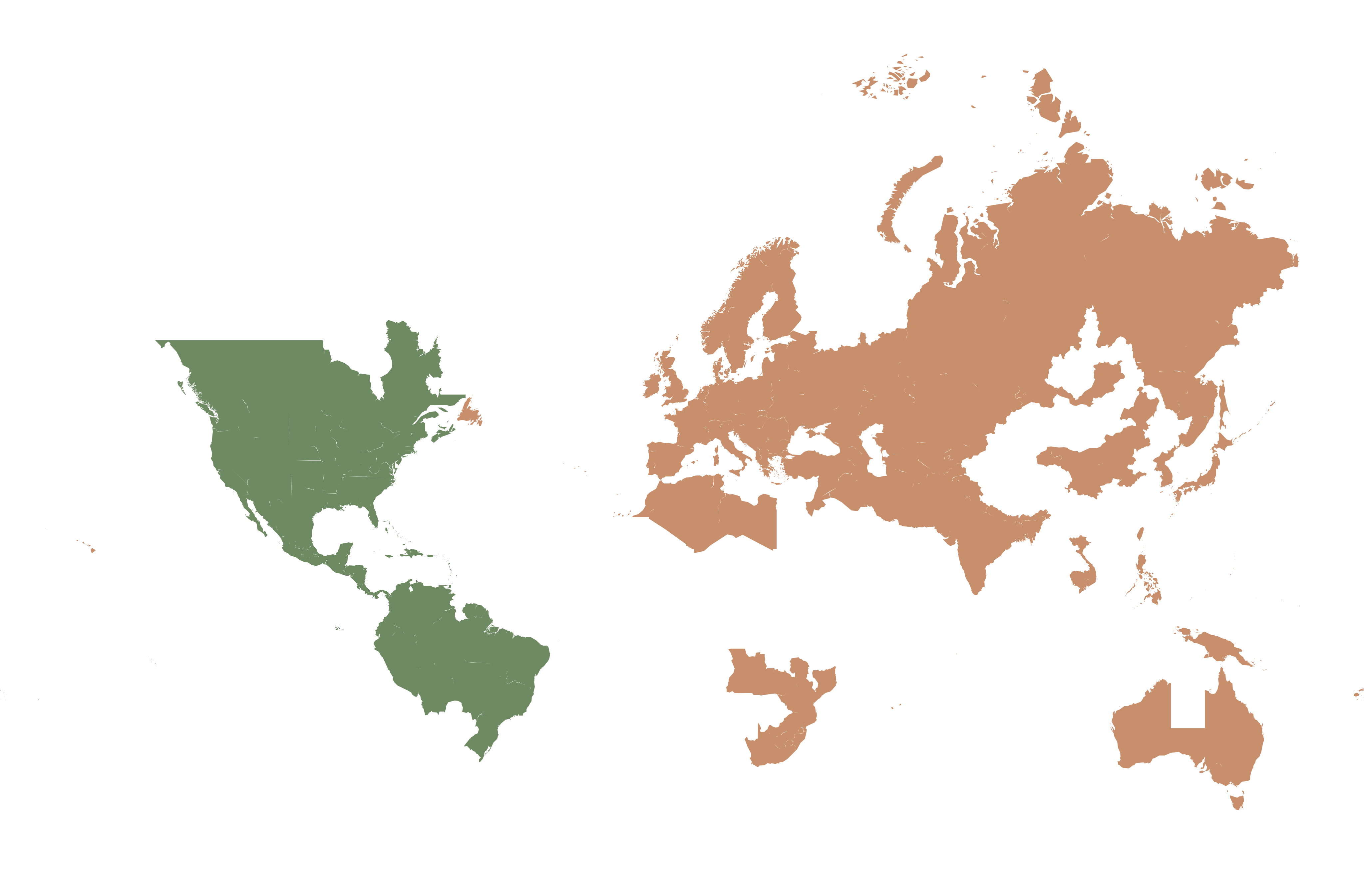
- Native
- Introduced
- North America
History
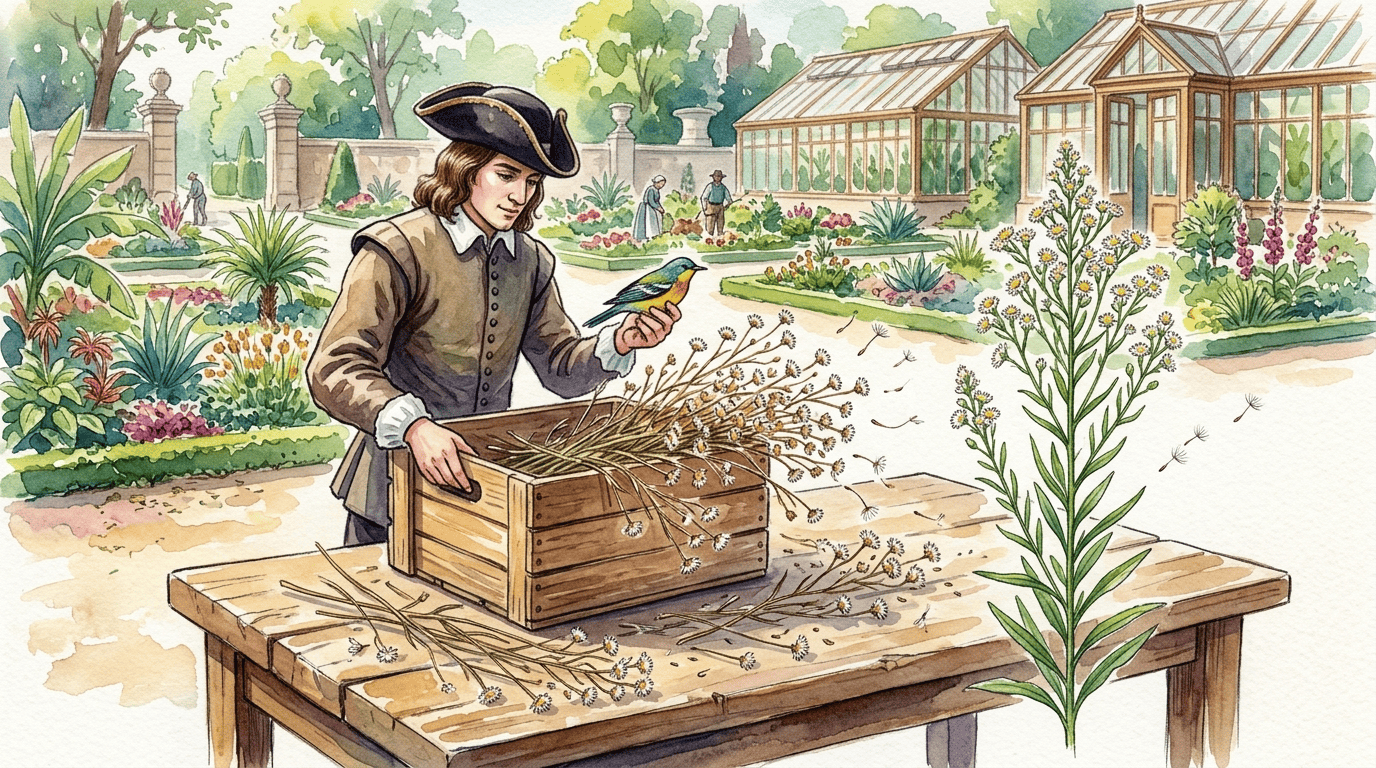
Erigeron canadensis is native to North America from Canada to Mexico. Linnaeus described it in Species Plantarum (1753). The widely repeated story of its European introduction dates to around 1650 when seeds reportedly escaped from an American bird specimen stuffed with horseweed being unpacked at the Jardin du Roi in Paris; whether accurate or apocryphal, it naturalized across Europe within a century.
Cherokee, Iroquois, and other Indigenous peoples burned its dried leaves as an insect-repellent incense and used it for diarrhea. The essential oil has anti-diarrheal and styptic properties. Of modern agronomic significance, in 2000 researchers at the University of Delaware confirmed the first glyphosate-resistant population in a Delaware soybean field — kicking off the glyphosate-resistance crisis that has since hit dozens of weed species globally.
Native to North America, believed to have been introduced to Europe in the 1600s by a bird-stuffed specimen and now naturalized worldwide. In 2000 became the first US agricultural weed to evolve glyphosate resistance in Delaware soybean fields, and now resists multiple herbicide classes across the American farm belt. A poster child for herbicide-resistance evolution.
Symbolism & meaning
What It Symbolizes
Horseweed is a study in Evolutionary speed — the first weed in the United States to evolve resistance to glyphosate, rewriting the rules of modern agriculture in a generation. As a Wind seeder it casts thousands of tiny parachuted seeds for miles. A modest gray plant that has, very quietly, outpaced industrial chemistry.
- Evolutionary speed — first US weed to evolve glyphosate resistance
- Wind seeder — thousands of tiny seeds ride wind for miles
Where the Name Comes From
'Erigeron' from Greek 'eri-geron' meaning early-old, for the early grayish seed heads; 'canadensis' means of Canada, for the northern native range.
Uses & Fun Facts
- Used in folk medicine for diarrhea and bleeding
- Tiny flowers support small native bees and beneficial insects
Related plants
Plants with similar care
 Chinese AbeliaAbelia chinensis
 Fragrant AbeliaAbelia mosanensis
 Large-Flowered AbeliaAbelia uniflora
 Glossy AbeliaAbelia x grandiflora
Frequently asked questions
How often should I water Horseweed?
In summer, water about every 7 days; in winter, about every 21 days. Adjust for heat, pot size and drainage.
How much light does Horseweed need?
Full sun: 6+ hrs direct. Watch the leaves — scorching or stretching means the light needs adjusting.
Is Horseweed toxic to cats or dogs?
Pets Not reported (Dogs Not reported · Cats Not reported) Educational information, not medical or veterinary advice. If exposure is suspected, contact a doctor or veterinarian.
Is Horseweed easy to grow?
Yes — it is considered an easy, beginner-friendly plant.
When does Horseweed bloom?
It typically blooms Jul–Oct in the Northern Hemisphere.
YardMate
Identify any plant in seconds
Snap a photo — YardMate names the plant, diagnoses problems, and reminds you when to water.
Download on the App Store