 YardMate


California Poppy
Eschscholzia californica
Easy · Beginner friendlyAbout California Poppy
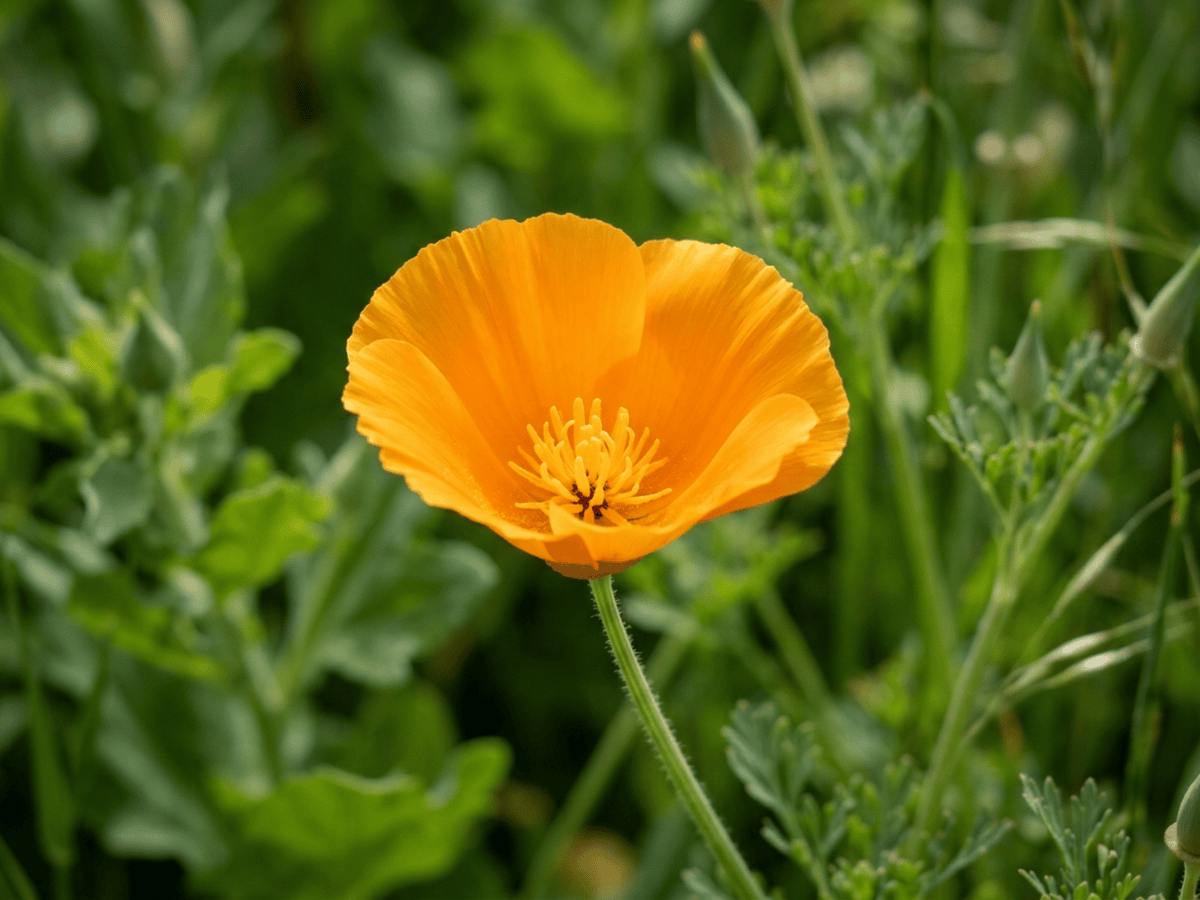
The California Poppy is the official state flower of California, native to the western United States from Oregon to Baja California. Its brilliant orange-gold four-petaled blossoms close at night and on cloudy days, opening with the morning sun. Drought-tolerant and self-seeding, it blooms prolifically from spring through summer in well-drained soils. California poppies carpet hillsides, roadsides, and desert plains in a riot of color each spring, creating some of the most iconic wildflower displays in the American West.
- Drought-tolerant
- Native
- Pollinator-friendly
How to care for California Poppy
Watering
- Springevery 10 days
- Summerevery 14 days
- Fallevery 14 days
- Winterpause watering
Soil · Well-draining
- Top dressingPine bark mulch10%
- Main mixPotting soil + perlite 2:170%
- DrainageLECA / gravel20%
Never skip the drainage layer — standing water is the top cause of root rot.
FERTILIZER
This plant needs little to no feeding.
At a Glance
- NativeNorth America
- Height0.5–1 ft (0.2–0.3 m)
- Spread0.5–1 ft (0.2–0.3 m)
- Flower colorOrange, Yellow, Red, White
- Foliage colorGreen, Blue-green
- SoilSandy, Well-drained
- LocationsYard · Balcony
Bloom time
BLOOM CYCLE
Peak bloom
Mar–Jun
Orange-gold cup-shaped flowers March to June
Fragrance
NO FRAGRANCE
No notable fragrance.
Toxicity
Humans Slight · Pets Slight
californidine, escholtzine, and protopine
Slight
- All
- Ingestion
EXPOSURE Eating any part of the plant.
EFFECT Mild alkaloid sedative and traditional herbal use. No significant acute toxicity.
NOTE Documented concern for humans: Mild alkaloid sedative and traditional herbal use. No significant acute toxicity.
Slight
- All
- Ingestion
EXPOSURE Eating any part of the plant.
EFFECT Mild GI upset possible.
NOTE Not listed as significantly toxic by ASPCA. Contains mild benzylisoquinoline alkaloids but no opiate narcotics.
Slight
- All
- Ingestion
EXPOSURE Eating any part of the plant.
EFFECT Mild GI upset possible.
NOTE Not listed as significantly toxic by ASPCA. Contains mild benzylisoquinoline alkaloids but no opiate narcotics.
Educational information, not medical or veterinary advice. If exposure is suspected, contact a doctor or veterinarian.
DISTRIBUTION

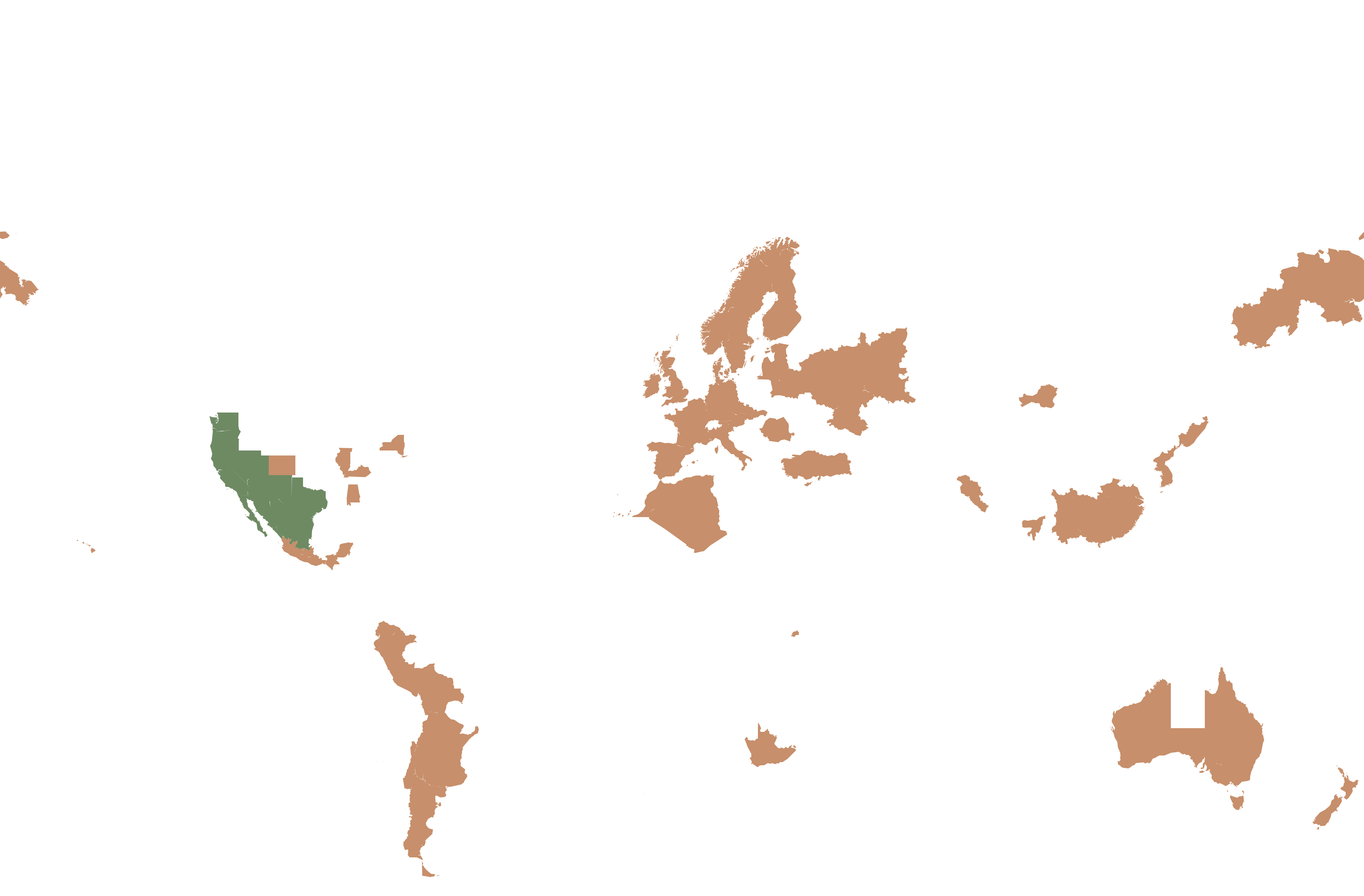
- Native
- Introduced
- North America
History
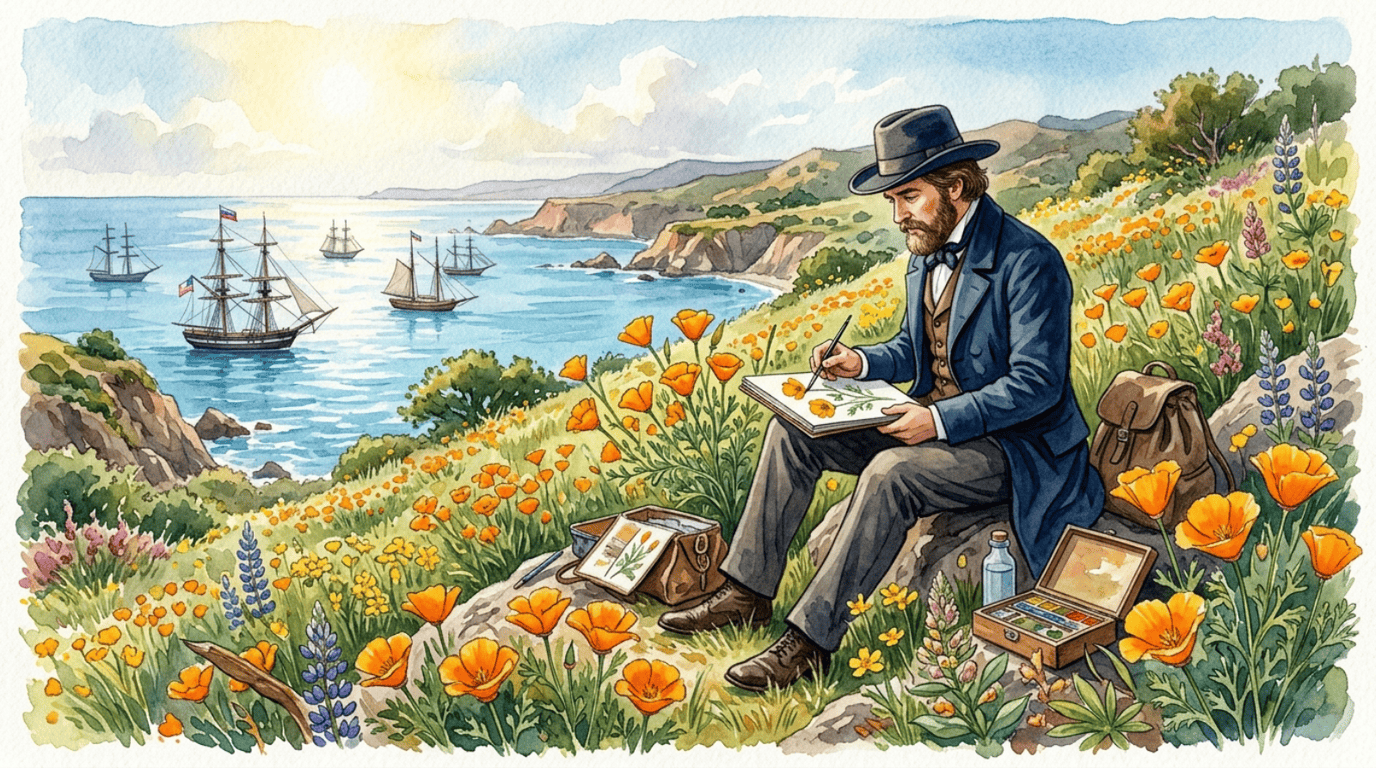
Eschscholzia californica is native to California, Oregon, Baja California, and parts of Nevada and Arizona, growing wild in grasslands, coastal bluffs, oak savanna, and open chaparral from sea level to 2000 meters. The genus was named in 1816 by German botanist Adelbert von Chamisso for his friend Johann Friedrich Eschscholtz, the Baltic German surgeon-naturalist on the Russian-financed Rurik expedition to the Pacific (1815-1818) that visited San Francisco Bay in 1816 — Chamisso described the species from specimens collected during that visit. It was the state flower of California by legislative adoption in 1903 (Assembly Bill 1022) and in 2010 the California Legislature designated April 6 as California Poppy Day.
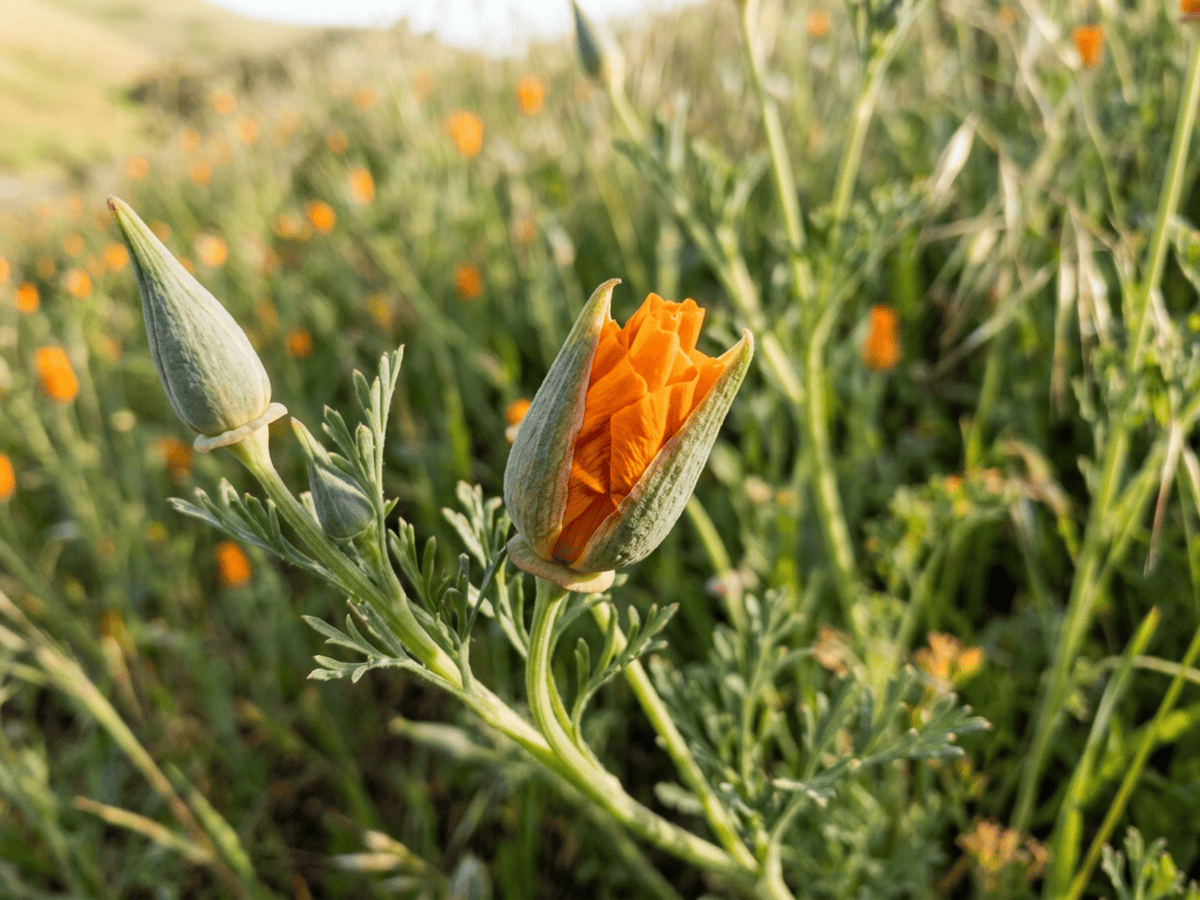
The plant produces bright-orange cup-shaped four-petaled flowers 3-6 cm across on 20-40 cm stems from early spring into summer, with deeply-dissected gray-green foliage. In particularly wet rainfall years the species produces spectacular "super bloom" displays in areas like the Antelope Valley California Poppy Reserve, Carrizo Plain, and Walker Canyon — 2019 and 2023 super blooms drew hundreds of thousands of visitors and caused traffic gridlock in Lake Elsinore.
The species has naturalized outside its native range in southern Europe, Chile, Argentina, Australia, and India, and is considered a minor invasive in some of those regions. The sap contains benzylisoquinoline alkaloids and has traditional use as a mild sedative by California Indigenous peoples and later Mexican herbal tradition, but contains no significant opiate alkaloids despite being a Papaveraceae member. The Spanish called it 'copa de oro' (cup of gold), and its annual blooming at Antelope Valley Poppy Reserve draws hundreds of thousands of visitors.
Symbolism & meaning
What It Symbolizes
California Poppy makes visible success, its cup of golden silk representing achievement and prosperity across the Golden State it crowns as official flower. Yet it earns that gold through resilience, thriving in harsh, dry conditions where pampered ornamentals quickly wither. A wildflower that quietly demonstrates how the most luminous victories often grow from the toughest soil.
- Success — represents achievement and golden prosperity
- Resilience — thrives in harsh conditions with minimal care
Where the Name Comes From
The name California Poppy points to California. Genus named for Johann Friedrich Eschscholtz (1793–1831), Baltic German naturalist; 'californica' refers to its native range.
Uses & Fun Facts
- Silky orange cups attract native bees and beetles
- California state flower for meadow and dry roadside plantings
- State flower of California celebrated each April Poppy Day
Related plants
Plants with similar care
 Chinese AbeliaAbelia chinensis
 Fragrant AbeliaAbelia mosanensis
 Large-Flowered AbeliaAbelia uniflora
 Glossy AbeliaAbelia x grandiflora
Frequently asked questions
How often should I water California Poppy?
Water about every 10 days during the growing season, and always let excess water drain away.
How much light does California Poppy need?
Full sun: 6+ hrs direct. Watch the leaves — scorching or stretching means the light needs adjusting.
Is California Poppy toxic to cats or dogs?
Pets Slight (Dogs Slight · Cats Slight) Educational information, not medical or veterinary advice. If exposure is suspected, contact a doctor or veterinarian.
Is California Poppy easy to grow?
Yes — it is considered an easy, beginner-friendly plant.
When does California Poppy bloom?
It typically blooms Mar–Jun in the Northern Hemisphere.
YardMate
Identify any plant in seconds
Snap a photo — YardMate names the plant, diagnoses problems, and reminds you when to water.
Download on the App Store