 YardMate


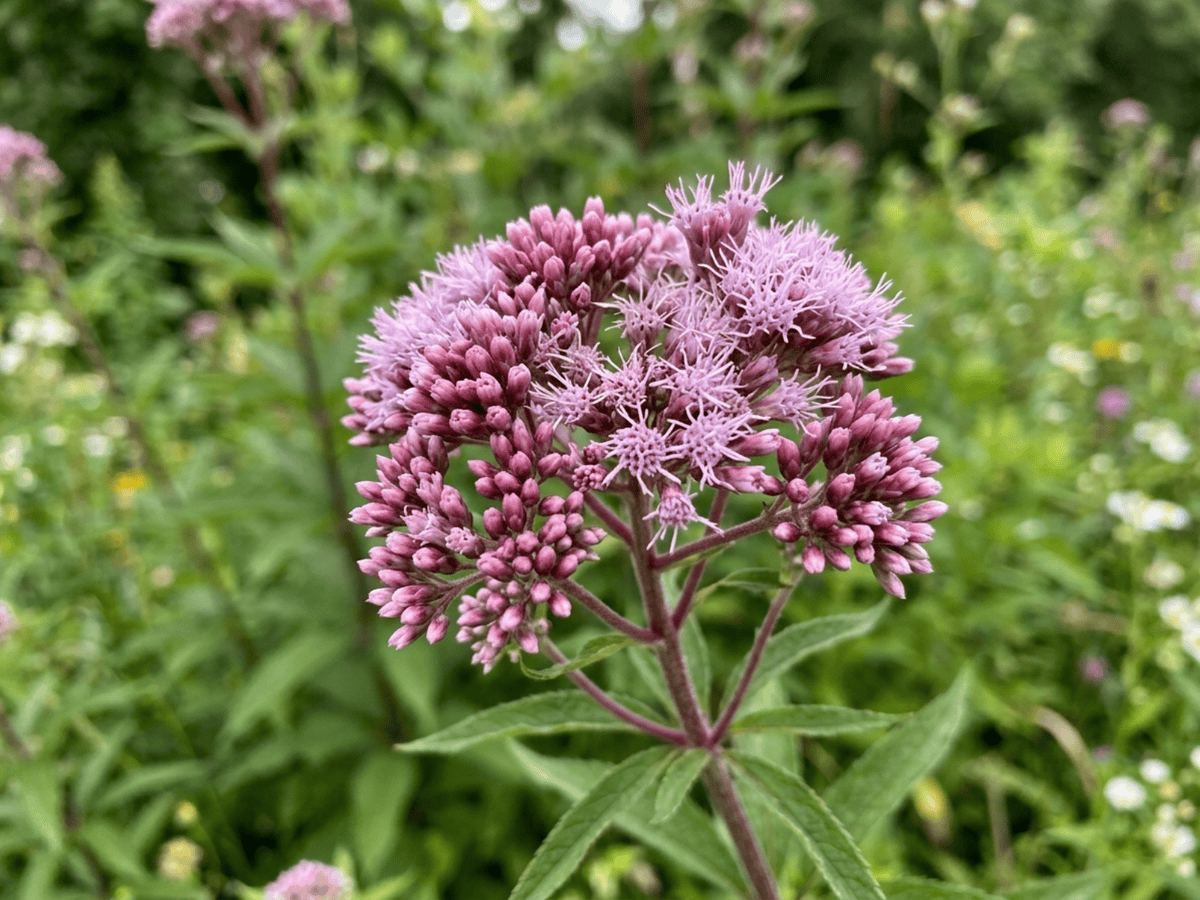

Spotted Joe-Pye Weed
Eupatorium purpureum
Easy · Beginner friendlyAbout Spotted Joe-Pye Weed
Eupatorium purpureum, Joe Pye weed, is a majestic native perennial of eastern North America that commands attention at the back of borders and in meadow plantings. Growing 150 to 210 cm tall, it produces massive domed clusters of dusty-pink to mauve flowers in mid to late summer that are magnets for butterflies, especially swallowtails and monarchs. The stems are distinctively purple or purple-spotted, and the whorled leaves release a vanilla-like fragrance when crushed. Unlike many tall perennials, Joe Pye weed rarely needs staking — its sturdy stems hold firm even in wind and rain. It naturally grows along stream banks and in moist meadows, preferring consistently moist, rich soil in full sun to partial shade. The plant forms impressive clumps over time but does not spread aggressively by rhizomes. It pairs beautifully with native grasses, ironweed, and goldenrod for a late-summer prairie spectacle. Deer generally avoid it, adding to its garden merit.
- Deer-resistant
- Native
How to care for Spotted Joe-Pye Weed
Watering
- Springevery 3 days
- Summerevery 2 days
- Fallevery 7 days
- Winterevery 30 days
Soil · Well-draining
- Top dressingPine bark mulch10%
- Main mixPotting soil + perlite 2:170%
- DrainageLECA / gravel20%
Never skip the drainage layer — standing water is the top cause of root rot.
FERTILIZER
Balanced Feed 14-14-14
An even feed covers all three needs at once, keeping leaves, roots and blooms moving together with nothing pushed out of balance.
- Nitrogen · Leaves
- Phosphorus · Roots + Blooms
- Potassium · Strength
- Springevery 60 days
At a Glance
- NativeNorth America
- Height5–7 ft (1.5–2.1 m)
- Spread3–4 ft (0.9–1.2 m)
- Flower colorPink, Purple
- Foliage colorGreen
- SoilLoamy, Moisture-retentive
- LocationsYard
Bloom time
BLOOM CYCLE
Peak bloom
Jul–Sep
Pinch stems in late spring for shorter, bushier growth; leave seed heads for winter architectural interest
Fragrance
MODERATE FRAGRANCE
Light sweet vanilla-scented flowers (hence "sweet-scented" common name), stronger than related species.
Toxicity
Humans Slight · Pets Slight
pyrrolizidine alkaloids (in small amounts)
Slight
- All
- Ingestion
EXPOSURE Eating any part of the plant.
EFFECT Contains small amounts of pyrrolizidine alkaloids and long-term internal medicinal use not recommended.
NOTE Documented concern for humans: Contains small amounts of pyrrolizidine alkaloids and long-term internal medicinal use not recommended.
Slight
- All
- Ingestion
EXPOSURE Eating any part of the plant.
EFFECT Mild GI upset possible.
NOTE Not listed by ASPCA. Low concern in ornamental settings.
Slight
- All
- Ingestion
EXPOSURE Eating any part of the plant.
EFFECT Mild GI upset possible.
NOTE Not listed by ASPCA. Low concern in ornamental settings.
Educational information, not medical or veterinary advice. If exposure is suspected, contact a doctor or veterinarian.
DISTRIBUTION


- Native
- North America
History
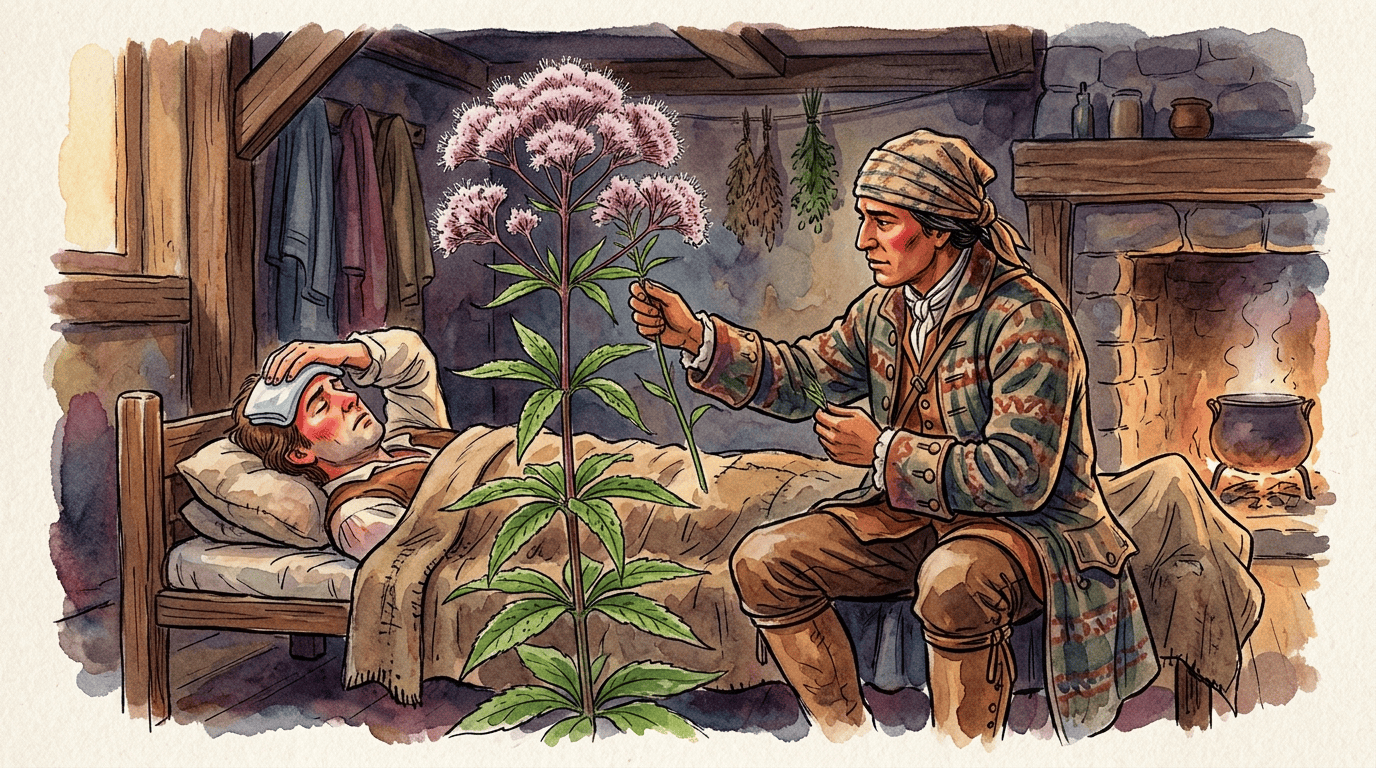
Eupatorium purpureum — recently reclassified by major taxonomic authorities as Eutrochium purpureum, though the older name remains widely used — is native to eastern and central North America, from Ontario south to Florida and west to Oklahoma, growing in moist meadows, streamside thickets, and open deciduous forest edges. It produces imposing clumps of 1.5-2.5 meter tall upright stems topped by large dome-shaped clusters of small pale-pink to mauve-pink flowers from late summer into early fall. The common name "Joe Pye weed" honors a Native American herbalist of the colonial or early federal period — most sources identify him as Joseph Shauquethqueat, a Mohican (Mahican) sachem (chief/medicine man) of the 18th or early 19th century, who reportedly used the plant to successfully treat a typhus epidemic among New England colonists, though historical documentation is fragmentary and some elements of the story are folk embellishment.
Indigenous Eastern Woodlands peoples including the Haudenosaunee and Algonquian-speaking groups used Eupatorium for kidney stones, fevers, and urinary-tract complaints. Modern garden use is dominated by compact cultivars including "Little Joe" (120-150 cm) and "Baby Joe" (60-90 cm), which brought Joe Pye weed into smaller garden spaces after decades of being restricted to large prairie-style borders.
The Iroquois called it 'kidney root.' In modern gardens, it has become a flagship plant for the native plant movement, championed by designers like Piet Oudolf for its naturalistic beauty and ecological value. The species is a major late-summer nectar source for monarch butterflies, swallowtails, and native bumblebees.
Symbolism & meaning
What It Symbolizes
Spotted Joe-Pye Weed inspires admiration through sheer towering presence — clouds of dusty mauve flowers crowned with butterflies catching late-summer light. Its dense flower clusters speak of community, countless tiny florets working together to feed pollinators in concert. It is a tall, generous prairie native, equal parts spectacle and sanctuary for the meadow's smaller lives.
- Admiration — Its towering stature and butterfly-covered blooms inspire awe and respect
- Community — Dense flower clusters symbolize strength through togetherness
Where the Name Comes From
The name Spotted Joe-Pye Weed describes its spotted markings. Eupatorium honors Mithridates Eupator, the ancient king of Pontus famed for his knowledge of plant lore. Purpureum means purple, describing the stem color.
Uses & Fun Facts
- Mauve flower domes are powerful magnets for monarch butterflies
- Tall Joe Pye stems with mauve flower clusters for back of border
Related plants
Plants with similar care
 Chinese AbeliaAbelia chinensis
 Fragrant AbeliaAbelia mosanensis
 Large-Flowered AbeliaAbelia uniflora
 Glossy AbeliaAbelia x grandiflora
Frequently asked questions
How often should I water Spotted Joe-Pye Weed?
In summer, water about every 2 days; in winter, about every 30 days. Adjust for heat, pot size and drainage.
How much light does Spotted Joe-Pye Weed need?
Full sun: 6+ hrs direct. Watch the leaves — scorching or stretching means the light needs adjusting.
Is Spotted Joe-Pye Weed toxic to cats or dogs?
Pets Slight (Dogs Slight · Cats Slight) Educational information, not medical or veterinary advice. If exposure is suspected, contact a doctor or veterinarian.
Is Spotted Joe-Pye Weed easy to grow?
Yes — it is considered an easy, beginner-friendly plant.
When does Spotted Joe-Pye Weed bloom?
It typically blooms Jul–Sep in the Northern Hemisphere.
YardMate
Identify any plant in seconds
Snap a photo — YardMate names the plant, diagnoses problems, and reminds you when to water.
Download on the App Store