 YardMate


Japanese Knotweed
Fallopia japonica
Easy · Beginner friendlyAbout Japanese Knotweed
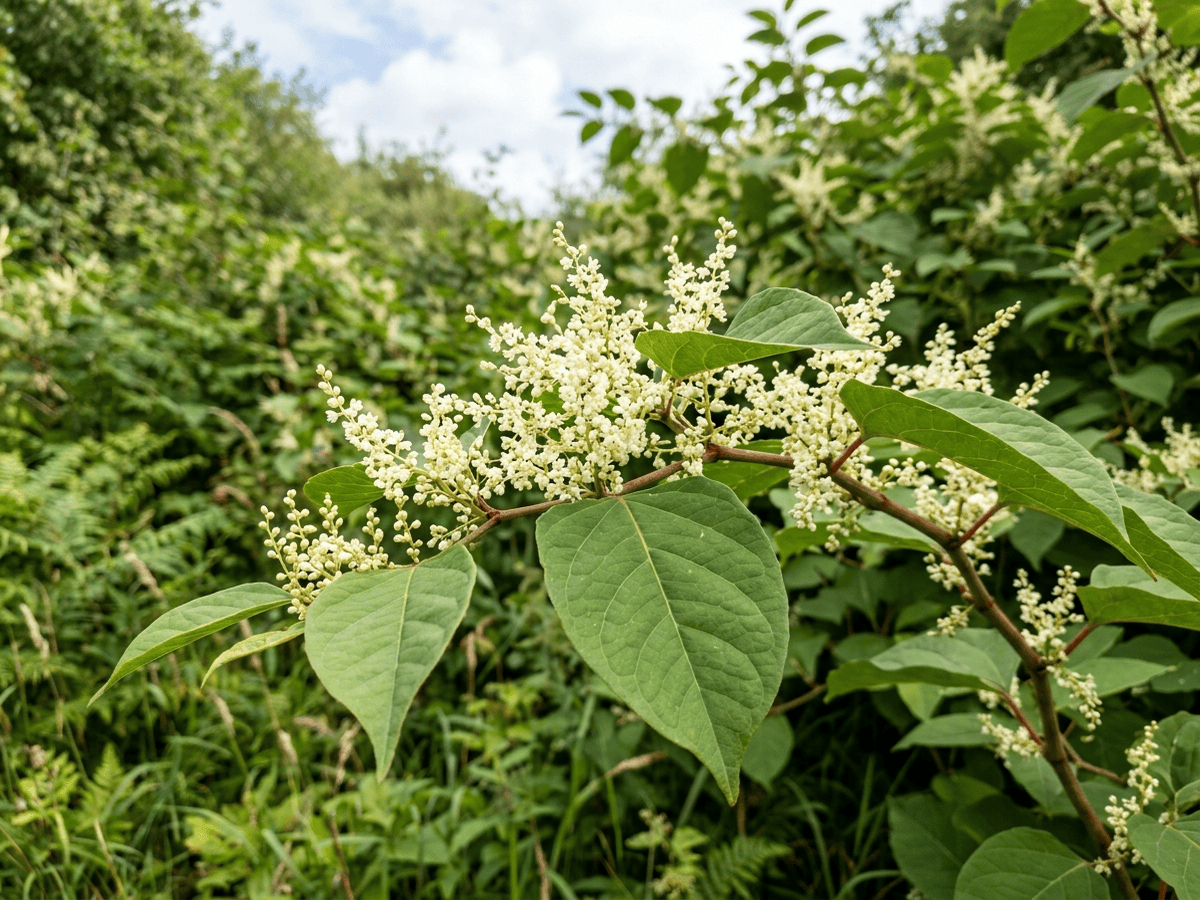
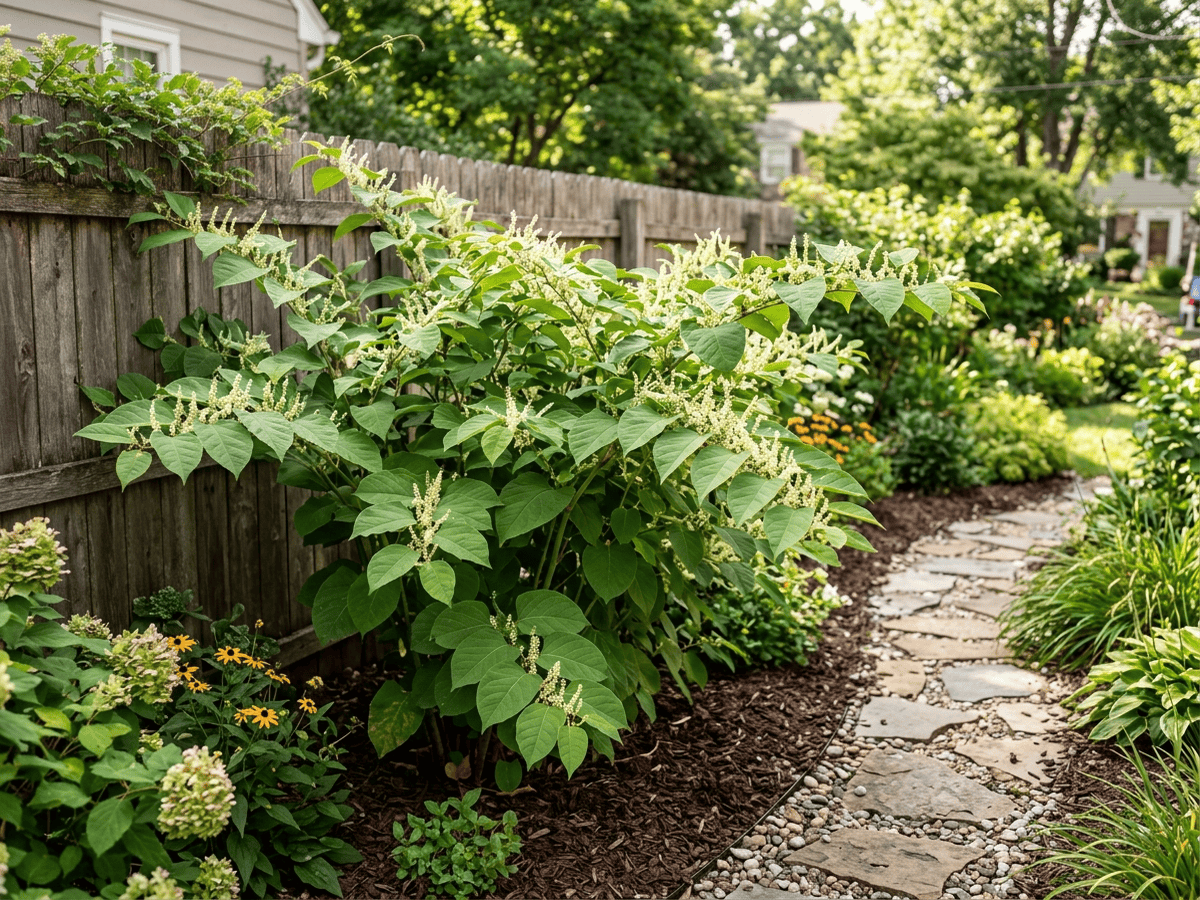
Japanese Knotweed is an East Asian rhizomatous perennial one of the world's 100 worst invasive species, notorious across the US and UK for crushing building foundations, cracking pavement, and forming impenetrable thickets. Growing 7 to 10 feet tall in a single season from bamboo-like hollow stems with heart-shaped leaves, it produces white flower sprays in late summer and spreads aggressively by deep rhizomes. Listed noxious in many US states.
- Fast-growing
How to care for Japanese Knotweed
Watering
- Springevery 10 days
- Summerevery 7 days
- Fallevery 14 days
- Winterevery 30 days
Soil · Well-draining
- Top dressingPine bark mulch10%
- Main mixPotting soil + perlite 2:170%
- DrainageLECA / gravel20%
Never skip the drainage layer — standing water is the top cause of root rot.
FERTILIZER
This plant needs little to no feeding.
At a Glance
- NativeEast Asia
- Height4–10 ft (1.2–3 m)
- Spread4–10 ft (1.2–3 m)
- Flower colorWhite, Cream
- Foliage colorGreen
- SoilLoamy, Moisture-retentive
- LocationsYard
Bloom time
BLOOM CYCLE
Peak bloom
Aug–Nov
Airy white flower panicles late summer to fall
Fragrance
LIGHT FRAGRANCE
Light honey scent attracting bees.
Toxicity
No toxicity has been reported for this plant. Still, it is wise to keep pets from chewing on any houseplant.
Educational information, not medical or veterinary advice. If exposure is suspected, contact a doctor or veterinarian.
DISTRIBUTION

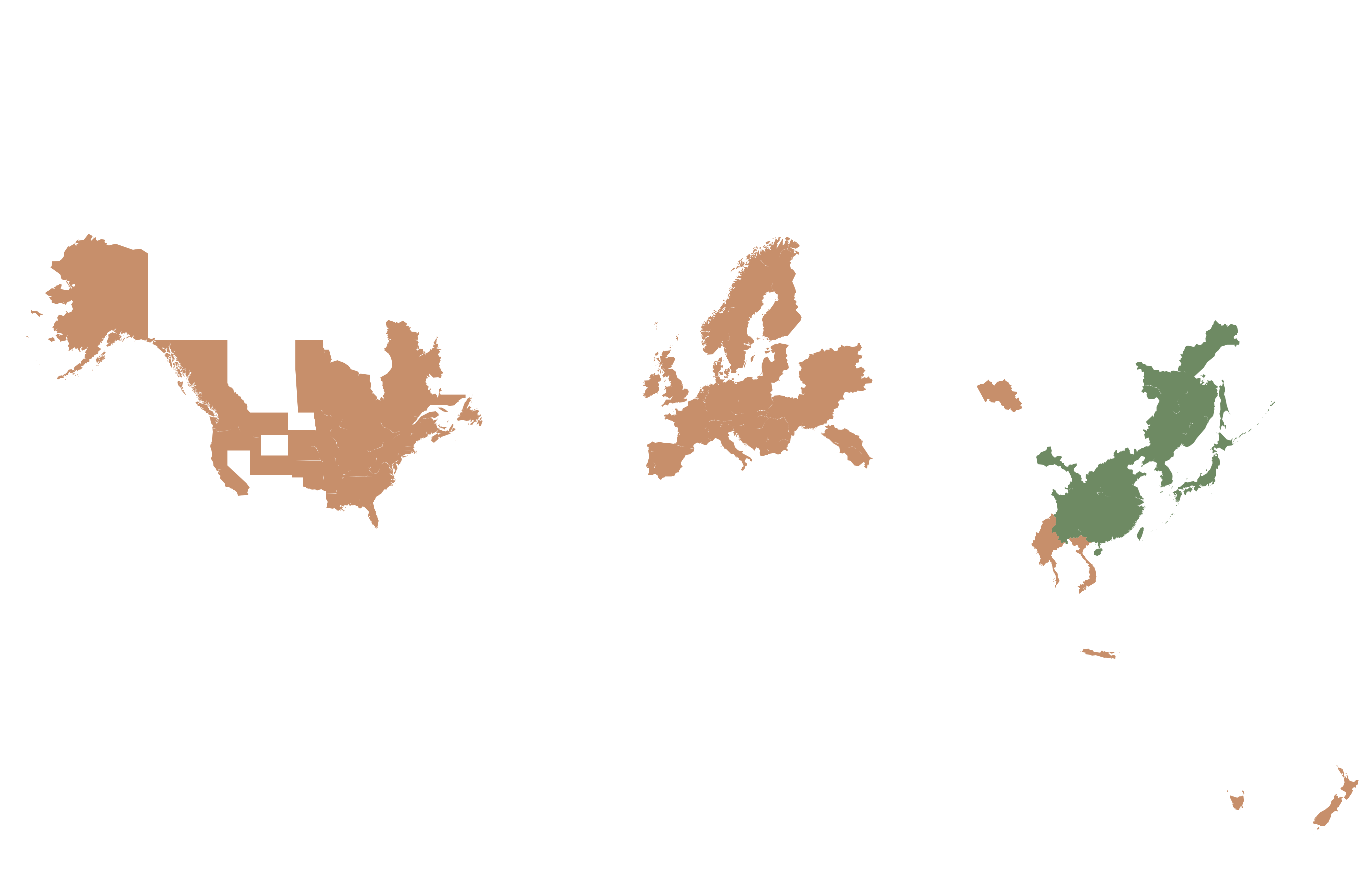
- Native
- Introduced
- East Asia
History

Fallopia japonica (syn. Reynoutria japonica, Polygonum cuspidatum), Japanese knotweed, is a rhizomatous perennial native to Japan, China, Korea, and Taiwan. Philipp Franz von Siebold collected plants from volcanic slopes near Nagasaki and sold them through his Leiden nursery from 1850; a single cutting he sent to the Royal Botanic Gardens, Kew, appears by genetic evidence to be the source of nearly every European and North American plant alive today, an extraordinary single-female-clone invasion. The bamboo-like stems reach three meters in a season, and underground rhizomes penetrate tarmac and concrete, causing enough damage to devalue British properties by tens of thousands of pounds.
The IUCN lists it among the 100 worst invasive species globally. Young shoots are edible and tart, somewhat like rhubarb.
Now among the top 100 world invasive species, it crushes building foundations, erodes streambanks, and resprouts from rhizome fragments under concrete. Listed noxious in many US states and nearly impossible to eradicate.
Symbolism & meaning
What It Symbolizes
Japanese Knotweed is unstoppable force in green form — its rhizomes crack pavement, lift foundations, and have made it a legal liability on British property deeds. A bamboo doppelganger with hollow segmented stems but no kinship to bamboo, it fools every layperson who meets its. It is the Victorian ornamental import that became one of the most feared plants in the Western world.
- Unstoppable force — cracks pavement and foundations
- Bamboo doppelganger — hollow bamboo-like stems, different plant
Where the Name Comes From
The name Japanese Knotweed points to Japan. 'Fallopia' honors Italian anatomist Gabriele Falloppio (1523-1562); 'japonica' means of Japan.
Uses & Fun Facts
- Young spring shoots cooked rhubarb-style in traditional Japanese dishes
Related plants
Plants with similar care
 Chinese AbeliaAbelia chinensis
 Fragrant AbeliaAbelia mosanensis
 Large-Flowered AbeliaAbelia uniflora
 Glossy AbeliaAbelia x grandiflora
Frequently asked questions
How often should I water Japanese Knotweed?
In summer, water about every 7 days; in winter, about every 30 days. Adjust for heat, pot size and drainage.
How much light does Japanese Knotweed need?
Full sun: 6+ hrs direct. Watch the leaves — scorching or stretching means the light needs adjusting.
Is Japanese Knotweed toxic to cats or dogs?
No toxicity has been reported for this plant. Still, it is wise to keep pets from chewing on any houseplant. Educational information, not medical or veterinary advice. If exposure is suspected, contact a doctor or veterinarian.
Is Japanese Knotweed easy to grow?
Yes — it is considered an easy, beginner-friendly plant.
When does Japanese Knotweed bloom?
It typically blooms Aug–Nov in the Northern Hemisphere.
YardMate
Identify any plant in seconds
Snap a photo — YardMate names the plant, diagnoses problems, and reminds you when to water.
Download on the App Store