 YardMate


Glaucous Barrel Cactus
Ferocactus glaucescens
Easy · Beginner friendlyAbout Glaucous Barrel Cactus
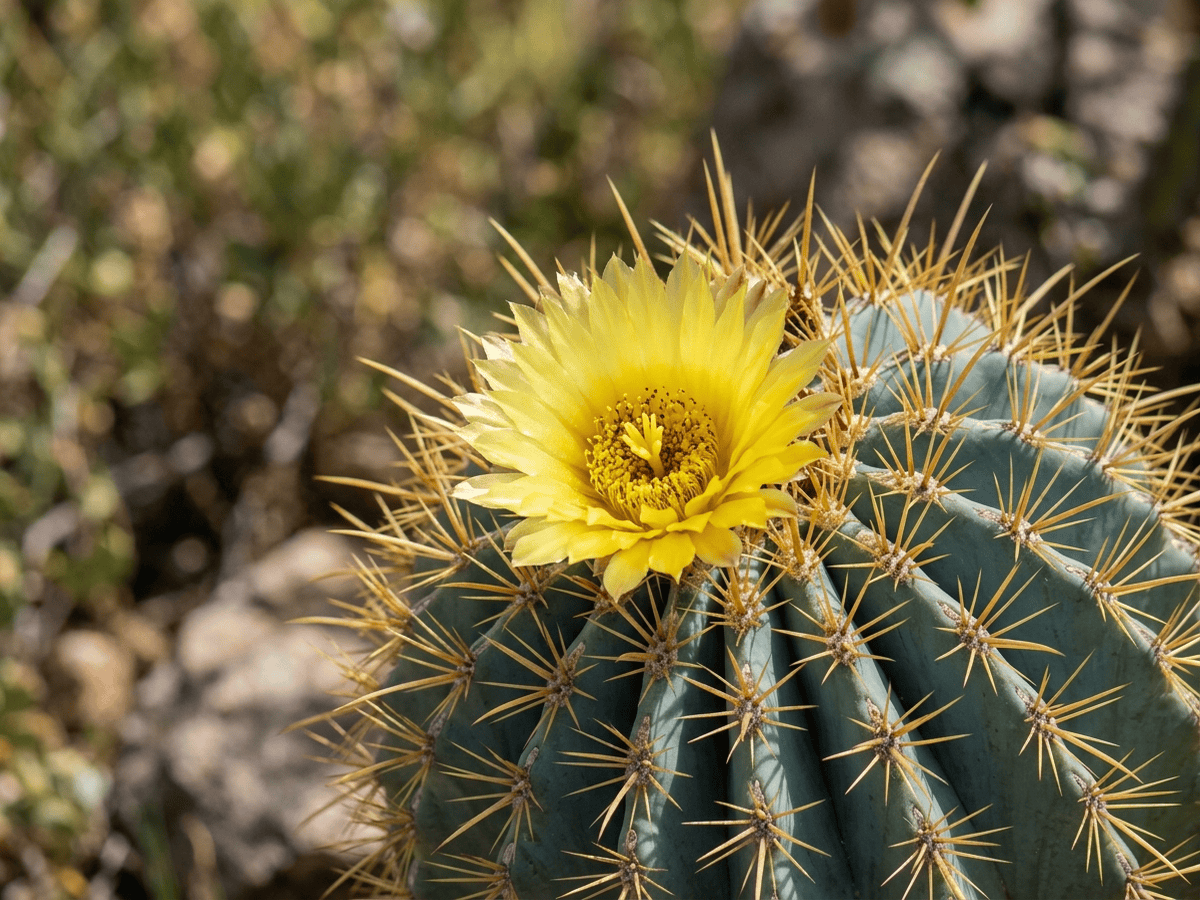
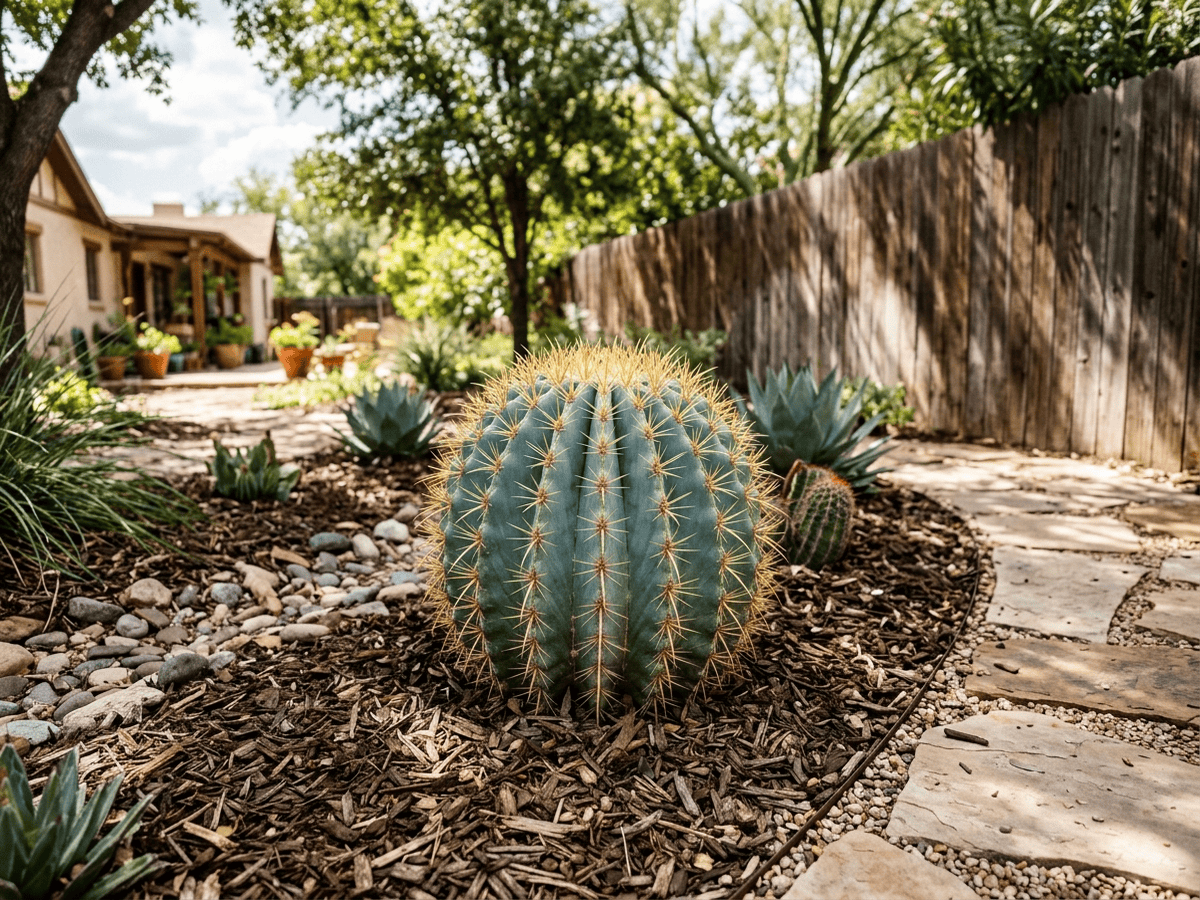
The Blue Barrel Cactus is a handsome Mexican species prized for its blue-green body and contrasting pale yellow spines. Native to the limestone hills of Hidalgo and Querétaro in east-central Mexico, it grows into a squat barrel shape up to a foot and a half in diameter. Its waxy, glaucous blue skin — the source of its name — gives it a distinctive frosty appearance that sets it apart from other barrel cacti. The ribs are sharply defined, each lined with clusters of stout, slightly curved spines. In spring and summer, cheerful lemon-yellow flowers emerge in a ring around the crown, followed by small white fruits. It is more cold-tolerant than many barrel cacti, handling brief frosts down to about twenty-five degrees Fahrenheit. Its moderate size and striking color make it excellent for container culture and rock gardens. Like other Ferocactus species, it stores water in its thick stem, a survival adaptation for months-long droughts.
- Low-maintenance
- Drought-tolerant
- Cold-hardy
How to care for Glaucous Barrel Cactus
Watering
- Springevery 14 days
- Summerevery 10 days
- Fallevery 21 days
- Winterevery 45 days
Soil · Fast-draining
- Main mixSand + pumice + soil 1:1:150%
- DrainagePumice / gravel50%
Keep grit at half the mix or more — this soil is meant to dry out fast.
FERTILIZER
Cactus & Succulent Feed 2-7-7
Hold the nitrogen back and growth stays compact instead of soft and stretched. Phosphorus and potassium carry the roots and the flowering.
- Nitrogen · Leaves
- Phosphorus · Roots + Blooms
- Potassium · Strength
- Springevery 45 days
- Summerevery 45 days
- Fallevery 60 days
At a Glance
- NativeNorth America
- Height1.5–2 ft (0.5–0.6 m)
- Spread1.5–2 ft (0.5–0.6 m)
- Flower colorYellow
- Foliage colorBlue-green
- SoilSandy, Well-drained
- LocationsYard · Indoor
Bloom time
BLOOM CYCLE
Peak bloom
Mar–Aug
Lemon-yellow flowers ring the crown in spring and summer
Fragrance
NO FRAGRANCE
No notable fragrance.
Toxicity
Humans Slight
Unknown toxic principle
Slight
- Stem
- Contact
EXPOSURE Touching stems.
EFFECT Mechanical injury from strong spines.
NOTE Non-toxic chemically; spine injury primary hazard.
Safe
EXPOSURE No exposure route is reported.
EFFECT Not chemically toxic.
NOTE Listed as non-toxic for dogs; avoid eating ornamental plants unless confirmed edible.
Safe
EXPOSURE No exposure route is reported.
EFFECT Not chemically toxic.
NOTE Listed as non-toxic for cats; avoid eating ornamental plants unless confirmed edible.
Educational information, not medical or veterinary advice. If exposure is suspected, contact a doctor or veterinarian.
DISTRIBUTION


- Native
- North America
History
Ferocactus glaucescens is native to limestone outcrops in the states of Hidalgo, Querétaro, and San Luis Potosí in central Mexico. Formally described by de Candolle in 1828 as Echinocactus glaucescens and later transferred to Ferocactus, it is one of the most distinctive barrel cacti due to its blue-glaucous waxy coating that reflects intense Mexican highland sunlight. The straw-yellow radial spines contrast dramatically with the cool body color.
Specimens in cultivation stay compact for many years, rarely exceeding 40 centimeters in diameter, making them more amenable to greenhouse and patio containers than the larger Ferocactus species. It is considered Near Threatened in the wild due to habitat loss and illegal collection and is protected under Mexican legislation. Commercial seed-grown stock supplies the global horticultural market.
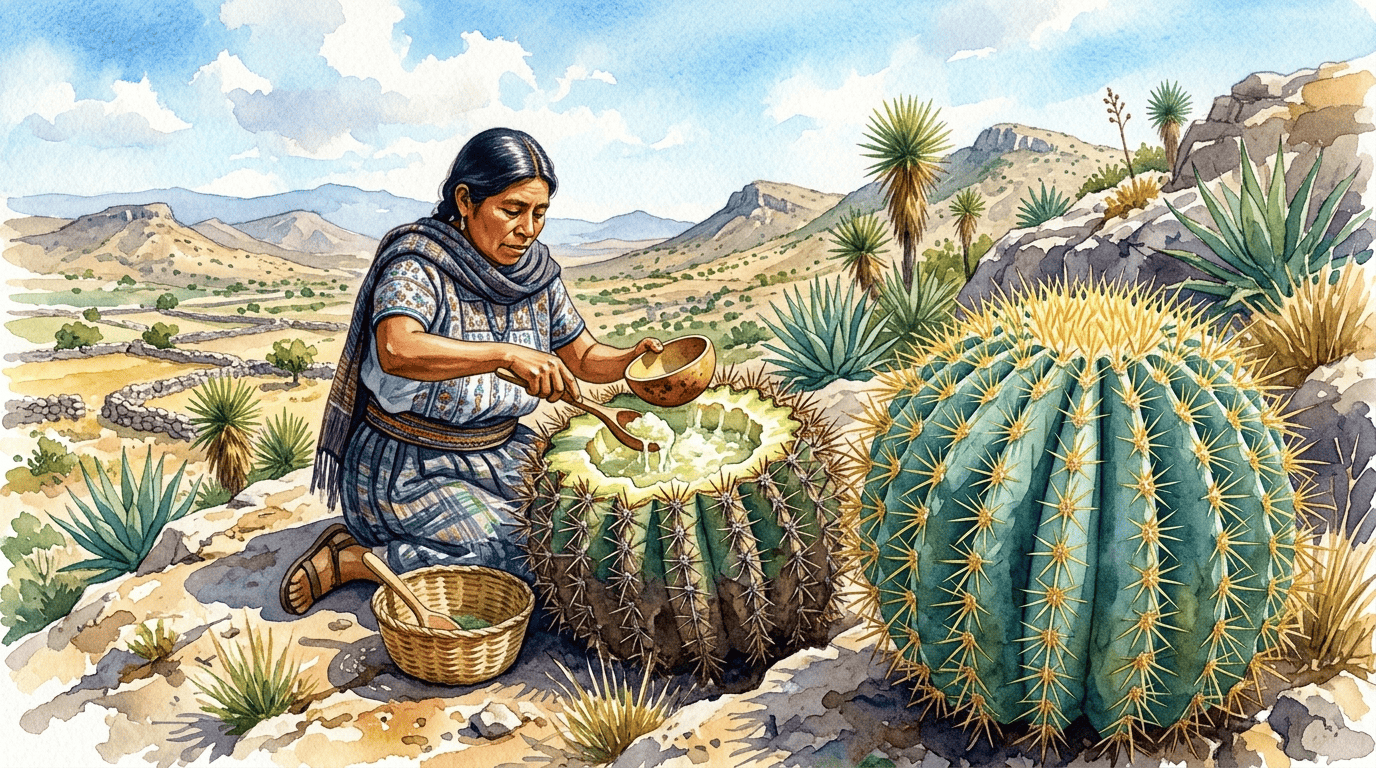
Ferocactus glaucescens was first described by Augustin Pyramus de Candolle in 1828. The genus name Ferocactus, meaning 'fierce cactus,' was coined in 1922 by Nathaniel Britton and Joseph Rose to distinguish the large barrel cacti from the similarly shaped Echinocactus. In its native Hidalgo, local people historically used large Ferocactus barrels as cooking pots by hollowing them out and using the inner flesh as an emergency water source during severe droughts.
Symbolism & meaning
What It Symbolizes
The glaucous barrel cactus is fortitude on a Mexican limestone cliff, surviving searing sun and seasons of drought with unwavering quiet strength. Its surface offers a rare softness for a cactus — a powdery, pale blue bloom that lends serenity to the desert palette. To meet one in habitat is to encounter a creature that has decided harshness is no obstacle to looking peaceful.
- Fortitude — survives limestone cliffs and drought with unwavering strength
- Serenity — its cool blue color evokes calm and tranquility
Where the Name Comes From
'Ferocactus' means 'fierce cactus' in Latin, referring to the heavy, hooked spines. 'Glaucescens' means 'becoming blue-green,' describing the stem's distinctive waxy blue coloring.
Uses & Fun Facts
- Glaucous blue barrel with yellow spines as desert garden centerpiece
- Slow-growing pot specimen for collectors of Mexican cacti
Related plants
Plants with similar care
 Chinese AbeliaAbelia chinensis
 Fragrant AbeliaAbelia mosanensis
 Large-Flowered AbeliaAbelia uniflora
 Glossy AbeliaAbelia x grandiflora
Frequently asked questions
How often should I water Glaucous Barrel Cactus?
In summer, water about every 10 days; in winter, about every 45 days. Adjust for heat, pot size and drainage.
How much light does Glaucous Barrel Cactus need?
Full sun: 6+ hrs direct. Watch the leaves — scorching or stretching means the light needs adjusting.
Is Glaucous Barrel Cactus toxic to cats or dogs?
Pets Safe (Dogs Safe · Cats Safe) Educational information, not medical or veterinary advice. If exposure is suspected, contact a doctor or veterinarian.
Is Glaucous Barrel Cactus easy to grow?
Yes — it is considered an easy, beginner-friendly plant.
Can Glaucous Barrel Cactus be grown indoors?
Yes, it adapts well to indoor growing given the right light.
When does Glaucous Barrel Cactus bloom?
It typically blooms Mar–Aug in the Northern Hemisphere.
YardMate
Identify any plant in seconds
Snap a photo — YardMate names the plant, diagnoses problems, and reminds you when to water.
Download on the App Store