 YardMate



Blue Fescue
Festuca glauca
Easy · Beginner friendlyAbout Blue Fescue
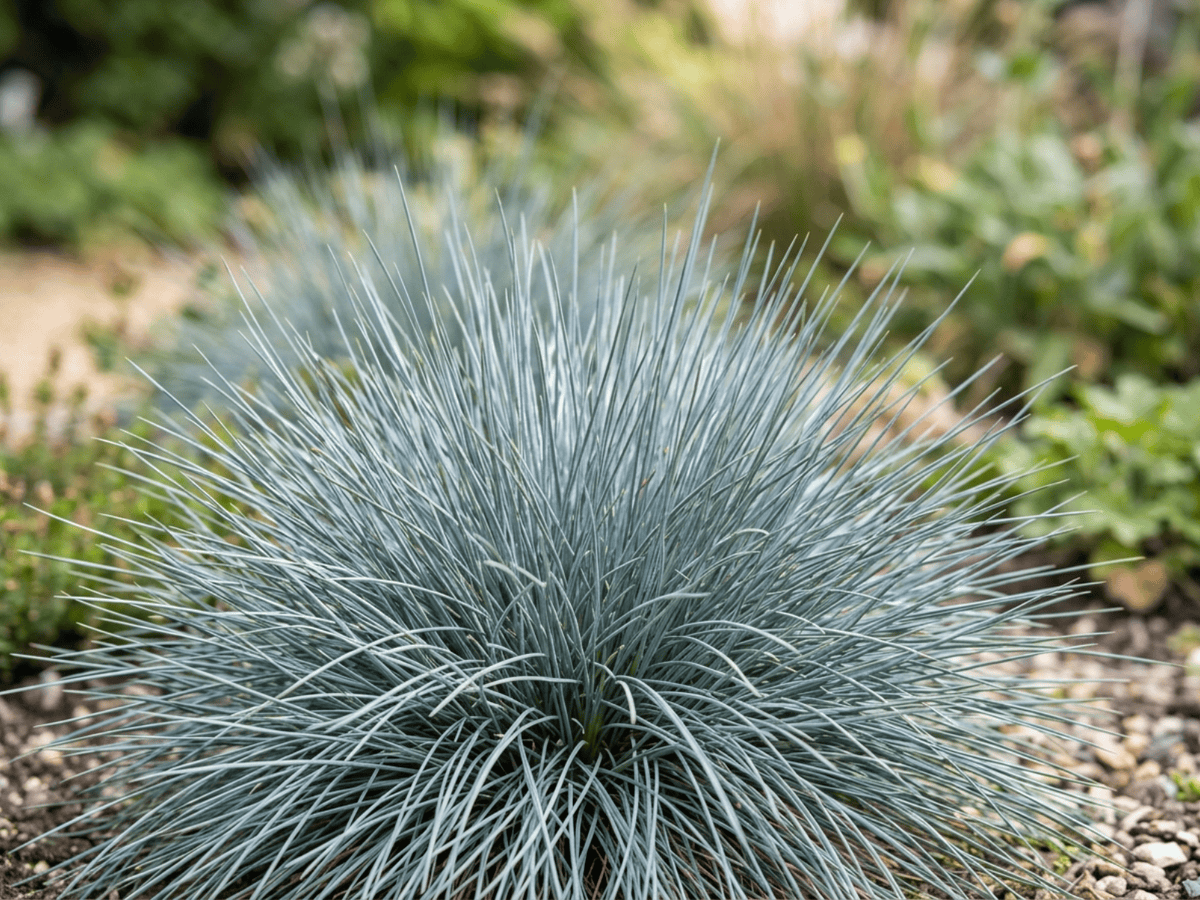
Festuca glauca, blue fescue, is a compact ornamental grass forming tight symmetrical mounds of fine steel-blue foliage. Native to southern France, it grows 20–30 centimeters tall and wide, creating a striking spherical tuft that adds cool color and texture to gardens year-round. In early summer, slender flower spikes rise above the foliage, starting blue-green and aging to golden tan. The intense blue color is produced by a waxy coating on the leaves that also provides drought tolerance. Blue fescue thrives in full sun and well-drained soil, performing poorly in humid heat or wet winter conditions. It is widely used as an accent in rock gardens, border fronts, gravel gardens, and contemporary minimalist landscapes. Mass plantings create a dramatic sea of blue. The cultivar 'Elijah Blue' is the most popular, selected for exceptionally bright coloring. Plants should be divided every few years to prevent browning in the center of the clump.
- Drought-tolerant
- Evergreen
How to care for Blue Fescue
Watering
- Springevery 7 days
- Summerevery 5 days
- Fallevery 14 days
- Winterevery 30 days
Soil · Well-draining
- Top dressingPine bark mulch10%
- Main mixPotting soil + perlite 2:170%
- DrainageLECA / gravel20%
Never skip the drainage layer — standing water is the top cause of root rot.
FERTILIZER
- Springevery 60 days
At a Glance
- NativeEurope
- Height0.5–1 ft (0.2–0.3 m)
- Spread0.5–1 ft (0.2–0.3 m)
- Flower colorWhite, Cream
- Foliage colorBlue-green, Silver, Yellow
- SoilSandy, Well-drained
- LocationsYard · Indoor · Balcony
Bloom time
BLOOM CYCLE
Peak bloom
Jun–Aug
Slender tan flower spikes in summer; trim spent spikes to keep tidy
Fragrance
NO FRAGRANCE
No notable fragrance.
Toxicity
No toxicity has been reported for this plant. Still, it is wise to keep pets from chewing on any houseplant.
Educational information, not medical or veterinary advice. If exposure is suspected, contact a doctor or veterinarian.
DISTRIBUTION


- Native
- Introduced
- Europe
History
Festuca glauca is native to southern France — likely Provence and the southwestern Alps — and, depending on taxonomic treatment, more broadly across parts of western and central Europe. Wild populations are not always clearly distinct from several closely related blue fescue species (F. cinerea, F. ovina glauca, F. valesiaca), and horticultural material often represents unclear hybrid origins. The plant's compact clumps of fine, narrow, waxy blue-silver needle-like leaves, 15-30 cm tall, give it a distinctive architectural appearance that made it one of the first ornamental grasses to achieve mainstream landscape acceptance in North America. German-American landscape architects Wolfgang Oehme and James van Sweden, working from the late 1970s onward, popularized ornamental grasses as structural planting components through the "New American Garden" movement — Piet Oudolf's later naturalistic planting work continued and internationalized this approach.
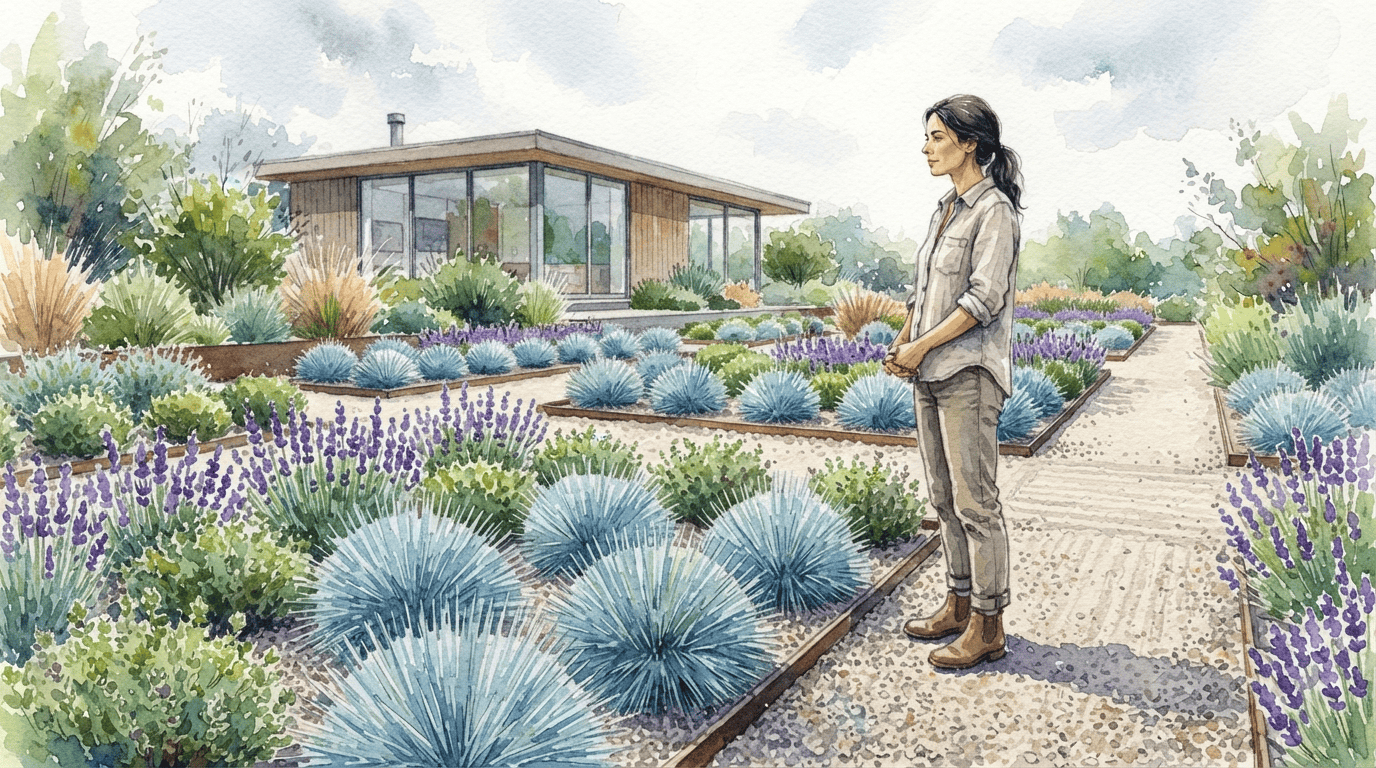
Modern cultivars include "Elijah Blue" (the most popular), "Beyond Blue," "Boulder Blue," "Intense Blue," and "Golden Toupee" (gold-leaved). Individual clumps tend to become bare at the center after 3-5 years and benefit from division or replacement. Blue fescue is native to the garigue landscapes of southern France, where it grows in thin rocky soil alongside lavender and thyme.
It was popularized in gardens by the great German nurseryman Karl Foerster in the mid-20th century, who championed ornamental grasses as essential garden plants. The cultivar 'Elijah Blue', selected in the 1970s, became one of the best-selling ornamental grasses worldwide. Blue fescue's geometric form made it a favorite of modernist landscape designers, and it remains a staple of contemporary minimalist and gravel garden design.
Symbolism & meaning
What It Symbolizes
Blue Fescue expresses independence, its tight blue spheres of foliage holding their shape with self-contained dignity. The cool blue color evokes clear skies and the calm of a settled mind, suggesting clarity of thought as well as form. To plant fescue in a row is to gather a series of small, self-reliant individuals — each one its own complete, blue-gray idea of what a grass should be.
- Independence — its self-contained spherical form represents self-reliance and individuality
- Clarity — the cool blue color evokes clear skies and calm thinking
Where the Name Comes From
Festuca is the Latin name for a type of grass or straw. Glauca means 'blue-gray', describing the distinctive foliage color.
Uses & Fun Facts
- Blue tufted grass adds cool texture to gravel beds and edging
- Blue hummocks edge gravel paths and cool hot-colored plantings
Related plants
Plants with similar care
 Chinese AbeliaAbelia chinensis
 Fragrant AbeliaAbelia mosanensis
 Large-Flowered AbeliaAbelia uniflora
 Glossy AbeliaAbelia x grandiflora
Frequently asked questions
How often should I water Blue Fescue?
In summer, water about every 5 days; in winter, about every 30 days. Adjust for heat, pot size and drainage.
How much light does Blue Fescue need?
Full sun: 6+ hrs direct. Watch the leaves — scorching or stretching means the light needs adjusting.
Is Blue Fescue toxic to cats or dogs?
No toxicity has been reported for this plant. Still, it is wise to keep pets from chewing on any houseplant. Educational information, not medical or veterinary advice. If exposure is suspected, contact a doctor or veterinarian.
Is Blue Fescue easy to grow?
Yes — it is considered an easy, beginner-friendly plant.
Can Blue Fescue be grown indoors?
Yes, it adapts well to indoor growing given the right light.
When does Blue Fescue bloom?
It typically blooms Jun–Aug in the Northern Hemisphere.
YardMate
Identify any plant in seconds
Snap a photo — YardMate names the plant, diagnoses problems, and reminds you when to water.
Download on the App Store