 YardMate


Franklin Tree
Franklinia alatamaha
Hard · Experienced growersAbout Franklin Tree
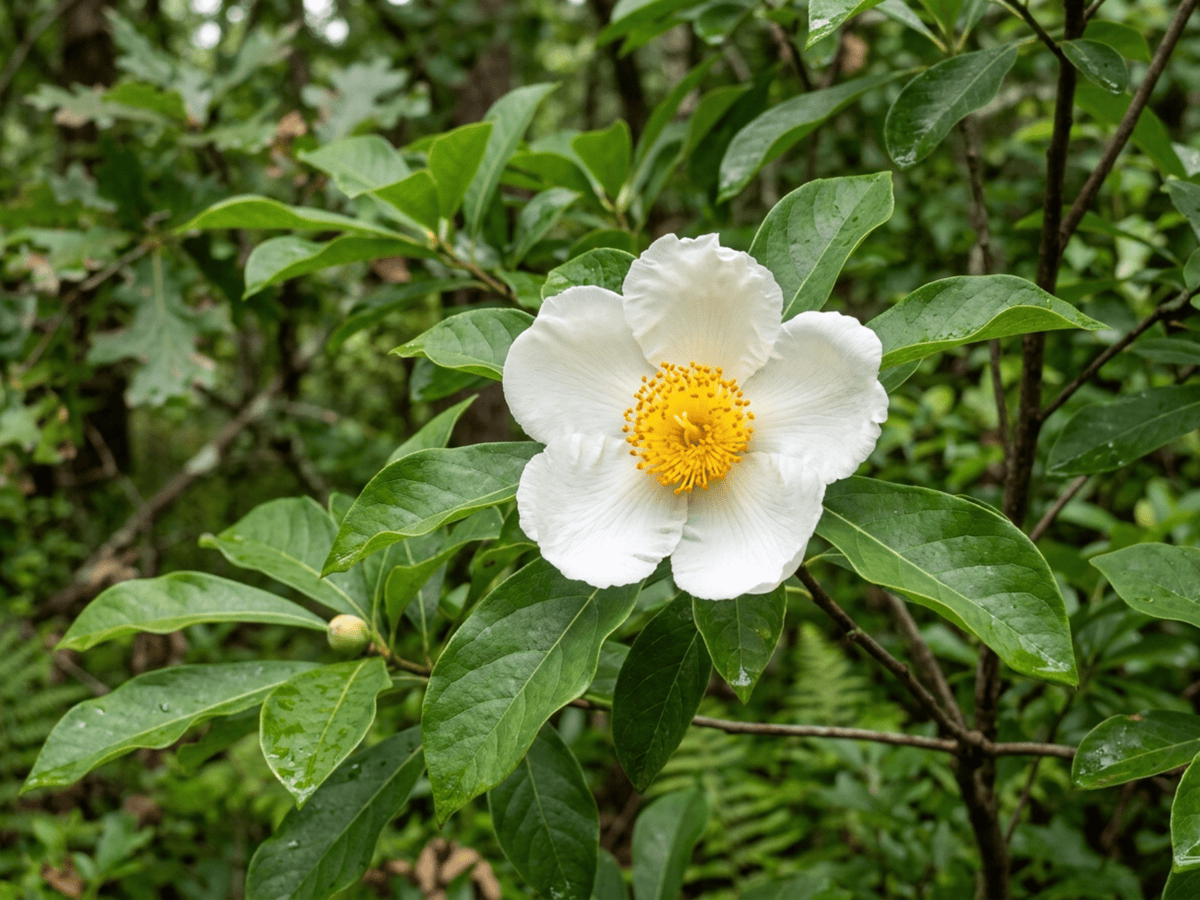
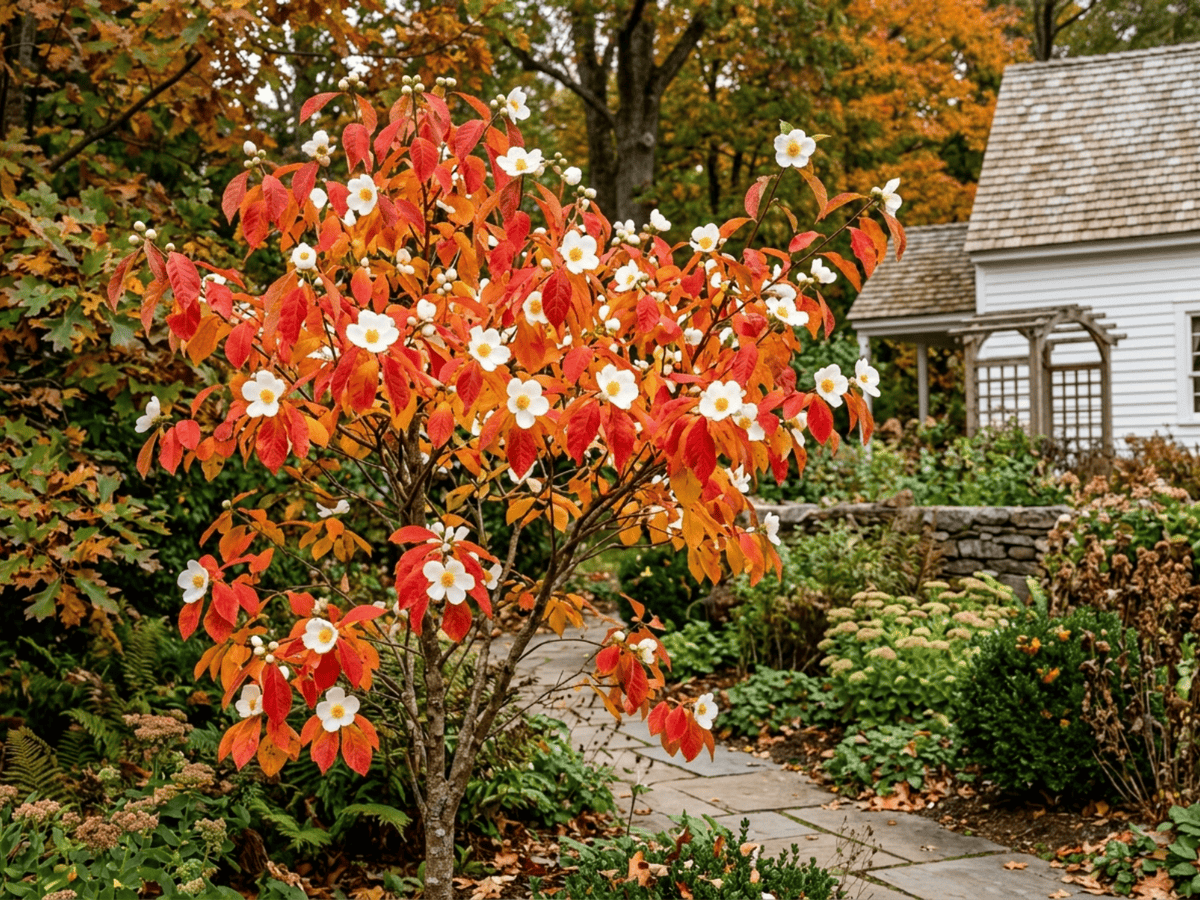
Franklinia is a small deciduous tree extinct in the wild but preserved entirely through cultivation, bearing 3-inch pure white cup-shaped flowers with golden stamens in late summer to autumn, paired with brilliant orange-red fall foliage. Growing 15-25 feet tall, it is a living monument to American botanical heritage—all existing specimens descend from seeds collected in Georgia in the 1770s by John and William Bartram. Hardy in USDA zones 5-8.
- Fragrant
- Fall-color
- Native
How to care for Franklin Tree
Watering
- Springevery 5 days
- Summerevery 4 days
- Fallevery 7 days
- Winterpause watering
Soil · Acidic · pH 4.5–6
- Top dressingPine needle mulch10%
- Main mixAcid-lover mix + peat 3:175%
- DrainageGravel15%
Never add lime or wood ash — it cancels out the acidity.
FERTILIZER
Acid-Loving Feed 4-3-4
One bag does both jobs. An acid feed carries the usual nitrogen, phosphorus and potassium, plus the sulfur and iron that keep the soil sour enough for the roots to take them up at all.
- Nitrogen · Leaves
- Phosphorus · Roots + Blooms
- Potassium · Strength
- Springevery 60 days
- Summerevery 60 days
At a Glance
- NativeNorth America
- Height10–25 ft (3–7.6 m)
- Spread6–15 ft (1.8–4.6 m)
- Flower colorWhite
- Foliage colorGreen, Bronze
- Fruit colorBrown
- SoilLoamy, Acidic, Moisture-retentive
- LocationsYard
Bloom time
BLOOM CYCLE
Peak bloom
Aug–Oct
White cup-shaped flowers August to October
Fragrance
MODERATE FRAGRANCE
The flowers have a sweet, honey-like scent.
Toxicity
Toxicity unknown
None reported
Unknown
EXPOSURE Unspecified plant material.
EFFECT Toxic effects are not specified.
NOTE Toxicity for humans is not well documented; use caution until verified.
Unknown
EXPOSURE Unspecified plant material.
EFFECT Toxic effects are not specified.
NOTE Toxicity for dogs is not well documented; use caution until verified.
Unknown
EXPOSURE Unspecified plant material.
EFFECT Toxic effects are not specified.
NOTE Toxicity for cats is not well documented; use caution until verified.
Educational information, not medical or veterinary advice. If exposure is suspected, contact a doctor or veterinarian.
DISTRIBUTION


- Native
- North America
History

Franklinia alatamaha is among the most famous plants of American botanical history. Philadelphia naturalist John Bartram and his son William discovered it in 1765 along a 2-3 acre stretch of bottomland along Georgia's Altamaha River near Fort Barrington. William returned in 1773-76 during his travels through the southeastern colonies and collected seed that John propagated in the Bartram Garden in Philadelphia.
The Bartrams named it for family friend Benjamin Franklin. After John Lyon's final observation of wild plants in 1803, the species was never seen again in nature despite extensive searches—extinct in the wild possibly due to disease, land clearing, or cotton cultivation. Every Franklinia alive today traces to the Bartrams' propagation.
The large fragrant white flowers with golden stamens appear in late summer-fall, accompanied by brilliant red autumn color. It remains extremely difficult to cultivate away from Bartram's descendants' climate. Last confirmed wild sighting was in 1803—all existing trees descend from seeds the Bartrams carefully collected and propagated at their Philadelphia garden. One of the great conservation stories of American horticulture.
Symbolism & meaning
What It Symbolizes
The Franklin Tree is preservation made botanical — extinct in the wild since the early 1800s, it survives only because William Bartram collected its seeds from a single Georgia population before it vanished. Named for Benjamin Franklin by his admiring friends, it carries the heritage of early American natural history in every white camellia-like flower. It is a tree that exists today only because one botanist paid attention in time.
- Preservation — saved from extinction by early American botanists
- Heritage — named for Benjamin Franklin
Where the Name Comes From
Named for Benjamin Franklin (1706–1790); 'alatamaha' refers to the Altamaha River where it was discovered.
Uses & Fun Facts
- Living conservation monument as autumn-blooming garden centerpiece
- Pure white late-summer flowers carry sweet honey scent
- Heritage tree with brilliant orange-red autumn foliage
Related plants
Plants with similar care
 Bear's BreechesAcanthus mollis
 Spiral AloeAloe polyphylla
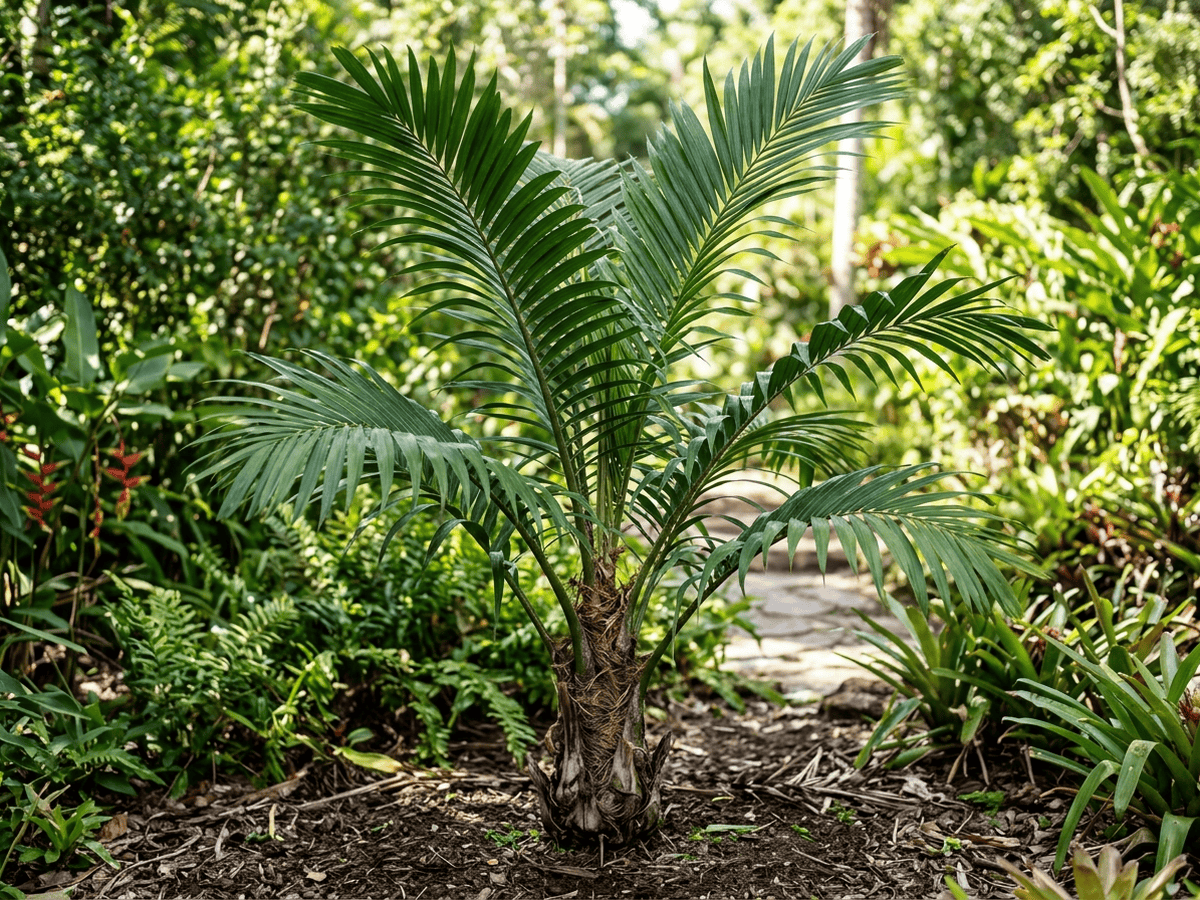 Formosa PalmArenga engleri
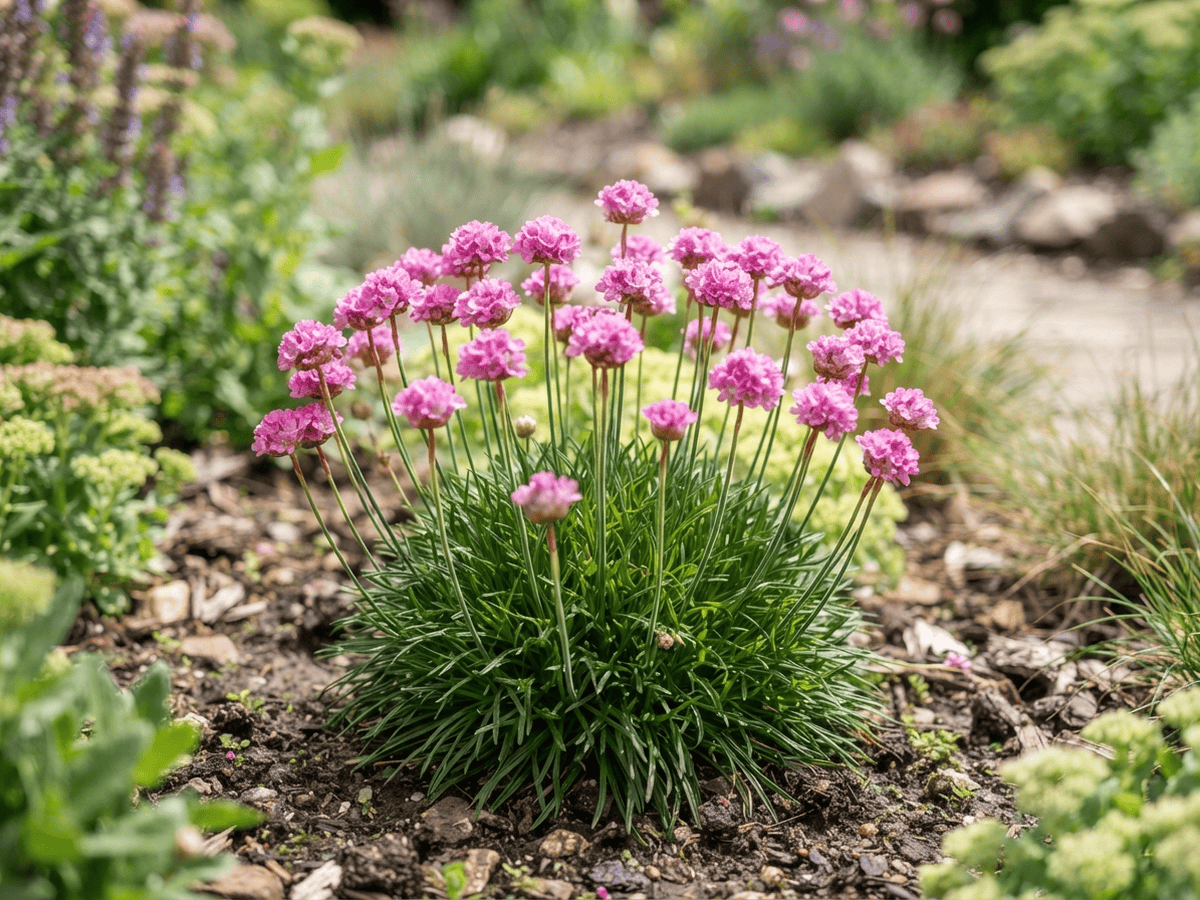 Sea ThriftArmeria maritima
Frequently asked questions
How often should I water Franklin Tree?
Water about every 5 days during the growing season, and always let excess water drain away.
How much light does Franklin Tree need?
Part shade: 2–4 hrs direct. Watch the leaves — scorching or stretching means the light needs adjusting.
Is Franklin Tree toxic to cats or dogs?
Pets Unknown (Dogs Unknown · Cats Unknown) Educational information, not medical or veterinary advice. If exposure is suspected, contact a doctor or veterinarian.
Is Franklin Tree easy to grow?
It is considered challenging and rewards experienced growers.
When does Franklin Tree bloom?
It typically blooms Aug–Oct in the Northern Hemisphere.
YardMate
Identify any plant in seconds
Snap a photo — YardMate names the plant, diagnoses problems, and reminds you when to water.
Download on the App Store