 YardMate


Yellow Jessamine
Gelsemium sempervirens
Easy · Beginner friendlyAbout Yellow Jessamine
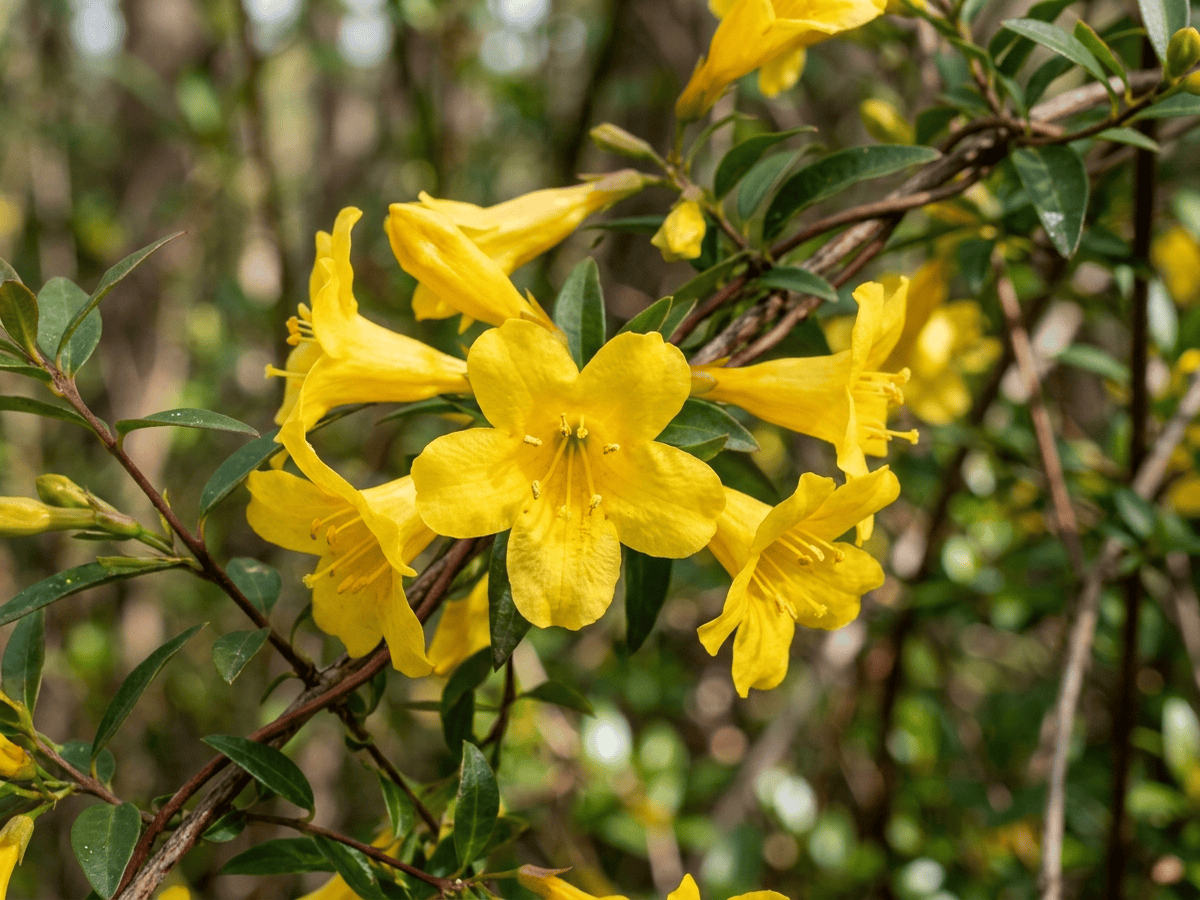
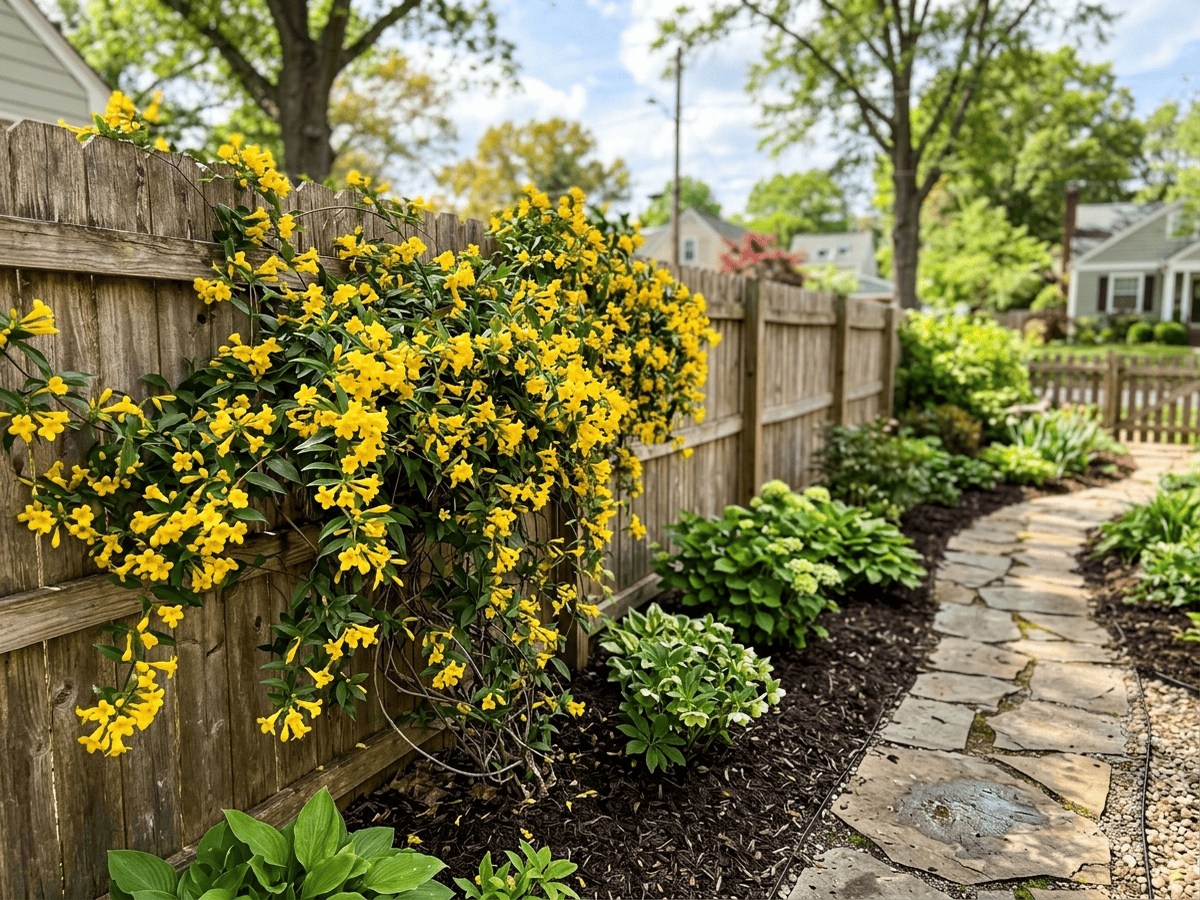
Carolina Jessamine is a Southeastern US native evergreen twining vine reaching 15-20 feet, heralding spring with masses of intensely fragrant bright yellow trumpet flowers. The official state flower of South Carolina, its honey-scented blooms cover fences and trellises across the Southern US in late winter and early spring. All parts are toxic, so handle with care, but it remains a beloved Southern heritage vine for its perfume and early bloom.
- Fragrant
- Climbing
- Evergreen
- Native
How to care for Yellow Jessamine
Watering
- Springevery 7 days
- Summerevery 5 days
- Fallevery 10 days
- Winterevery 21 days
Soil · Well-draining
- Top dressingPine bark mulch10%
- Main mixPotting soil + perlite 2:170%
- DrainageLECA / gravel20%
Never skip the drainage layer — standing water is the top cause of root rot.
FERTILIZER
Balanced Feed 14-14-14
An even feed covers all three needs at once, keeping leaves, roots and blooms moving together with nothing pushed out of balance.
- Nitrogen · Leaves
- Phosphorus · Roots + Blooms
- Potassium · Strength
- Springevery 30 days
At a Glance
- NativeNorth America, Central America
- Height10–20 ft (3–6.1 m)
- Spread4–8 ft (1.2–2.4 m)
- Flower colorYellow
- Foliage colorDark-green, Green, Bronze
- Fruit colorBrown
- SoilLoamy, Well-drained
- LocationsYard
Bloom time
BLOOM CYCLE
Peak bloom
Feb–Apr
Fragrant yellow trumpet flowers February to April
Fragrance
STRONG FRAGRANCE
The flowers have a sweet jasmine-honeysuckle fragrance.
Toxicity
Humans Severe · Pets Severe
gelsemine, gelseminine, and sempervirine
Severe
- Leaf
- Flower
- Root
- Nectar
- Ingestion
- Contact
EXPOSURE Eating leaves, flowers, roots, and nectar. Touching leaves, flowers, roots, and nectar.
EFFECT Muscle weakness, paralysis, seizures, respiratory failure, death; as little as one flower can be dangerous to small children.
NOTE All parts extremely toxic. Honey from flowers has caused human poisoning. Keep away from children and livestock.
Severe
- Leaf
- Flower
- Root
- Ingestion
EXPOSURE Eating leaves, flowers, and roots.
EFFECT Weakness, paralysis, respiratory failure.
NOTE All parts extremely toxic. Honey from flowers has caused human poisoning. Keep away from children and livestock.
Severe
- Leaf
- Flower
- Root
- Ingestion
EXPOSURE Eating leaves, flowers, and roots.
EFFECT Weakness, paralysis, respiratory failure.
NOTE All parts extremely toxic. Honey from flowers has caused human poisoning. Keep away from children and livestock.
Educational information, not medical or veterinary advice. If exposure is suspected, contact a doctor or veterinarian.
DISTRIBUTION


- Native
- North America
- Central America
History
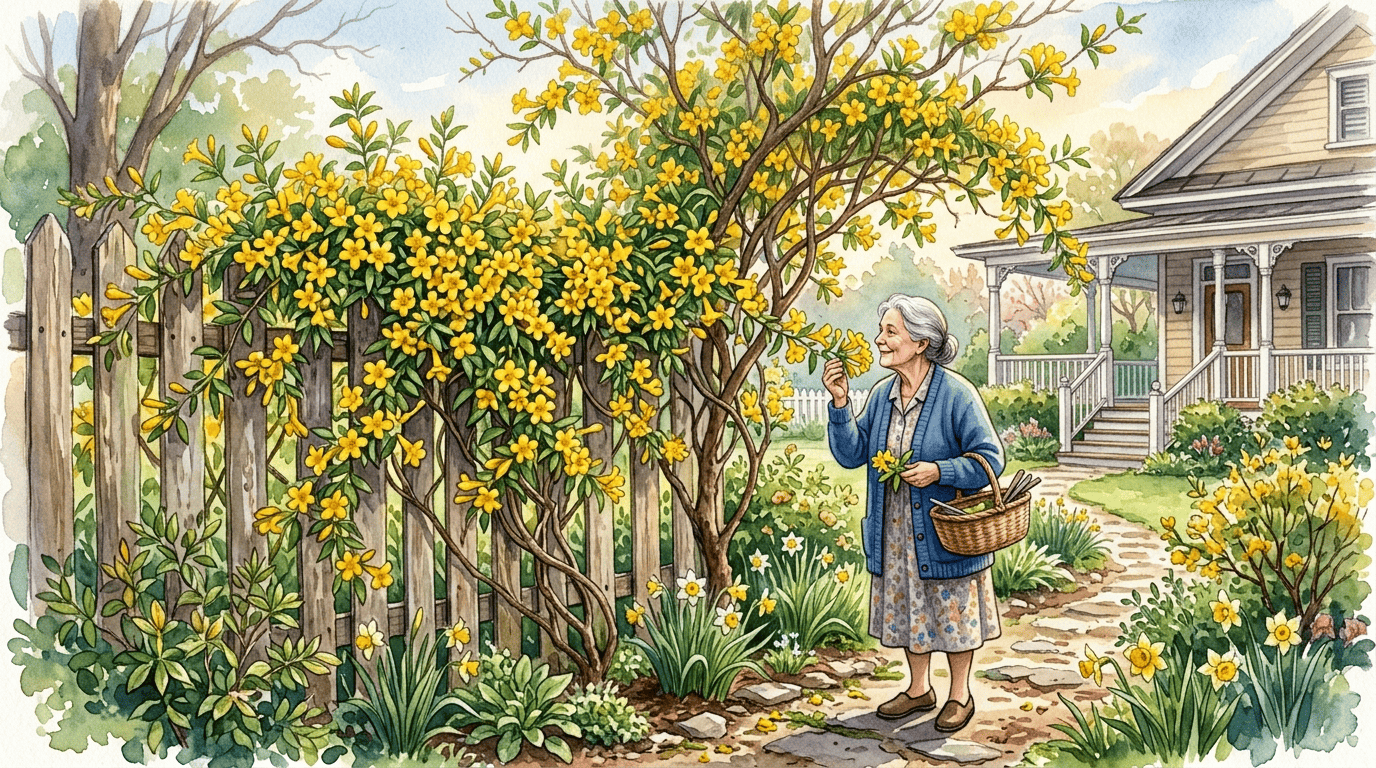
Gelsemium sempervirens is native to the southeastern United States from Virginia south through Florida, west to Arkansas and Texas, and south through Mexico to Guatemala. Linnaeus described the species in 1753 as Bignonia sempervirens; English botanist William Aiton transferred it to the genus Gelsemium in 1789. The genus name Gelsemium comes from the Italian gelsomino (jasmine)—a reference to the superficial resemblance of the fragrant tubular flowers to true jasmine, though the plant is not actually related to true jasmines.
It has been the official state flower of South Carolina since 1924. The 5-7 meter semi-evergreen twining vine produces masses of small bright yellow 3-4 cm trumpet flowers with a sweet jasmine-like fragrance from February through April—one of the earliest and most celebrated signs of southern spring, draping fences, trees, and highway embankments throughout the Coastal Plain. However, all parts of the plant contain potent indole alkaloids (gelsemine, gelseminine, sempervirine) that can cause paralysis, convulsions, and respiratory failure.
Honey made from the flowers has caused poisonings. Designated the state flower of South Carolina in 1924, celebrating its role in heralding Southern spring. Native Americans and early Southern settlers used it cautiously as a medicinal, though it is dangerously toxic. Its fragrance perfumes Southern gardens in February when little else blooms.
Symbolism & meaning
What It Symbolizes
Yellow Jessamine is the Southern spring announced in fragrance, its golden trumpets pouring sweet scent over Carolina fences as winter loosens its hold. As South Carolina's state flower it carries the heritage of porch railings, churchyards, and country lanes across the Lowcountry. The first warm breeze of the year often arrives smelling distinctly of jessamine.
- Southern spring — first fragrance of Southern year
- Heritage — South Carolina state flower
Where the Name Comes From
The common name highlights its yellow coloring. 'Gelsemium' from the Italian 'gelsomino' (jasmine-like); 'sempervirens' means evergreen.
Uses & Fun Facts
- Honey-scented yellow trumpets perfume Southern early-spring fences
- Twining native vine covers arbors, mailboxes, and split-rail fences
- Official state flower of South Carolina with regional heritage
- Evergreen foliage gives year-round Southern garden structure
Related plants
Plants with similar care
 Chinese AbeliaAbelia chinensis
 Fragrant AbeliaAbelia mosanensis
 Large-Flowered AbeliaAbelia uniflora
 Glossy AbeliaAbelia x grandiflora
Frequently asked questions
How often should I water Yellow Jessamine?
In summer, water about every 5 days; in winter, about every 21 days. Adjust for heat, pot size and drainage.
How much light does Yellow Jessamine need?
Full sun: 6+ hrs direct. Watch the leaves — scorching or stretching means the light needs adjusting.
Is Yellow Jessamine toxic to cats or dogs?
Pets Severe (Dogs Severe · Cats Severe) Educational information, not medical or veterinary advice. If exposure is suspected, contact a doctor or veterinarian.
Is Yellow Jessamine easy to grow?
Yes — it is considered an easy, beginner-friendly plant.
When does Yellow Jessamine bloom?
It typically blooms Feb–Apr in the Northern Hemisphere.
YardMate
Identify any plant in seconds
Snap a photo — YardMate names the plant, diagnoses problems, and reminds you when to water.
Download on the App Store