 YardMate

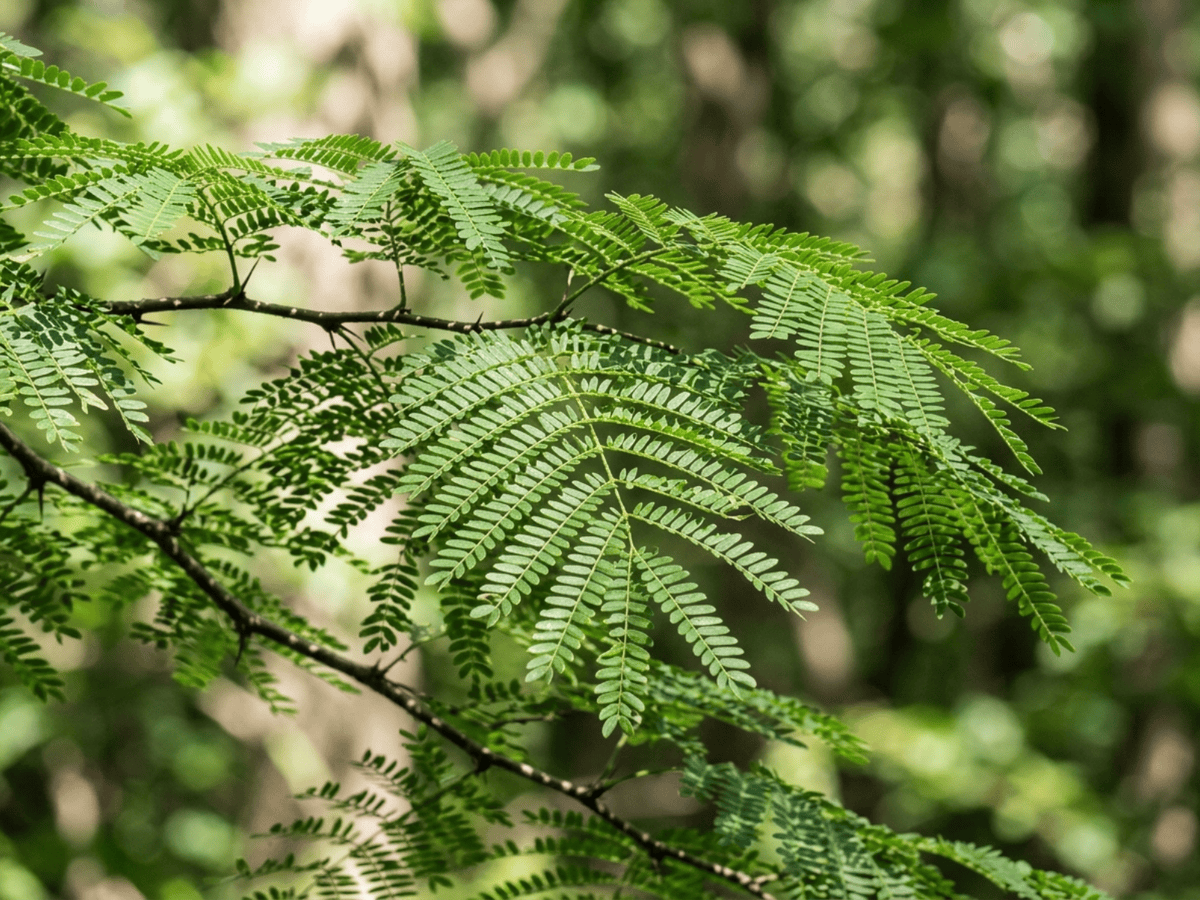


Japanese Honey Locust
Gleditsia japonica
Easy · Beginner friendlyAbout Japanese Honey Locust
Japanese Honey Locust is a medium deciduous tree native to Japan and northern China, reaching 50-60 feet, with finely textured bipinnate compound foliage that casts light dappled shade. Fragrant greenish-yellow flower clusters bloom in early summer, producing long curly seed pods. Like its American cousin it is tolerant of urban stress, but remains less commonly planted in American gardens, offering a refined alternative.
- Drought-tolerant
- Pollinator-friendly
How to care for Japanese Honey Locust
Watering
- Springevery 14 days
- Summerevery 10 days
- Fallevery 14 days
- Winterevery 30 days
Soil · Well-draining
- Top dressingPine bark mulch10%
- Main mixPotting soil + perlite 2:170%
- DrainageLECA / gravel20%
Never skip the drainage layer — standing water is the top cause of root rot.
FERTILIZER
Balanced Feed 14-14-14
An even feed covers all three needs at once, keeping leaves, roots and blooms moving together with nothing pushed out of balance.
- Nitrogen · Leaves
- Phosphorus · Roots + Blooms
- Potassium · Strength
- Springevery 60 days
At a Glance
- NativeEast Asia
- Height40–70 ft (12.2–21.3 m)
- Spread30–50 ft (9.1–15.2 m)
- Flower colorGreen, Yellow
- Foliage colorGreen, Yellow
- Fruit colorBrown
- SoilLoamy, Well-drained
- LocationsYard
Bloom time
BLOOM CYCLE
Peak bloom
Jun
Greenish-yellow fragrant flower clusters in June
Fragrance
LIGHT FRAGRANCE
The flowers have a mild sweet pea-like scent.
Toxicity
Humans Slight · Pets Slight
triterpenoid saponins and gleditsia saponins
Slight
- Fruit
- Seed
- Ingestion
EXPOSURE Eating fruit and seeds.
EFFECT GI irritation from saponins if large amounts ingested raw.
NOTE Pods rich in saponins; mild GI irritant. Thorns pose physical hazard.
Slight
- Fruit
- Ingestion
EXPOSURE Eating fruit.
EFFECT Vomiting, diarrhea from saponins.
NOTE Pods rich in saponins; mild GI irritant. Thorns pose physical hazard.
Slight
- Fruit
- Ingestion
EXPOSURE Eating fruit.
EFFECT Vomiting, diarrhea from saponins.
NOTE Pods rich in saponins; mild GI irritant. Thorns pose physical hazard.
Educational information, not medical or veterinary advice. If exposure is suspected, contact a doctor or veterinarian.
DISTRIBUTION


- Native
- East Asia
History

Gleditsia japonica grows naturally in Japan, Korea, and adjacent parts of China (where var. delavayi is recognized). Dutch botanist Friedrich Anton Wilhelm Miquel described the species in 1867 from Japanese material. The genus Gleditsia honors German botanist Johann Gottlieb Gleditsch, director of the Berlin Botanical Garden in the 18th century.
The trunk and main branches are armed with formidable branched thorns up to 15 cm long—an ancestral defense against extinct Pleistocene megafauna also seen in American G. triacanthos. Long, flat, twisted, dark brown pods reach 20-30 cm and contain seeds embedded in sweetish pulp. Because the pods are rich in saponins they were historically used in Japan and Korea as a soap substitute for washing clothes and hair, and powdered pods were used to promote sneezing in traditional Chinese medicine (under the name zao jia).
Extracts are being studied for antitumor and antiviral activity. The species is occasionally planted as an ornamental and closely resembles the American G. triacanthos except for the twisted pods. The hard, rot-resistant wood is used for fence posts and tool handles. The thornless forms are occasionally cultivated as ornamental shade trees in botanical collections.
Symbolism & meaning
What It Symbolizes
Japanese Honey Locust is protection by armor — wild trunks bristling with fearsome branched thorns that historically warded off livestock and intruders alike. It also evokes resilience, thriving in compacted urban soil and pollution where finer trees decline. It is the deceptively elegant shade tree whose ancestors evolved their thorns against now-extinct megafauna, still standing guard over modern streets.
- Protection — thorny wild trunks ward off intruders
- Resilience — thrives in poor urban conditions
Where the Name Comes From
The name Japanese Honey Locust points to Japan. 'Gleditsia' honors German botanist Johann Gleditsch; 'japonica' means of Japan.
Uses & Fun Facts
- Light dappled canopy ideal for residential lawn shade
- Hard durable timber used in Asian woodworking traditions
- Pods used in traditional East Asian remedies and saponins
Related plants
Plants with similar care
 Chinese AbeliaAbelia chinensis
 Fragrant AbeliaAbelia mosanensis
 Large-Flowered AbeliaAbelia uniflora
 Glossy AbeliaAbelia x grandiflora
Frequently asked questions
How often should I water Japanese Honey Locust?
In summer, water about every 10 days; in winter, about every 30 days. Adjust for heat, pot size and drainage.
How much light does Japanese Honey Locust need?
Full sun: 6+ hrs direct. Watch the leaves — scorching or stretching means the light needs adjusting.
Is Japanese Honey Locust toxic to cats or dogs?
Pets Slight (Dogs Slight · Cats Slight) Educational information, not medical or veterinary advice. If exposure is suspected, contact a doctor or veterinarian.
Is Japanese Honey Locust easy to grow?
Yes — it is considered an easy, beginner-friendly plant.
When does Japanese Honey Locust bloom?
It typically blooms Jun in the Northern Hemisphere.
YardMate
Identify any plant in seconds
Snap a photo — YardMate names the plant, diagnoses problems, and reminds you when to water.
Download on the App Store