 YardMate


Ghost-Plant
Graptopetalum paraguayense
Easy · Beginner friendlyAbout Ghost-Plant
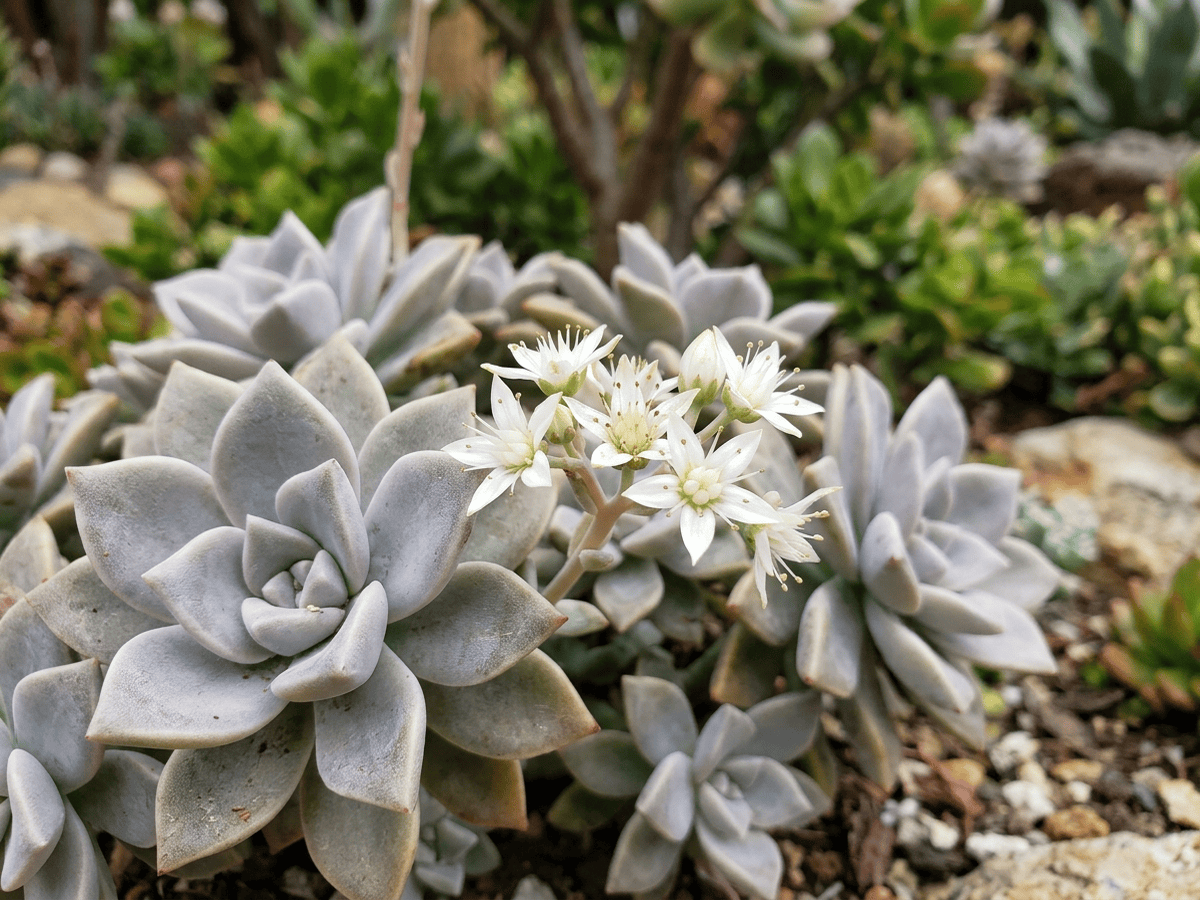
Graptopetalum paraguayense, known as ghost plant or mother of pearl, is an elegant succulent native to the mountains of Tamaulipas, Mexico — despite its misleading species name suggesting Paraguay, which arose from a labeling error. It forms loose rosettes of thick, pointed leaves covered in a powdery farina coating that gives them a pale lavender-gray, almost ghostly appearance. The leaves refract light beautifully, shifting between silver, pink, blue, and pale yellow depending on light and temperature conditions. In spring it sends up arching stems bearing star-shaped white flowers with red spots. The plant trails gracefully as it grows, with rosettes forming along lengthening stems, making it ideal for hanging baskets and wall planters. It is incredibly easy to propagate from individual leaves, which root and sprout new plants within weeks. Ghost plant is drought-tolerant, frost-resistant to about minus seven degrees Celsius, and virtually indestructible in well-drained soil. It has become one of the most popular succulents worldwide.
- Drought-tolerant
- Cold-hardy
- Trailing
How to care for Ghost-Plant
Watering
- Springevery 10 days
- Summerevery 7 days
- Fallevery 14 days
- Winterevery 30 days
Soil · Fast-draining
- Main mixSand + pumice + soil 1:1:150%
- DrainagePumice / gravel50%
Keep grit at half the mix or more — this soil is meant to dry out fast.
FERTILIZER
Cactus & Succulent Feed 2-7-7
Hold the nitrogen back and growth stays compact instead of soft and stretched. Phosphorus and potassium carry the roots and the flowering.
- Nitrogen · Leaves
- Phosphorus · Roots + Blooms
- Potassium · Strength
- Springevery 30 days
- Summerevery 45 days
- Fallevery 60 days
At a Glance
- NativeNorth America
- Height0.5–1 ft (0.2–0.3 m)
- Spread1–2 ft (0.3–0.6 m)
- Flower colorWhite, Yellow
- Foliage colorSilver, Purple, Red
- SoilSandy, Well-drained
- LocationsIndoor · Yard · Balcony
Bloom time
BLOOM CYCLE
Peak bloom
Mar–May
White star flowers with red spots on arching stems in spring
Fragrance
NO FRAGRANCE
No notable fragrance.
Toxicity
Humans Safe · Pets Safe
None reported
Safe
EXPOSURE No exposure route is reported.
EFFECT No significant toxicity.
NOTE Listed as non-toxic for humans; avoid eating ornamental plants unless confirmed edible.
Safe
EXPOSURE No exposure route is reported.
EFFECT Not listed as toxic.
NOTE Listed as non-toxic for dogs; avoid eating ornamental plants unless confirmed edible.
Safe
EXPOSURE No exposure route is reported.
EFFECT Not listed as toxic.
NOTE Listed as non-toxic for cats; avoid eating ornamental plants unless confirmed edible.
Educational information, not medical or veterinary advice. If exposure is suspected, contact a doctor or veterinarian.
DISTRIBUTION


- Native
- Introduced
- North America
History

Graptopetalum paraguayense was first described from plants grown in Europe in the early 20th century; the type locality was mistakenly given as Paraguay, but all wild populations have since been located in the Mexican states of Tamaulipas and San Luis Potosí, growing on limestone cliffs. The species was formally reassigned to Graptopetalum in 1958 by taxonomist Eric Walther. It spread through horticulture primarily through informal cutting exchange rather than commercial breeding, precisely because any dropped leaf or stem piece roots readily on contact with soil.
Its ability to shift color dramatically — from silver-lavender in shade to pink-peach under full sun stress — made it a favorite of California and Mediterranean dry garden designers. It's now one of the most globally distributed hobby succulents.
The ghost plant's species name 'paraguayense' is one of botany's famous geographic errors — the plant was described in 1904 from a specimen believed to have come from Paraguay, but it is actually native to the Sierra de Tamaulipas mountains in northeastern Mexico. This was not corrected because botanical naming rules require retaining the original name once published. The powdery coating that gives it its ghostly appearance is epicuticular wax, a survival adaptation that reflects intense sunlight and reduces water loss in its arid mountain habitat.
Symbolism & meaning
What It Symbolizes
The Ghost-Plant makes visible mystery through its ethereal, almost spectral rosettes that shift between lavender, pink, and silver depending on sun and stress. Beyond its haunting appearance lies remarkable adaptability, thriving in conditions from full sun to half-shade with equal ease. This is a succulent of quiet enchantment — a plant whose flexible nature is itself part of its magic, never quite the same color from one season to the next.
- Mystery — Its ethereal ghostly appearance evokes a sense of the unknown and enchanting
- Adaptability — Thrives in diverse conditions, representing flexibility and resilience
Where the Name Comes From
Graptopetalum from Greek 'graptos' (written or marked) and 'petalon' (petal), referring to the spotted petals. 'Paraguayense' is a geographic misnomer — the plant is actually from Mexico.
Uses & Fun Facts
- Powdery trailing rosettes soften dish gardens and sunny windowsills
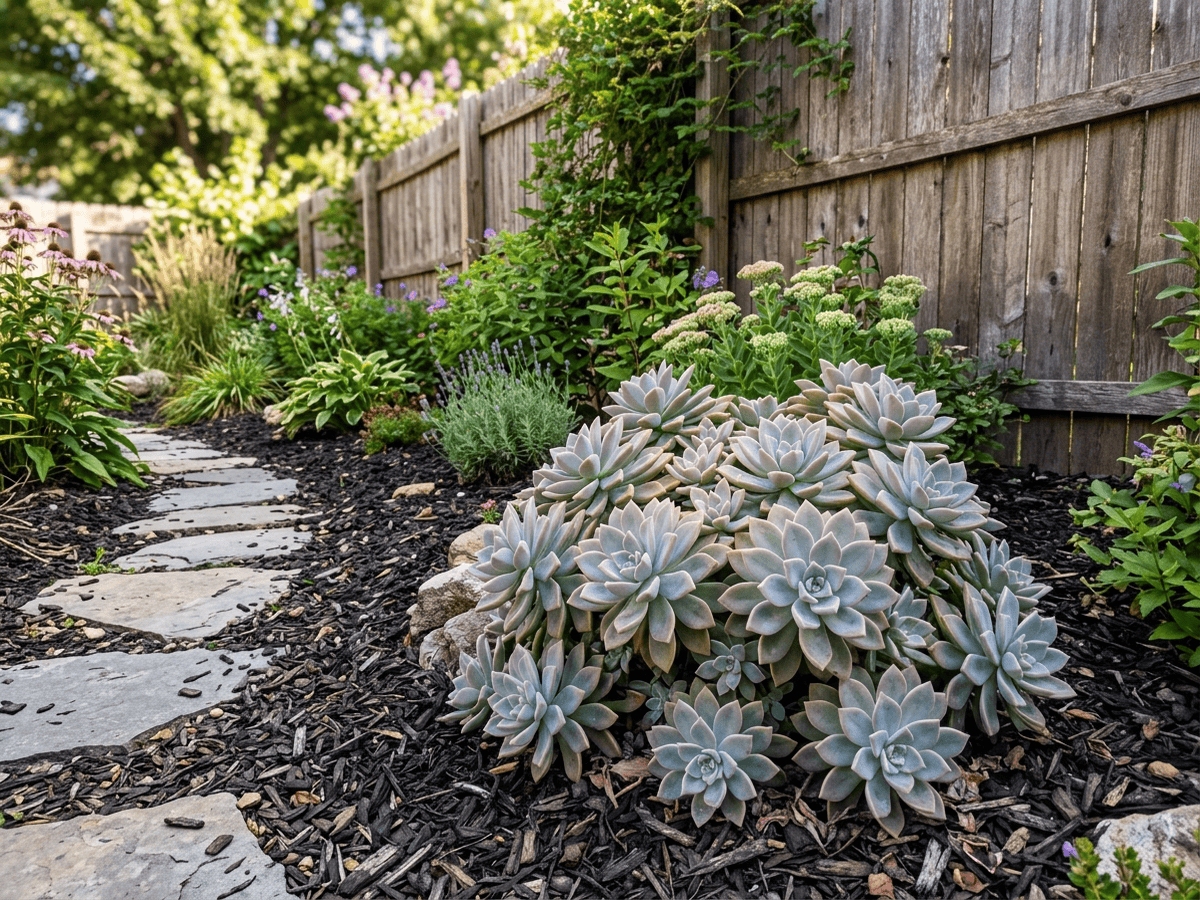
- Ghost-Plant spreads as low groundcover on banks and slopes
- Rosettes spill over dry pots and mix easily with other succulents
Related plants
Plants with similar care
 Chinese AbeliaAbelia chinensis
 Fragrant AbeliaAbelia mosanensis
 Large-Flowered AbeliaAbelia uniflora
 Glossy AbeliaAbelia x grandiflora
Frequently asked questions
How often should I water Ghost-Plant?
In summer, water about every 7 days; in winter, about every 30 days. Adjust for heat, pot size and drainage.
How much light does Ghost-Plant need?
Full sun: 6+ hrs direct. Watch the leaves — scorching or stretching means the light needs adjusting.
Is Ghost-Plant toxic to cats or dogs?
Pets Safe (Dogs Safe · Cats Safe) Educational information, not medical or veterinary advice. If exposure is suspected, contact a doctor or veterinarian.
Is Ghost-Plant easy to grow?
Yes — it is considered an easy, beginner-friendly plant.
Can Ghost-Plant be grown indoors?
Yes, it adapts well to indoor growing given the right light.
When does Ghost-Plant bloom?
It typically blooms Mar–May in the Northern Hemisphere.
YardMate
Identify any plant in seconds
Snap a photo — YardMate names the plant, diagnoses problems, and reminds you when to water.
Download on the App Store