 YardMate

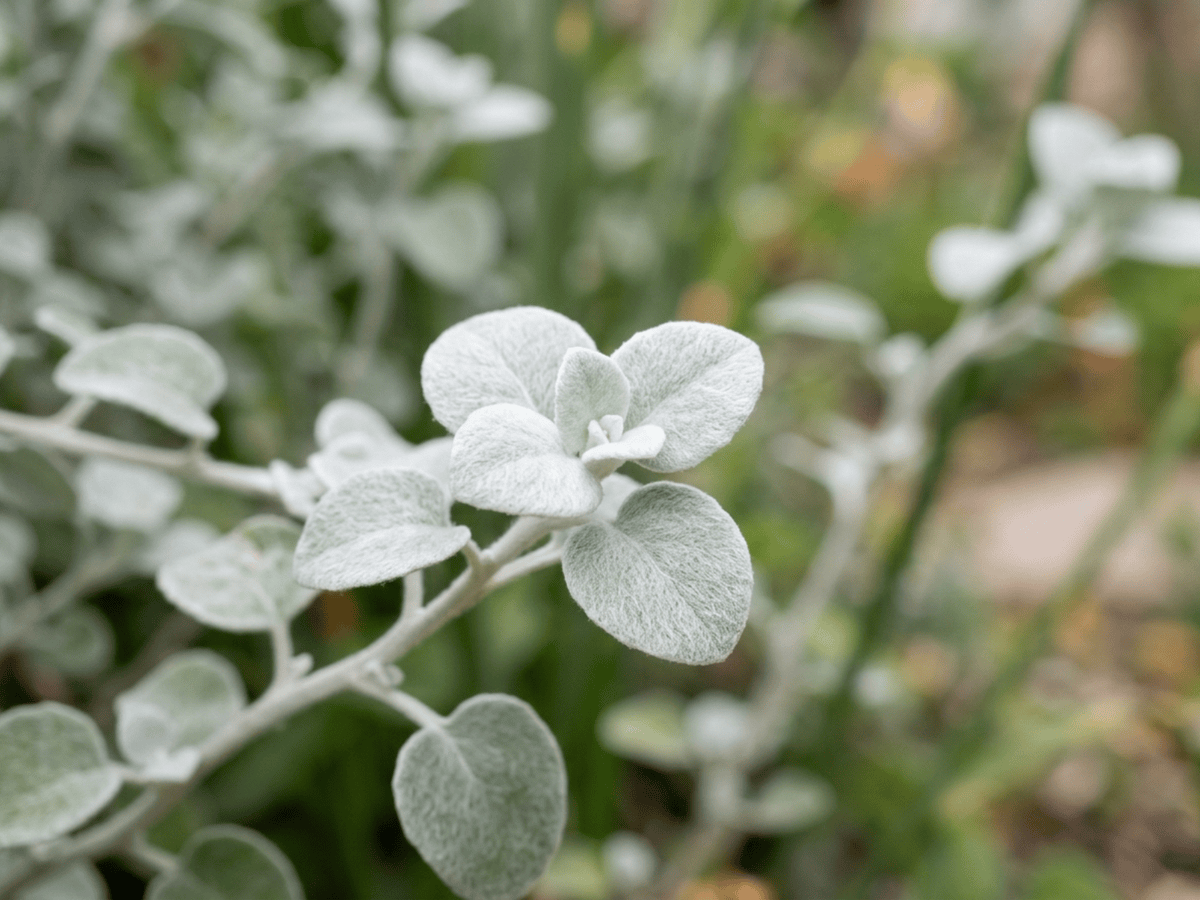


Licorice Plant
Helichrysum petiolare
Easy · Beginner friendlyAbout Licorice Plant
Licorice Plant is a tender perennial from South Africa grown as an annual across the United States, prized for its woolly, silvery-gray heart-shaped leaves on trailing stems 18–36 inches long. A classic 'spiller' in mixed containers and hanging baskets, it contrasts beautifully with bright-flowered annuals. Heat- and drought-tolerant, it rarely blooms in cultivation—its value is entirely in the silver foliage. Cultivars include 'Limelight' (chartreuse) and 'Variegatum'.
- Drought-tolerant
- Heat-tolerant
- Trailing
- Container-friendly
How to care for Licorice Plant
Watering
- Springevery 5 days
- Summerevery 4 days
- Fallevery 10 days
- Winterevery 30 days
Soil · Well-draining
- Top dressingPine bark mulch10%
- Main mixPotting soil + perlite 2:170%
- DrainageLECA / gravel20%
Never skip the drainage layer — standing water is the top cause of root rot.
FERTILIZER
Balanced Feed 14-14-14
An even feed covers all three needs at once, keeping leaves, roots and blooms moving together with nothing pushed out of balance.
- Nitrogen · Leaves
- Phosphorus · Roots + Blooms
- Potassium · Strength
- Springevery 21 days
- Summerevery 21 days
At a Glance
- NativeAfrica
- Height1–2 ft (0.3–0.6 m)
- Spread3–5 ft (0.9–1.5 m)
- Flower colorCream, Yellow
- Foliage colorSilver, Variegated, Yellow
- SoilSandy, Well-drained, Loamy
- LocationsYard · Balcony
Bloom time
BLOOM CYCLE
Grown for silvery foliage, rarely blooms
Fragrance
LIGHT FRAGRANCE
Faint licorice-like scent from crushed foliage.
Toxicity
No toxicity has been reported for this plant. Still, it is wise to keep pets from chewing on any houseplant.
Educational information, not medical or veterinary advice. If exposure is suspected, contact a doctor or veterinarian.
DISTRIBUTION


- Native
- Introduced
- Africa
History

Helichrysum petiolare is native to South Africa, primarily the Eastern Cape and KwaZulu-Natal provinces, where it grows in coastal and montane grasslands. It is a spreading tender perennial with trailing 60-90 cm stems covered in dense silvery-white woolly tomentum and small rounded felted leaves. Though technically a flowering perennial (small clusters of tiny cream-yellow flowers appear in summer), it is almost universally grown for foliage rather than flowers — the silvery trailing stems serve as a filler and unifier in mixed container compositions, hanging baskets, and summer bedding schemes, softening the color contrasts between brighter flowering partners. Its rise to global popularity coincided with the late-20th-century boom in upscale designer container gardening; by the 2000s it was one of the most widely-grown foliage plants in European and American commercial bedding production.
Important cultivars include "Limelight" (chartreuse-yellow foliage), "Variegatum" (cream-and-silver splashed foliage), "Icicles" (finely-dissected silver leaves), and the original silver species form. The leaves have a faint licorice scent when crushed, giving the common name. Plants tolerate considerable drought once established but appreciate moderate summer water in container conditions.
Hardy only to approximately USDA zone 9-10; grown as a warm-season annual in colder climates. Introduced from South Africa to European horticulture in the late 1800s and to American garden centers in the late 20th century as the container-gardening movement took hold. Proven Winners and other plant brands made it a staple of recipe-style mixed containers across the US.
Symbolism & meaning
What It Symbolizes
Licorice Plant is warm companionship in container plantings, its silver-felted leaves spilling beneath bolder partners and making everything around its look better. Native to South African veld, it brings resilience to pots that bake on summer terraces, thriving where coddled neighbors collapse. It is the supporting actor every great container needs, generous with shine and never stealing the scene.
- Warm companionship — pairs beautifully with other container plants
- Resilience — silver felted foliage withstands glare, wind, and dry soil
Where the Name Comes From
Genus from Greek 'helios' (sun) and 'chrysos' (gold); 'petiolare' refers to its long leaf petioles.
Uses & Fun Facts
- Classic silvery spiller cascading from mixed summer baskets
- Trailing woolly stems edge sunny dry borders and pathways
Related plants
Plants with similar care
 Chinese AbeliaAbelia chinensis
 Fragrant AbeliaAbelia mosanensis
 Large-Flowered AbeliaAbelia uniflora
 Glossy AbeliaAbelia x grandiflora
Frequently asked questions
How often should I water Licorice Plant?
In summer, water about every 4 days; in winter, about every 30 days. Adjust for heat, pot size and drainage.
How much light does Licorice Plant need?
Full sun: 6+ hrs direct. Watch the leaves — scorching or stretching means the light needs adjusting.
Is Licorice Plant toxic to cats or dogs?
No toxicity has been reported for this plant. Still, it is wise to keep pets from chewing on any houseplant. Educational information, not medical or veterinary advice. If exposure is suspected, contact a doctor or veterinarian.
Is Licorice Plant easy to grow?
Yes — it is considered an easy, beginner-friendly plant.
YardMate
Identify any plant in seconds
Snap a photo — YardMate names the plant, diagnoses problems, and reminds you when to water.
Download on the App Store