 YardMate


Sausage Vine
Holboellia latifolia
Medium · Some experienceAbout Sausage Vine
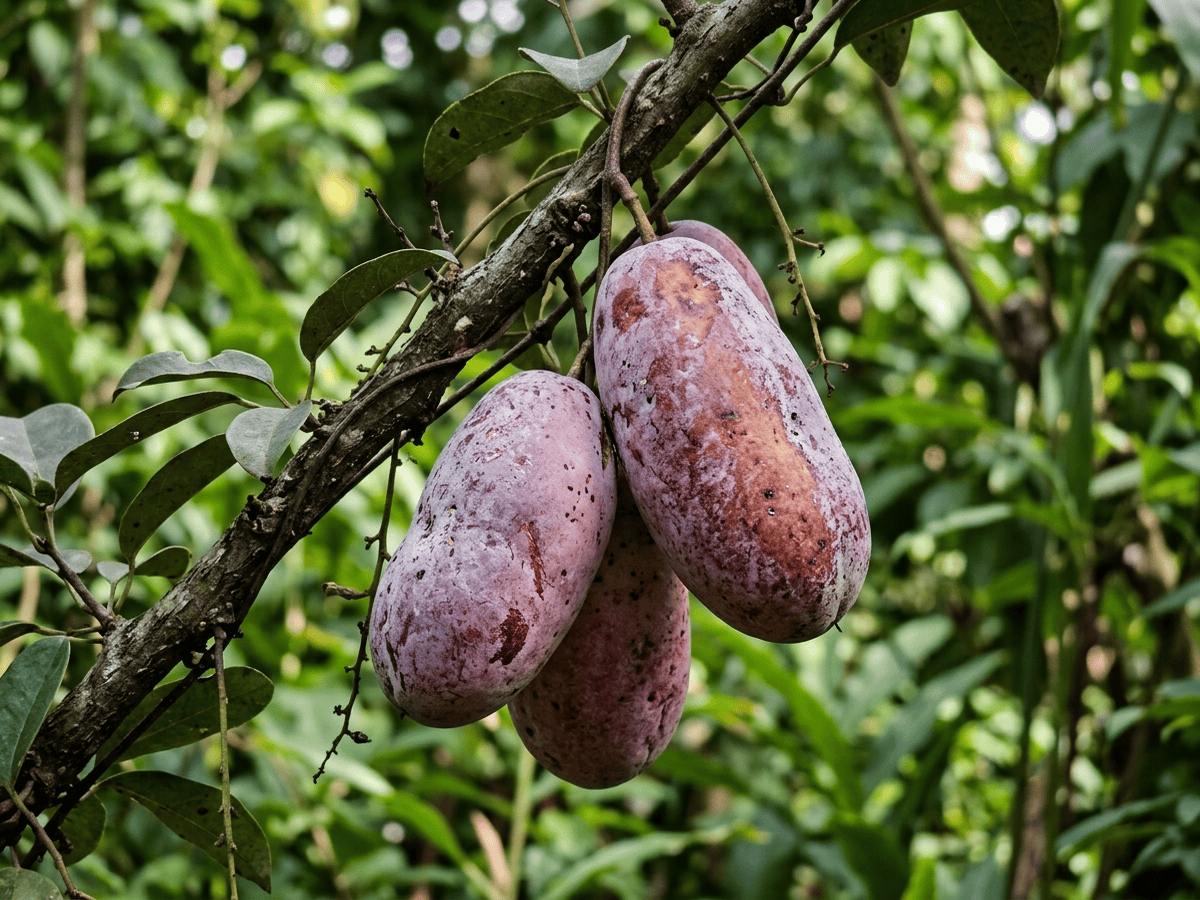
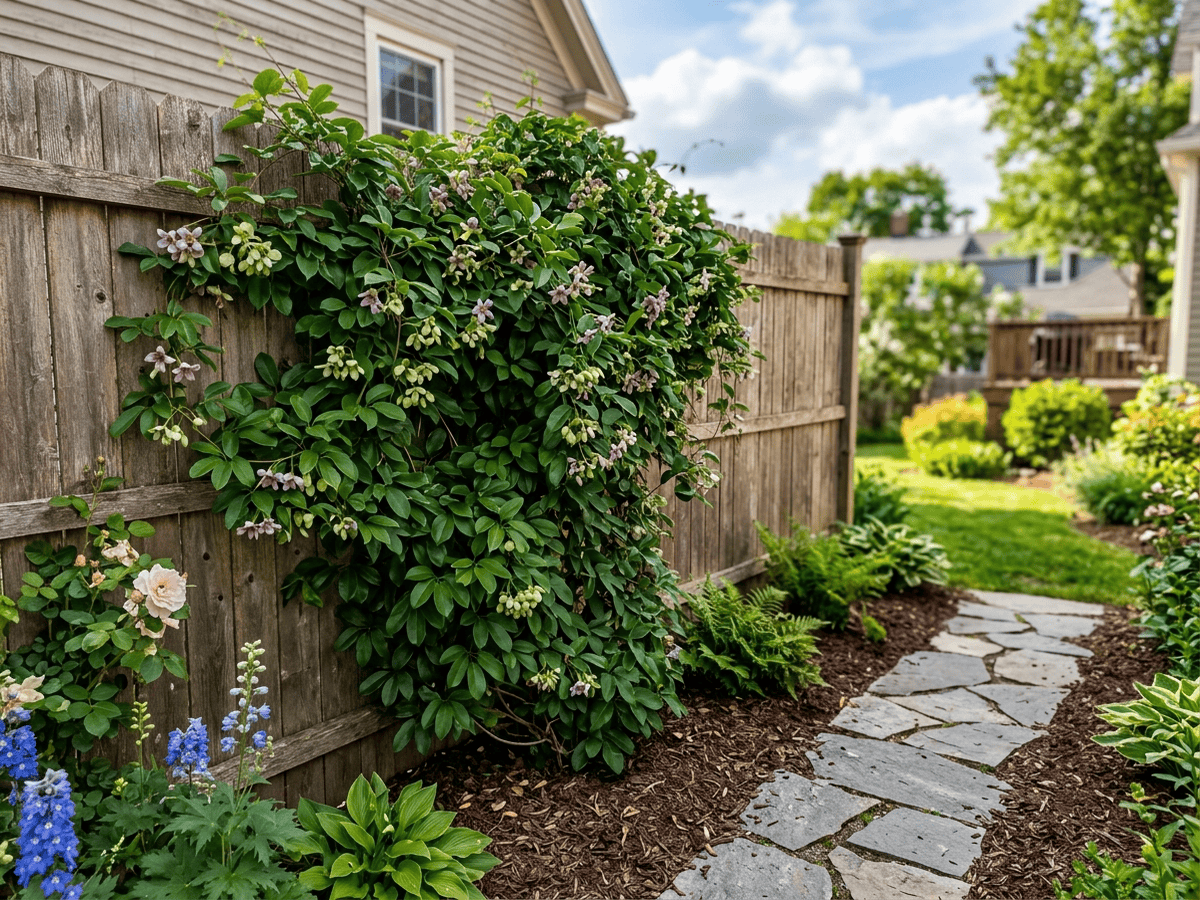
Sausage Vine is an unusual semi-evergreen climber reaching 15-20 feet with graceful palmate leaves and fragrant greenish-white flowers with purple centers in spring. Female plants produce striking purple sausage-shaped edible fruits. Native to Himalayan forests, it is a choice collector's vine for Pacific Northwest and warmer US gardens where its refined foliage and fragrant flowers shine in partial shade.
- Edible
- Fragrant
- Climbing
- Evergreen
How to care for Sausage Vine
Watering
- Springevery 7 days
- Summerevery 5 days
- Fallevery 10 days
- Winterevery 21 days
Soil · Well-draining
- Top dressingPine bark mulch10%
- Main mixPotting soil + perlite 2:170%
- DrainageLECA / gravel20%
Never skip the drainage layer — standing water is the top cause of root rot.
FERTILIZER
Balanced Feed 14-14-14
An even feed covers all three needs at once, keeping leaves, roots and blooms moving together with nothing pushed out of balance.
- Nitrogen · Leaves
- Phosphorus · Roots + Blooms
- Potassium · Strength
- Springevery 30 days
At a Glance
- NativeSouth Asia, East Asia
- Height15–25 ft (4.6–7.6 m)
- Spread6–10 ft (1.8–3 m)
- Flower colorWhite, Purple, Pink, Green
- Foliage colorDark-green, Green
- Fruit colorPurple
- SoilLoamy, Well-drained
- LocationsYard
Bloom time
BLOOM CYCLE
Peak bloom
Apr–May
Fragrant cream-purple flowers April to May
Fragrance
MODERATE FRAGRANCE
The flowers have a sweet jasmine-vanilla fragrance.
Toxicity
Pets Slight
Unknown toxic principle
Not reported
EXPOSURE No exposure route is reported.
EFFECT No toxic effect is reported.
NOTE No toxicity is reported for humans in this catalog; this is not evidence that the plant is edible or harmless.
Slight
- Leaf
- Stem
- Ingestion
EXPOSURE Eating leaves and stems.
EFFECT Mild GI upset.
NOTE Fruit pulp is edible. Not widely reported toxic.
Slight
- Leaf
- Stem
- Ingestion
EXPOSURE Eating leaves and stems.
EFFECT Mild GI upset.
NOTE Fruit pulp is edible. Not widely reported toxic.
Educational information, not medical or veterinary advice. If exposure is suspected, contact a doctor or veterinarian.
DISTRIBUTION


- Native
- South Asia
- East Asia
History
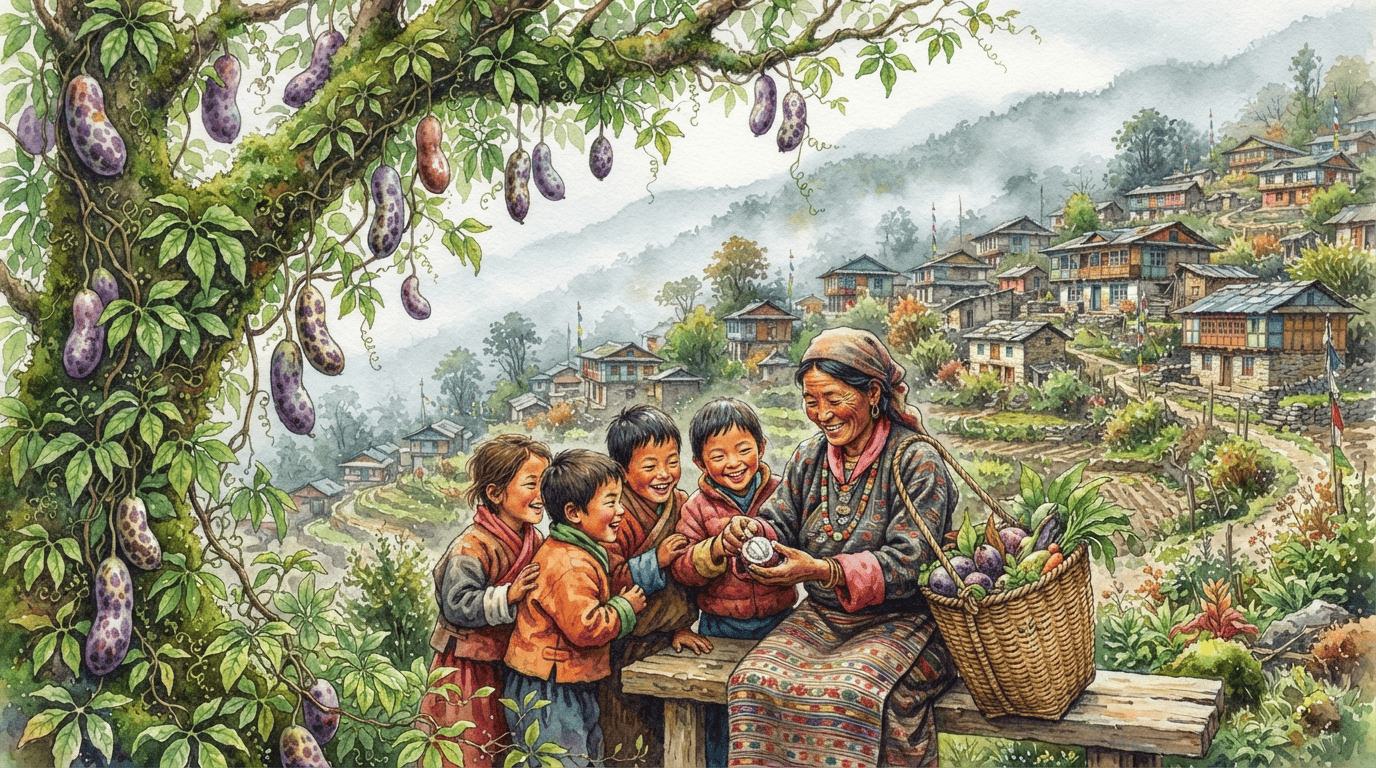
Holboellia latifolia is native to the Himalayas (Nepal, Bhutan, northeastern India, Pakistan) and western China (Sichuan, Yunnan, Tibet). Danish botanist Nathaniel Wallich formally described the species in 1824 while he was head of the Calcutta Botanic Garden and surveying the flora of India and Nepal. The genus Holboellia was named by Wallich in honor of Frederik Ludvig Holbøll (1765-1829), a Danish horticulturist and superintendent of the Copenhagen Botanic Garden.
The 5-7 meter evergreen twining vine belongs to the Lardizabalaceae family (along with Akebia and Stauntonia) and closely resembles Akebia quinata: palmately compound leaves, racemes of small fragrant bell-shaped flowers in spring (male white, female purplish on the same plant), and—if cross-pollinated—curious sausage-shaped 5-10 cm purple-fleshy fruits with sweet white edible pulp. Unlike Akebia, however, Holboellia is more tender (zone 7-8) and is grown mainly in the Pacific Northwest and mild British gardens rather than across the full American temperate zone. Deer-resistant, good for shaded walls.
Named for Danish botanist Frederik Holboll. A connoisseur's vine introduced to Western horticulture through plant explorations in Sikkim and Yunnan. Finds a good home in the mild moist climate of Pacific Northwest US.
Symbolism & meaning
What It Symbolizes
Stauntonia Latifolia can symbolize quiet elegance, a refined climbing vine whose beauty rewards the observer rather than the passing glance. Another layer is mystery, for the unusual sausage-shaped fruits that follow its fragrant flowers surprise and delight whoever encounters them for the first time. In the language of woody climbers, holboellia is the well-mannered guest, never showy on first arrival, but unfolding into something memorable for those who keep it close.
- Quiet elegance — refined beauty rewards the observer
- Mystery — unusual fruits surprise and delight
Where the Name Comes From
Genus honors Frederik Ludvig Holboll, Danish naturalist; 'latifolia' means broad-leaved.
Uses & Fun Facts
- Sweet purple sausage-pods eaten fresh in Himalayan regions
- Spring flowers smell of vanilla and orange blossom
- Evergreen vine clothes pergolas in mild climates
- Glossy palmate leaves stay green year-round
Related plants
Plants with similar care
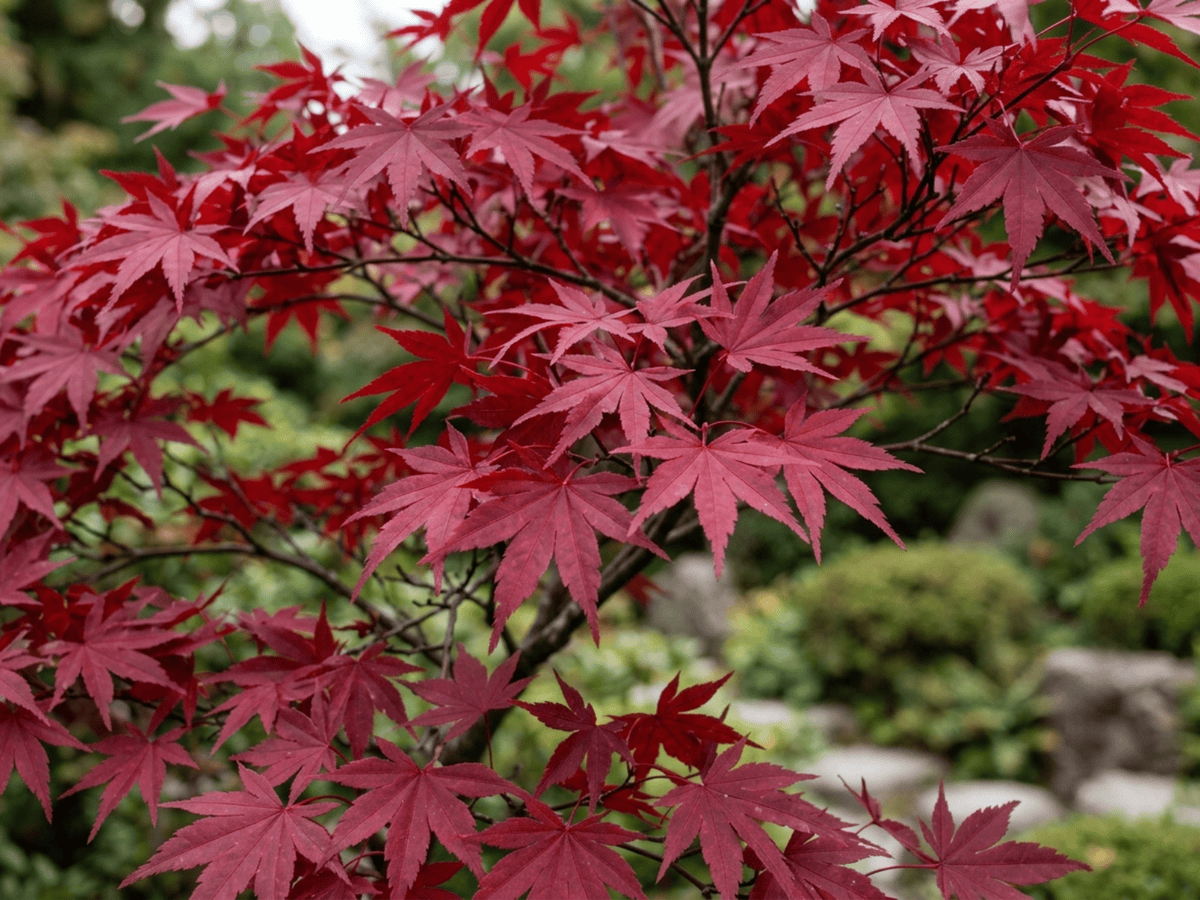 Japanese MapleAcer palmatum
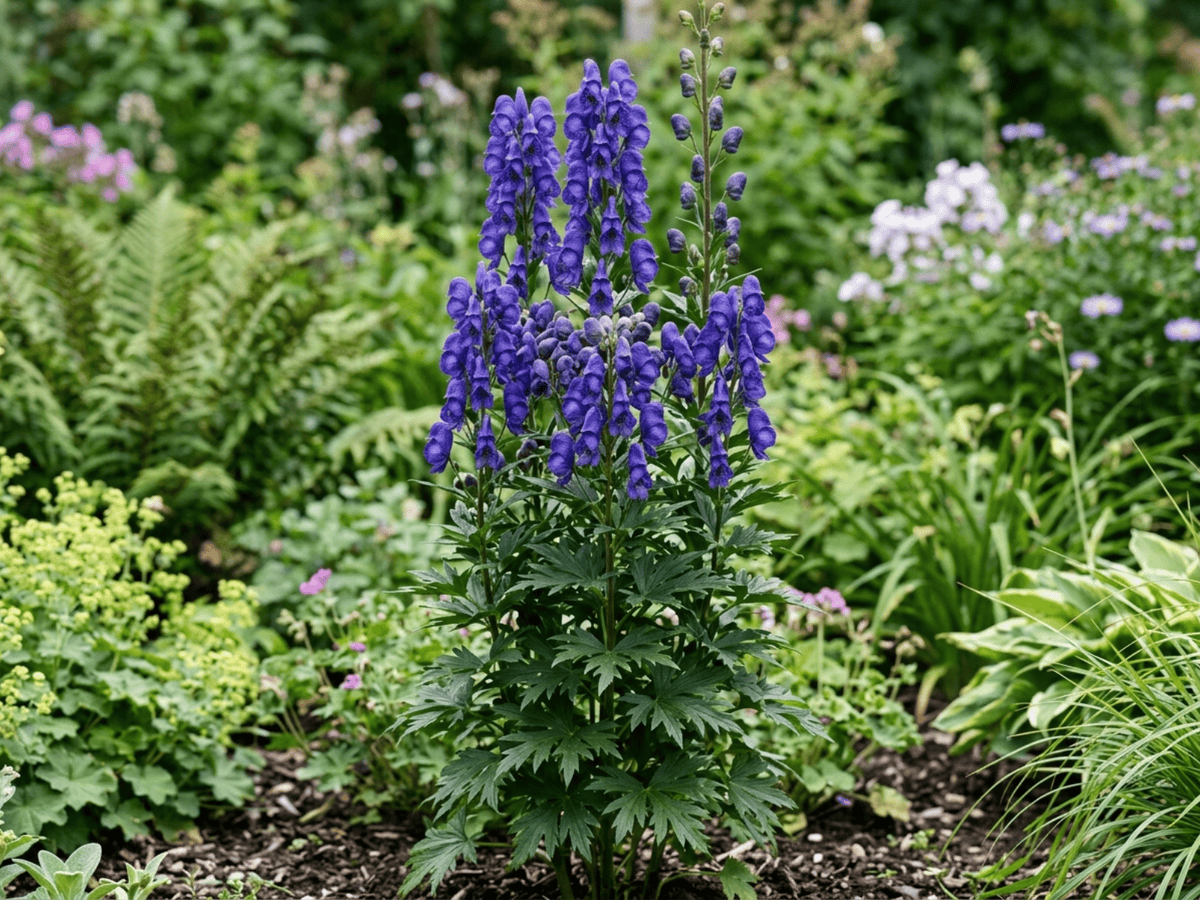 Azure MonkshoodAconitum carmichaelii
 Florida HobblebushAgarista populifolia
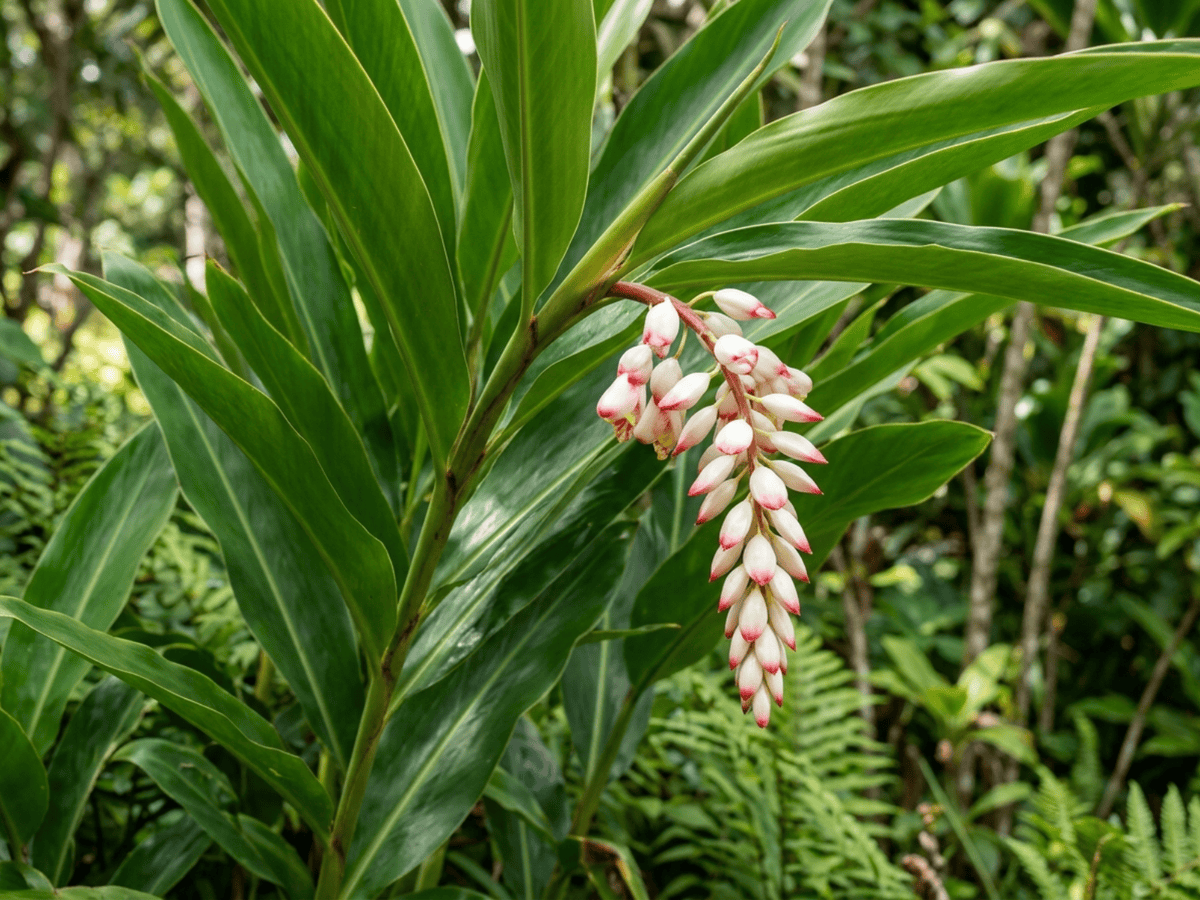 Shell GingerAlpinia zerumbet
Frequently asked questions
How often should I water Sausage Vine?
In summer, water about every 5 days; in winter, about every 21 days. Adjust for heat, pot size and drainage.
How much light does Sausage Vine need?
Part shade: 2–4 hrs direct. Watch the leaves — scorching or stretching means the light needs adjusting.
Is Sausage Vine toxic to cats or dogs?
Pets Slight (Dogs Slight · Cats Slight) Educational information, not medical or veterinary advice. If exposure is suspected, contact a doctor or veterinarian.
Is Sausage Vine easy to grow?
It is moderately demanding: a good choice once you have a little experience.
When does Sausage Vine bloom?
It typically blooms Apr–May in the Northern Hemisphere.
YardMate
Identify any plant in seconds
Snap a photo — YardMate names the plant, diagnoses problems, and reminds you when to water.
Download on the App Store