 YardMate

Hyacinth
Hyacinthus orientalis
Easy · Beginner friendlyAbout Hyacinth
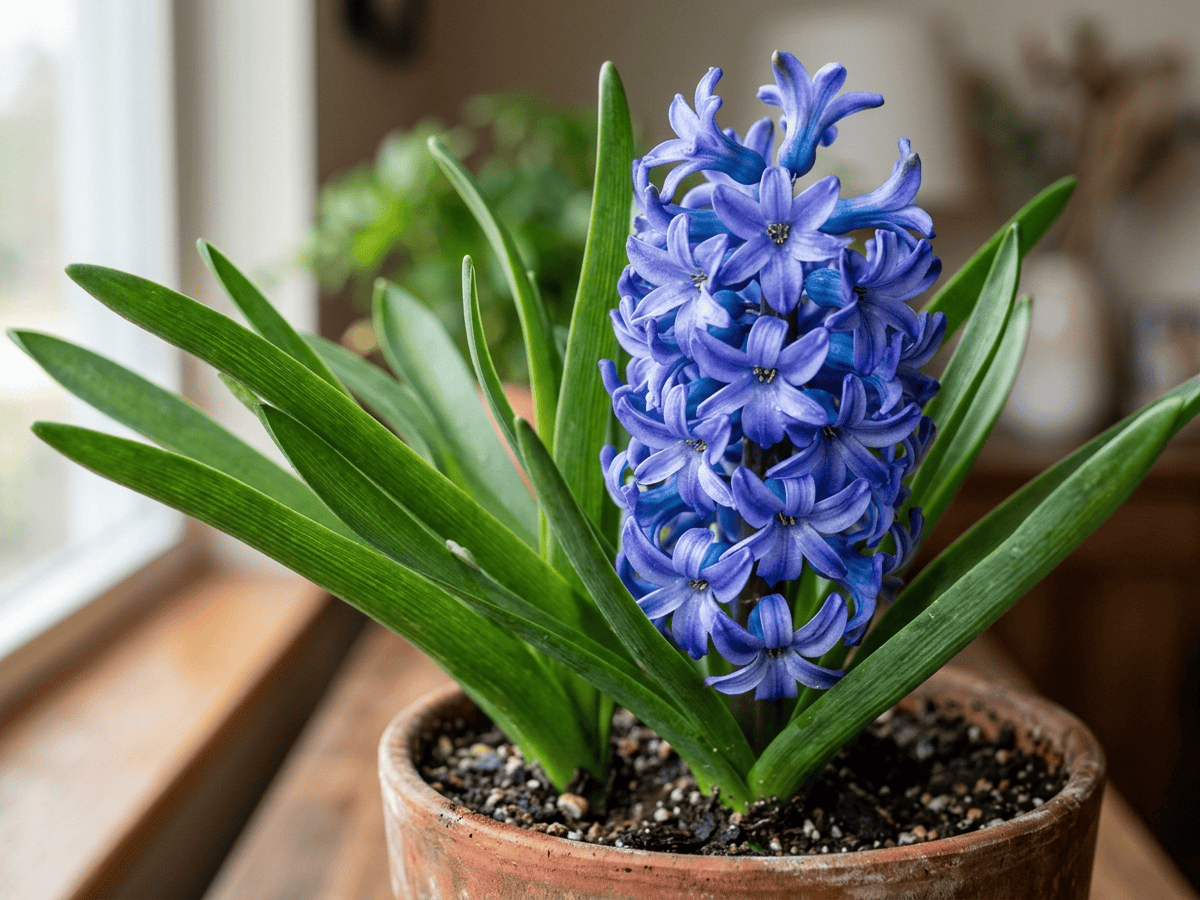
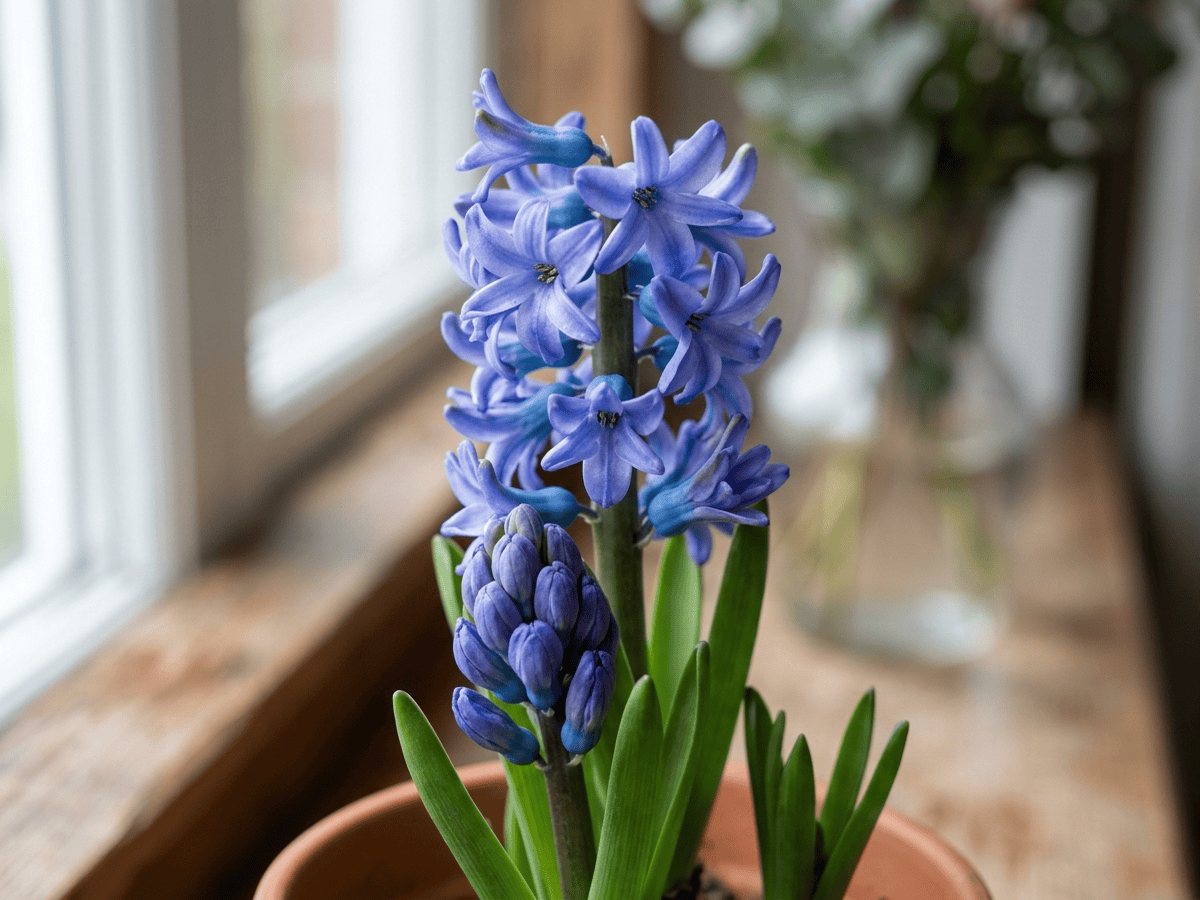
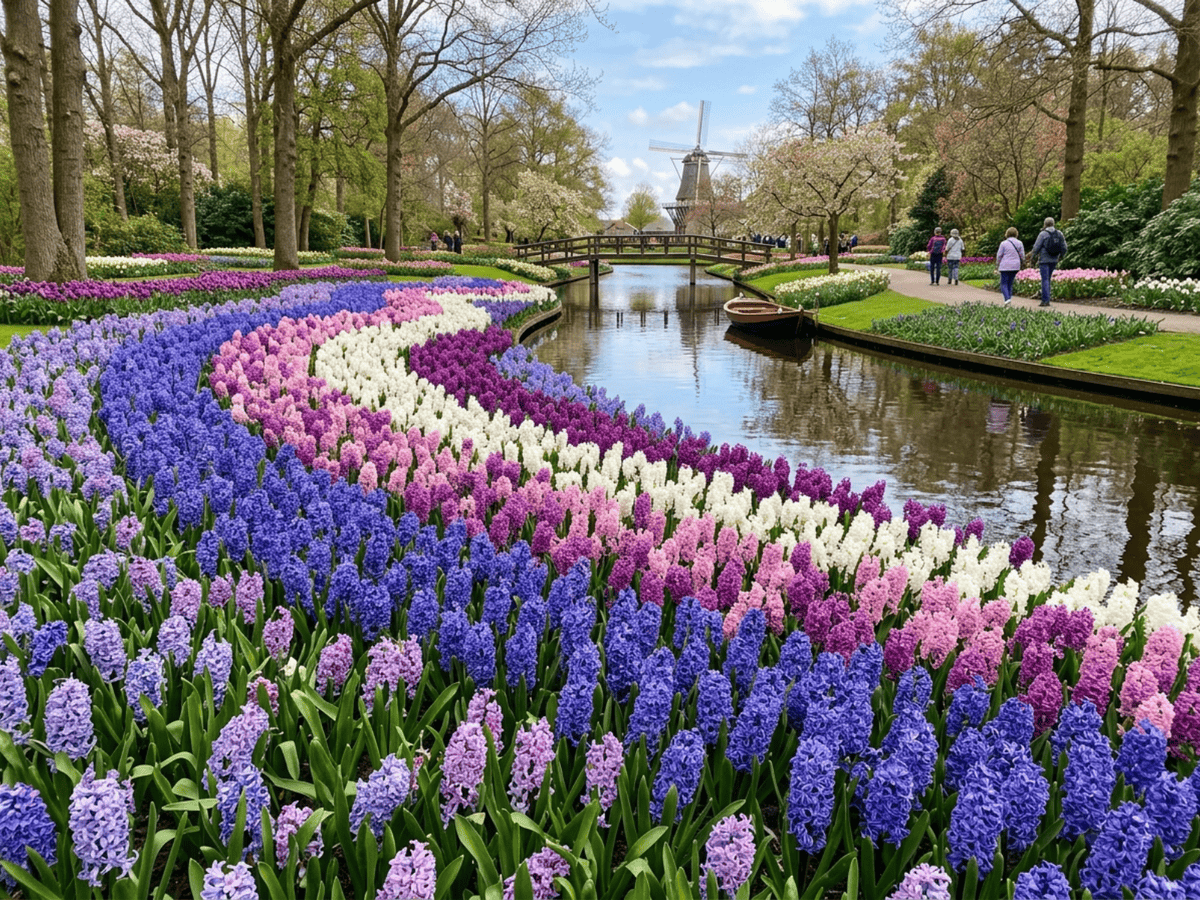
Hyacinthus orientalis, the common hyacinth, produces dense spikes of intensely fragrant, bell-shaped flowers in spring. Colors range from deep blue and purple through pink, red, white, and yellow. Each bulb produces one thick flower spike packed with 20–40 individual florets that release one of the strongest, sweetest fragrances in the plant kingdom. Native to Turkey, Lebanon, and Syria, it has been cultivated since the Ottoman Empire. Dutch growers produce over 2 billion hyacinth bulbs annually. Hyacinths are commonly forced for indoor winter bloom — a single bulb can perfume an entire room.
- Fragrant
How to care for Hyacinth
Watering
- Springevery 7 days
- Summerevery 30 days
- Fallevery 14 days
- Winterevery 30 days
Soil · Well-draining
- Main mixLoam + coarse sand 3:175%
- DrainageGravel25%
Sharp drainage matters most — bulbs rot in wet soil while dormant.
FERTILIZER
Bulb Feed 3-5-3
With bulbs, when matters more than what. One dose goes in the hole at planting, the second when shoots break ground.
- Nitrogen · Leaves
- Phosphorus · Roots + Blooms
- Potassium · Strength
- Springevery 30 days
- Fallevery 60 days
At a Glance
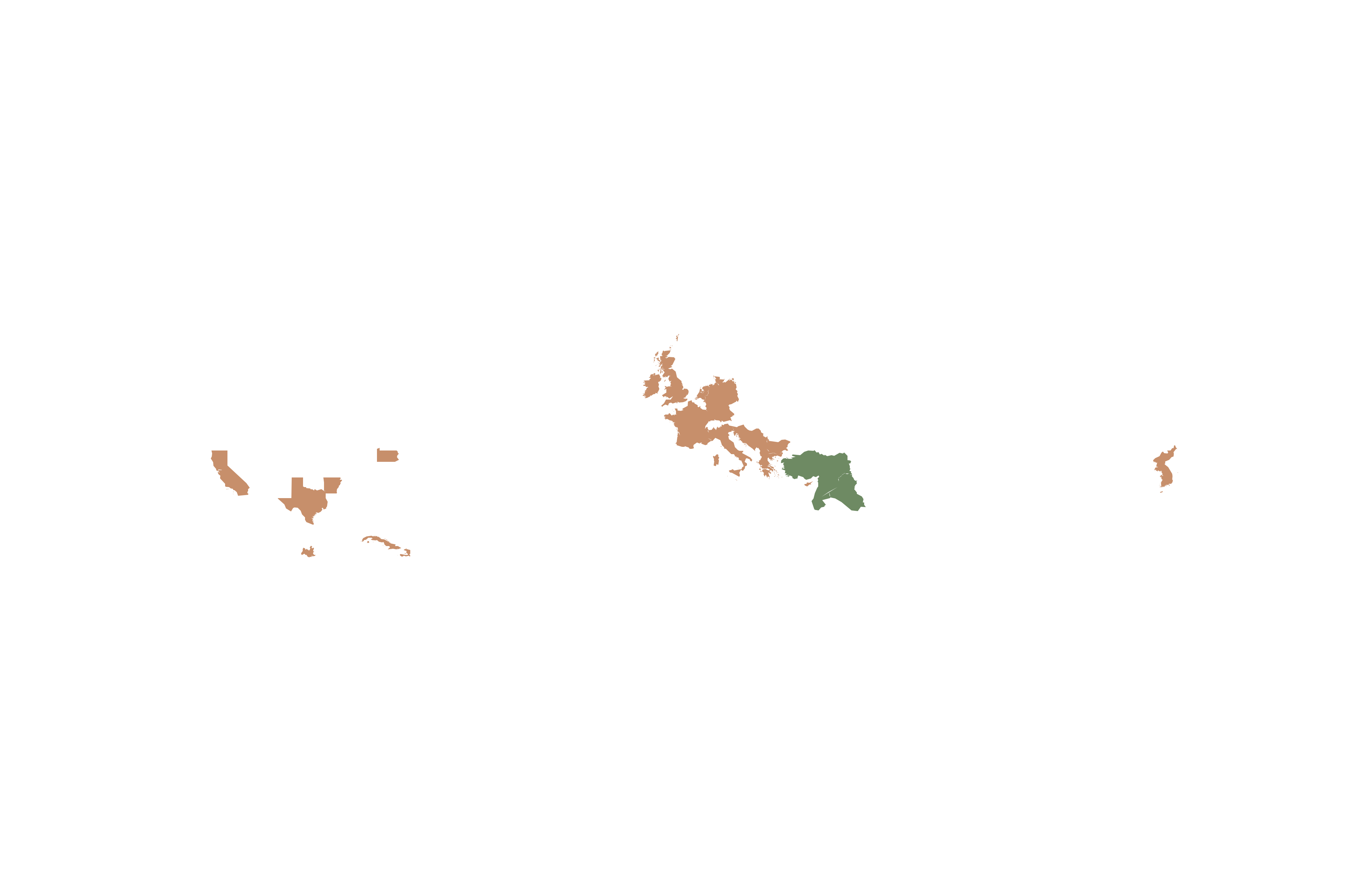
- NativeWestern Asia
- Height0.5–1 ft (0.2–0.3 m)
- Spread0.3–0.5 ft (0.1–0.2 m)
- Flower colorBlue, Pink, White, Purple
- Foliage colorGreen
- SoilLoamy, Well-drained
- LocationsYard · Indoor
Bloom time
BLOOM CYCLE
Peak bloom
Mar–Apr
Plant autumn 10cm deep; force indoors on water in special vases; one of spring's strongest scents
Fragrance
STRONG FRAGRANCE
One of the most powerfully fragrant garden bulbs — intense, sweet, and spicy — the defining early-spring fragrance in perfumery.
Toxicity
Humans Moderate · Pets Moderate
insoluble calcium oxalate raphides and lycorine-type alkaloids (low)
Moderate
- Root
- Contact
- Ingestion
EXPOSURE Touching roots. Eating roots.
EFFECT 'Hyacinth itch' contact dermatitis from bulb handling (calcium oxalate needles) and gI upset if bulbs eaten.
NOTE Toxicity concentrated in the bulb; handlers should wear gloves during bulb planting.
Moderate
- Root
- Ingestion
EXPOSURE Eating roots.
EFFECT Intense GI irritation, vomiting, drooling, tremors, cardiac symptoms, bulb is most dangerous, and per ASPCA.
NOTE Toxicity concentrated in the bulb; handlers should wear gloves during bulb planting.
Moderate
- Root
- Ingestion
EXPOSURE Eating roots.
EFFECT Intense GI irritation, vomiting, drooling, tremors, cardiac symptoms, bulb is most dangerous, and per ASPCA.
NOTE Toxicity concentrated in the bulb; handlers should wear gloves during bulb planting.
Educational information, not medical or veterinary advice. If exposure is suspected, contact a doctor or veterinarian.
DISTRIBUTION

- Native
- Introduced
- Western Asia
History

Hyacinthus orientalis is native to the mountains of Turkey, Syria, Lebanon, and northwestern Iran, where it grows on dry rocky hillsides. Ottoman Turkish gardeners had cultivated hundreds of named varieties by the 16th century, and Turkish bulbs reached Vienna in 1573 and the Netherlands by the 1590s. Dutch breeders around Haarlem quickly made hyacinth cultivation a specialty rival to tulips, and by 1730 Holland was exporting some two thousand hyacinth cultivars across Europe. At the peak of 18th-century Dutch enthusiasm single bulbs of novel double-flowered cultivars sold for thousands of guilders — a smaller-scale echo of the tulip bubble a century earlier.
Haarlem remains the world center of forcing hyacinth production. The common name derives from the Greek myth of Hyakinthos, a youth accidentally killed by Apollo and transformed into a flower. Significantly toxic to pets.
In Greek mythology, Hyacinthus was a beautiful youth loved by Apollo and Zephyrus (the west wind). During a discus contest, jealous Zephyrus blew the discus to strike Hyacinthus fatally. Apollo, grief-stricken, caused a flower to spring from the boy's blood. Ottoman Sultan Ahmed III (1703–1730) was so obsessed with hyacinths that his court cultivated over 2,000 varieties during the 'Tulip Period.' Dutch growers later inherited Ottoman cultivars and industrialized production. The 'hyacinth itch' caused by handling bulbs is due to calcium oxalate needle crystals — Dutch bulb workers historically wore gloves to avoid the painful rash.
Symbolism & meaning
What It Symbolizes
The Hyacinth carries playfulness across millennia, named for the youth Hyacinthos beloved of Apollo in Greek myth — a flower born from sport, tragedy, and the joy of being alive. Its dense, fragrant spires turn ordinary spring rooms into perfumed celebrations. Beneath the fragrance and the bright color lies an ancient story of beauty, loss, and exuberant rebirth.
- Playfulness — Named for a youth loved by gods, representing sport, beauty, and the joy of living
Where the Name Comes From
Hyacinthus from the Greek mythological figure Hyacinthus. Orientalis means 'eastern,' for its origin in the eastern Mediterranean and Middle East.
Uses & Fun Facts
- Dense floret spikes release intense sweet spring perfume
- Forced bulbs scent indoor rooms during late winter
- Stout flower stems harvested for fragrant spring bouquets
- Bold colors anchor formal beds and mixed bulb plantings
Related plants
Plants with similar care
 Chinese AbeliaAbelia chinensis
 Fragrant AbeliaAbelia mosanensis
 Large-Flowered AbeliaAbelia uniflora
 Glossy AbeliaAbelia x grandiflora
Frequently asked questions
How often should I water Hyacinth?
In summer, water about every 30 days; in winter, about every 30 days. Adjust for heat, pot size and drainage.
How much light does Hyacinth need?
Full sun: 6+ hrs direct. Watch the leaves — scorching or stretching means the light needs adjusting.
Is Hyacinth toxic to cats or dogs?
Pets Moderate (Dogs Moderate · Cats Moderate) Educational information, not medical or veterinary advice. If exposure is suspected, contact a doctor or veterinarian.
Is Hyacinth easy to grow?
Yes — it is considered an easy, beginner-friendly plant.
Can Hyacinth be grown indoors?
Yes, it adapts well to indoor growing given the right light.
When does Hyacinth bloom?
It typically blooms Mar–Apr in the Northern Hemisphere.
YardMate
Identify any plant in seconds
Snap a photo — YardMate names the plant, diagnoses problems, and reminds you when to water.
Download on the App Store