 YardMate


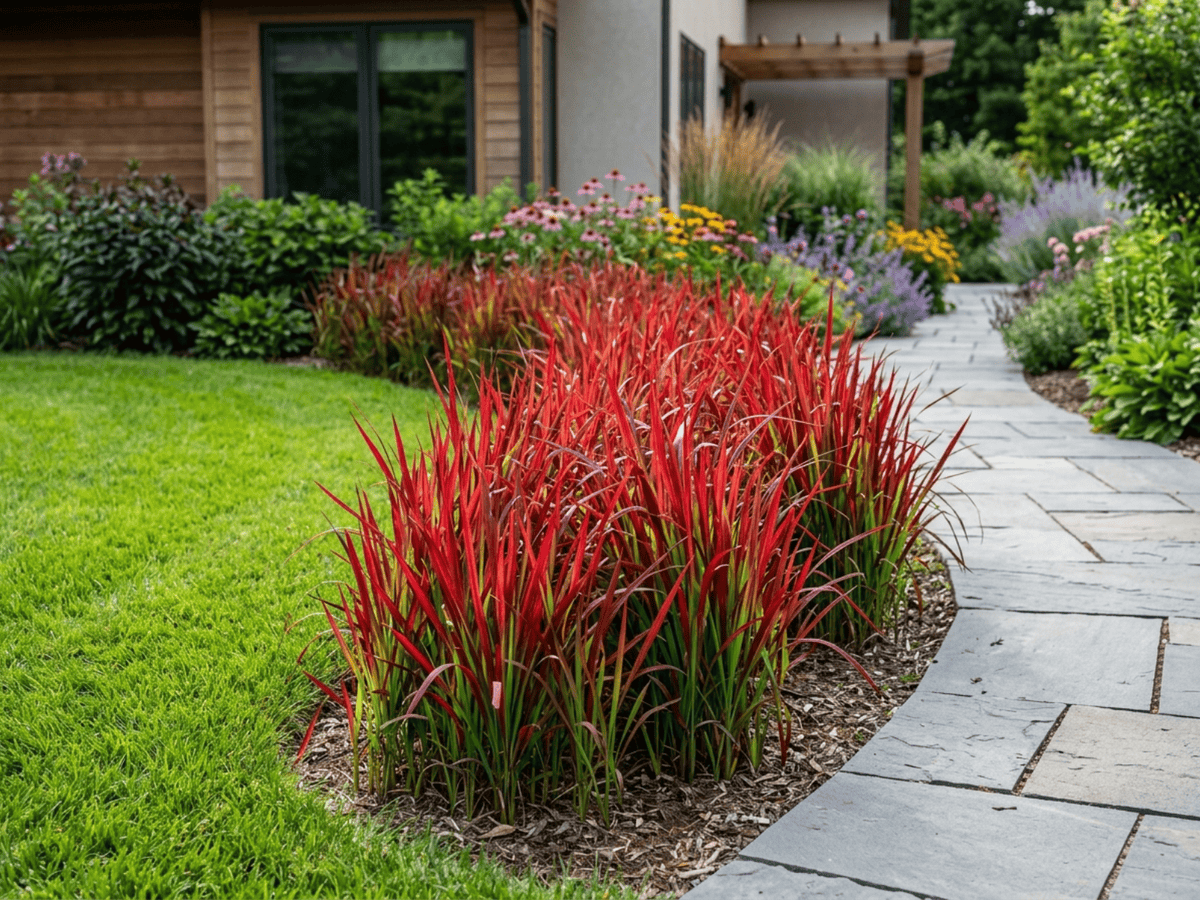
Cogon Grass
Imperata cylindrica
Medium · Some experienceAbout Cogon Grass
Imperata cylindrica, known as Japanese blood grass in its ornamental form and cogon grass in its wild form, is a warm-season perennial grass found across tropical and subtropical regions worldwide. The ornamental cultivar 'Rubra' (or 'Red Baron') is prized for its upright blades that emerge green at the base and transition to brilliant crimson-red at the tips, intensifying in color as the season progresses. Growing 30 to 45 centimeters tall, it creates a stunning visual effect when backlit by low sun. However, the wild species is one of the world's most invasive plants, listed among the top 10 worst weeds globally by the IUCN. It spreads aggressively via deep rhizomes and can dominate entire ecosystems. The ornamental red cultivar is much less aggressive in cool climates but can revert to the green invasive form, so any all-green shoots should be removed immediately. It is banned or restricted in several US states due to its invasive potential.
- Drought-tolerant
- Fast-growing
- Architectural
- Heat-tolerant
How to care for Cogon Grass
Watering
- Springevery 7 days
- Summerevery 5 days
- Fallevery 14 days
- Winterevery 30 days
Soil · Well-draining
- Top dressingPine bark mulch10%
- Main mixPotting soil + perlite 2:170%
- DrainageLECA / gravel20%
Never skip the drainage layer — standing water is the top cause of root rot.
FERTILIZER
Balanced Feed 14-14-14
An even feed covers all three needs at once, keeping leaves, roots and blooms moving together with nothing pushed out of balance.
- Nitrogen · Leaves
- Phosphorus · Roots + Blooms
- Potassium · Strength
- Springevery 60 days
At a Glance
- NativeSoutheast Asia, Africa
- Height1.5–3 ft (0.5–0.9 m)
- Spread2–4 ft (0.6–1.2 m)
- Flower colorWhite
- Foliage colorGreen, Red, Variegated
- SoilWell-drained, Loamy
- LocationsYard
Bloom time
BLOOM CYCLE
Peak bloom
Jun–Aug
Silky white plumes in summer; rarely flowers in cool climates
Fragrance
NO FRAGRANCE
No notable fragrance.
Toxicity
No toxicity has been reported for this plant. Still, it is wise to keep pets from chewing on any houseplant.
Educational information, not medical or veterinary advice. If exposure is suspected, contact a doctor or veterinarian.
DISTRIBUTION

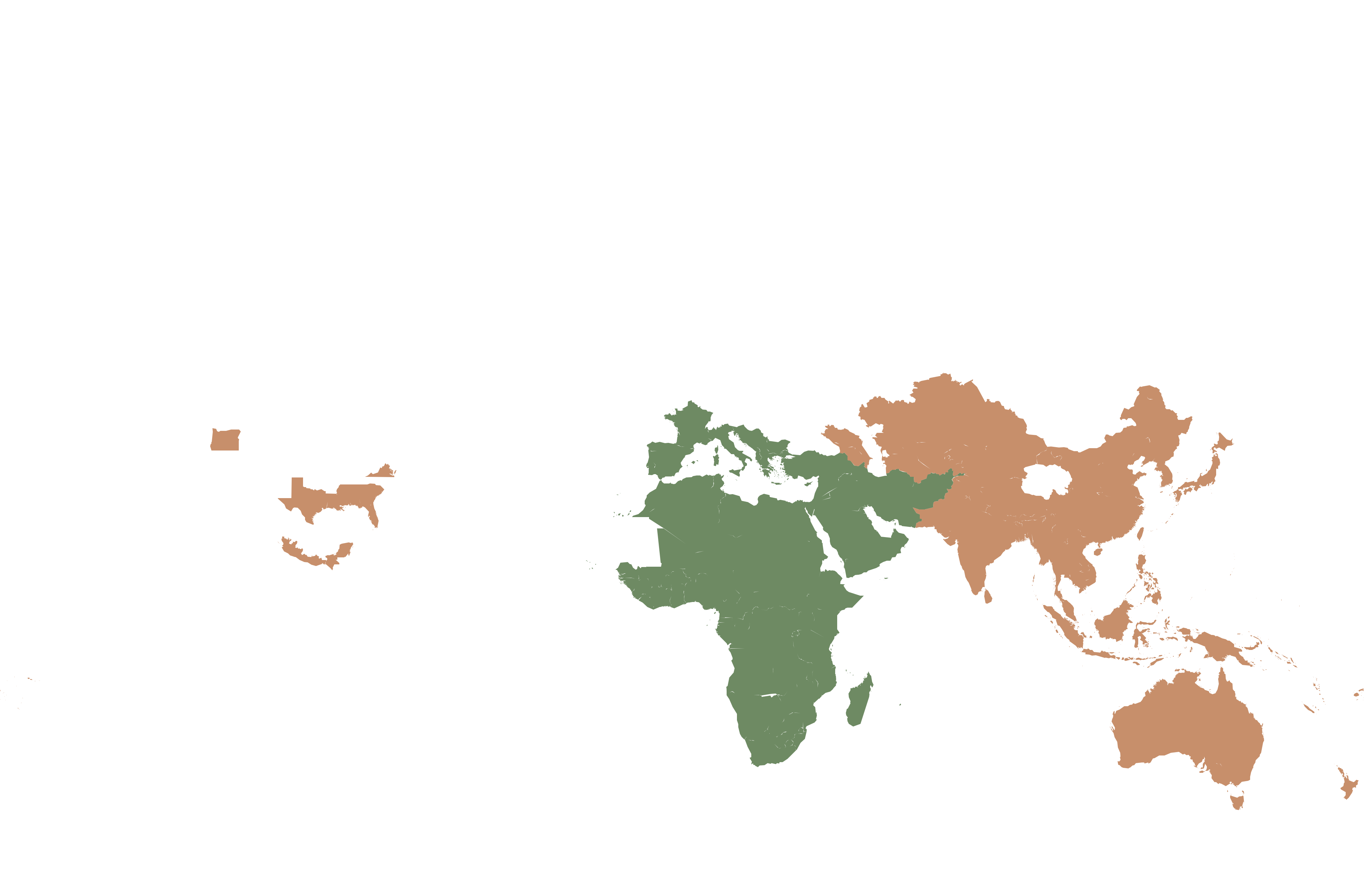
- Native
- Introduced
- Southeast Asia
- Africa
History

Imperata cylindrica is native to an enormous range across tropical and subtropical Asia, Africa, southern Europe, and Australia, where it grows as a dominant tall rhizomatous grass of disturbed ground, burnt fields, and deforested tropical soils. It is one of the most serious weed species in the world — widely listed among the ten worst global weeds — because its aggressive underground rhizomes, fire tolerance, and allelopathic chemistry allow it to form dense monoculture thickets that exclude agriculture and native vegetation. In the US Southeast, cogongrass has become a serious invasive of pine plantations and pastures in Alabama, Mississippi, Florida, Louisiana, and Georgia; most of these states classify the species as a noxious weed and ban its sale. The ornamental cultivar Imperata cylindrica "Rubra" (also sold as "Red Baron" and "Japanese Blood Grass") is a sterile or near-sterile selection with striking blood-red leaf tips that intensify through summer, prized in cottage and mixed-border gardens.
However, concerns about reversion to the invasive wild form and difficulty of regulatory distinction have led several US states to ban even the ornamental cultivar. The species is consequently stocked only sporadically in contemporary US horticulture, and widely unavailable in the Southeast even as "Red Baron.". Imperata cylindrica is believed to be one of the most widespread grasses on Earth, covering an estimated 500 million hectares across the tropics.
In Southeast Asia, cogon grass has been used for millennia as thatching material — traditional Filipino nipa huts use it extensively. The ornamental 'Red Baron' cultivar was selected in Japan and introduced to Western gardens in the 1980s. In the southern United States, the wild form has become an ecological disaster, displacing native plants and creating fire hazards due to its highly flammable dry foliage.
Symbolism & meaning
What It Symbolizes
Cogon Grass burns with passion: its blades tipped in blood red seem to flicker like flame in the slanting sun, an intense vegetal vitality. Yet that beauty is shadowed by tenacity gone wrong — across tropical regions, its aggressive survival makes it one of the most invasive grasses on earth. Its meaning is double-edged: dramatic vitality and unyielding determination, equally striking and difficult.
- Passion — The blood-red blade tips represent intense emotion and vitality
- Tenacity — Its aggressive survival instinct symbolizes unyielding determination
Where the Name Comes From
The name Cogon Grass describes its grasslike foliage. 'Imperata' honors Italian pharmacist Ferrante Imperato, a 16th-century naturalist who created one of Europe's first natural history museums. 'Cylindrica' refers to the cylindrical flower spike.
Related plants
Plants with similar care
 Mexican AbeliaAbelia floribunda
 Fraser FirAbies fraseri
 Paperbark MapleAcer griseum
 Sugar MapleAcer saccharum
Frequently asked questions
How often should I water Cogon Grass?
In summer, water about every 5 days; in winter, about every 30 days. Adjust for heat, pot size and drainage.
How much light does Cogon Grass need?
Full sun: 6+ hrs direct. Watch the leaves — scorching or stretching means the light needs adjusting.
Is Cogon Grass toxic to cats or dogs?
No toxicity has been reported for this plant. Still, it is wise to keep pets from chewing on any houseplant. Educational information, not medical or veterinary advice. If exposure is suspected, contact a doctor or veterinarian.
Is Cogon Grass easy to grow?
It is moderately demanding: a good choice once you have a little experience.
When does Cogon Grass bloom?
It typically blooms Jun–Aug in the Northern Hemisphere.
YardMate
Identify any plant in seconds
Snap a photo — YardMate names the plant, diagnoses problems, and reminds you when to water.
Download on the App Store