 YardMate


Bloodleaf
Iresine herbstii
Easy · Beginner friendlyAbout Bloodleaf
Bloodleaf is a tender perennial from Brazil, grown as a foliage annual across the United States for its brilliant magenta, crimson, or bronze-red leaves with contrasting veins. Plants reach 12–24 inches and form dense, colorful clumps. A Victorian carpet-bedding favorite, it remains popular in American public gardens and in containers where its jewel-toned foliage holds color all season. Can be overwintered as a houseplant in cold zones.
- Container-friendly
How to care for Bloodleaf
Watering
- Springevery 3 days
- Summerevery 2 days
- Fallevery 5 days
- Winterevery 14 days
Soil · Well-draining
- Top dressingPine bark mulch10%
- Main mixPotting soil + perlite 2:170%
- DrainageLECA / gravel20%
Never skip the drainage layer — standing water is the top cause of root rot.
FERTILIZER
Balanced Feed 14-14-14
An even feed covers all three needs at once, keeping leaves, roots and blooms moving together with nothing pushed out of balance.
- Nitrogen · Leaves
- Phosphorus · Roots + Blooms
- Potassium · Strength
- Springevery 14 days
- Summerevery 14 days
- Fallevery 21 days
At a Glance
- NativeSouth America
- Height1–3 ft (0.3–0.9 m)
- Spread1–2 ft (0.3–0.6 m)
- Foliage colorRed, Yellow, Bronze, Variegated
- SoilLoamy, Well-drained
- LocationsYard · Balcony · Indoor
Bloom time
BLOOM CYCLE
Grown for foliage, insignificant flowers
Fragrance
NO FRAGRANCE
No notable fragrance.
Toxicity
No toxicity has been reported for this plant. Still, it is wise to keep pets from chewing on any houseplant.
Educational information, not medical or veterinary advice. If exposure is suspected, contact a doctor or veterinarian.
DISTRIBUTION


- Native
- Introduced
- South America
History
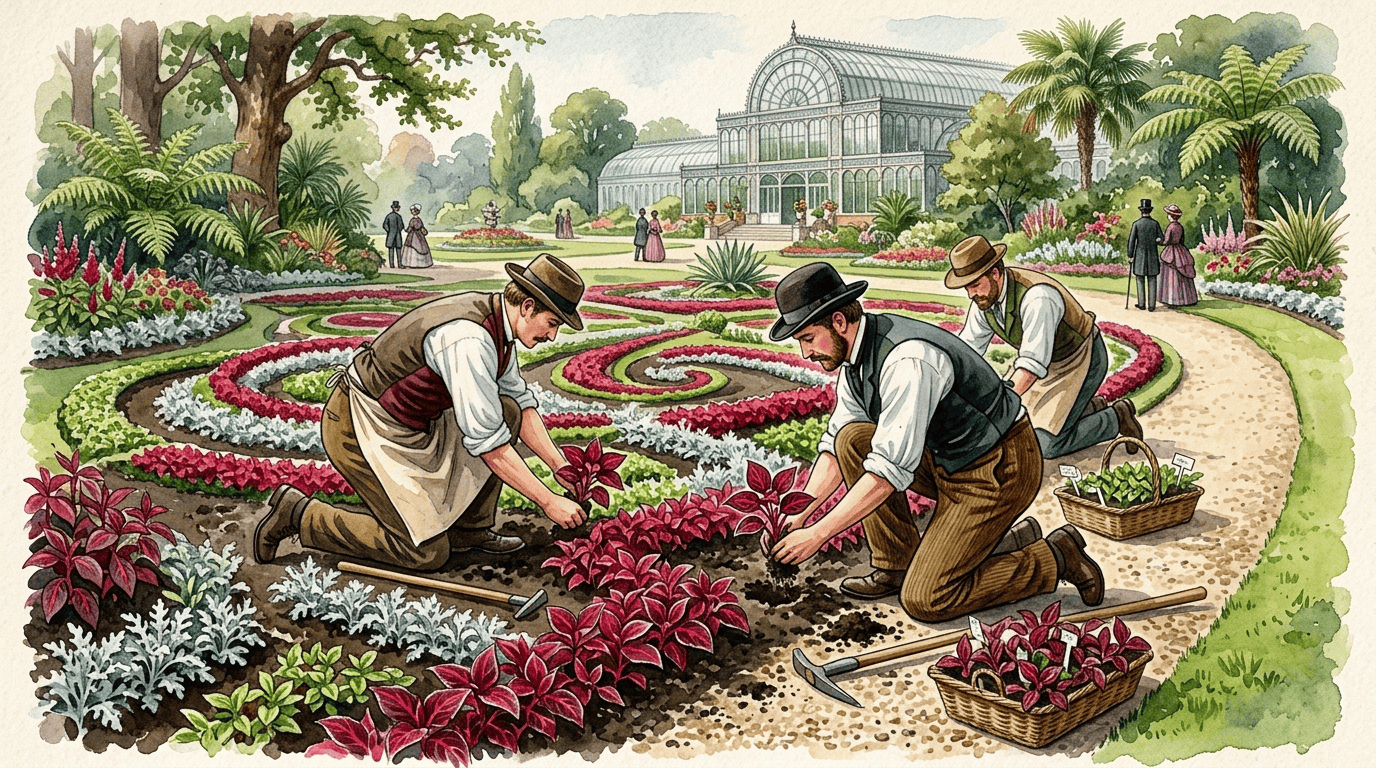
Iresine herbstii is native to southern Brazil. It was introduced to European horticulture around 1864 and named for Hermann Carl Gottlieb Herbst (1830-1904), a German nurseryman and plant collector who worked in Brazil during the mid-19th century and sent many South American plants to European botanical and horticultural establishments. The plant is a tender herbaceous perennial 40-75 cm tall, grown almost exclusively for its intensely colored foliage rather than its insignificant flowers.
The typical species form has deep wine-red to burgundy leaves with bright pink-to-red veining, producing a striking near-unnatural tropical color signature. Selected cultivars expand the range further: "Aureoreticulata" has green leaves with bright-yellow veins and red petioles; "Brilliantissima" has especially vivid pink-red overall leaves; newer selections offer orange, rose, and bronze variants. The plant was a Victorian-era carpet-bedding favorite — when intricate geometric patterns of contrasting-colored foliage were planted in public parks, botanical gardens, and estate lawns — and has enjoyed recurring popularity since.
Modern commercial use concentrates on summer container and bedding display; the plant is also grown as an indoor foliage houseplant in bright windowsills. Hardy only to approximately USDA zone 10-11; grown as a warm-season annual elsewhere. Easily propagated from stem cuttings.
Symbolism & meaning
What It Symbolizes
Iresine herbstii embodies fiery passion, its blood-red leaves saturated with an intensity rare in foliage plants. Paired with boldness, its vivid color refuses to fade into the background of any planting. It is a plant for those who like their borders to declare something — a green that has chosen, instead, to burn.
- Fiery passion — blood-red leaves evoke intensity
- Boldness — vivid color demands attention
Where the Name Comes From
Genus from Greek 'eiros' (wool) for the woolly flowers; 'herbstii' honors collector Hermann Herbst.
Uses & Fun Facts
- Glowing magenta-veined foliage brightens summer patio planters
- Heart-shaped leaves blaze blood-red and pink for summer bedding
Related plants
Plants with similar care
 Chinese AbeliaAbelia chinensis
 Fragrant AbeliaAbelia mosanensis
 Large-Flowered AbeliaAbelia uniflora
 Glossy AbeliaAbelia x grandiflora
Frequently asked questions
How often should I water Bloodleaf?
In summer, water about every 2 days; in winter, about every 14 days. Adjust for heat, pot size and drainage.
How much light does Bloodleaf need?
Full sun: 6+ hrs direct. Watch the leaves — scorching or stretching means the light needs adjusting.
Is Bloodleaf toxic to cats or dogs?
No toxicity has been reported for this plant. Still, it is wise to keep pets from chewing on any houseplant. Educational information, not medical or veterinary advice. If exposure is suspected, contact a doctor or veterinarian.
Is Bloodleaf easy to grow?
Yes — it is considered an easy, beginner-friendly plant.
Can Bloodleaf be grown indoors?
Yes, it adapts well to indoor growing given the right light.
YardMate
Identify any plant in seconds
Snap a photo — YardMate names the plant, diagnoses problems, and reminds you when to water.
Download on the App Store