 YardMate

Jungle Flame
Ixora coccinea
Medium · Some experienceAbout Jungle Flame
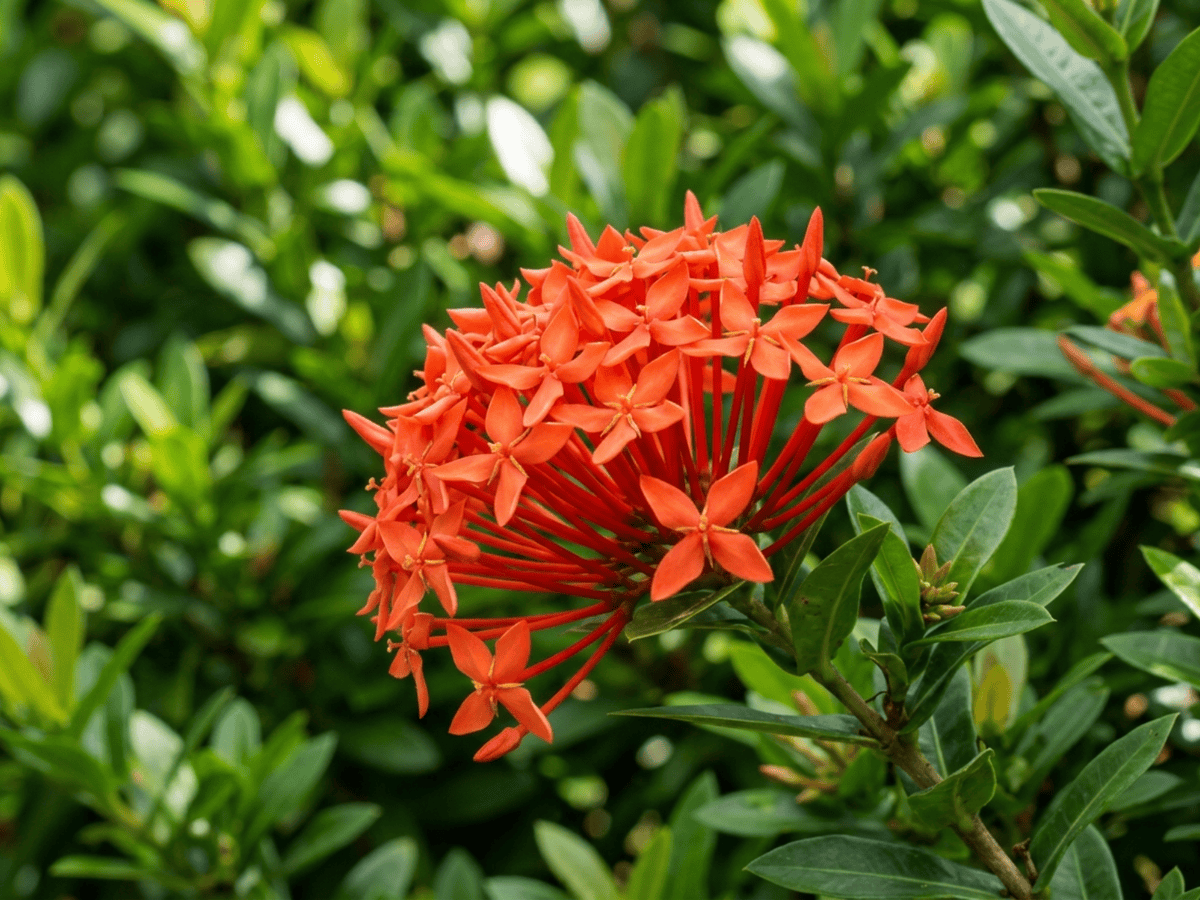
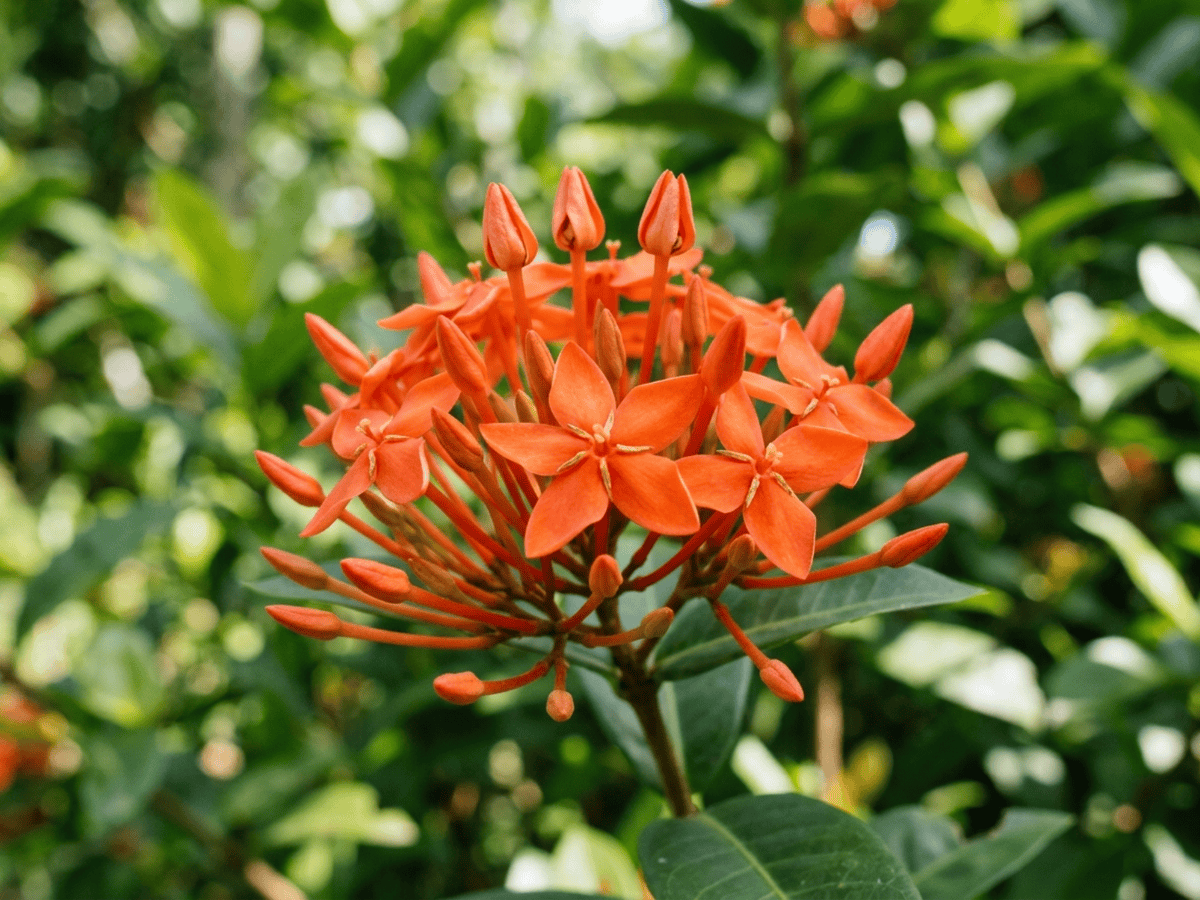
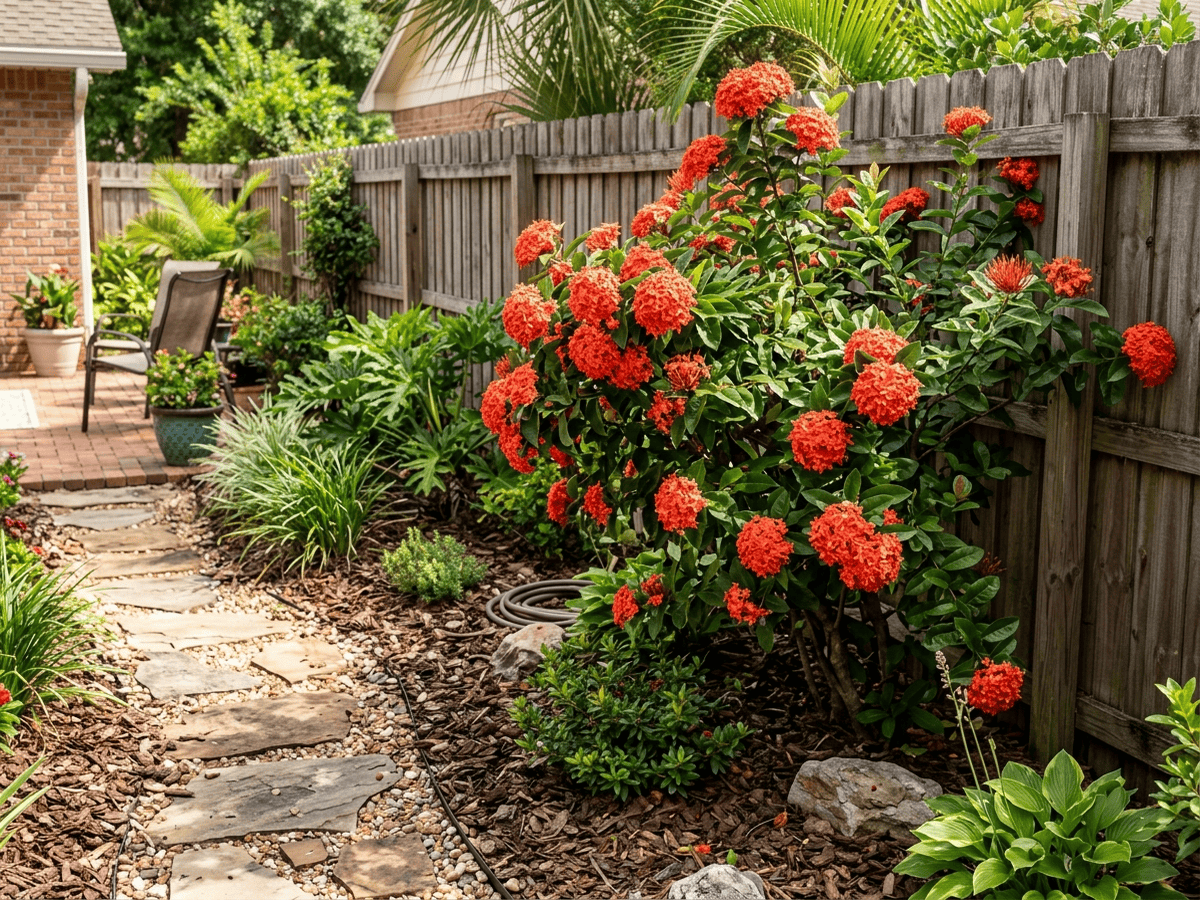
Ixora coccinea, the jungle geranium or flame of the woods, is a tropical evergreen shrub from southern India and Sri Lanka prized for its dense, rounded clusters of tubular flowers in vivid red, orange, yellow, or pink. Each flower cluster can contain 30–60 individual blooms, creating a ball-shaped display that lasts for weeks. The glossy, opposite leaves remain attractive year-round, and the shrub naturally forms a dense, rounded shape requiring minimal pruning. It is one of the most widely planted ornamental shrubs across the tropics, used extensively for hedging, foundation planting, and container gardening. Ixora prefers acidic soil and can develop iron chlorosis (yellowing leaves) in alkaline conditions. Regular feeding with an acid-loving plant fertilizer keeps foliage dark green. In Hindu traditions, the flowers are commonly offered in temple worship, giving rise to its Tamil name 'vetchi.' It is a reliable butterfly and hummingbird attractant and blooms nearly continuously in warm climates.
- Evergreen
- Tropical
- Pollinator-friendly
How to care for Jungle Flame
Watering
- Springevery 3 days
- Summerevery 2 days
- Fallevery 5 days
- Winterevery 14 days
Soil · Acidic · pH 4.5–6
- Top dressingPine needle mulch10%
- Main mixAcid-lover mix + peat 3:175%
- DrainageGravel15%
Never add lime or wood ash — it cancels out the acidity.
FERTILIZER
Acid-Loving Feed 4-3-4
One bag does both jobs. An acid feed carries the usual nitrogen, phosphorus and potassium, plus the sulfur and iron that keep the soil sour enough for the roots to take them up at all.
- Nitrogen · Leaves
- Phosphorus · Roots + Blooms
- Potassium · Strength
- Springevery 30 days
- Summerevery 30 days
- Fallevery 30 days
At a Glance
- NativeSouth Asia
- Height4–6 ft (1.2–1.8 m)
- Spread3–5 ft (0.9–1.5 m)
- Flower colorRed, Orange, Pink, Yellow
- Foliage colorGreen
- SoilLoamy, Acidic, Well-drained
- LocationsYard · Indoor · Balcony
Bloom time
BLOOM CYCLE
Peak bloom
Jun–Aug
Dense ball-shaped clusters in red, orange, pink; needs acidic soil for best color
Fragrance
LIGHT FRAGRANCE
The flowers have a light sweet scent.
Toxicity
No toxicity has been reported for this plant. Still, it is wise to keep pets from chewing on any houseplant.
Educational information, not medical or veterinary advice. If exposure is suspected, contact a doctor or veterinarian.
DISTRIBUTION


- Native
- Introduced
- South Asia
History
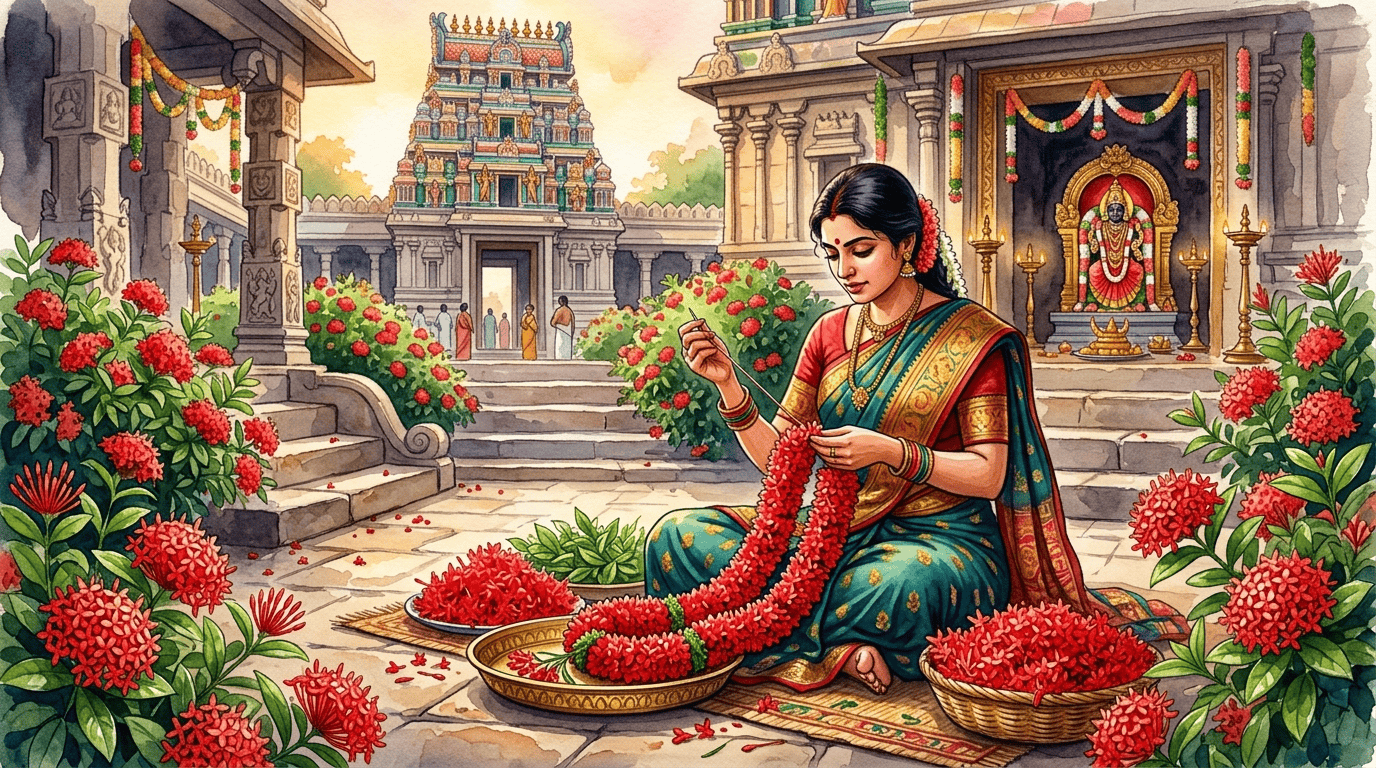
Ixora coccinea is native to southern India and Sri Lanka, where it grows as an evergreen shrub in forest edges and rocky slopes. The genus name derives from the Portuguese corruption of "Ishwara," a name of the Hindu god Shiva — reflecting the plant's religious role in Hindu worship, where its dense spherical clusters of scarlet-red tubular flowers are among the standard floral offerings to the goddess Durga (Shakti) in temple devotion, particularly during Navratri and Durga Puja festivals. The plant is also used in Tamil, Telugu, and Malayalam cultural contexts as a ceremonial decoration. It was introduced to Western horticulture in the 18th century and has become one of the most widely planted tropical hedging and specimen shrubs across South and Southeast Asia, the Caribbean, tropical Africa, Hawaii, and warm-subtropical parts of the southern United States (particularly Florida).
Modern ornamental horticulture is dominated by named cultivars in red, orange, pink, yellow, and white: "Nora Grant" (pink), "Maui" (yellow), "Super King" (large red), and dwarf forms including "Dwarf Red" and "Petite Orange." Individual flower heads can remain in bloom for weeks, and plants flower almost continuously in tropical climates. The species is an important nectar source for butterflies and nectar-feeding birds.
Ixora has been cultivated in Indian gardens for centuries and holds a sacred place in Hindu worship. The flowers are offered to deities, particularly Lord Shiva, and are woven into garlands for temple ceremonies. In traditional Indian and Southeast Asian medicine, various parts of the plant are used to treat diarrhea, dysentery, and skin conditions. The shrub was introduced to European greenhouses in the 17th century and has since been hybridized into hundreds of cultivars in every warm color imaginable.
Symbolism & meaning
What It Symbolizes
Jungle Flame is devotion in temple form — across South India and Sri Lanka its crimson clusters are offered to deities at shrines, a sacred flower of spiritual dedication. Its vivid flame-colored heads also speak of passion, the intense vitality of tropical life rendered in a single inflorescence. It is the flower laid at the feet of gods and at the feet of lovers, with the same red sincerity.
- Devotion — Sacred temple flower symbolizing spiritual dedication and worship
- Passion — Vivid flame-colored clusters express intense emotion and vitality
Where the Name Comes From
Ixora derives from the Portuguese rendering of 'Ishvara,' a Sanskrit name for Lord Shiva, to whom the flowers are traditionally offered. Coccinea means 'scarlet' in Latin.
Uses & Fun Facts
- Dense evergreen tropical hedge for South Florida and Hawaii
- Flowers used in Hindu temple offerings across South Asia
- Tubular clusters draw butterflies and tropical sunbirds
Related plants
Plants with similar care
 Mexican AbeliaAbelia floribunda
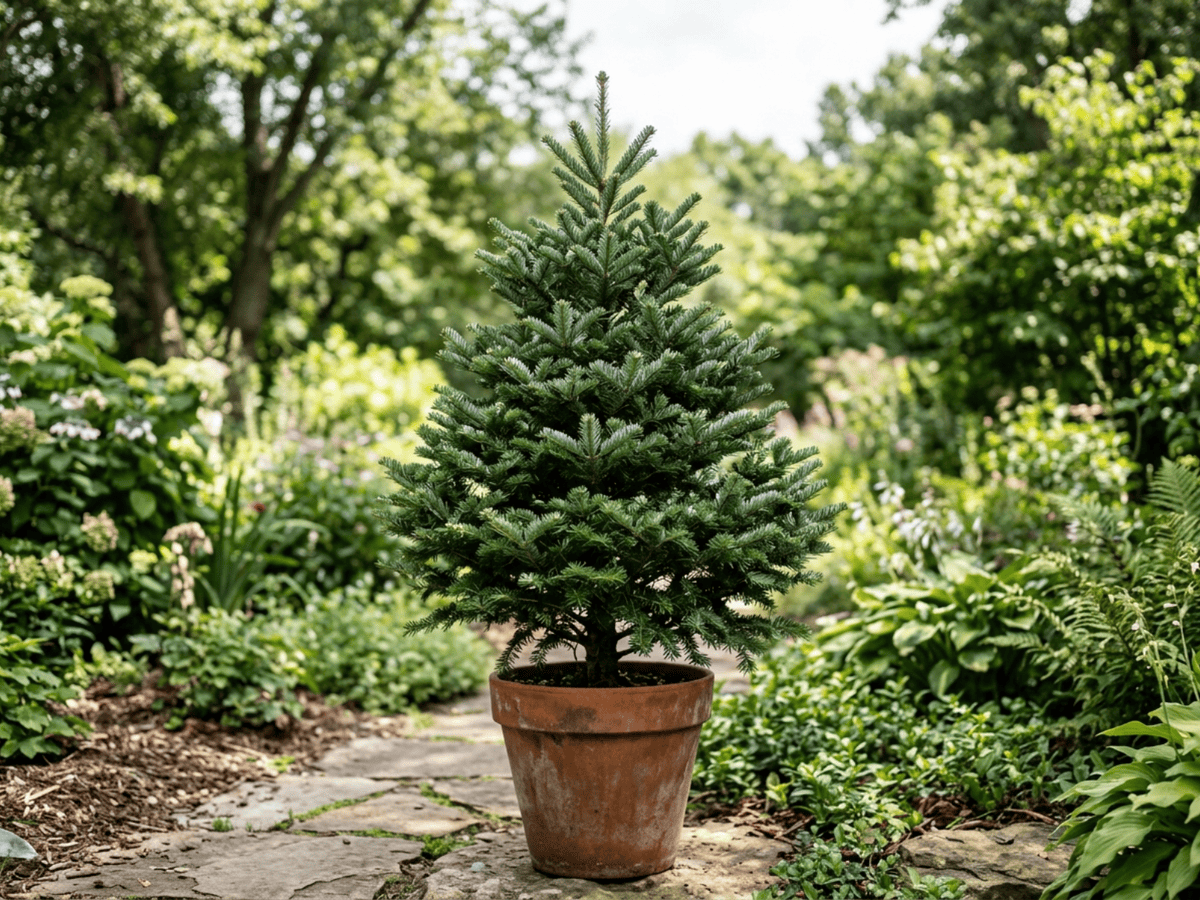 Fraser FirAbies fraseri
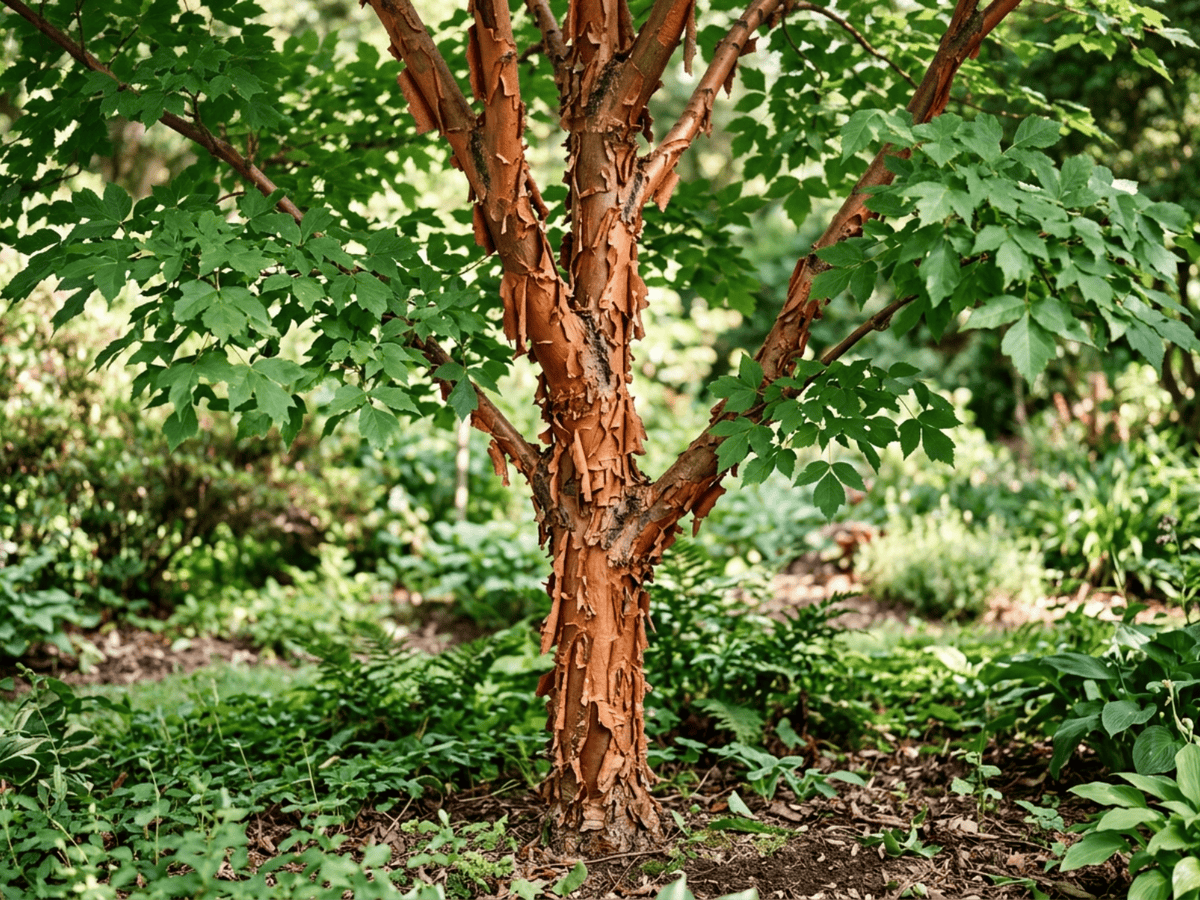 Paperbark MapleAcer griseum
 Sugar MapleAcer saccharum
Frequently asked questions
How often should I water Jungle Flame?
In summer, water about every 2 days; in winter, about every 14 days. Adjust for heat, pot size and drainage.
How much light does Jungle Flame need?
Full sun: 6+ hrs direct. Watch the leaves — scorching or stretching means the light needs adjusting.
Is Jungle Flame toxic to cats or dogs?
No toxicity has been reported for this plant. Still, it is wise to keep pets from chewing on any houseplant. Educational information, not medical or veterinary advice. If exposure is suspected, contact a doctor or veterinarian.
Is Jungle Flame easy to grow?
It is moderately demanding: a good choice once you have a little experience.
Can Jungle Flame be grown indoors?
Yes, it adapts well to indoor growing given the right light.
When does Jungle Flame bloom?
It typically blooms Jun–Aug in the Northern Hemisphere.
YardMate
Identify any plant in seconds
Snap a photo — YardMate names the plant, diagnoses problems, and reminds you when to water.
Download on the App Store