 YardMate
Purple Jacaranda
Jacaranda mimosifolia
Hard · Experienced growersAbout Purple Jacaranda
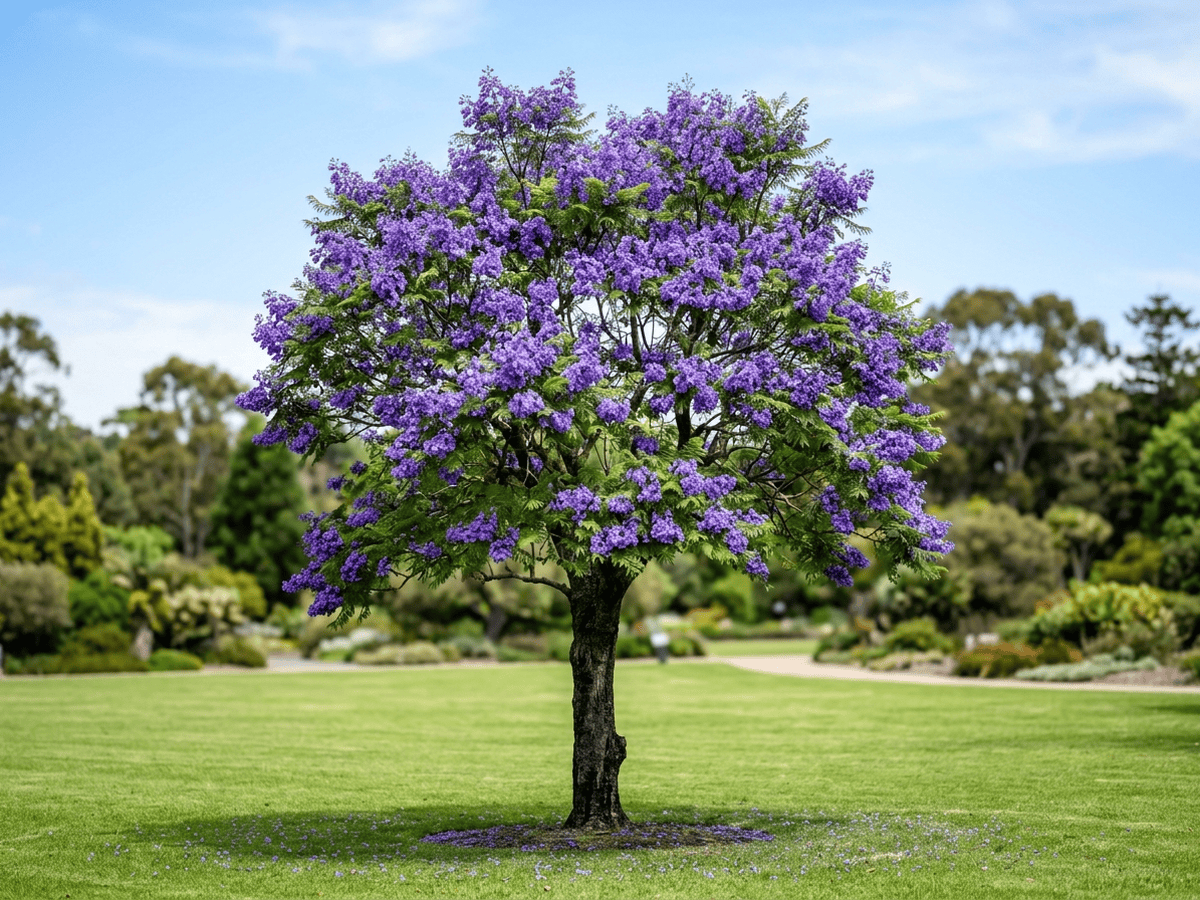
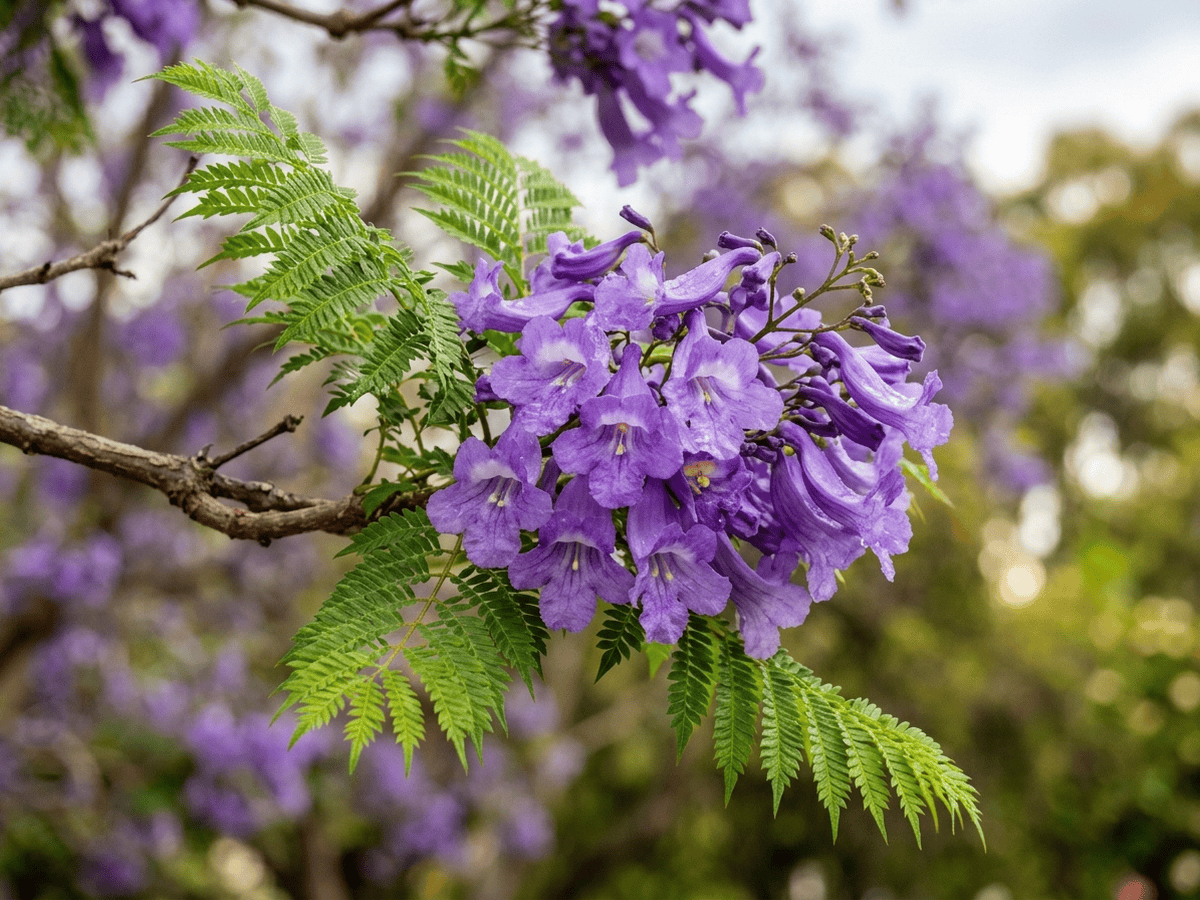
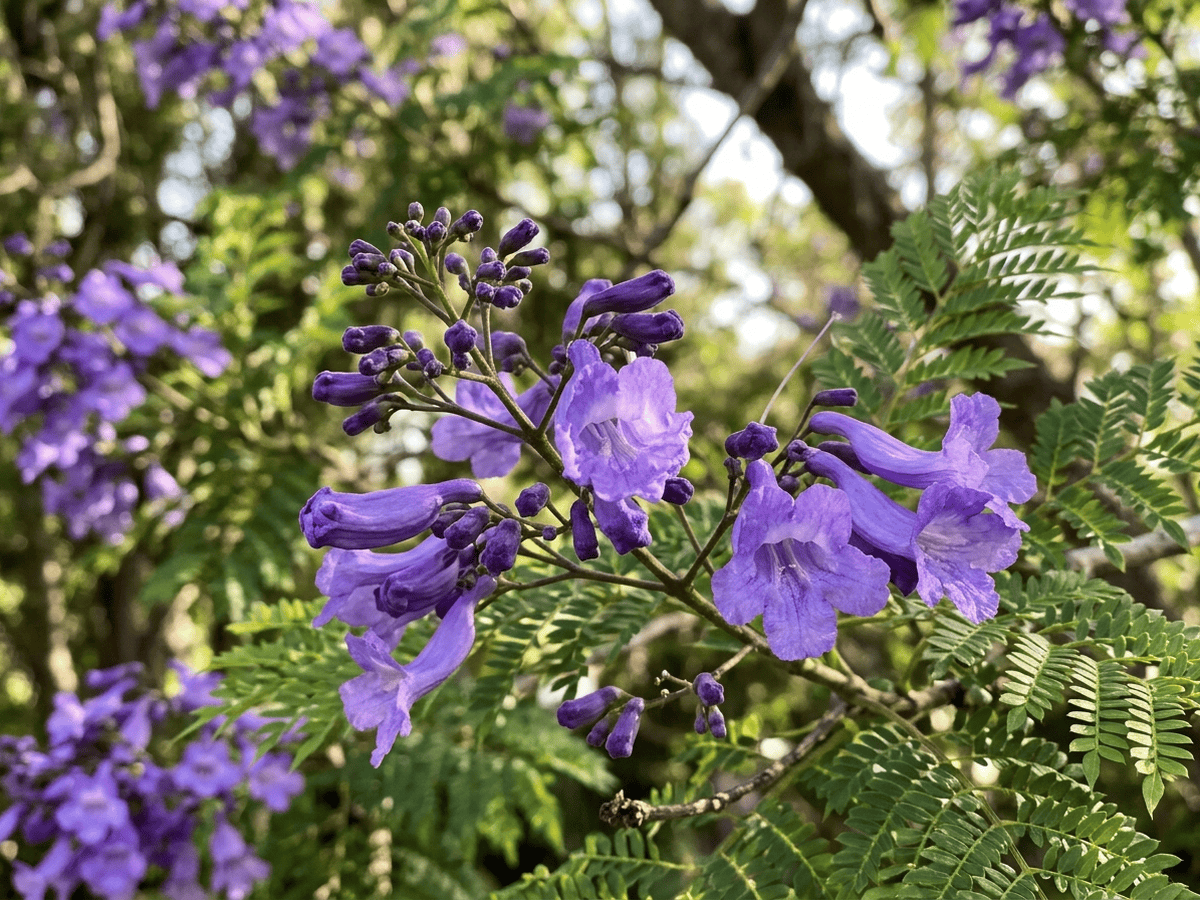
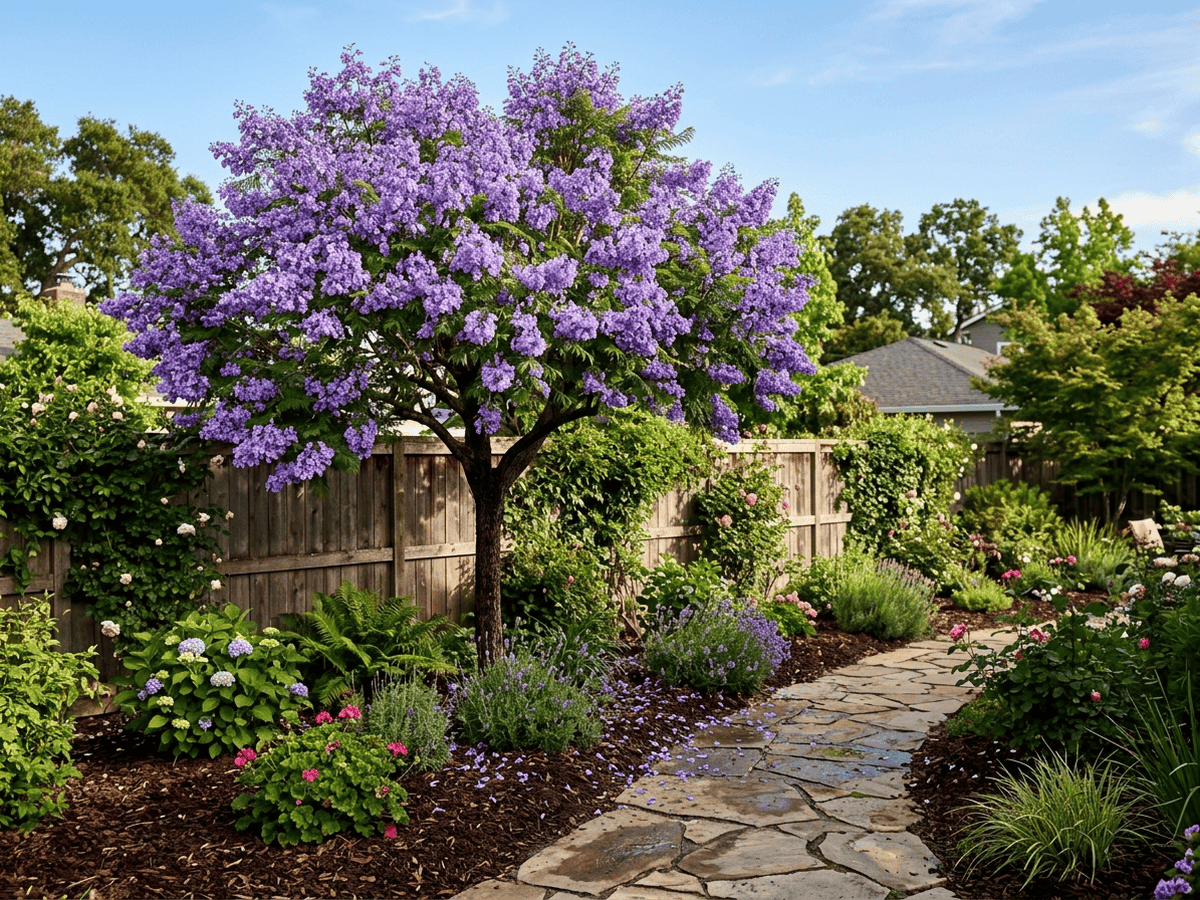
The Purple Jacaranda is a fast-growing deciduous tree famed for its spring display: fern-like compound leaves fall away as clusters of trumpet-shaped lavender-purple flowers blanket the canopy, then carpet the ground below in violet. Native to the subtropical woodlands of Argentina and Bolivia, it has become a beloved ornamental shade and street tree worldwide, from Pretoria to Los Angeles to Sydney. Mature trees reach 30 to 50 feet with a broad, spreading crown, followed by flat, woody seed pods. It thrives in full sun with well-drained soil and, once established, tolerates drought well.
- Fast-growing
- Deciduous
- Drought-tolerant
- Showy-fruit
- Fragrant
- Pollinator-friendly
How to care for Purple Jacaranda
Watering
- Springevery 10 days
- Summerevery 7 days
- Fallevery 15 days
- Winterevery 30 days
Soil · Well-draining
- Top dressingPine bark mulch10%
- Main mixPotting soil + perlite 2:170%
- DrainageLECA / gravel20%
Never skip the drainage layer — standing water is the top cause of root rot.
FERTILIZER
Balanced Feed 14-14-14
An even feed covers all three needs at once, keeping leaves, roots and blooms moving together with nothing pushed out of balance.
- Nitrogen · Leaves
- Phosphorus · Roots + Blooms
- Potassium · Strength
- Springevery 30 days
- Summerevery 30 days
- Fallevery 30 days
At a Glance
- NativeSouth America
- Height30–50 ft (9.1–15.2 m)
- Spread25–40 ft (7.6–12.2 m)
- Flower colorPurple
- Foliage colorGreen
- Fruit colorBrown
- SoilWell-drained, Loamy
- LocationsYard · Patio
Bloom time
BLOOM CYCLE
Peak bloom
May–Sep
This plant flowers in summer, displaying beautiful purple blossoms.
Fragrance
LIGHT FRAGRANCE
Clusters of trumpet-shaped flowers give off a faint, sweet honey-like scent, most noticeable when a tree is in full bloom.
Toxicity
Pets Safe
None reported
Not reported
EXPOSURE No exposure route is reported.
EFFECT No toxic effect is reported.
NOTE No toxicity is reported for humans in this catalog; this is not evidence that the plant is edible or harmless.
Safe
EXPOSURE No exposure route is reported.
EFFECT No toxic effect is reported.
NOTE Authoritative sources report this plant as non-toxic to dogs; this is not evidence that the plant is edible.
Safe
EXPOSURE No exposure route is reported.
EFFECT No toxic effect is reported.
NOTE Authoritative sources report this plant as non-toxic to cats; this is not evidence that the plant is edible.
Educational information, not medical or veterinary advice. If exposure is suspected, contact a doctor or veterinarian.
DISTRIBUTION


- Native
- Introduced
- South America
History

The Purple Jacaranda is native to the dry subtropical woodlands of northwestern Argentina and southern Bolivia, where it grows scattered among other deciduous trees along riverbanks and rocky slopes. Its genus name comes from a Guaraní word for the tree, long prized by South American woodworkers for its fragrant, easily carved timber. In the nineteenth century, botanic gardens and colonial plant collectors carried the Purple Jacaranda far beyond South America, and by the early twentieth century it had been planted as an avenue tree across the subtropical world. Nowhere took to it more than Pretoria, South Africa, where more than seventy thousand jacarandas were planted along city streets starting in the 1880s, earning it the nickname the Jacaranda City. Because the trees burst into full violet bloom each October and November, exactly as the University of Pretoria's academic year draws to a close, generations of students have walked beneath purple-carpeted streets watching for falling flowers, holding that a blossom landing on your head or being caught before it touches the ground brings good luck on final exams. The same trees now line boulevards from Buenos Aires to Los Angeles to Sydney, their brief but brilliant flowering season marking the turn of the seasons in cities half a world from where the species first grew wild.
Symbolism & meaning
What It Symbolizes
In Pretoria, South Africa, nicknamed the Jacaranda City for its tens of thousands of purple-blooming trees, university students have long held that catching a falling jacaranda blossom, or having one land on your head, brings good luck on final exams. Because the trees flower each October and November, exactly as the academic year ends, generations of students have walked beneath purple-carpeted streets watching for falling flowers as a sign of good fortune to come.
- Good Fortune — In Pretoria, South Africa, students have long believed a jacaranda blossom falling on your head, or catching one before it hits the ground, brings luck on final exams — the trees bloom each year exactly as term ends.
- Renewal — Its dramatic transition from bare branches to a canopy of solid violet, before a single leaf appears, has made the Purple Jacaranda a seasonal symbol of transformation and renewal in cities across the Southern Hemisphere.
Where the Name Comes From
The genus name Jacaranda comes from a Guaraní word describing the tree's fragrant, richly grained timber, long used by South American woodworkers. The species name mimosifolia refers to its fern-like, mimosa-like compound leaves. The common name Purple Jacaranda simply reflects its signature violet flowers.
Uses & Fun Facts
- Planted worldwide as a flowering shade and street tree for its spectacular spring bloom.
- Trumpet-shaped flowers attract bees and other pollinating insects.
- Its fragrant, easily carved wood has long been used by South American woodworkers for furniture and small crafts.
Related plants
Plants with similar care
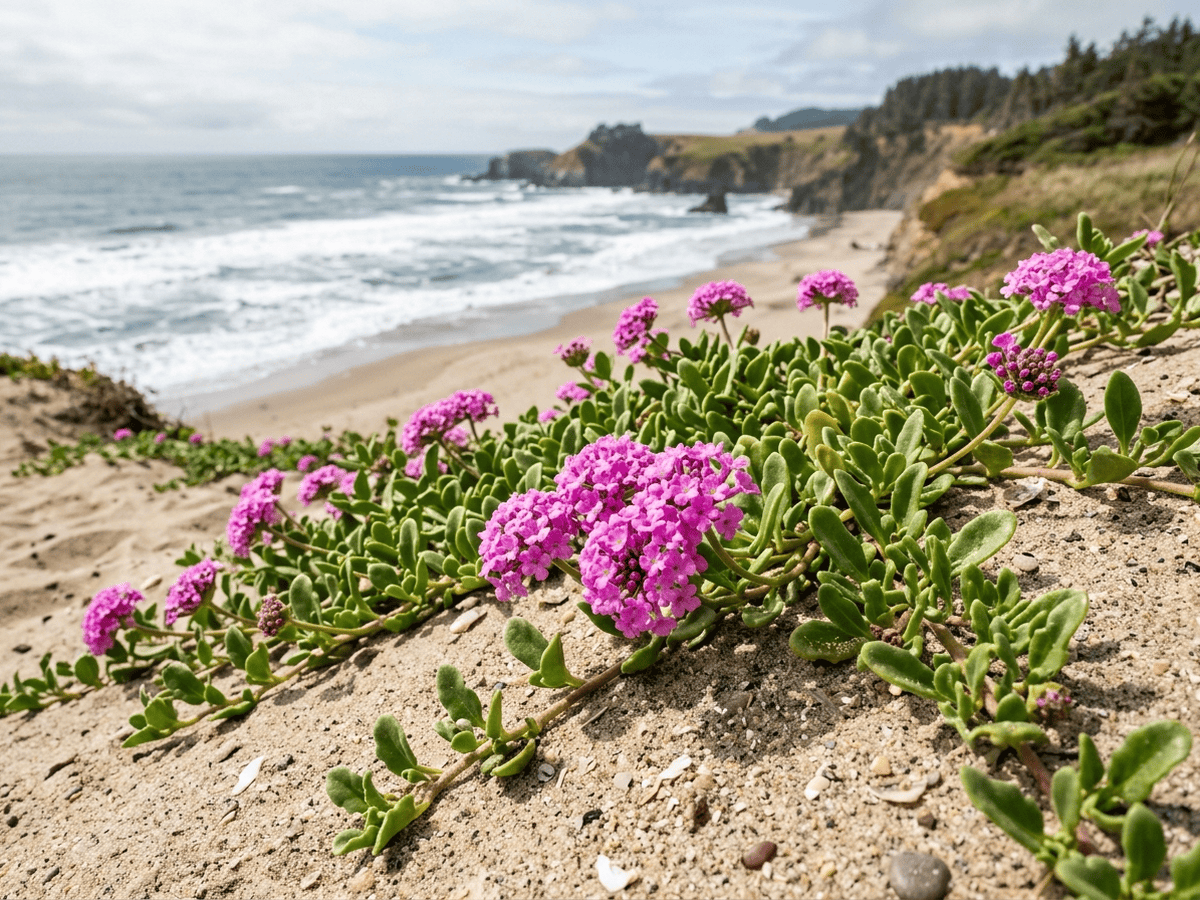 Pink Sand VerbenaAbronia umbellata
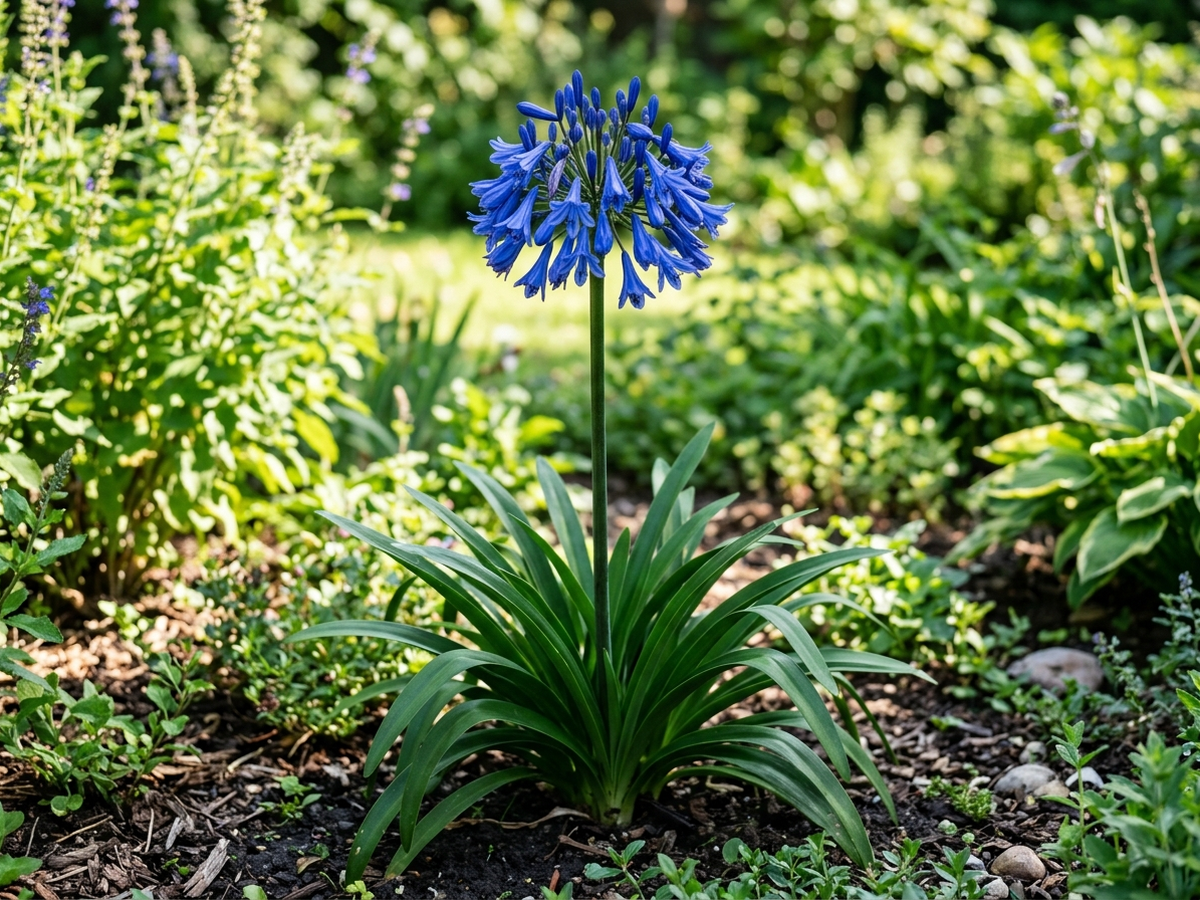 Drooping AgapanthusAgapanthus inapertus
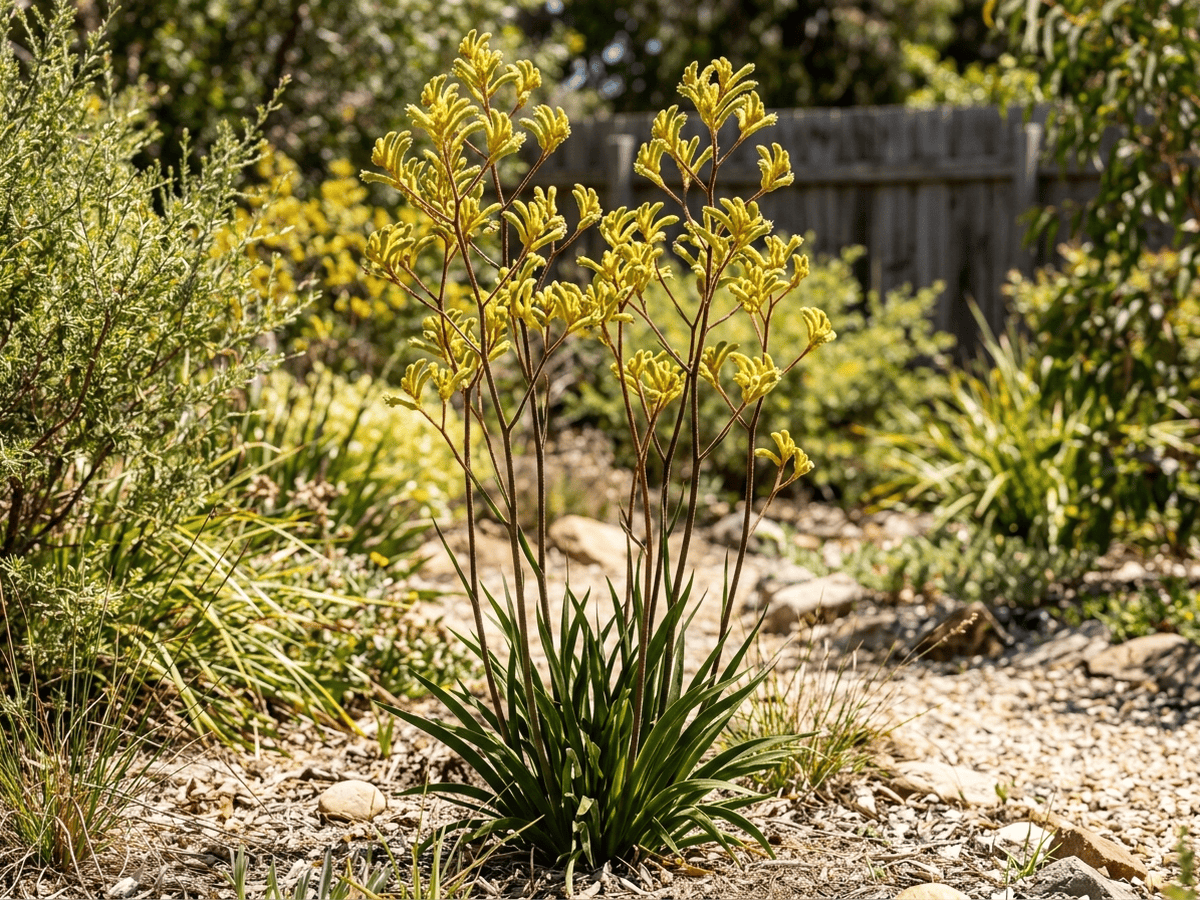 Tall Kangaroo PawAnigozanthos flavidus
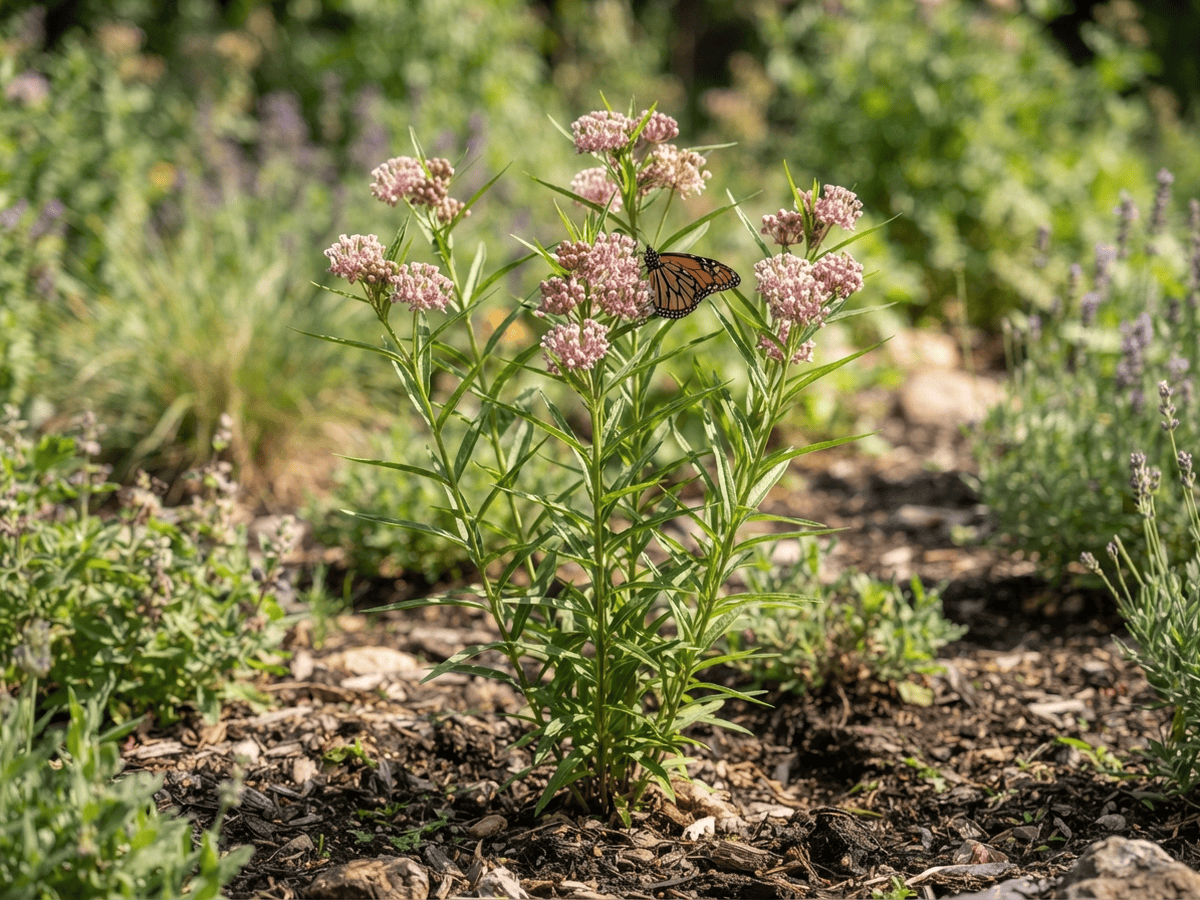 Narrowleaf MilkweedAsclepias fascicularis
Frequently asked questions
How often should I water Purple Jacaranda?
In summer, water about every 7 days; in winter, about every 30 days. Adjust for heat, pot size and drainage.
How much light does Purple Jacaranda need?
Full sun: 6+ hrs direct. Watch the leaves — scorching or stretching means the light needs adjusting.
Is Purple Jacaranda toxic to cats or dogs?
Pets Safe (Dogs Safe · Cats Safe) Educational information, not medical or veterinary advice. If exposure is suspected, contact a doctor or veterinarian.
Is Purple Jacaranda easy to grow?
It is considered challenging and rewards experienced growers.
When does Purple Jacaranda bloom?
It typically blooms May–Sep in the Northern Hemisphere.
YardMate
Identify any plant in seconds
Snap a photo — YardMate names the plant, diagnoses problems, and reminds you when to water.
Download on the App Store