 YardMate


Prairie Junegrass
Koeleria macrantha
Easy · Beginner friendlyAbout Prairie Junegrass
June Grass or Prairie June Grass is a North American and Eurasian native cool-season grass reaching 12-24 inches tall, forming compact tufts of fine blue-green foliage topped by silvery-green spike-like panicles in late spring to early summer. Tolerant of poor dry soils, it is a key component of shortgrass and mixed-grass prairie communities across the Great Plains and Rocky Mountains. Increasingly used in native lawn alternatives and waterwise landscapes.
- Drought-tolerant
- Compact
- Native
How to care for Prairie Junegrass
Watering
- Springevery 14 days
- Summerevery 21 days
- Fallevery 21 days
- Winterevery 45 days
Soil · Well-draining
- Top dressingPine bark mulch10%
- Main mixPotting soil + perlite 2:170%
- DrainageLECA / gravel20%
Never skip the drainage layer — standing water is the top cause of root rot.
FERTILIZER
This plant needs little to no feeding.
At a Glance
- NativeNorth America, East Asia
- Height1–2 ft (0.3–0.6 m)
- Spread1–1.5 ft (0.3–0.5 m)
- Flower colorGreen
- Foliage colorBlue-green, Green
- SoilSandy, Well-drained
- LocationsYard
Bloom time
BLOOM CYCLE
Peak bloom
Mar–Aug
Silvery-green spike-like panicles late spring to early summer
Toxicity
Humans Safe · Pets Safe
None reported
Safe
EXPOSURE No exposure route is reported.
EFFECT No toxic effect is reported.
NOTE Listed as non-toxic for humans; avoid eating ornamental plants unless confirmed edible.
Safe
EXPOSURE No exposure route is reported.
EFFECT No toxic effect is reported.
NOTE Listed as non-toxic for dogs; avoid eating ornamental plants unless confirmed edible.
Safe
EXPOSURE No exposure route is reported.
EFFECT No toxic effect is reported.
NOTE Listed as non-toxic for cats; avoid eating ornamental plants unless confirmed edible.
Educational information, not medical or veterinary advice. If exposure is suspected, contact a doctor or veterinarian.
DISTRIBUTION

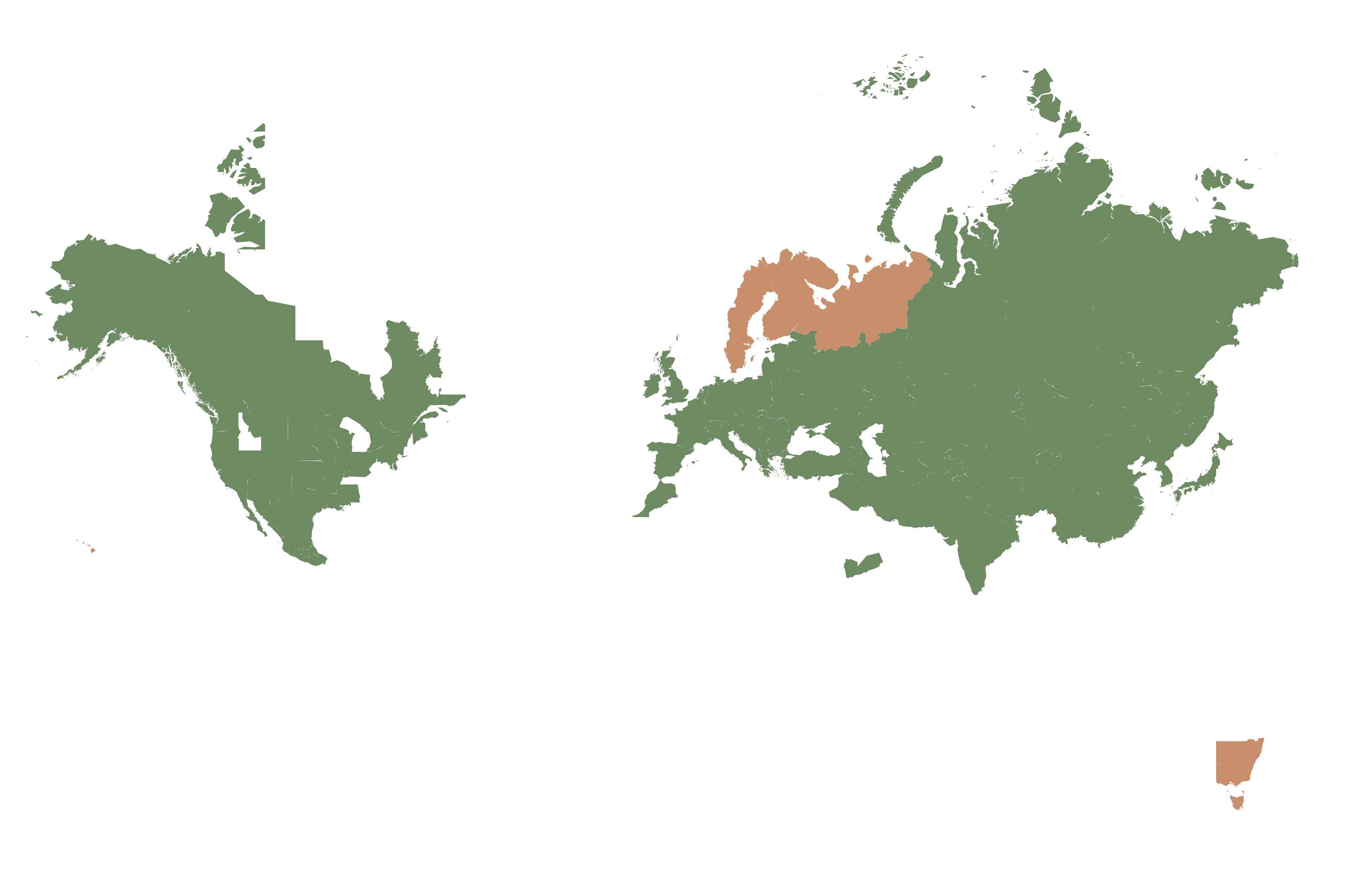
- Native
- Introduced
- North America
- East Asia
History
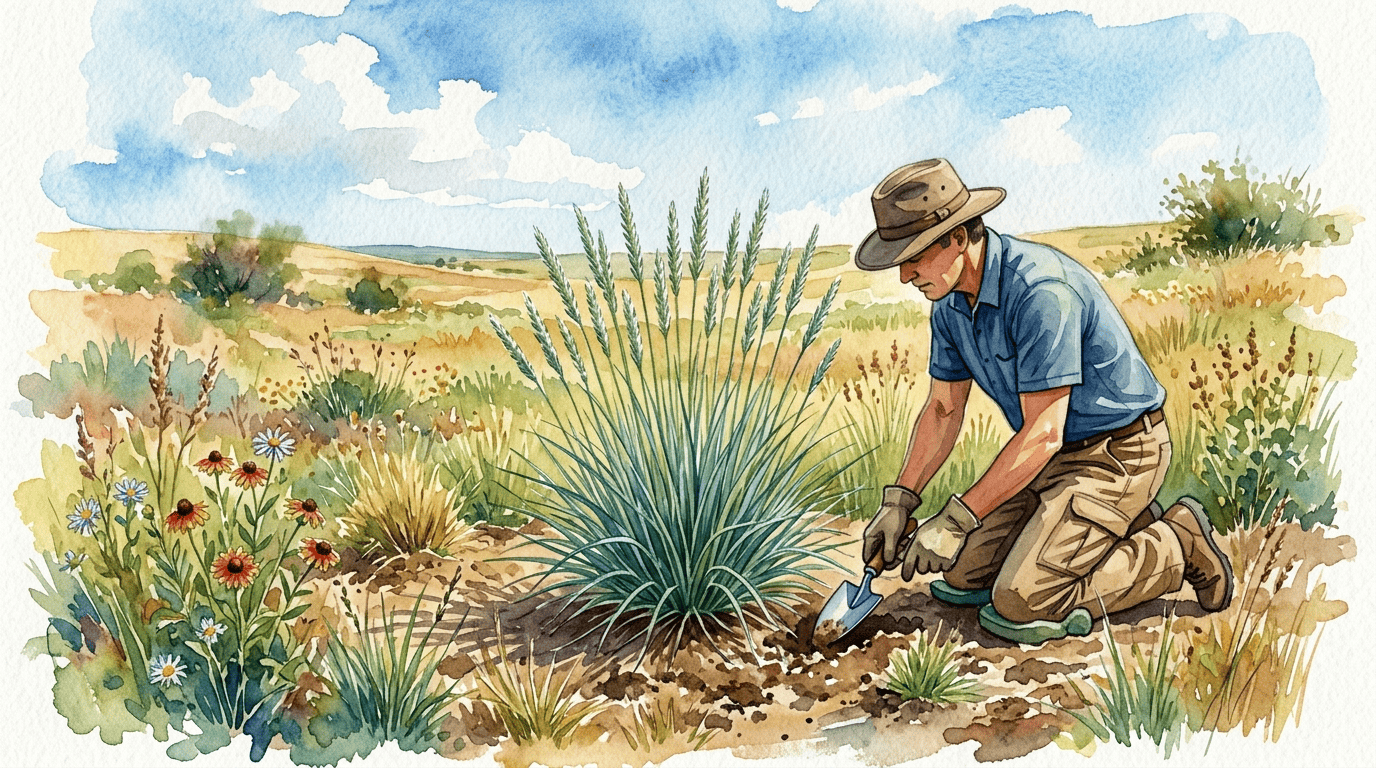
Koeleria macrantha, commonly called prairie junegrass, is a cool-season clumping perennial grass in the family Poaceae with a broad circumpolar distribution across temperate North America (from Alaska and Canada south through most US states except the southeast) and much of Eurasia from Europe through Siberia, Mongolia, and northern China. Russian-German botanist Carl Friedrich von Ledebour originally described it as Aira macrantha in 1820; Austrian botanist Josef August Schultes transferred it to Koeleria in 1824. The taxonomy has long been confused with K. cristata and K. pyramidata (both partial synonyms), but modern treatments retain K. macrantha.
Plants form compact 20-40 cm tufts of narrow blue-green to gray-green flat basal leaves with upright spike-like narrowly cylindrical panicles to 50 cm tall in early summer, silvery-green or slightly purple-tinged, fading to tan. An important species in native North American short-grass prairie and European dry grassland communities.
Increasingly used in native meadow and sustainable lawn mixes. Native circumboreally, including across the Great Plains and Rocky Mountain West. A defining grass of shortgrass prairie communities, it has gained renewed attention as a sustainable lawn alternative for water-conscious western American homeowners.
Symbolism & meaning
What It Symbolizes
Prairie Junegrass bears endurance in its tidy clumps and silvery flower spikes, thriving in harsh shortgrass conditions where richer grasses fail. As an iconic component of North American shortgrass prairies, it carries a heritage older than any farm, woven through buffalo trails and pronghorn meadows. Its meaning is the quiet strength of a native grass that helped define a continent's open horizon.
- Endurance — early-season grass built for cold, drought, and open prairie
- Heritage — iconic grass of North American shortgrass prairies
Where the Name Comes From
The name Prairie Junegrass describes its grasslike foliage. 'Koeleria' honors German botanist Georg Ludwig Koeler; 'macrantha' from Greek meaning large-flowered.
Uses & Fun Facts
- Compact blue-green tufts with silvery spikes for prairie restorations
- Seed and cover supports shortgrass prairie birds and small mammals
Related plants
Plants with similar care
 Chinese AbeliaAbelia chinensis
 Fragrant AbeliaAbelia mosanensis
 Large-Flowered AbeliaAbelia uniflora
 Glossy AbeliaAbelia x grandiflora
Frequently asked questions
How often should I water Prairie Junegrass?
In summer, water about every 21 days; in winter, about every 45 days. Adjust for heat, pot size and drainage.
How much light does Prairie Junegrass need?
Full sun: 6+ hrs direct. Watch the leaves — scorching or stretching means the light needs adjusting.
Is Prairie Junegrass toxic to cats or dogs?
Pets Safe (Dogs Safe · Cats Safe) Educational information, not medical or veterinary advice. If exposure is suspected, contact a doctor or veterinarian.
Is Prairie Junegrass easy to grow?
Yes — it is considered an easy, beginner-friendly plant.
When does Prairie Junegrass bloom?
It typically blooms Mar–Aug in the Northern Hemisphere.
YardMate
Identify any plant in seconds
Snap a photo — YardMate names the plant, diagnoses problems, and reminds you when to water.
Download on the App Store