 YardMate



Golden Rain Tree
Koelreuteria paniculata
Easy · Beginner friendlyAbout Golden Rain Tree
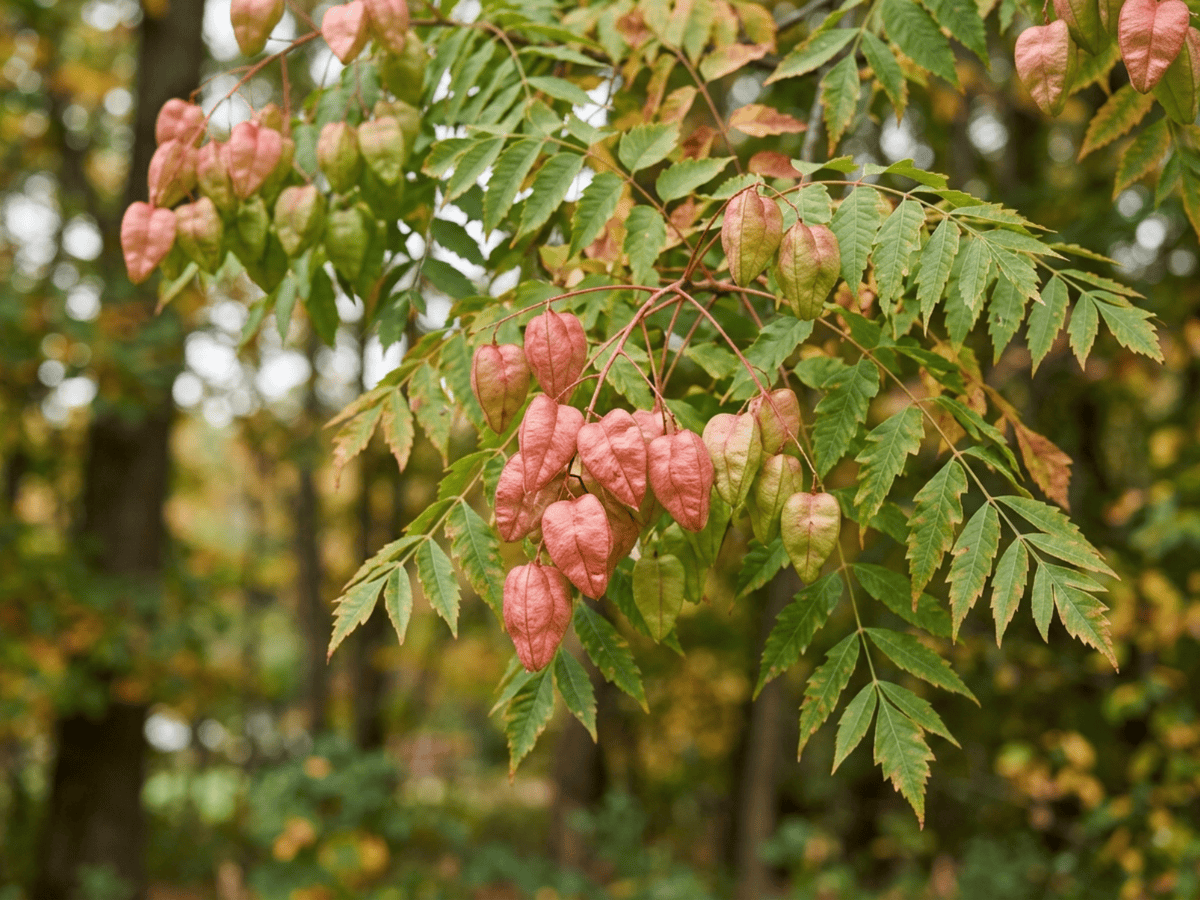
Golden Rain Tree is a medium-sized deciduous tree from China and Korea reaching 25-40 feet tall, producing spectacular foot-long panicles of bright yellow flowers in midsummer—rare among flowering trees—followed by decorative papery pink-to-tan lantern-shaped seed pods. A star performer in the American landscape for tough urban sites, hardy in USDA zones 5-9 and extremely drought-tolerant once established. Also called 'Pride of India'.
- Drought-tolerant
- Pollinator-friendly
How to care for Golden Rain Tree
Watering
- Springevery 7 days
- Summerevery 5 days
- Fallevery 10 days
- Winterpause watering
Soil · Well-draining
- Top dressingPine bark mulch10%
- Main mixPotting soil + perlite 2:170%
- DrainageLECA / gravel20%
Never skip the drainage layer — standing water is the top cause of root rot.
FERTILIZER
Balanced Feed 14-14-14
An even feed covers all three needs at once, keeping leaves, roots and blooms moving together with nothing pushed out of balance.
- Nitrogen · Leaves
- Phosphorus · Roots + Blooms
- Potassium · Strength
- Springevery 60 days
- Summerevery 60 days
At a Glance
- NativeEast Asia
- Height25–40 ft (7.6–12.2 m)
- Spread25–40 ft (7.6–12.2 m)
- Flower colorYellow
- Foliage colorGreen, Yellow
- Fruit colorPink, Brown
- SoilLoamy, Well-drained
- LocationsYard
Bloom time
BLOOM CYCLE
Peak bloom
Jun–Aug
Yellow summer panicles June to July
Fragrance
LIGHT FRAGRANCE
The flowers have a mild scent.
Toxicity
Humans Slight · Pets Slight
Unknown toxic principle
Slight
- Seed
- Ingestion
EXPOSURE Eating seeds.
EFFECT Mild GI upset.
NOTE Documented concern for humans: Mild GI upset.
Slight
- Seed
- Ingestion
EXPOSURE Eating seeds.
EFFECT Mild vomiting.
NOTE Not listed by ASPCA; low toxicity. Seeds sometimes used as beads.
Slight
- Seed
- Ingestion
EXPOSURE Eating seeds.
EFFECT Mild vomiting.
NOTE Not listed by ASPCA; low toxicity. Seeds sometimes used as beads.
Educational information, not medical or veterinary advice. If exposure is suspected, contact a doctor or veterinarian.
DISTRIBUTION

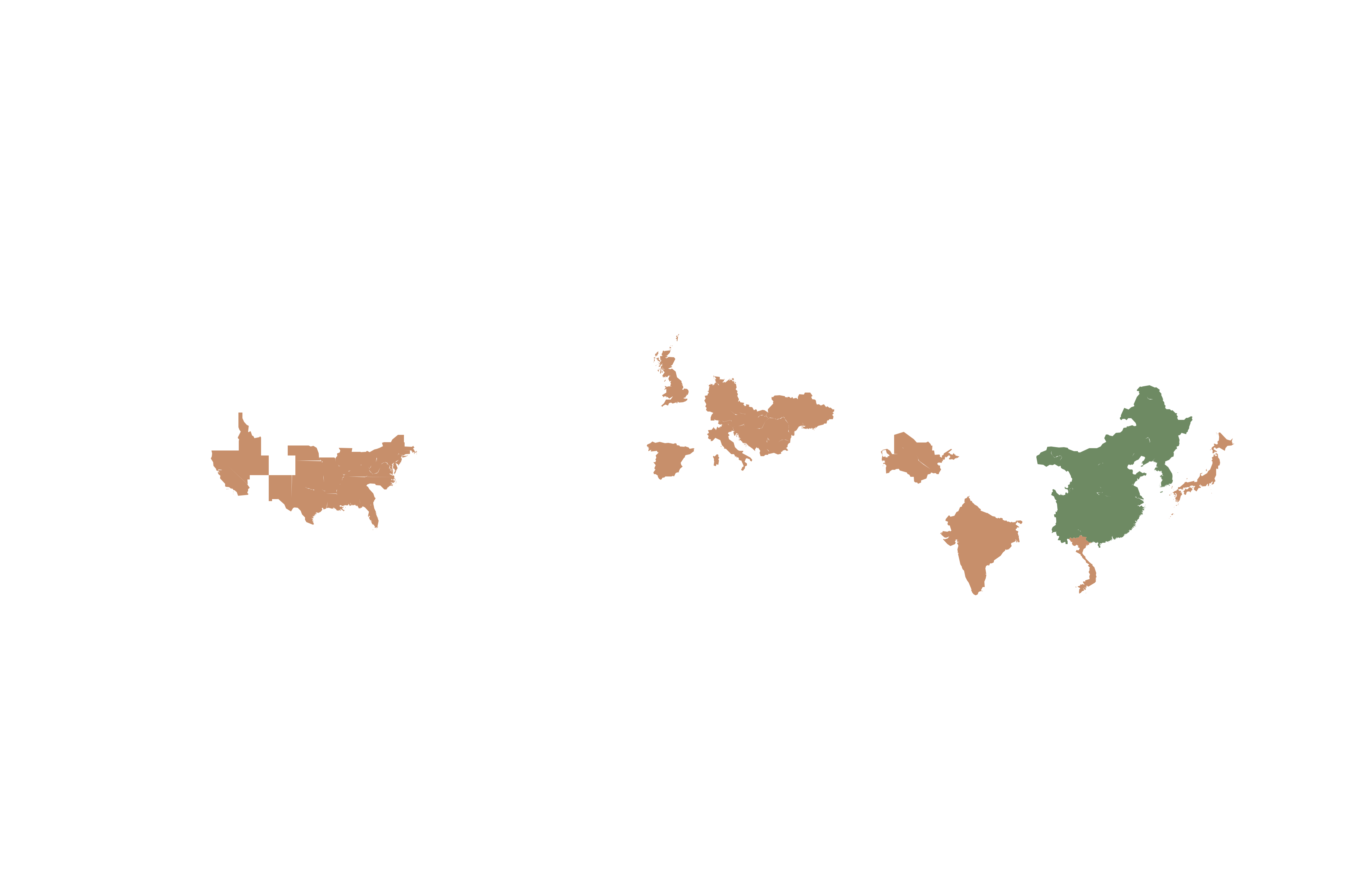
- Native
- Introduced
- East Asia
History
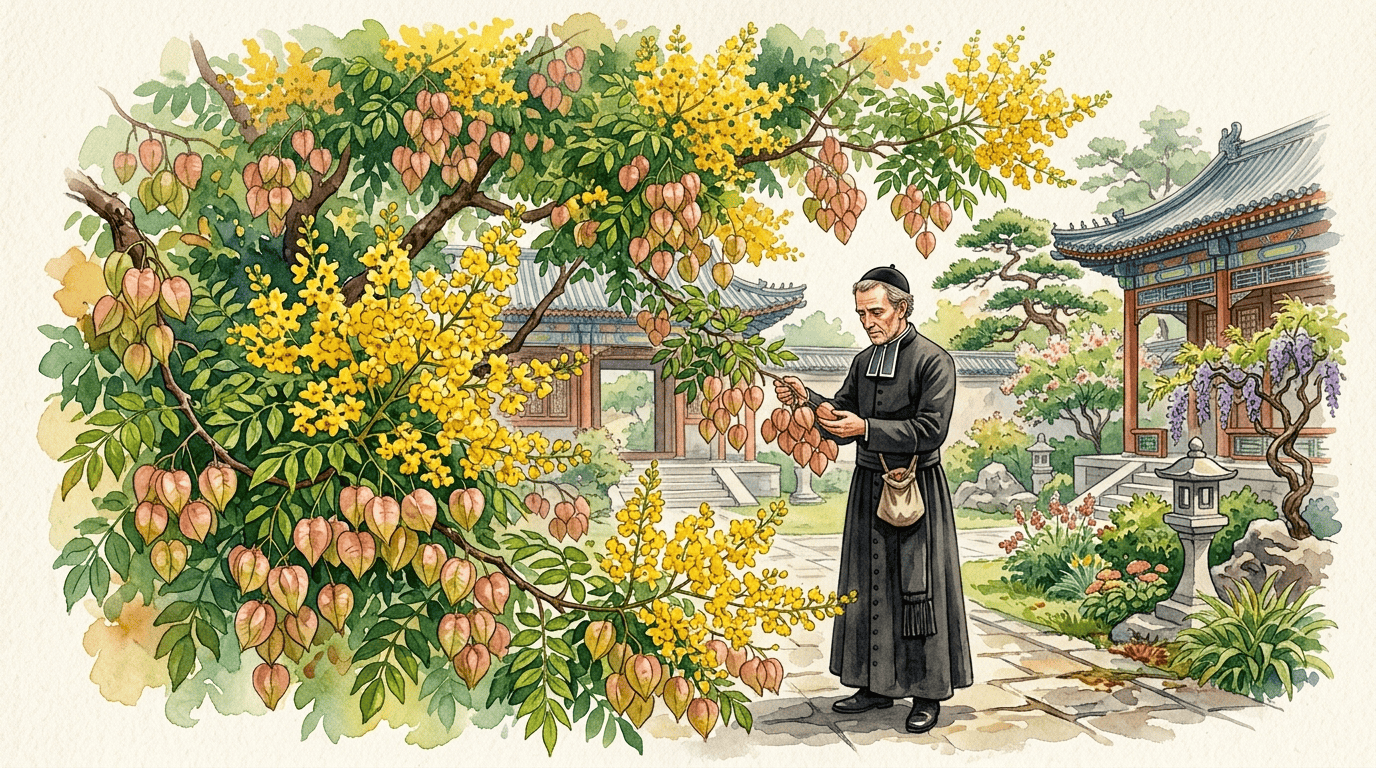
Koelreuteria paniculata is native to China and Korea, with cultivation extending back centuries in Chinese temple gardens as luan hua (luan tree). French Jesuit priest Pierre Nicolas d'Incarville, serving in Beijing, sent seeds to Paris in 1747—making it one of the earliest Chinese trees in Western cultivation. Johann Jacob Reichard formally named the genus in 1772 honoring Joseph Gottlieb Kölreuter, a German botanist who pioneered plant hybridization research.
It became a popular 19th-century street and park tree across Europe and America for its large foot-long panicles of bright yellow flowers in July when few trees bloom, followed by distinctive pink-bronze inflated papery seed capsules resembling Chinese lanterns. Unfortunately it has become invasive in parts of the southeastern US, and modern plantings often prefer the sterile cultivar 'Fastigiata' or its later-blooming relative K. bipinnata.
Listed among Thomas Jefferson's favorite trees—he planted seedlings at Monticello. Self-seeds freely and is considered mildly invasive in parts of the eastern US, so site thoughtfully. The cultivar 'Fastigiata' has a narrow upright form ideal for street planting.
Symbolism & meaning
What It Symbolizes
The Golden Rain Tree is prosperity in a summer shower — panicles of small yellow flowers rain down across the lawn in July, followed by lantern-shaped pink seed pods in fall. Rare among trees for blooming yellow at the height of summer, it becomes a celebration in a season usually reserved for foliage and grass. It is the tree that teaches a yard to feel festive in August.
- Prosperity — shower of golden flowers
- Celebration — summer gift of rare yellow bloom
Where the Name Comes From
The common name highlights its golden coloring. Genus honors Joseph Gottlieb Koelreuter (1733–1806), German botanist; 'paniculata' refers to the panicle-shaped inflorescence.
Uses & Fun Facts
- Mid-sized canopy tree for hot urban streetscapes
- Yellow midsummer panicles feed bees during nectar dearth
- Decorative pink lantern seedpods extend interest into autumn
Related plants
Plants with similar care
 Chinese AbeliaAbelia chinensis
 Fragrant AbeliaAbelia mosanensis
 Large-Flowered AbeliaAbelia uniflora
 Glossy AbeliaAbelia x grandiflora
Frequently asked questions
How often should I water Golden Rain Tree?
Water about every 7 days during the growing season, and always let excess water drain away.
How much light does Golden Rain Tree need?
Full sun: 6+ hrs direct. Watch the leaves — scorching or stretching means the light needs adjusting.
Is Golden Rain Tree toxic to cats or dogs?
Pets Slight (Dogs Slight · Cats Slight) Educational information, not medical or veterinary advice. If exposure is suspected, contact a doctor or veterinarian.
Is Golden Rain Tree easy to grow?
Yes — it is considered an easy, beginner-friendly plant.
When does Golden Rain Tree bloom?
It typically blooms Jun–Aug in the Northern Hemisphere.
YardMate
Identify any plant in seconds
Snap a photo — YardMate names the plant, diagnoses problems, and reminds you when to water.
Download on the App Store