 YardMate
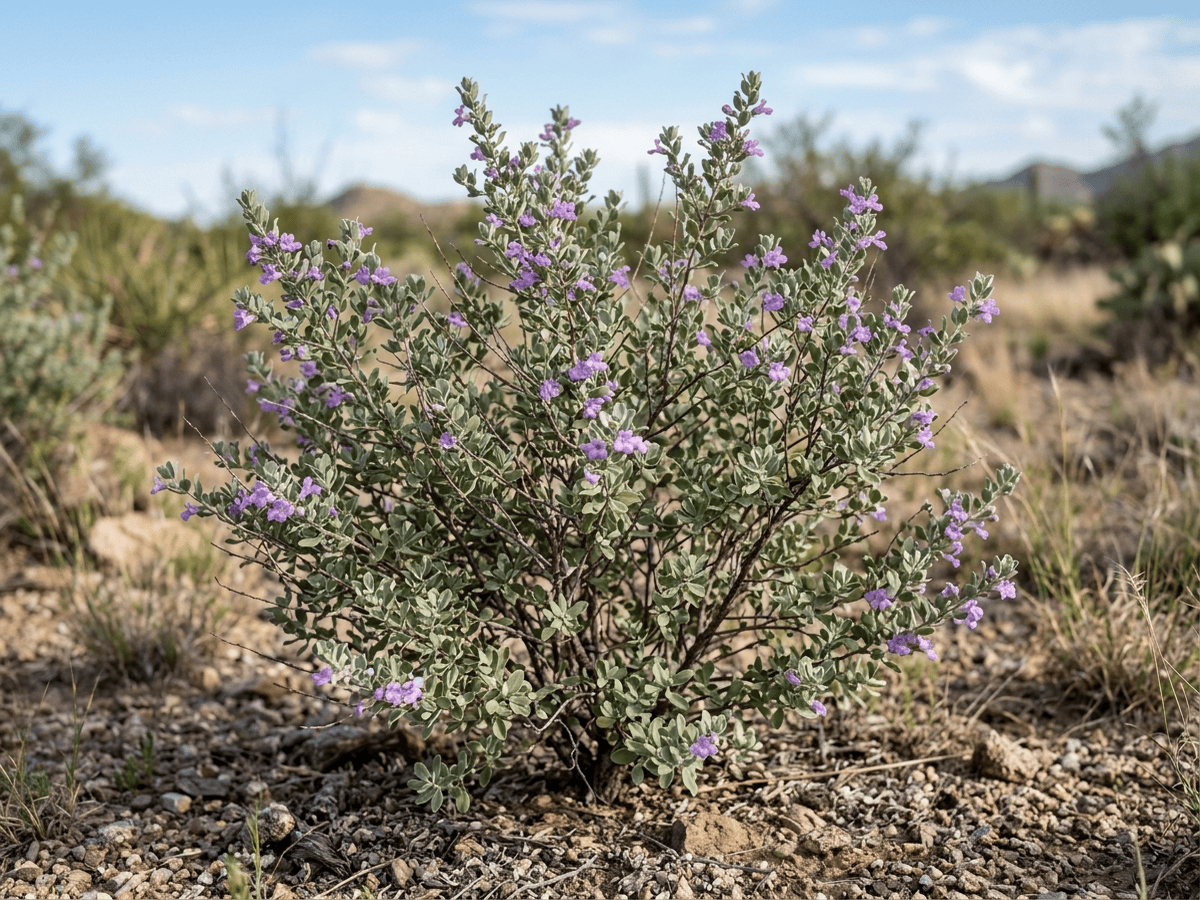


Chihuahuan Sage
Leucophyllum laevigatum
Easy · Beginner friendlyAbout Chihuahuan Sage
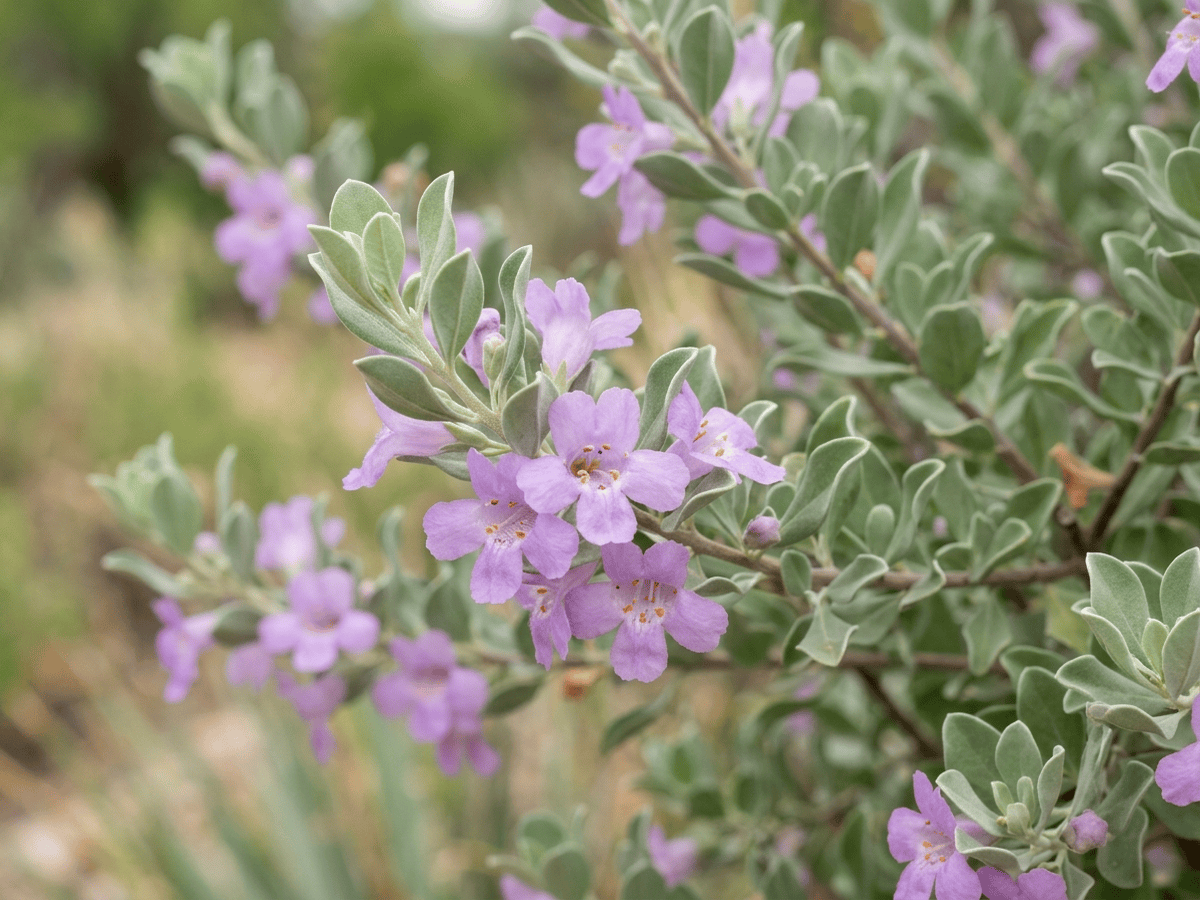
Chihuahuan Sage is a graceful, more open-growing Texas Sage relative native to the Chihuahuan Desert of Mexico and adjacent Texas. Reaching 4 to 5 feet tall with narrow medium-green leaves and a more refined, less dense form than other Texas Sages, it produces fragrant lavender-blue tubular flowers in flushes following summer rains. Increasingly popular among Southwest gardeners seeking a less stiff, more naturalistic alternative to traditional Texas Sage hedges.
- Fragrant
- Drought-tolerant
- Heat-tolerant
- Evergreen
How to care for Chihuahuan Sage
Watering
- Springevery 14 days
- Summerevery 10 days
- Fallevery 21 days
- Winterevery 30 days
Soil · Fast-draining
- Main mixSand + pumice + soil 1:1:150%
- DrainagePumice / gravel50%
Keep grit at half the mix or more — this soil is meant to dry out fast.
FERTILIZER
This plant needs little to no feeding.
At a Glance
- NativeNorth America
- Height4–6 ft (1.2–1.8 m)
- Spread4–6 ft (1.2–1.8 m)
- Flower colorPurple
- Foliage colorGreen
- SoilSandy, Well-drained
- LocationsYard
Bloom time
BLOOM CYCLE
Peak bloom
Jun–Aug
Fragrant lavender-blue flowers following summer rains
Fragrance
LIGHT FRAGRANCE
The flowers have a sweet light lavender fragrance.
Toxicity
Toxicity unknown
None reported
Unknown
EXPOSURE Unspecified plant material.
EFFECT Toxic effects are not specified.
NOTE Toxicity for humans is not well documented; use caution until verified.
Unknown
EXPOSURE Unspecified plant material.
EFFECT Toxic effects are not specified.
NOTE Toxicity for dogs is not well documented; use caution until verified.
Unknown
EXPOSURE Unspecified plant material.
EFFECT Toxic effects are not specified.
NOTE Toxicity for cats is not well documented; use caution until verified.
Educational information, not medical or veterinary advice. If exposure is suspected, contact a doctor or veterinarian.
DISTRIBUTION


- Native
- North America
History
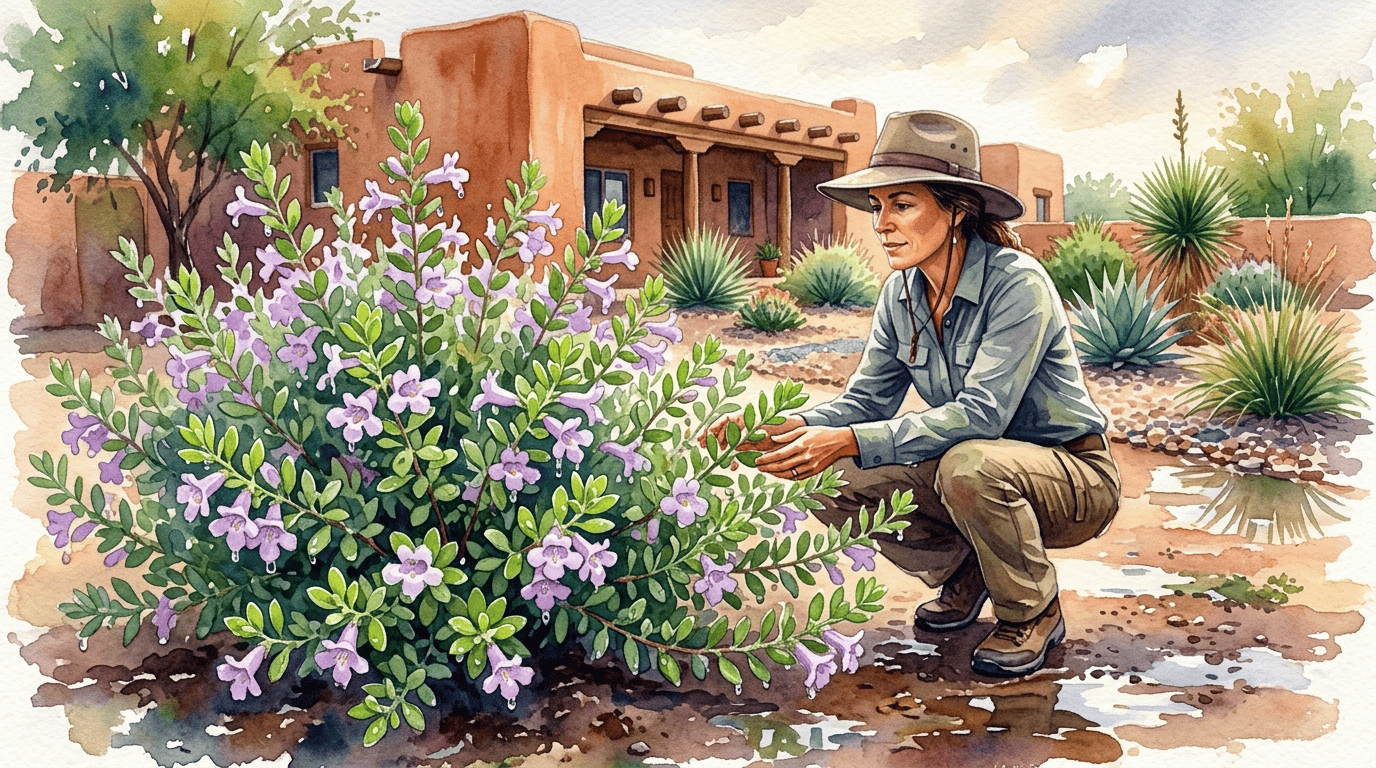
Leucophyllum laevigatum, the Chihuahuan sage or Chihuahuan cenizo, is an evergreen shrub native to rocky slopes of the Chihuahuan Desert in northern Mexico and adjacent southern New Mexico. Unlike the heavily silvered species in its genus, L. laevigatum bears small smooth bright green leaves, giving it a more delicate appearance. Flushes of fragrant pale lavender tubular flowers appear after summer monsoon rains, a habit it shares with other cenizos that prompted the group's common name barometer bush.
American southwestern xeriscape designers began using it widely in the 1990s and 2000s for its softer silhouette, cold hardiness compared to other Leucophyllum species, and low water needs. It is a staple of desert-adapted residential and commercial landscapes across the US Southwest.
A Chihuahuan Desert native, Chihuahuan Sage was introduced to Southwest American horticulture in the late 20th century as Texas A&M and Arizona breeding programs sought less rigid alternatives to common Texas Sage.
Symbolism & meaning
What It Symbolizes
Leucophyllum laevigatum brings desert grace as a softer, more refined form of Texas Sage, its arching branches and small leaves offering a gentler silhouette. Its bloom is a monsoon ritual: fragrant lavender flowers triggered by humidity, washing the shrub in color after summer storms. Its meaning is the quiet covenant between desert plant and rare rain — beauty held in reserve until the sky finally answers.
- Desert grace — softer more elegant Texas Sage form
- Monsoon bloom — fragrant flowers triggered by summer rain
Where the Name Comes From
'Leucophyllum' is Greek for 'white leaf'; 'laevigatum' means smooth, referring to the leaves.
Uses & Fun Facts
- Aromatic gray foliage releases scent in summer rain
- Drought-tough shrub forms low informal Southwestern hedges
- Lavender flower flushes feed bees after summer storms
Related plants
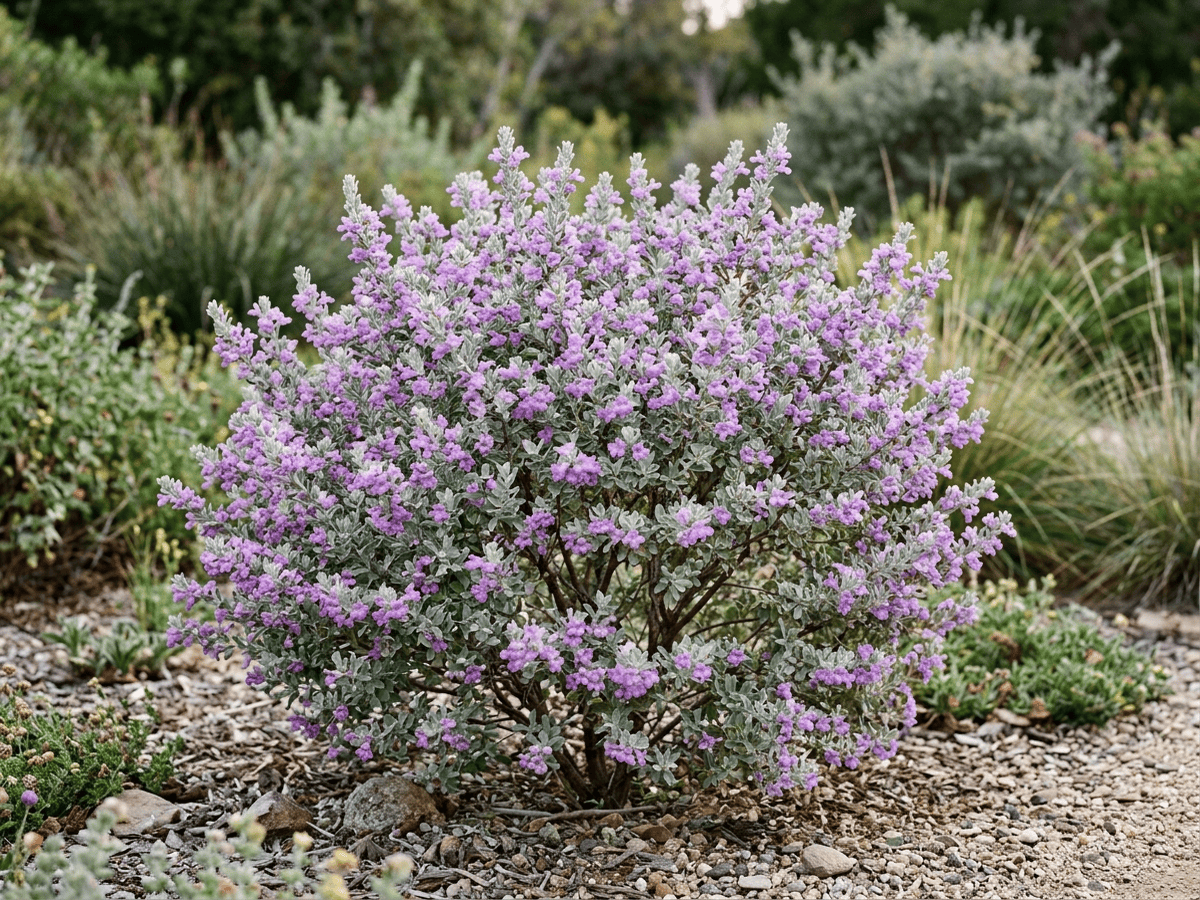
More Leucophyllum plants
Plants with similar care
 Chinese AbeliaAbelia chinensis
 Fragrant AbeliaAbelia mosanensis
 Large-Flowered AbeliaAbelia uniflora
 Glossy AbeliaAbelia x grandiflora
Frequently asked questions
How often should I water Chihuahuan Sage?
In summer, water about every 10 days; in winter, about every 30 days. Adjust for heat, pot size and drainage.
How much light does Chihuahuan Sage need?
Full sun: 6+ hrs direct. Watch the leaves — scorching or stretching means the light needs adjusting.
Is Chihuahuan Sage toxic to cats or dogs?
Pets Unknown (Dogs Unknown · Cats Unknown) Educational information, not medical or veterinary advice. If exposure is suspected, contact a doctor or veterinarian.
Is Chihuahuan Sage easy to grow?
Yes — it is considered an easy, beginner-friendly plant.
When does Chihuahuan Sage bloom?
It typically blooms Jun–Aug in the Northern Hemisphere.
YardMate
Identify any plant in seconds
Snap a photo — YardMate names the plant, diagnoses problems, and reminds you when to water.
Download on the App Store