 YardMate

Dense Blazing Star
Liatris spicata
Easy · Beginner friendlyAbout Dense Blazing Star
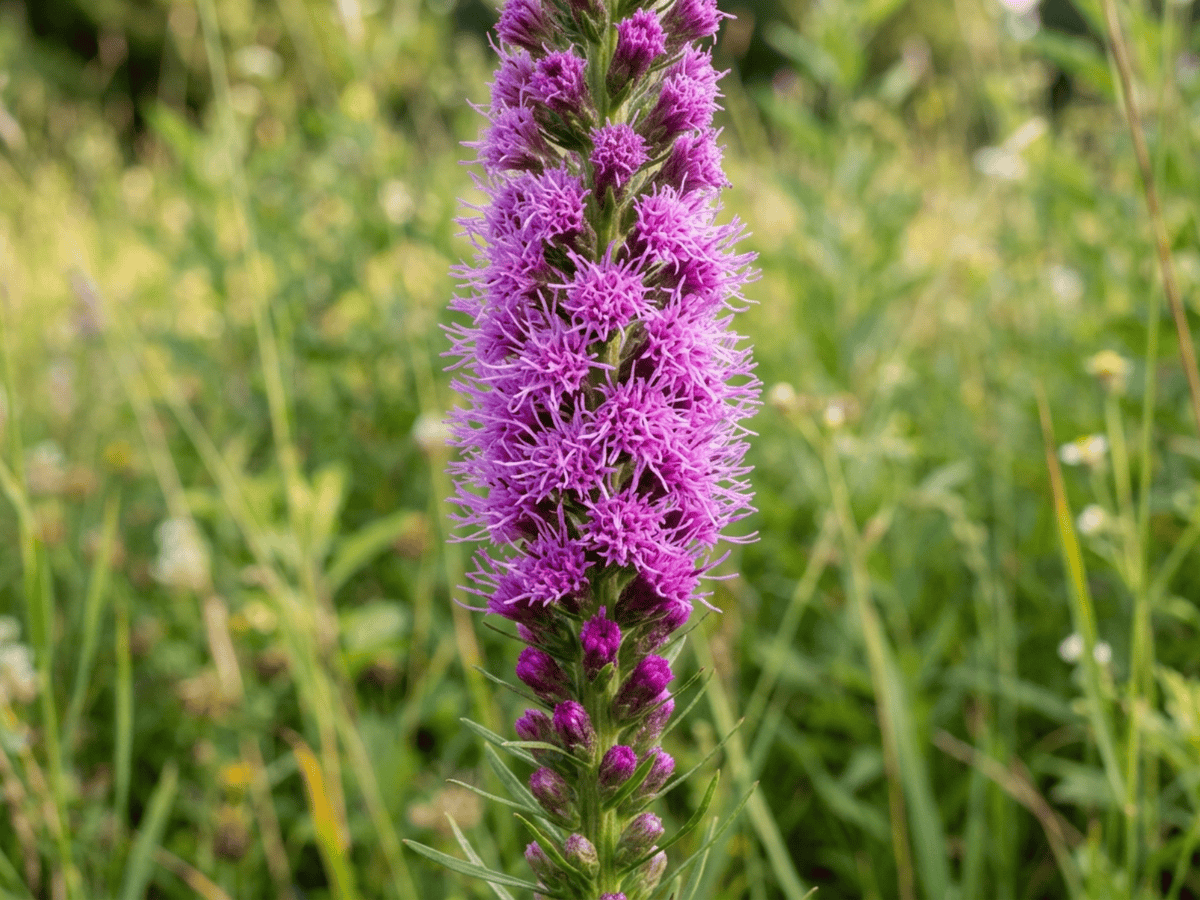
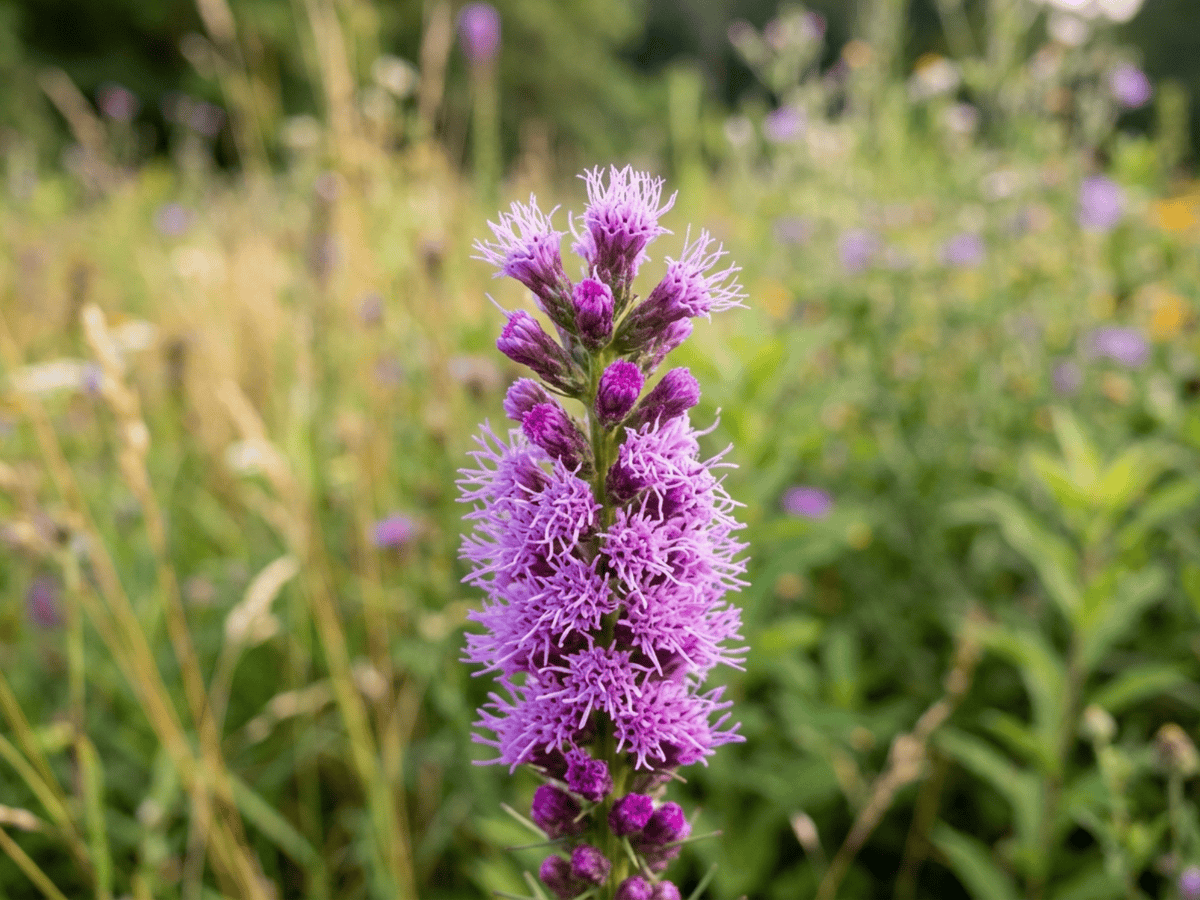
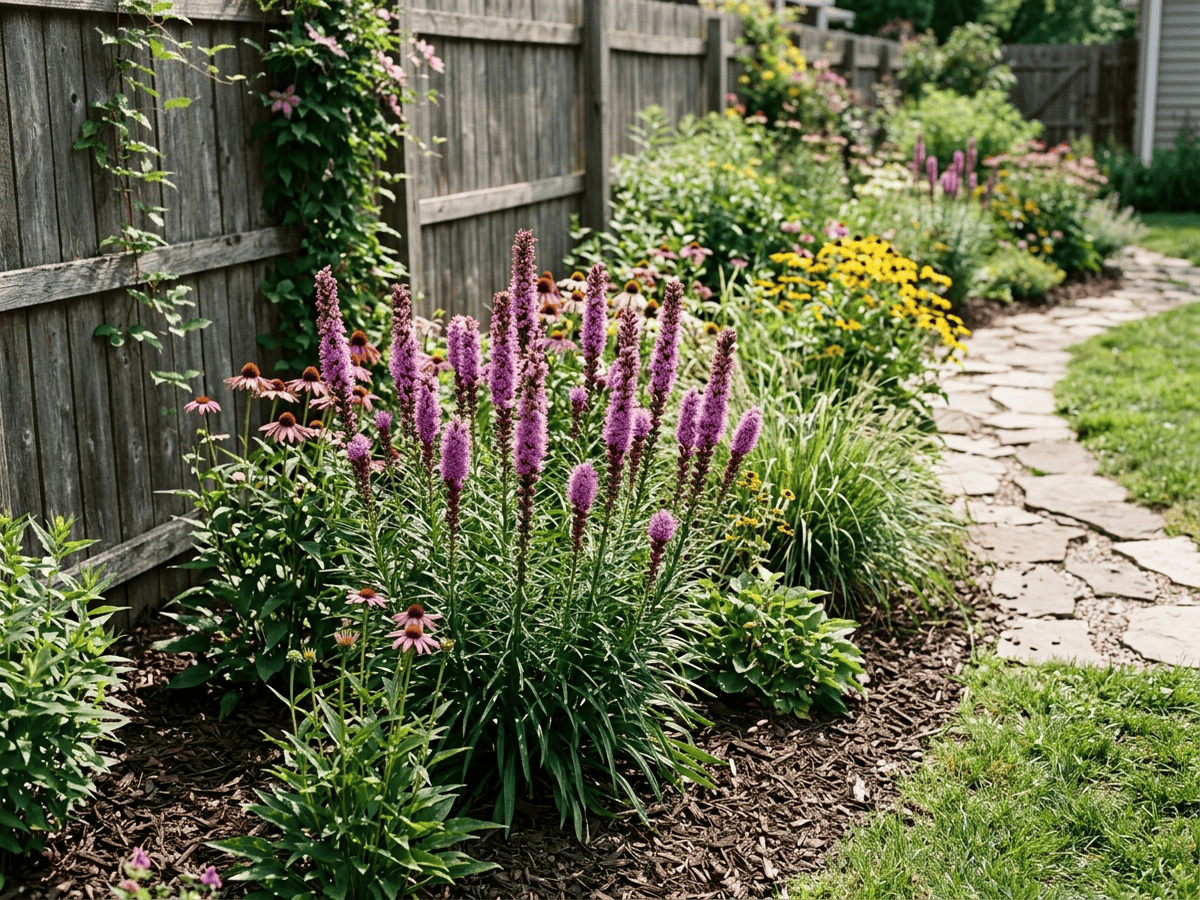
Liatris spicata, the dense blazing star or gayfeather, is a striking North American native perennial that produces tall, fuzzy spikes of vivid purple-magenta flowers from mid to late summer. What makes it unique among spike-shaped flowers is that it blooms from the top down rather than the typical bottom-up pattern, creating a distinctive torch-like effect. Growing from a corm (bulb-like structure), it sends up rigid stems 60–120 cm tall clothed in narrow, grass-like leaves. The flowers are intensely attractive to monarch butterflies, native bees, and hummingbirds, making it a cornerstone plant for pollinator gardens. Once established, it is remarkably drought-tolerant thanks to its underground corm, and it thrives in lean, well-drained soil — heavy, wet clay is its main enemy. The cut flowers are long-lasting in arrangements and are widely grown commercially for the florist trade. In prairie restorations it adds crucial late-summer nectar when many other flowers have finished blooming.
- Cut-flower
- Drought-tolerant
- Native
- Pollinator-friendly
How to care for Dense Blazing Star
Watering
- Springevery 5 days
- Summerevery 4 days
- Fallevery 10 days
- Winterevery 30 days
Soil · Well-draining
- Top dressingPine bark mulch10%
- Main mixPotting soil + perlite 2:170%
- DrainageLECA / gravel20%
Never skip the drainage layer — standing water is the top cause of root rot.
FERTILIZER
- Springevery 60 days
At a Glance
- NativeNorth America
- Height2–4 ft (0.6–1.2 m)
- Spread0.5–1.5 ft (0.2–0.5 m)
- Flower colorPurple, Pink, White
- Foliage colorGreen
- SoilSandy, Well-drained
- LocationsYard
Bloom time
BLOOM CYCLE
Peak bloom
Jun–Sep
Purple spikes bloom top-down — unique among spike flowers; peak in mid to late summer
Fragrance
NO FRAGRANCE
No notable fragrance.
Toxicity
No toxicity has been reported for this plant. Still, it is wise to keep pets from chewing on any houseplant.
Educational information, not medical or veterinary advice. If exposure is suspected, contact a doctor or veterinarian.
DISTRIBUTION


- Native
- Introduced
- North America
History
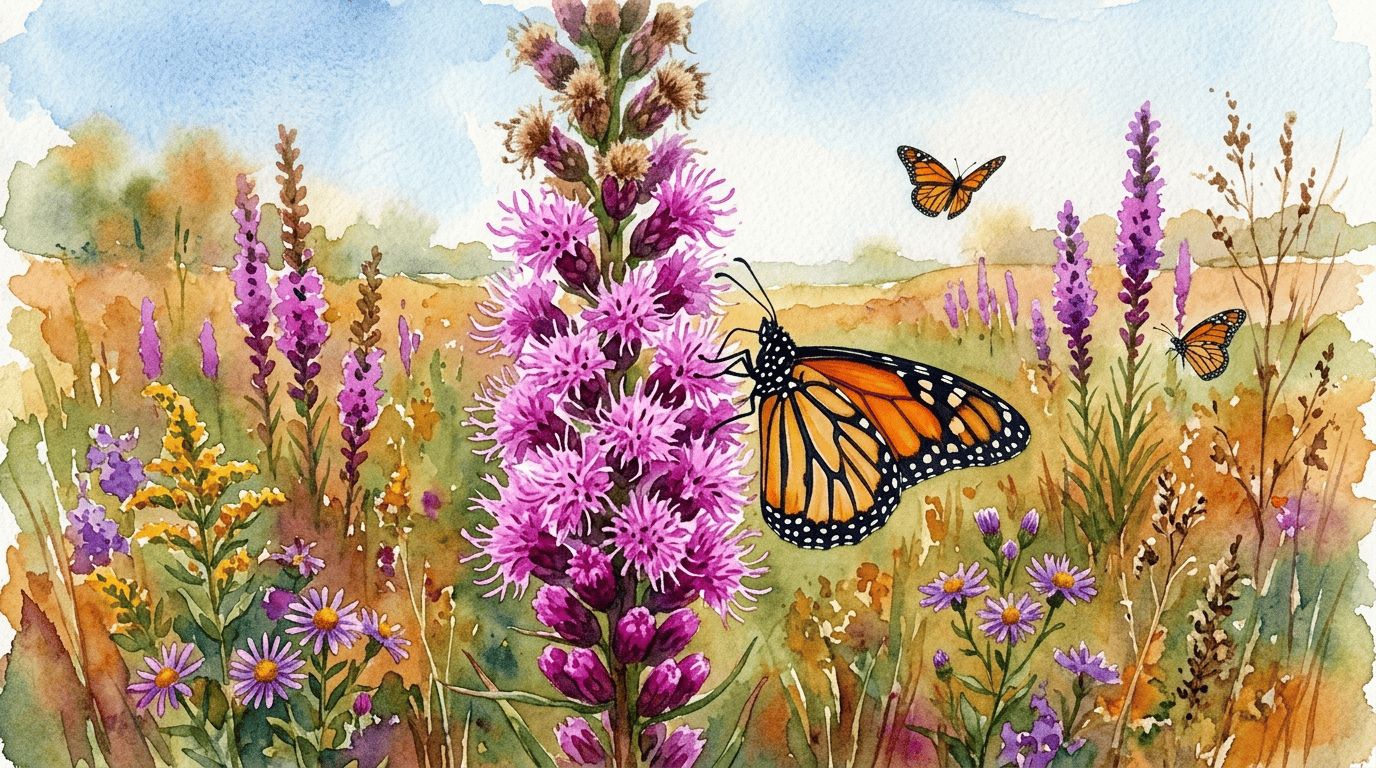
Liatris spicata is native to moist prairie, meadow, and open wet-ground habitats of the eastern and central United States, from southeastern Canada south to Florida and west to Louisiana. It produces erect 60-120 cm tall flowering spikes densely covered with fluffy pink-purple (or white) disk flowers, with the characteristic and unusual feature of opening from the top down — most spike-flowering plants open from bottom up — so that the lowest flowers are opening while the top flowers are already spent. This top-down blooming sequence is unique and visually striking, and makes Liatris immediately identifiable in the field. The species is among the most important nectar sources for monarch butterflies during their fall southward migration through the central and eastern United States, and is widely planted in habitat restoration, native prairie gardens, and butterfly gardens for this reason.
It is also a major source of nectar for bumblebees, small butterflies, and hummingbirds. In the cut-flower industry, L. spicata is grown commercially for its long-lasting cut spikes, particularly in the Netherlands and Israel. Liatris spicata is native to moist prairies and meadows of eastern North America, from the Great Lakes to the Gulf Coast.
Native Americans used the corms medicinally — the Ojibwe made a decoction for bladder ailments, and the Cherokee used it as a gargle for sore throats. It entered commercial floriculture in the 1970s and is now one of the most widely grown American native wildflowers in the global cut flower industry, particularly popular in European and Japanese markets. Popular cultivars include "Kobold" (compact, 45-60 cm tall, deep purple), "Floristan White," and "Alba." Plains Indigenous peoples (several Great Plains nations) used Liatris roots for various medicinal purposes including treatment of kidney and bladder ailments.
Symbolism & meaning
What It Symbolizes
Dense Blazing Star carries aspiration in its tall purple spires, reaching skyward like fireworks frozen mid-rise. Paired with joy, its alternative name 'gayfeather' hints at the cheerful exuberance of those feathery plumes opening from the top down. It is a prairie native that combines ambition and gladness in a single vertical line of bloom.
- Aspiration — Tall spires reaching skyward represent ambition and upward striving
- Joy — Called gayfeather for the cheerful exuberance of its feathery purple plumes
Where the Name Comes From
The origin of 'Liatris' is uncertain — it may derive from a Greek word, but its exact etymology is lost. Spicata means 'spiked' in Latin, describing the flower form.
Uses & Fun Facts
- Tall purple bottlebrush spikes prized in tall summer arrangements
- Top-down opening spikes are magnets for monarchs and bees
Related plants
Plants with similar care
 Chinese AbeliaAbelia chinensis
 Fragrant AbeliaAbelia mosanensis
 Large-Flowered AbeliaAbelia uniflora
 Glossy AbeliaAbelia x grandiflora
Frequently asked questions
How often should I water Dense Blazing Star?
In summer, water about every 4 days; in winter, about every 30 days. Adjust for heat, pot size and drainage.
How much light does Dense Blazing Star need?
Full sun: 6+ hrs direct. Watch the leaves — scorching or stretching means the light needs adjusting.
Is Dense Blazing Star toxic to cats or dogs?
No toxicity has been reported for this plant. Still, it is wise to keep pets from chewing on any houseplant. Educational information, not medical or veterinary advice. If exposure is suspected, contact a doctor or veterinarian.
Is Dense Blazing Star easy to grow?
Yes — it is considered an easy, beginner-friendly plant.
When does Dense Blazing Star bloom?
It typically blooms Jun–Sep in the Northern Hemisphere.
YardMate
Identify any plant in seconds
Snap a photo — YardMate names the plant, diagnoses problems, and reminds you when to water.
Download on the App Store