 YardMate

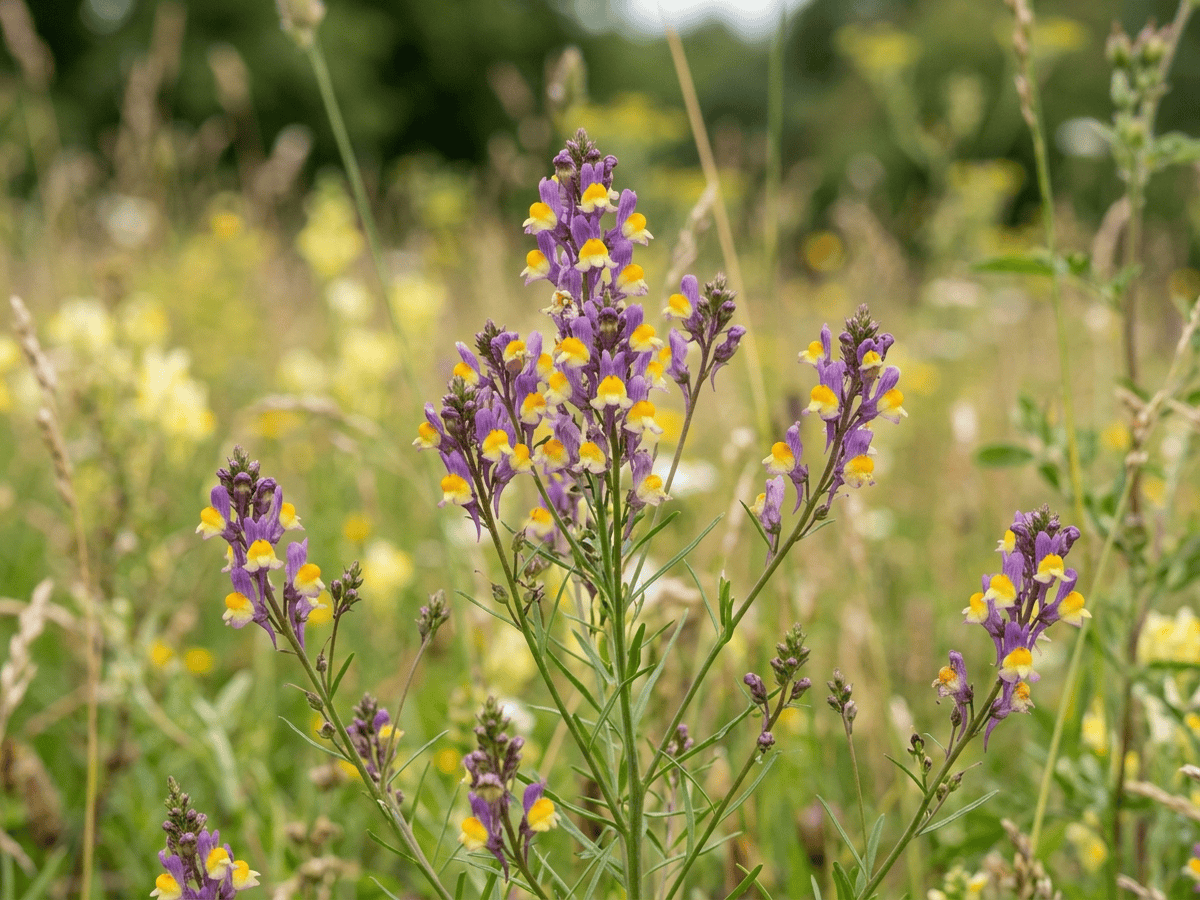


Annual Toadflax
Linaria maroccana
Easy · Beginner friendlyAbout Annual Toadflax
Moroccan Toadflax or Baby Snapdragon is a Moroccan annual wildflower producing miniature snapdragon-like spikes in vibrant bicolors of pink, yellow, orange, purple, and red. Growing 8 to 15 inches tall on slender stems with narrow blue-green leaves, it blooms from late spring through summer, filling American cottage gardens and containers with dollhouse-scale flowers. The Fairy Bouquet series is a signature heirloom mix in US seed catalogs.
- Cut-flower
- Pollinator-friendly
How to care for Annual Toadflax
Watering
- Springevery 5 days
- Summerevery 4 days
- Fallevery 7 days
- Winterevery 10 days
Soil · Well-draining
- Top dressingPine bark mulch10%
- Main mixPotting soil + perlite 2:170%
- DrainageLECA / gravel20%
Never skip the drainage layer — standing water is the top cause of root rot.
FERTILIZER
Balanced Feed 14-14-14
An even feed covers all three needs at once, keeping leaves, roots and blooms moving together with nothing pushed out of balance.
- Nitrogen · Leaves
- Phosphorus · Roots + Blooms
- Potassium · Strength
- Springevery 30 days
At a Glance
- NativeAfrica
- Height0.8–1.5 ft (0.2–0.5 m)
- Spread0.5–1 ft (0.2–0.3 m)
- Flower colorPink, Yellow, Purple, Red
- Foliage colorGreen
- SoilWell-drained, Sandy, Loamy
- LocationsYard · Balcony
Bloom time
BLOOM CYCLE
Peak bloom
Mar–Aug
Miniature snapdragon spikes late spring to summer
Fragrance
LIGHT FRAGRANCE
Flowers have a light, soft scent.
Toxicity
Toxicity unknown
None reported
Unknown
EXPOSURE Unspecified plant material.
EFFECT Toxic effects are not specified.
NOTE Toxicity for humans is not well documented; use caution until verified.
Unknown
EXPOSURE Unspecified plant material.
EFFECT Toxic effects are not specified.
NOTE Toxicity for dogs is not well documented; use caution until verified.
Unknown
EXPOSURE Unspecified plant material.
EFFECT Toxic effects are not specified.
NOTE Toxicity for cats is not well documented; use caution until verified.
Educational information, not medical or veterinary advice. If exposure is suspected, contact a doctor or veterinarian.
DISTRIBUTION


- Native
- Africa
History

Linaria maroccana, commonly called Moroccan toadflax or baby snapdragon, is a slender annual native to Morocco and adjacent northern Africa. French botanist Christian Gottfried Daniel Nees von Esenbeck described the species in 1843. Its small spurred two-lipped flowers resemble miniature snapdragons and appear in an astonishing color range including pink, yellow, purple, red, blue, white, and bicolors.
The species reached European horticulture in the mid-19th century, and the famous Fairy Bouquet mix developed by Thompson and Morgan in the early 20th century made it a beloved cottage garden staple. Modern strains such as Northern Lights and Enchantment offer improved height and color.
The plant thrives in cool spring weather and reseeds in mild climates where it performs as a winter annual. Native to Morocco and introduced to European gardens in the late 1800s, reaching American seed catalogs by the early 1900s. The Fairy Bouquet mix has been a Burpee and Park Seed staple for over a century, still a charming cool-season cottage-garden flower.
Symbolism & meaning
What It Symbolizes
Annual Toadflax is Delicate joy in miniature — flowers like tiny snapdragons in pastel washes, scattered across spring beds. It carries a Cottage magic familiar from old fairy-tale wildflower mixes, the kind of plant a child might imagine fairies wearing. A flower that turns the front border into something faintly enchanted.
- Delicate joy — dollhouse-scale snapdragon flowers
- Cottage magic — classic fairy-tale wildflower mix
Where the Name Comes From
'Linaria' from Latin 'linum' meaning flax, for flax-like leaves; 'maroccana' refers to Morocco, the species origin.
Uses & Fun Facts
- Miniature snapdragon flowers in jewel tones fill cottage gardens
- Slim spikes add color to small posies
- Spurred blooms attract bumblebees to sunny borders
Related plants
Plants with similar care
 Chinese AbeliaAbelia chinensis
 Fragrant AbeliaAbelia mosanensis
 Large-Flowered AbeliaAbelia uniflora
 Glossy AbeliaAbelia x grandiflora
Frequently asked questions
How often should I water Annual Toadflax?
In summer, water about every 4 days; in winter, about every 10 days. Adjust for heat, pot size and drainage.
How much light does Annual Toadflax need?
Full sun: 6+ hrs direct. Watch the leaves — scorching or stretching means the light needs adjusting.
Is Annual Toadflax toxic to cats or dogs?
Pets Unknown (Dogs Unknown · Cats Unknown) Educational information, not medical or veterinary advice. If exposure is suspected, contact a doctor or veterinarian.
Is Annual Toadflax easy to grow?
Yes — it is considered an easy, beginner-friendly plant.
When does Annual Toadflax bloom?
It typically blooms Mar–Aug in the Northern Hemisphere.
YardMate
Identify any plant in seconds
Snap a photo — YardMate names the plant, diagnoses problems, and reminds you when to water.
Download on the App Store