 YardMate


Creeping Lilyturf
Liriope spicata
Easy · Beginner friendlyAbout Creeping Lilyturf
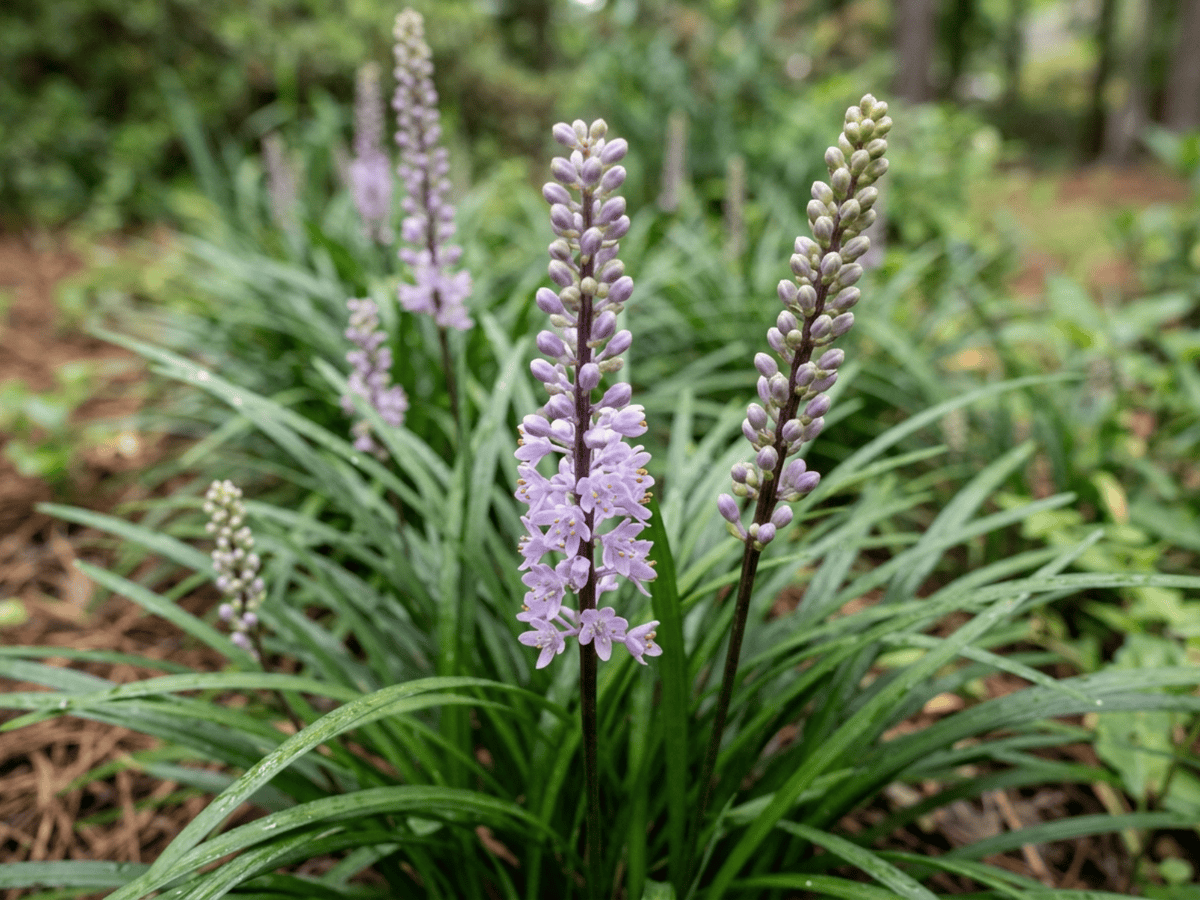
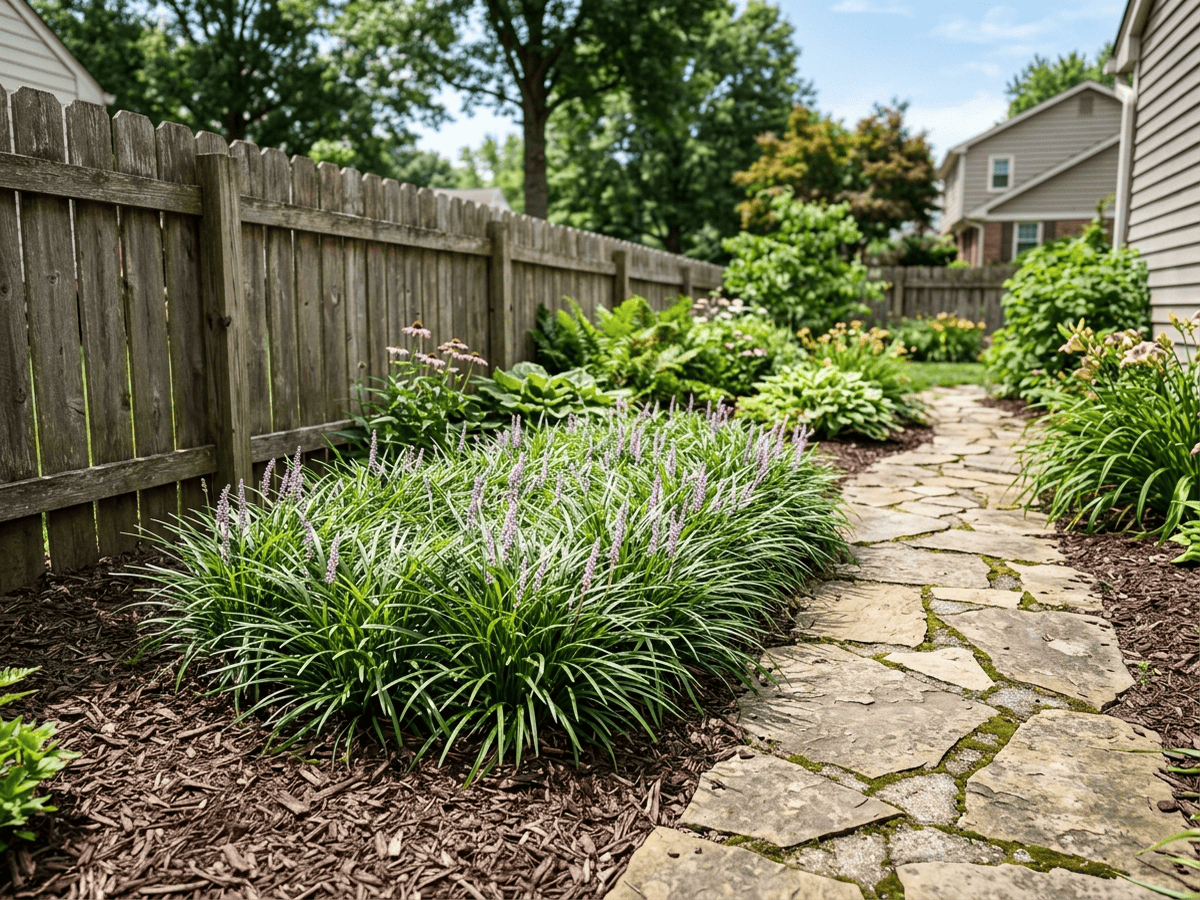
Liriope spicata, creeping lilyturf, is a vigorous spreading groundcover native to China and Vietnam. Unlike its clumping cousin L. muscari, it spreads aggressively by underground stolons, making it ideal for large-area groundcover but potentially invasive in refined garden beds. It forms a dense mat of narrow grass-like leaves 20–30 centimeters tall, with pale lavender to white flower spikes in late summer that are less showy than those of L. muscari. The plant excels in difficult situations — deep shade, dry soil under tree roots, steep banks, and areas with heavy root competition. It is widely used in commercial and municipal landscaping where mass coverage is needed with minimal maintenance. Once established it is nearly impossible to eradicate, which is both its greatest strength and its main drawback. It tolerates mowing and can be cut back hard in early spring to refresh the foliage.
- Shade-tolerant
- Groundcover
- Evergreen
How to care for Creeping Lilyturf
Watering
- Springevery 7 days
- Summerevery 5 days
- Fallevery 14 days
- Winterevery 30 days
Soil · Well-draining
- Top dressingPine bark mulch10%
- Main mixPotting soil + perlite 2:170%
- DrainageLECA / gravel20%
Never skip the drainage layer — standing water is the top cause of root rot.
FERTILIZER
- Springevery 60 days
At a Glance
- NativeEast Asia, Southeast Asia
- Height0.5–1 ft (0.2–0.3 m)
- Spread1–2 ft (0.3–0.6 m)
- Flower colorPurple, White
- Foliage colorGreen, Variegated
- SoilLoamy, Well-drained
- LocationsYard
Bloom time
BLOOM CYCLE
Peak bloom
Jun–Sep
Pale lavender spikes in late summer; less showy than L. muscari
Fragrance
NO FRAGRANCE
No notable fragrance.
Toxicity
No toxicity has been reported for this plant. Still, it is wise to keep pets from chewing on any houseplant.
Educational information, not medical or veterinary advice. If exposure is suspected, contact a doctor or veterinarian.
DISTRIBUTION

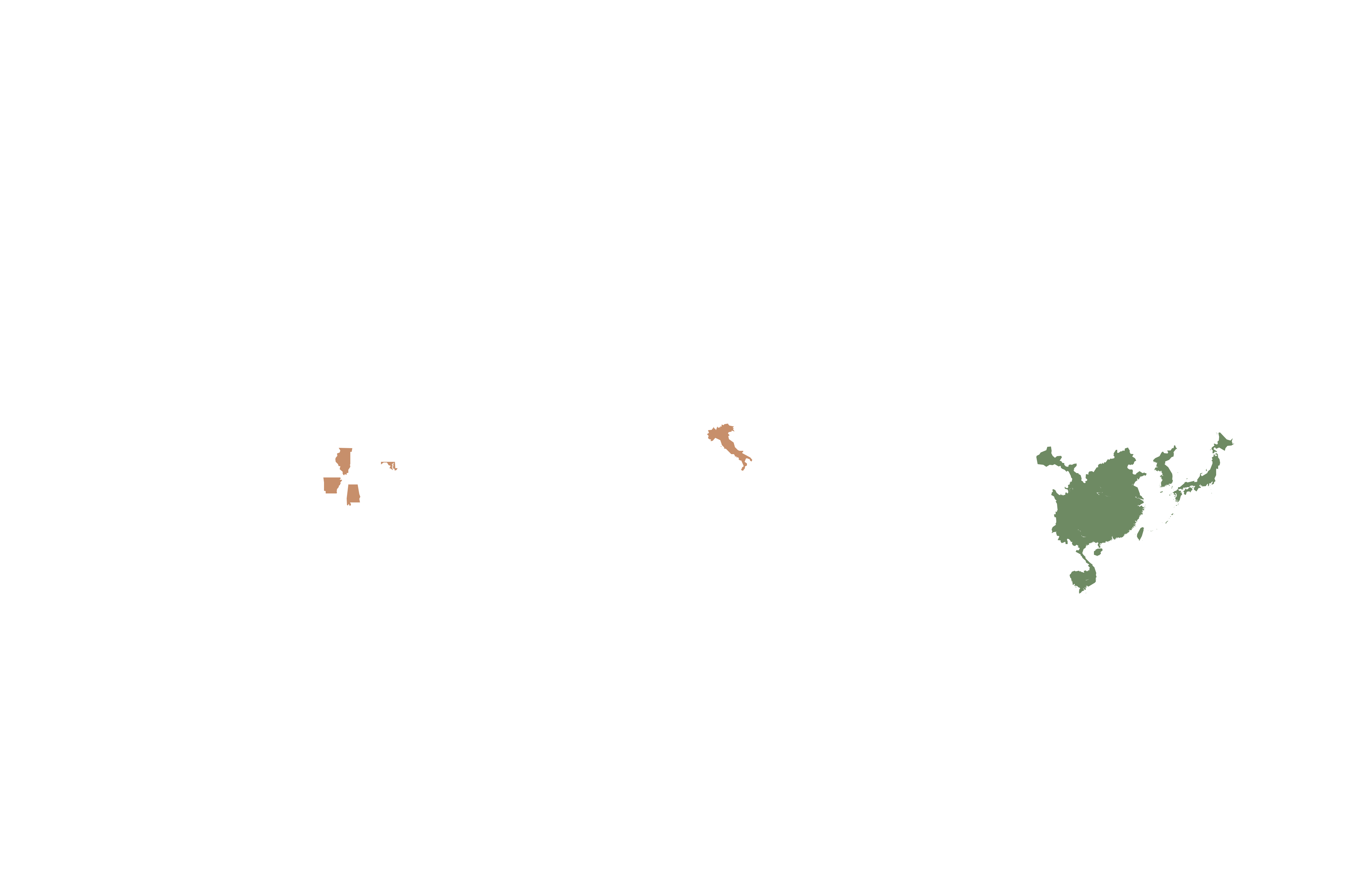
- Native
- Introduced
- East Asia
- Southeast Asia
History
Liriope spicata is native to central and eastern China, Japan, Korea, and Vietnam. It differs from the clumping L. muscari by spreading aggressively via long underground rhizomes, producing a continuous mat rather than discrete clumps. This rhizomatous habit makes it valuable as a tough utility groundcover for slopes, under trees, and difficult shaded areas where other plants struggle — but also makes it prone to escaping garden boundaries and spreading into lawns, neighboring beds, and adjacent woodlands.
Since the 2000s, several Mid-Atlantic and Southeastern US states (Virginia, Tennessee, Kentucky, Maryland) have classified it as invasive, as it displaces native herbaceous layer plants in disturbed suburban woodland edges. Flower spikes are paler (often pale purple or nearly white) and less showy than those of L. muscari, and the foliage is typically narrower and a slightly lighter green. The cultivar "Silver Dragon" has cream variegated leaves.
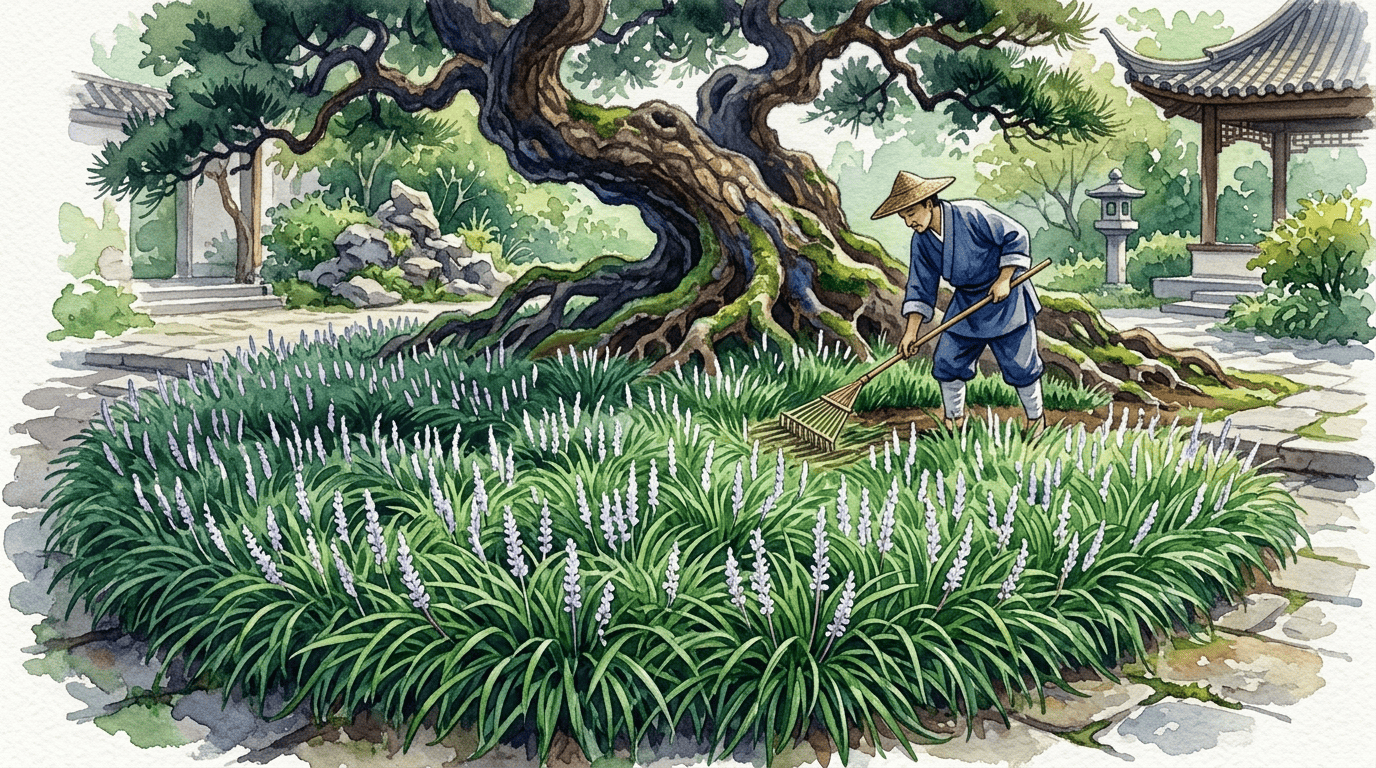
Often sold interchangeably with L. Creeping lilyturf has been used in East Asian gardens for centuries, particularly in China where it provides green carpets beneath ancient temple trees. In traditional Chinese herbal medicine, its roots are used similarly to L. muscari as 'Mai Dong'. muscari in the trade despite their different growth habits, causing a common source of landscape-scale confusion.
Symbolism & meaning
What It Symbolizes
Creeping Lilyturf expresses perseverance, its unstoppable spreading growth representing determination that simply cannot be contained. Paired with community, the underground stolons that connect each tuft suggest bonds running just beneath the surface — separate-looking plants, secretly one. It is a groundcover whose meaning matches its habit: tireless, connected, and always quietly extending its reach.
- Perseverance — its unstoppable spreading growth represents determination that cannot be contained
- Community — connected by underground stolons, symbolizing bonds beneath the surface
Where the Name Comes From
The name Creeping Lilyturf describes its low, spreading habit. Liriope from Greek mythology — the nymph Liriope was the mother of Narcissus. Spicata means 'bearing spikes', referring to the flower arrangement.
Uses & Fun Facts
- Spreading rhizomes form tough evergreen carpet under trees
- Grass-like foliage and pale lavender flower spikes for edging
Related plants
More Liriope plants
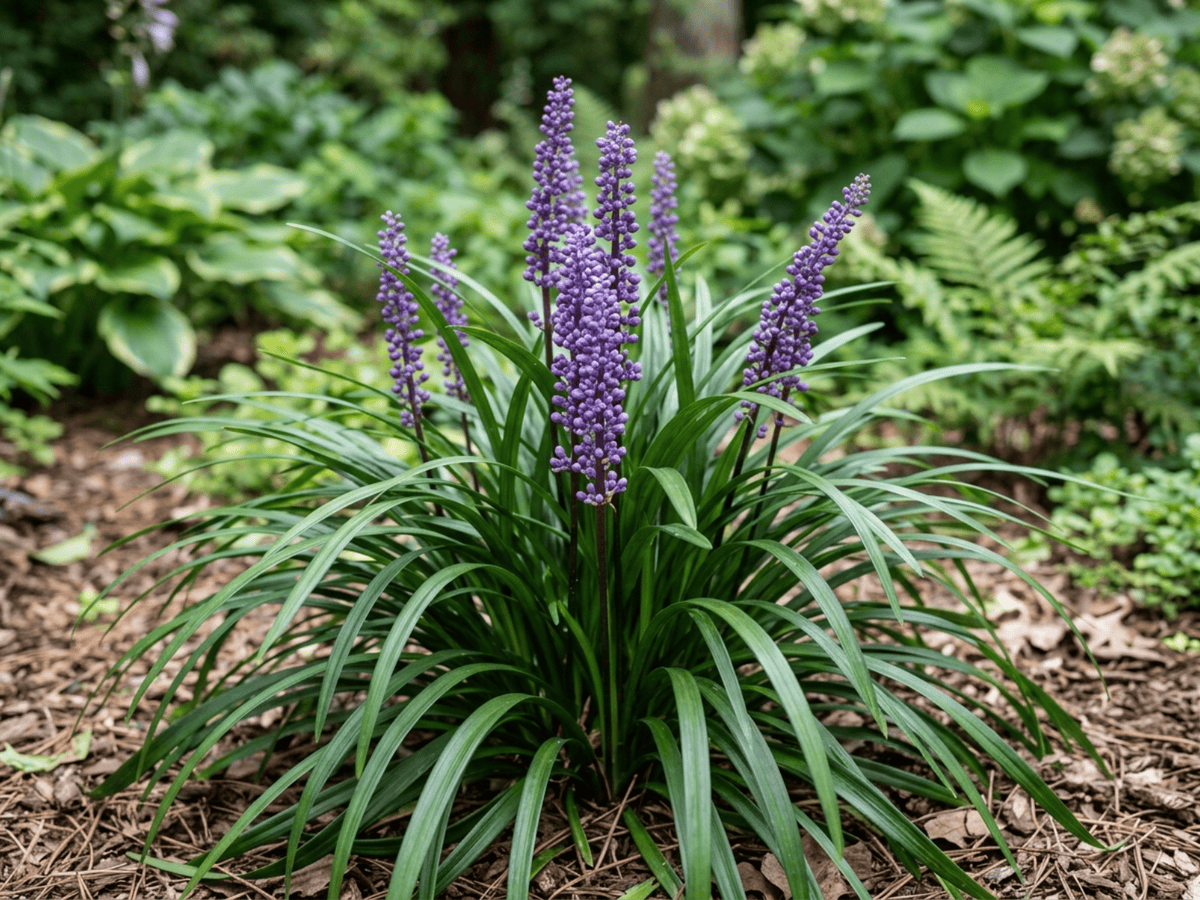
Plants with similar care
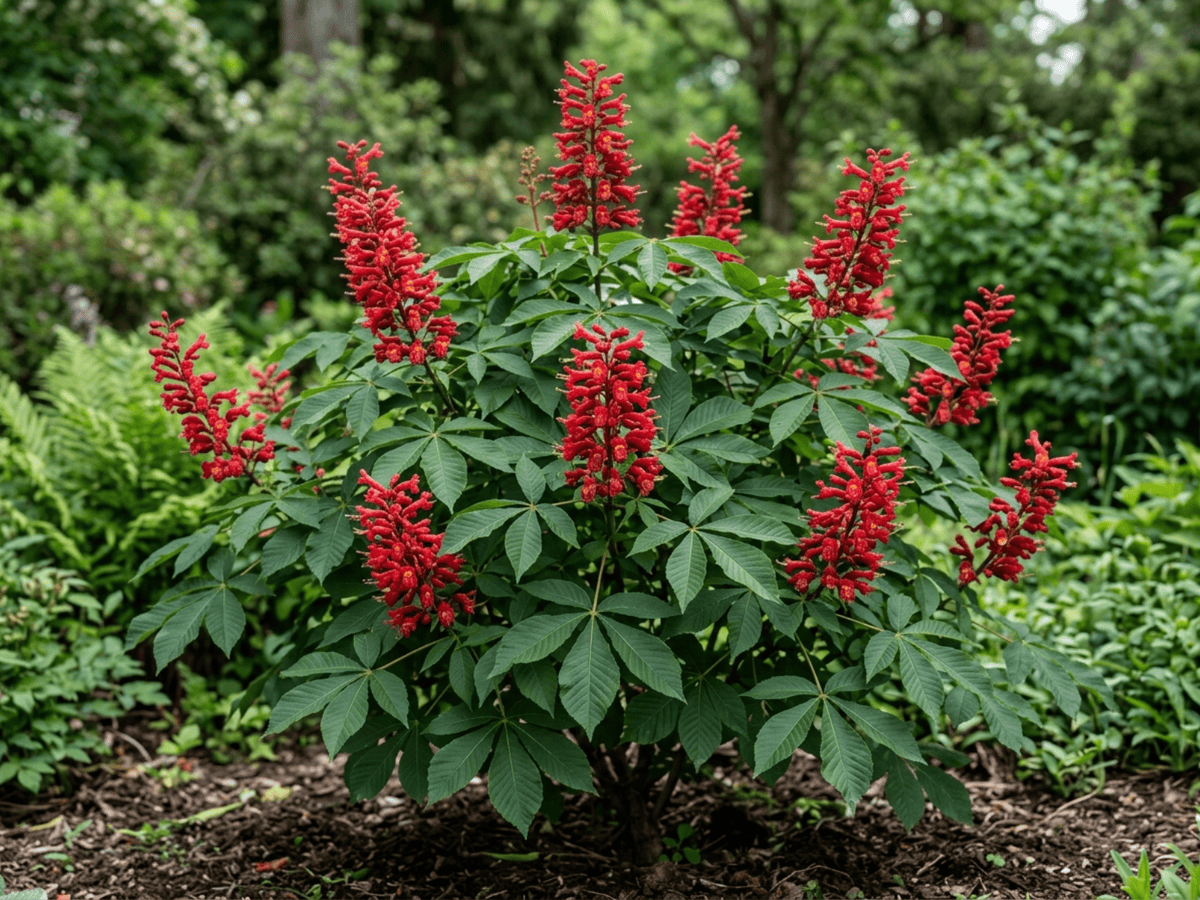 Red BuckeyeAesculus pavia
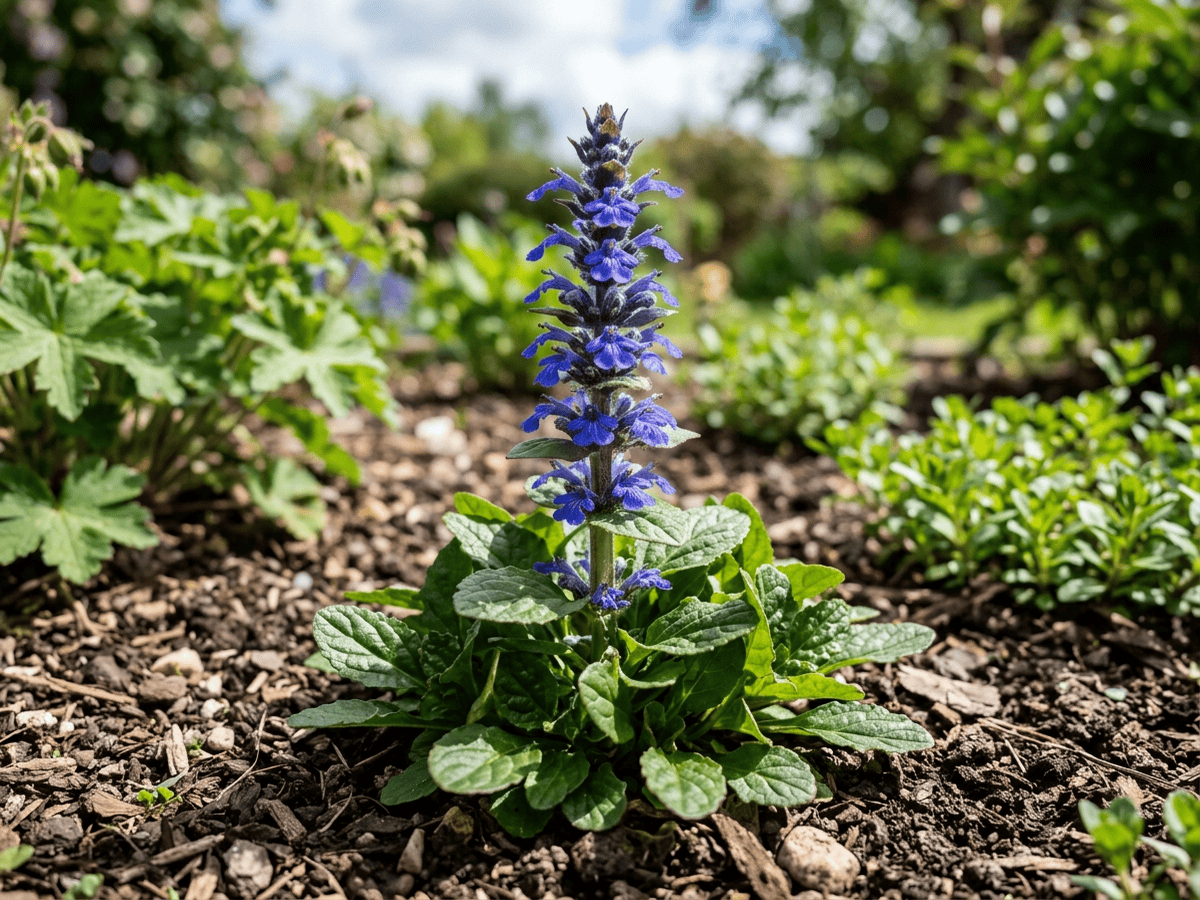 Blue BugleAjuga genevensis
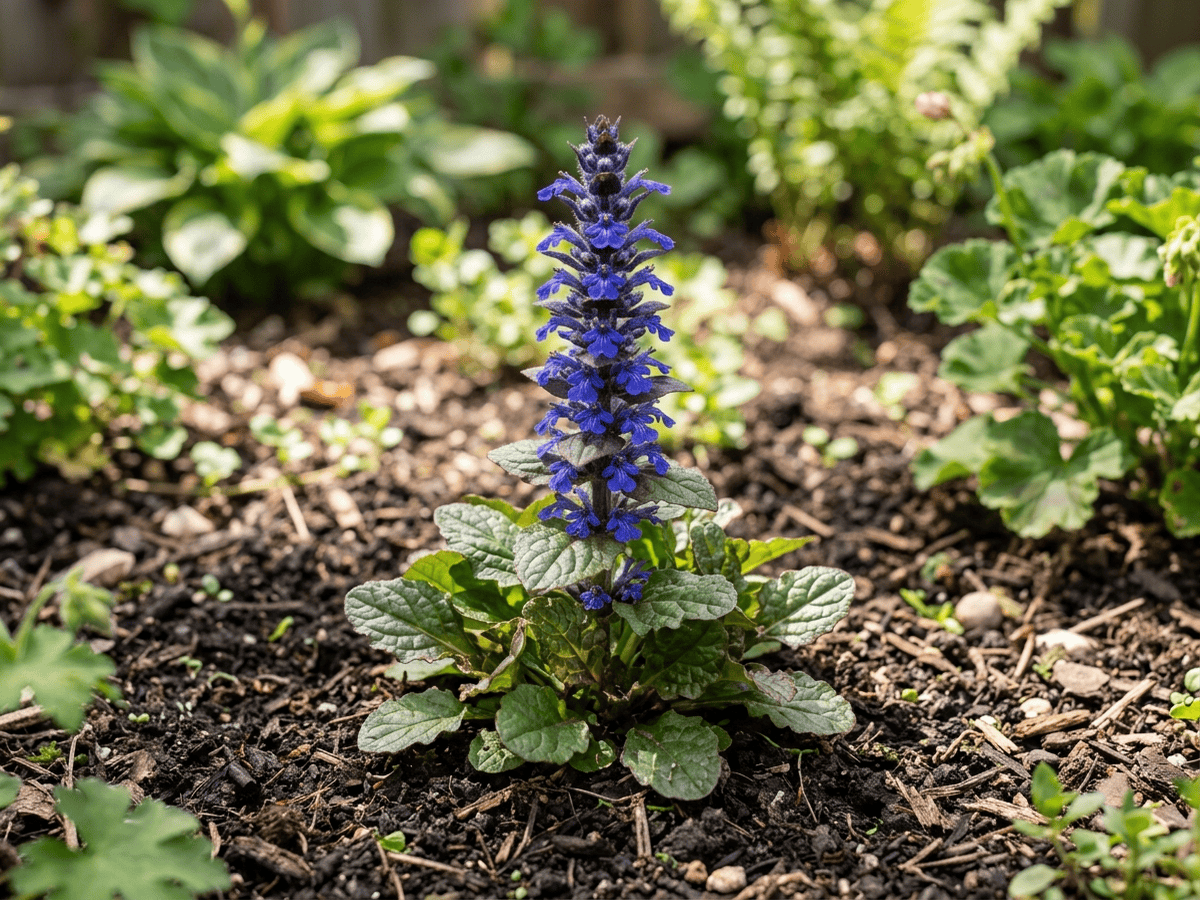 Pyramidal BugleAjuga pyramidalis
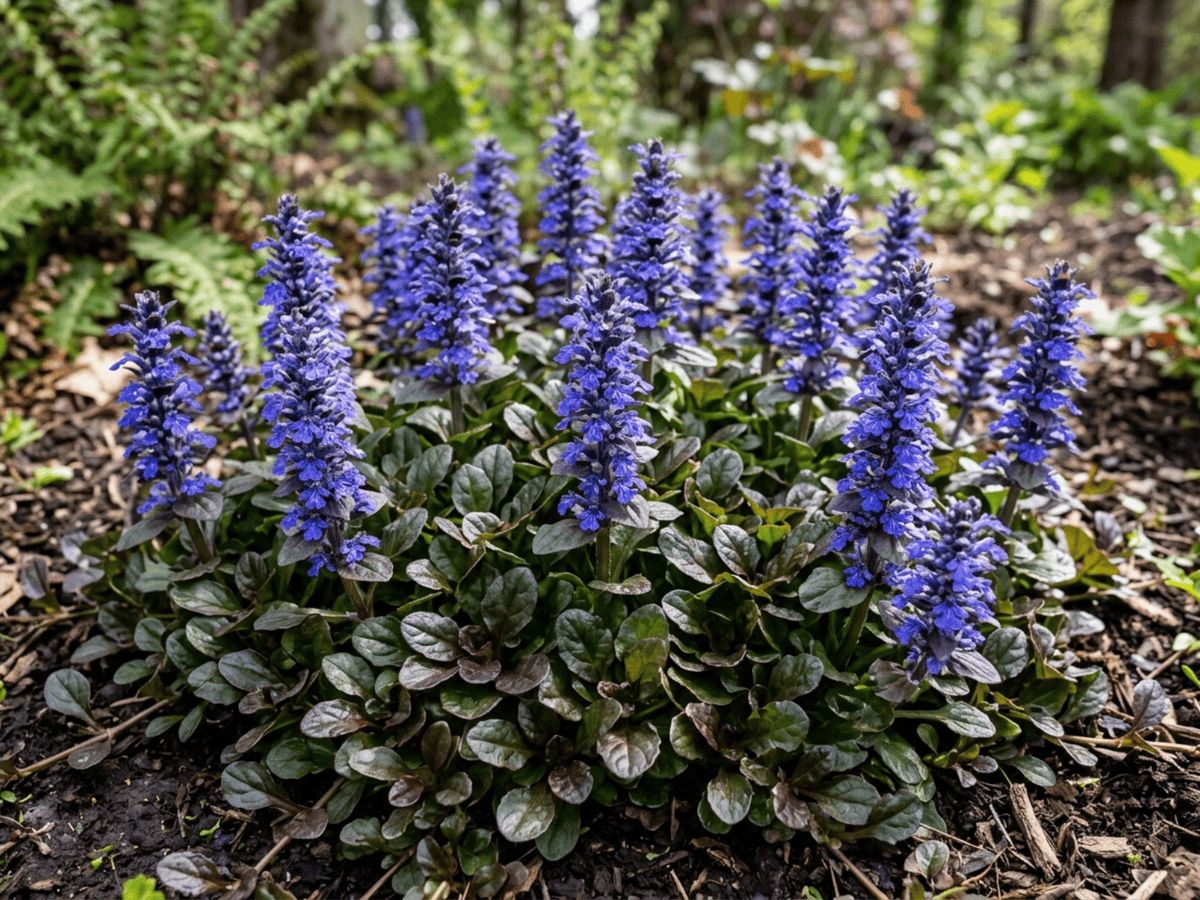 Carpet BugleAjuga reptans
Frequently asked questions
How often should I water Creeping Lilyturf?
In summer, water about every 5 days; in winter, about every 30 days. Adjust for heat, pot size and drainage.
How much light does Creeping Lilyturf need?
Part shade: 2–4 hrs direct. Watch the leaves — scorching or stretching means the light needs adjusting.
Is Creeping Lilyturf toxic to cats or dogs?
No toxicity has been reported for this plant. Still, it is wise to keep pets from chewing on any houseplant. Educational information, not medical or veterinary advice. If exposure is suspected, contact a doctor or veterinarian.
Is Creeping Lilyturf easy to grow?
Yes — it is considered an easy, beginner-friendly plant.
When does Creeping Lilyturf bloom?
It typically blooms Jun–Sep in the Northern Hemisphere.
YardMate
Identify any plant in seconds
Snap a photo — YardMate names the plant, diagnoses problems, and reminds you when to water.
Download on the App Store