 YardMate


Sweet Alyssum
Lobularia maritima
Easy · Beginner friendlyAbout Sweet Alyssum
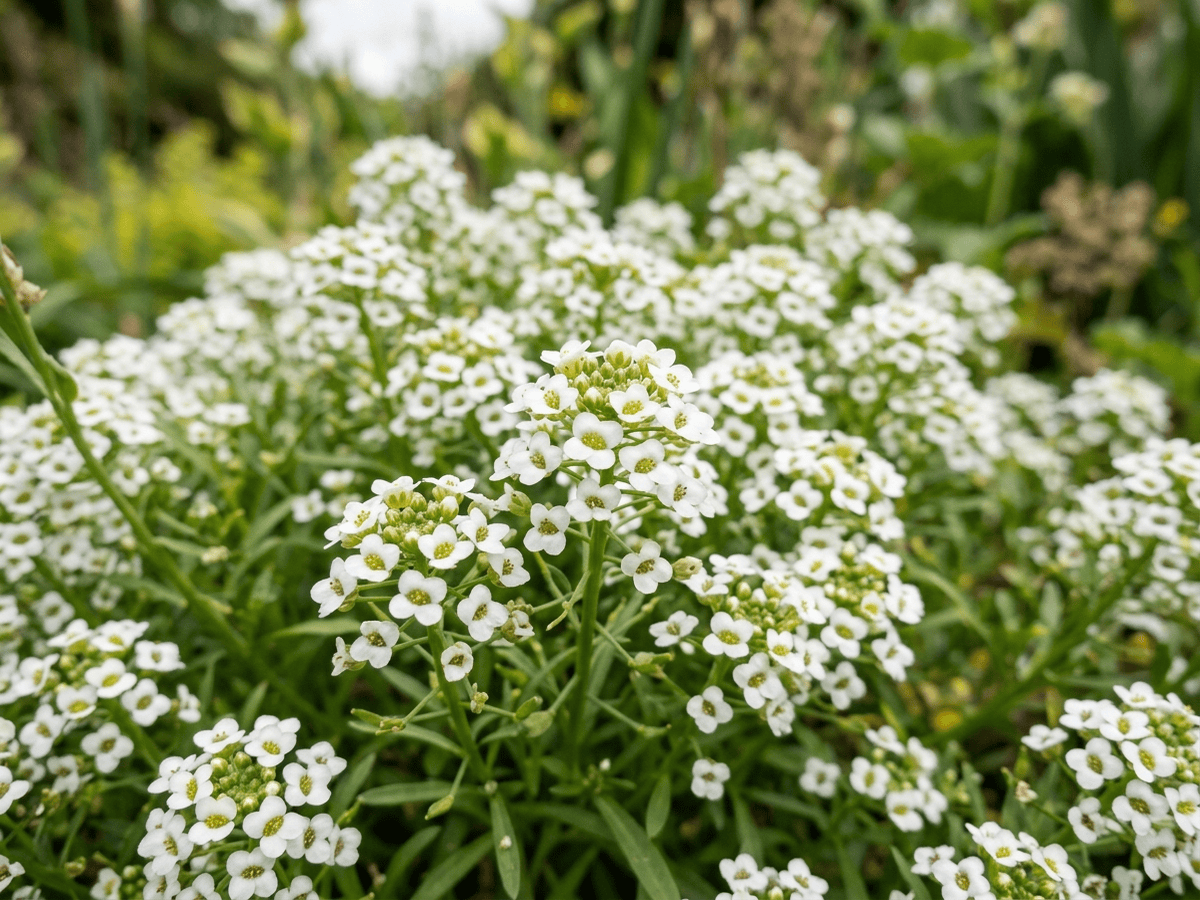
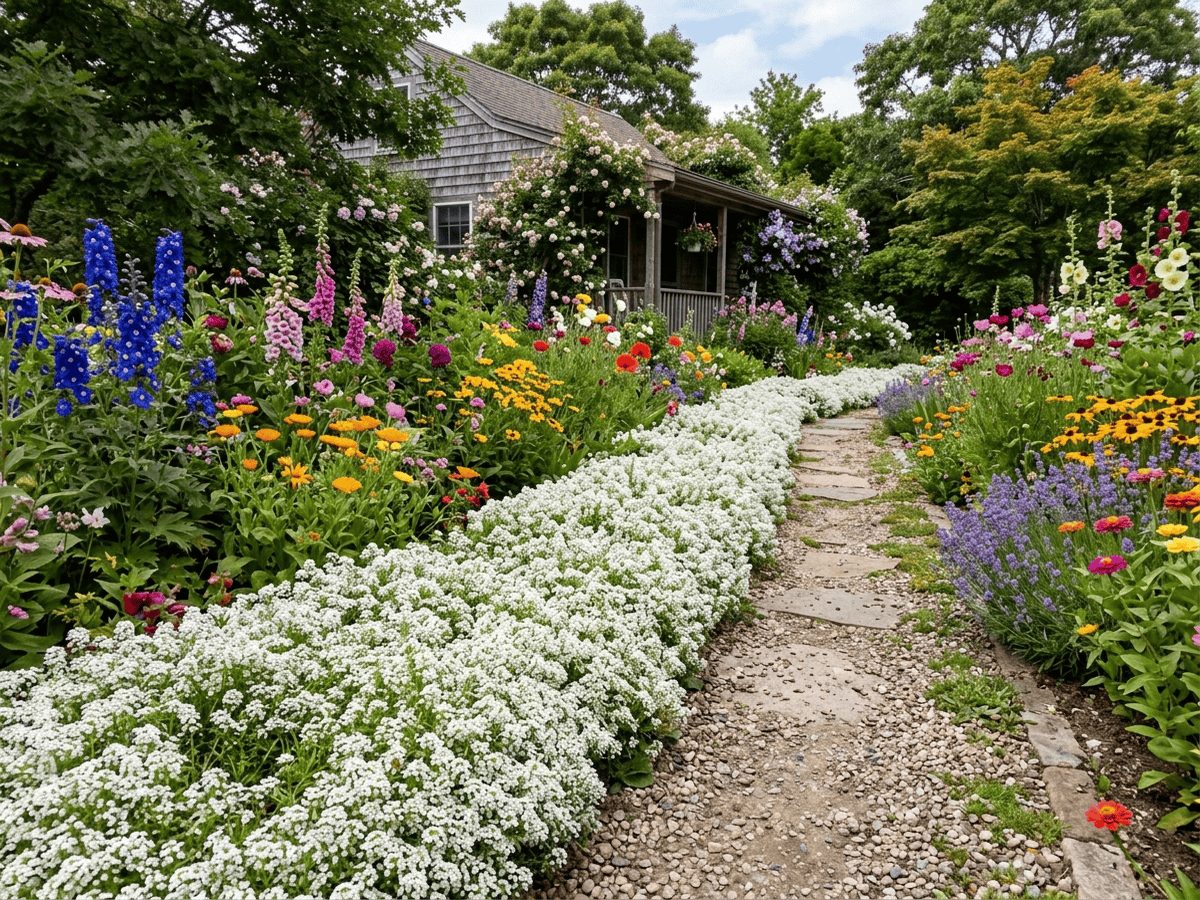
Sweet Alyssum is a low-growing annual or short-lived perennial from the Mediterranean region, now one of the most widely planted bedding flowers across the US. Reaching only 3 to 10 inches tall, it forms dense cushions covered in tiny honey-scented white, pink, or purple flowers from spring through fall. Beloved for lining pathways, tumbling from containers, and its legendary sweet fragrance that perfumes entire gardens on warm afternoons.
- Fragrant
- Heat-tolerant
- Deer-resistant
- Long-blooming
How to care for Sweet Alyssum
Watering
- Springevery 5 days
- Summerevery 3 days
- Fallevery 7 days
- Winterevery 10 days
Soil · Well-draining
- Top dressingPine bark mulch10%
- Main mixPotting soil + perlite 2:170%
- DrainageLECA / gravel20%
Never skip the drainage layer — standing water is the top cause of root rot.
FERTILIZER
Balanced Feed 14-14-14
An even feed covers all three needs at once, keeping leaves, roots and blooms moving together with nothing pushed out of balance.
- Nitrogen · Leaves
- Phosphorus · Roots + Blooms
- Potassium · Strength
- Springevery 30 days
- Summerevery 30 days
At a Glance
- NativeMediterranean, Africa
- Height0.3–1 ft (0.1–0.3 m)
- Spread0.5–1 ft (0.2–0.3 m)
- Flower colorWhite, Pink, Purple, Orange
- Foliage colorGreen
- SoilLoamy, Well-drained, Sandy
- LocationsYard · Balcony
Bloom time
BLOOM CYCLE
Peak bloom
Mar–Nov
Honey-scented clusters spring to frost, heaviest in cool weather
Fragrance
STRONG FRAGRANCE
The flowers have an intense sweet honey fragrance.
Toxicity
No toxicity has been reported for this plant. Still, it is wise to keep pets from chewing on any houseplant.
Educational information, not medical or veterinary advice. If exposure is suspected, contact a doctor or veterinarian.
DISTRIBUTION

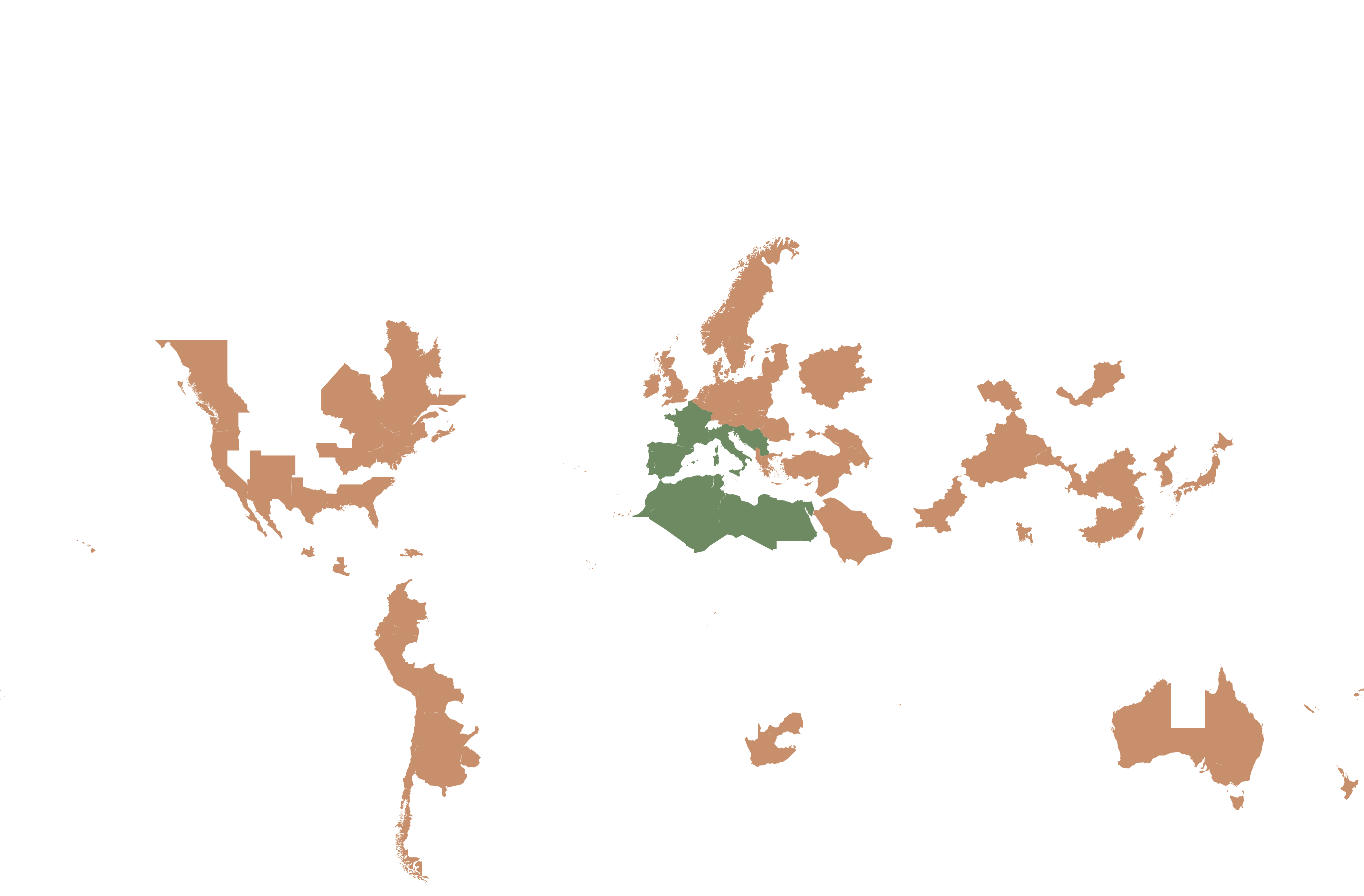
- Native
- Introduced
- Mediterranean
- Africa
History
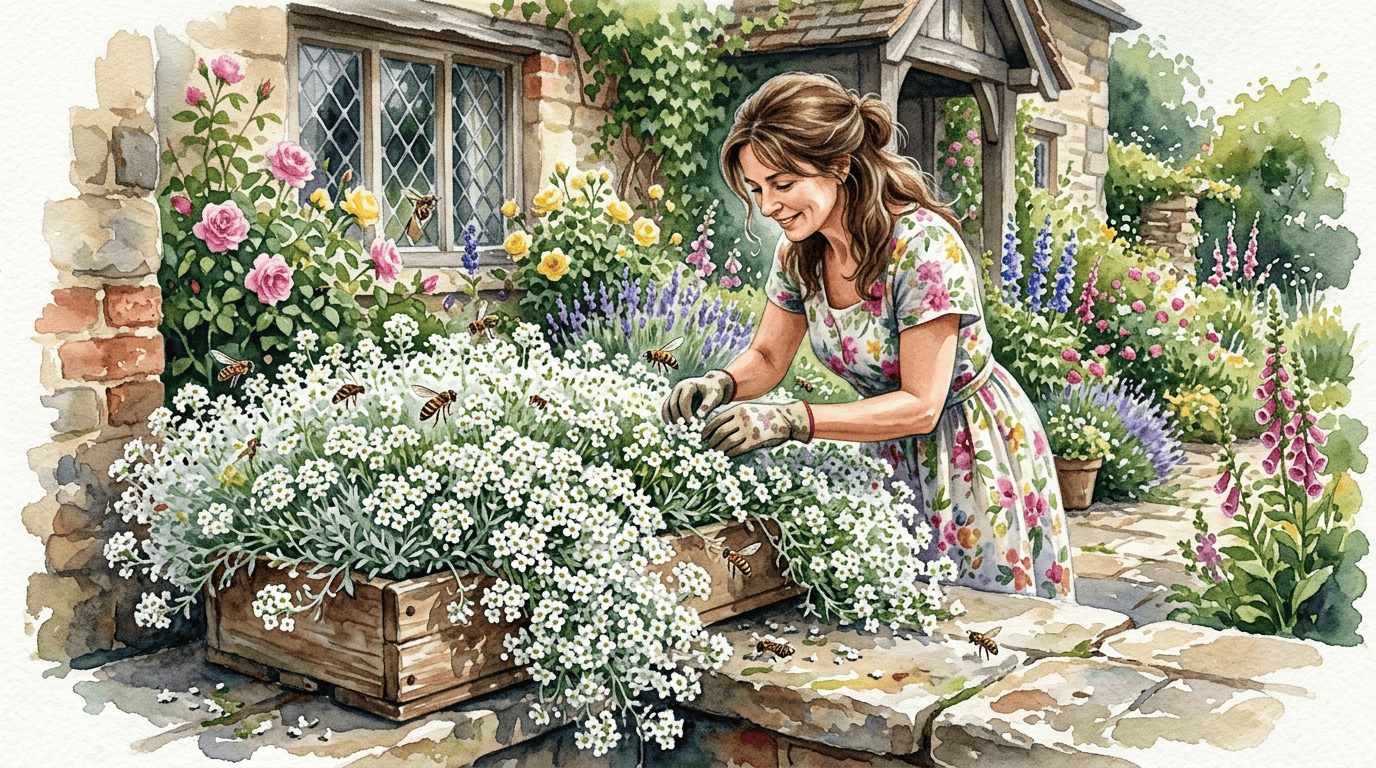
Lobularia maritima, sweet alyssum, is a low-growing annual or short-lived perennial in the mustard family native to Mediterranean coastlines of southern Europe and North Africa. Linnaeus described it as Alyssum maritimum in 1753 before it was transferred to Lobularia in 1842. The plant forms a dense mound of narrow gray-green leaves topped by abundant clusters of four-petaled cruciform flowers in white, pink, purple, or apricot, exuding an intense honey fragrance that attracts hoverflies, bees, and beneficial parasitic wasps.
Victorian English gardeners popularized sweet alyssum across the 19th century for edging, cottage borders, and window boxes. Modern breeding has produced trailing selections such as Snow Princess that bloom nonstop from spring through fall.
It naturalizes along California coasts. Introduced to American gardens by the 1860s from its Mediterranean homeland, Sweet Alyssum became a Victorian favorite for cottage gardens and edging. Modern beneficial-insect research has re-elevated it as a key plant for attracting hoverflies that control aphids in vegetable gardens.
Symbolism & meaning
What It Symbolizes
Sweet Alyssum carries worth beyond beauty, its modest white carpets pouring out a honeyed fragrance far larger than the flowers that produce it. Low-growing and unassuming, it has earned universal love through humble grace rather than spectacle. In its small clouds of bloom, gardeners are reminded that the best gifts in a border often come close to the ground.
- Sweet worth — modest flowers with outsized fragrance
- Humble grace — low-growing but universally beloved
Where the Name Comes From
The name Sweet Alyssum describes its sweet scent or flavor. 'Lobularia' from Latin 'lobulus' meaning small pod, for the seed shape; 'maritima' refers to coastal habitat origin.
Uses & Fun Facts
- Honey-scented cushions perfume edges, paths, and rock gardens
- Tiny flowers feed beneficial hoverflies and parasitic wasps
- Low spreading carpet fills paving cracks and bed edges
- Reliable cool-season spiller for window boxes and mixed pots
Related plants
Plants with similar care
 Chinese AbeliaAbelia chinensis
 Fragrant AbeliaAbelia mosanensis
 Large-Flowered AbeliaAbelia uniflora
 Glossy AbeliaAbelia x grandiflora
Frequently asked questions
How often should I water Sweet Alyssum?
In summer, water about every 3 days; in winter, about every 10 days. Adjust for heat, pot size and drainage.
How much light does Sweet Alyssum need?
Full sun: 6+ hrs direct. Watch the leaves — scorching or stretching means the light needs adjusting.
Is Sweet Alyssum toxic to cats or dogs?
No toxicity has been reported for this plant. Still, it is wise to keep pets from chewing on any houseplant. Educational information, not medical or veterinary advice. If exposure is suspected, contact a doctor or veterinarian.
Is Sweet Alyssum easy to grow?
Yes — it is considered an easy, beginner-friendly plant.
When does Sweet Alyssum bloom?
It typically blooms Mar–Nov in the Northern Hemisphere.
YardMate
Identify any plant in seconds
Snap a photo — YardMate names the plant, diagnoses problems, and reminds you when to water.
Download on the App Store