 YardMate


Chinese Fringe Flower
Loropetalum chinense
Easy · Beginner friendlyAbout Chinese Fringe Flower
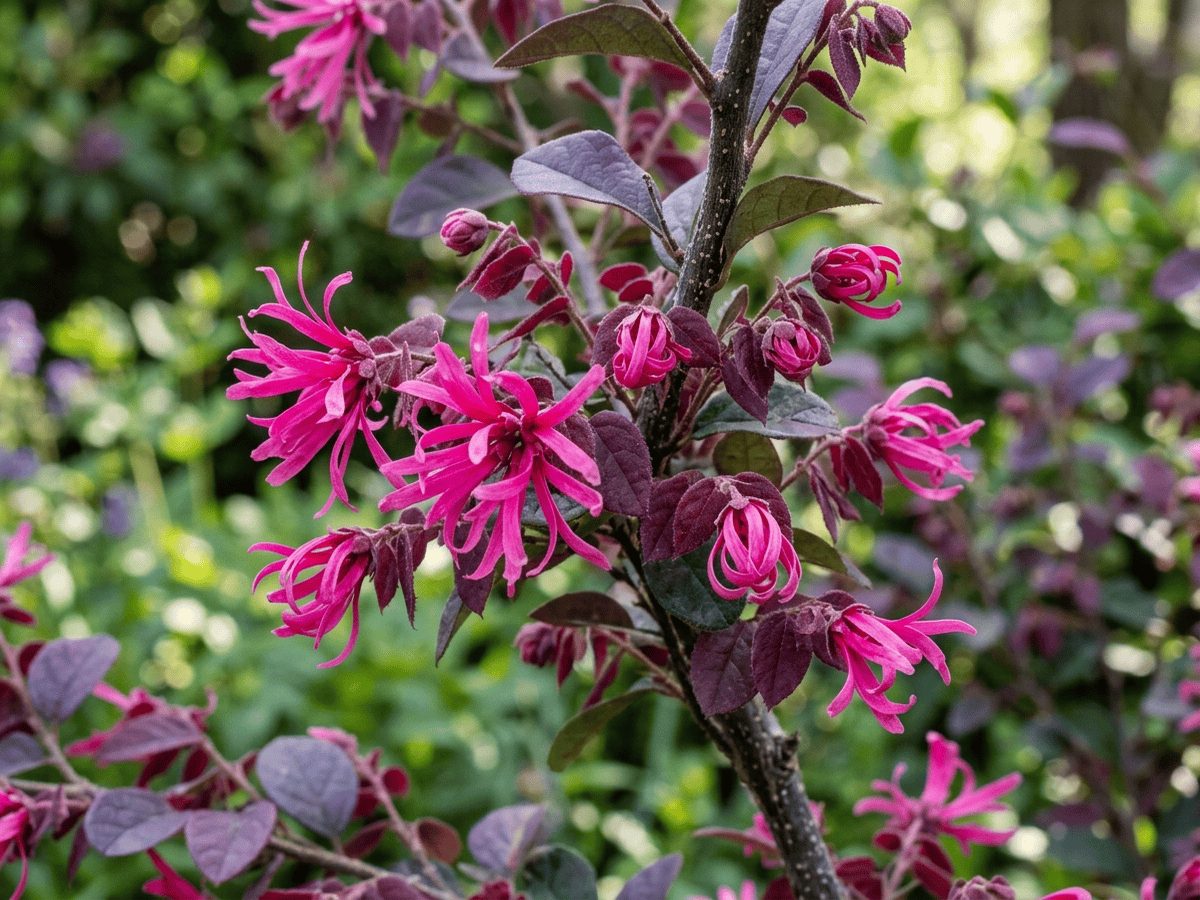
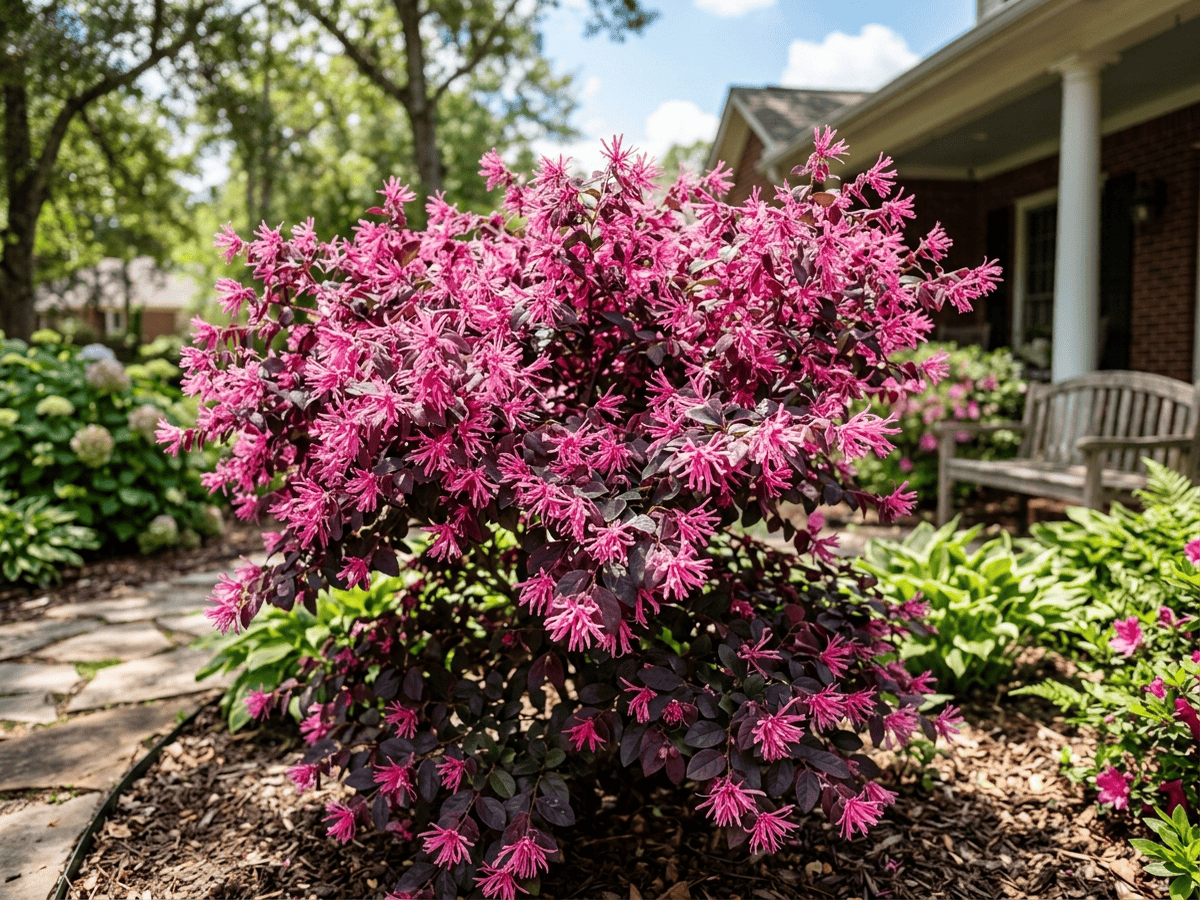
Chinese Fringe Flower is a graceful evergreen shrub from China, Japan, and the Himalayas, growing 6-15 feet tall with arching branches draped in spidery strap-shaped flowers. The species has white flowers and green leaves, but the purple-leaved variety rubrum with hot pink to magenta flowers has become one of the most popular landscape shrubs in the American South. Covered in a haze of fringed flowers in early spring with sporadic rebloom through summer, it adds year-round burgundy foliage color.
- Heat-tolerant
- Evergreen
- Long-blooming
How to care for Chinese Fringe Flower
Watering
- Springevery 7 days
- Summerevery 5 days
- Fallevery 10 days
- Winterevery 21 days
Soil · Acidic · pH 4.5–6
- Top dressingPine needle mulch10%
- Main mixAcid-lover mix + peat 3:175%
- DrainageGravel15%
Never add lime or wood ash — it cancels out the acidity.
FERTILIZER
Acid-Loving Feed 4-3-4
One bag does both jobs. An acid feed carries the usual nitrogen, phosphorus and potassium, plus the sulfur and iron that keep the soil sour enough for the roots to take them up at all.
- Nitrogen · Leaves
- Phosphorus · Roots + Blooms
- Potassium · Strength
- Springevery 30 days
At a Glance
- NativeEast Asia
- Height6–10 ft (1.8–3 m)
- Spread6–10 ft (1.8–3 m)
- Flower colorPink, White, Red
- Foliage colorGreen, Red, Purple, Bronze
- SoilLoamy, Well-drained, Acidic
- LocationsYard
Bloom time
BLOOM CYCLE
Peak bloom
Mar, Apr, Jun, Jul, Aug
Hot pink fringed flowers March to April; sporadic rebloom through summer
Fragrance
LIGHT FRAGRANCE
The flowers have a mild sweet scent.
Toxicity
No toxicity has been reported for this plant. Still, it is wise to keep pets from chewing on any houseplant.
Educational information, not medical or veterinary advice. If exposure is suspected, contact a doctor or veterinarian.
DISTRIBUTION


- Native
- Introduced
- East Asia
History

Loropetalum chinense is native to southern and central China, northeastern India, Myanmar, northern Thailand, Laos, Vietnam, and Japan. Scottish botanist Robert Brown described the species in 1818. The genus name Loropetalum means strap-petal from Greek loron (strap), describing the narrow ribbon-like four petals—a shared characteristic with its witch hazel family cousin Hamamelis.
For over a century only the white-flowered green-leaved wild-type species was known in Western cultivation, and it remained a minor garden plant. In 1989 the striking purple-leaved, hot-pink-flowered variety rubrum was introduced to North America from Chinese nurseries through the US National Arboretum, transforming the genus's horticultural status almost overnight. Cultivars 'Blush' ('Razzleberri'), 'Burgundy', 'Ruby', 'Zhuzhou Fuchsia', 'Plum Delight', and the compact 'Purple Pixie' and 'Purple Diamond' became enormously popular across the southeastern United States for their year-round burgundy foliage and spring-and-reblooming pink flowers.
The species is hardy to about zone 7. Native to woodlands of southeastern China, Japan, and the eastern Himalayas. The purple-leaved form was discovered in Japan and introduced to American nurseries in the 1980s, where it rapidly became a best-seller across the South. Cultivars like 'Ruby' (compact), 'Zhuzhou Fuchsia' (tall), and 'Purple Diamond' span a range of sizes. It is now the most widely planted ornamental shrub in the southeastern US, rivaling azaleas and camellias in popularity.
Symbolism & meaning
What It Symbolizes
Chinese Fringe Flower carries whimsy, its fringed ribbon-like flowers fluttering on bare branches like tiny celebratory streamers. Distinctive purple foliage adds another layer of distinction, setting it apart from any other shrub on the lot. Equal parts party decoration and quietly sophisticated planting, it is a shrub that refuses to choose between playful and refined.
- Whimsy — fringed ribbon-like flowers flutter in the breeze
- Distinction — unique purple foliage stands out in any landscape
Where the Name Comes From
'Loropetalum' from Greek 'loron' (strap) and 'petalon' (petal), referring to the ribbon-like flower petals; 'chinense' refers to its Chinese origin.
Uses & Fun Facts
- Burgundy-leaved growth trimmed into colorful Southern hedges
- Fringed pink flowers and dark foliage as garden focal shrub
- Year-round purple foliage with spring fringe-flower display
Related plants
Plants with similar care
 Chinese AbeliaAbelia chinensis
 Fragrant AbeliaAbelia mosanensis
 Large-Flowered AbeliaAbelia uniflora
 Glossy AbeliaAbelia x grandiflora
Frequently asked questions
How often should I water Chinese Fringe Flower?
In summer, water about every 5 days; in winter, about every 21 days. Adjust for heat, pot size and drainage.
How much light does Chinese Fringe Flower need?
Full sun: 6+ hrs direct. Watch the leaves — scorching or stretching means the light needs adjusting.
Is Chinese Fringe Flower toxic to cats or dogs?
No toxicity has been reported for this plant. Still, it is wise to keep pets from chewing on any houseplant. Educational information, not medical or veterinary advice. If exposure is suspected, contact a doctor or veterinarian.
Is Chinese Fringe Flower easy to grow?
Yes — it is considered an easy, beginner-friendly plant.
When does Chinese Fringe Flower bloom?
It typically blooms Mar, Apr, Jun, Jul, Aug in the Northern Hemisphere.
YardMate
Identify any plant in seconds
Snap a photo — YardMate names the plant, diagnoses problems, and reminds you when to water.
Download on the App Store