 YardMate


Rose Campion
Lychnis coronaria
Easy · Beginner friendlyAbout Rose Campion
Rose Campion is a Mediterranean short-lived perennial often grown as a biennial or annual in American gardens, prized for its silvery-woolly foliage and brilliant magenta five-petal flowers. Growing 2 to 3 feet tall on branched stems, it blooms in early summer with vivid 1-inch flowers that glow against the gray felted leaves. Self-sows abundantly, creating drifts in cottage gardens and perennial borders across the US.
- Drought-tolerant
- Deer-resistant
- Pollinator-friendly
How to care for Rose Campion
Watering
- Springevery 7 days
- Summerevery 10 days
- Fallevery 14 days
- Winterevery 21 days
Soil · Well-draining
- Top dressingPine bark mulch10%
- Main mixPotting soil + perlite 2:170%
- DrainageLECA / gravel20%
Never skip the drainage layer — standing water is the top cause of root rot.
FERTILIZER
- Springevery 60 days
- Fallevery 60 days
At a Glance
- NativeNorth America, Western Asia, Europe
- Height2–3 ft (0.6–0.9 m)
- Spread1–1.5 ft (0.3–0.5 m)
- Flower colorPurple, Pink, White, Red
- Foliage colorSilver, Variegated
- SoilLoamy, Well-drained
- LocationsYard
Bloom time
BLOOM CYCLE
Peak bloom
May–Jul
Brilliant magenta flowers late May through July
Toxicity
Humans Slight · Pets Slight
saponins
Slight
- Leaf
- Seed
- Ingestion
EXPOSURE Eating leaves and seeds.
EFFECT Saponins and may cause mild GI upset in quantity.
NOTE Documented concern for humans: Saponins and may cause mild GI upset in quantity.
Slight
- Leaf
- Seed
- Ingestion
EXPOSURE Eating leaves and seeds.
EFFECT Saponins may cause vomiting and diarrhea.
NOTE Not specifically listed by ASPCA; saponins are irritating to GI tract.
Slight
- Leaf
- Seed
- Ingestion
EXPOSURE Eating leaves and seeds.
EFFECT Saponins may cause vomiting and diarrhea.
NOTE Not specifically listed by ASPCA; saponins are irritating to GI tract.
Educational information, not medical or veterinary advice. If exposure is suspected, contact a doctor or veterinarian.
DISTRIBUTION

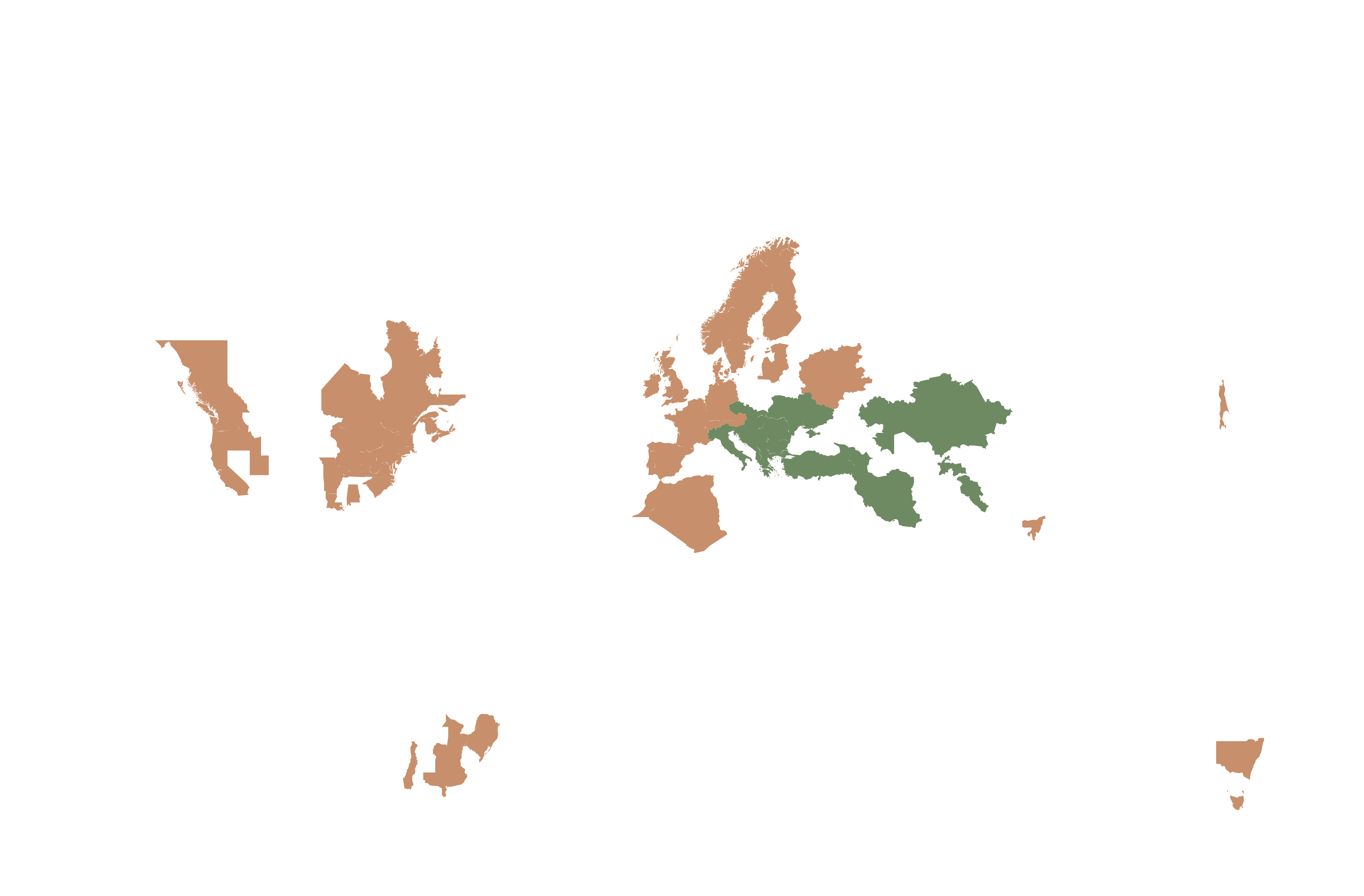
- Native
- Introduced
- North America
- Western Asia
- Europe
History

Lychnis coronaria, now taxonomically placed as Silene coronaria, is a short-lived perennial or biennial native to southeastern Europe and Asia Minor, particularly the Balkans, Turkey, and the Caucasus. Ancient Greek and Roman cultures used the silvery-leaved plant to weave into chaplets and wreaths worn at celebrations and religious festivals; the epithet coronaria reflects this crown use, and the common name Flower of Jove comes from the same tradition. Medieval European herbalists and monastic gardeners continued growing it, and by the Renaissance it was a cottage garden staple across England and northern Europe.
Modern cultivars include Alba, Atrosanguinea, and Gardeners' World, with silvery woolly foliage and flowers ranging from intense magenta to clear white, making striking silver-and-pink or silver-and-white border combinations. Cultivated in European gardens since medieval times, brought to American colonial gardens by the 1600s and naturalized in parts of the northeast.
Thomas Jefferson grew it at Monticello, and it remains a staple of American cottage and heritage gardens for its silver foliage and hot magenta blooms.
Symbolism & meaning
What It Symbolizes
Rose campion's silver glow is unforgettable — gray felted leaves making the magenta flowers blaze even brighter, an unrequited love that simply will not be ignored. Its history reaches back to ancient Greece, where its blooms were woven into festive wreaths, joining athletic and religious garlands. The Victorian language of flowers later assigned it a sadder meaning, but the plant itself remains exuberantly, almost defiantly bright.
- Silver glow — gray felted leaves make magenta flowers pop
- Ancient wreath — used in Greek festive garlands
Where the Name Comes From
The name Rose Campion describes its rose-like blooms. 'Lychnis' from Greek 'lychnos' meaning lamp, for the glowing flower color; 'coronaria' means suitable for garlands, referring to ancient Greek use in festive crowns.
Uses & Fun Facts
- Magenta flowers float above silvery woolly foliage in sunny borders
- Bright blooms attract butterflies and long-tongued bees
Related plants
Plants with similar care
 Chinese AbeliaAbelia chinensis
 Fragrant AbeliaAbelia mosanensis
 Large-Flowered AbeliaAbelia uniflora
 Glossy AbeliaAbelia x grandiflora
Frequently asked questions
How often should I water Rose Campion?
In summer, water about every 10 days; in winter, about every 21 days. Adjust for heat, pot size and drainage.
How much light does Rose Campion need?
Full sun: 6+ hrs direct. Watch the leaves — scorching or stretching means the light needs adjusting.
Is Rose Campion toxic to cats or dogs?
Pets Slight (Dogs Slight · Cats Slight) Educational information, not medical or veterinary advice. If exposure is suspected, contact a doctor or veterinarian.
Is Rose Campion easy to grow?
Yes — it is considered an easy, beginner-friendly plant.
When does Rose Campion bloom?
It typically blooms May–Jul in the Northern Hemisphere.
YardMate
Identify any plant in seconds
Snap a photo — YardMate names the plant, diagnoses problems, and reminds you when to water.
Download on the App Store