 YardMate


Purple Loosestrife
Lythrum salicaria
Easy · Beginner friendlyAbout Purple Loosestrife
Purple Loosestrife is a Eurasian perennial wetland plant one of the most notorious invasive species in North American wetlands. Growing 3 to 7 feet tall in dense monoculture stands with lance-shaped leaves and tall spikes of brilliant magenta-purple flowers in summer, it dominates marshes, wet meadows, and shorelines across the northern US. Listed as noxious in nearly every state, causing catastrophic damage to native wetland ecosystems.
- Pollinator-friendly
- Long-blooming
- Fast-growing
How to care for Purple Loosestrife
Watering
- Springevery 7 days
- Summerevery 7 days
- Fallevery 10 days
- Winterevery 14 days
Soil · Bog-wet
- WaterStanding water above soil20%
- SoilHeavy pond soil80%
No drainage layer — keep water standing above the soil.
FERTILIZER
This plant needs little to no feeding.
At a Glance
- NativeEurope
- Height3–6 ft (0.9–1.8 m)
- Spread2–4 ft (0.6–1.2 m)
- Flower colorPurple, Pink
- Foliage colorGreen
- SoilMoisture-retentive, Loamy
- LocationsYard
Bloom time
BLOOM CYCLE
Peak bloom
Jul–Sep
Tall magenta-purple flower spikes July to September
Toxicity
Humans Safe · Pets Safe
tannins
Safe
EXPOSURE No exposure route is reported.
EFFECT No toxic effect is reported.
NOTE Listed as non-toxic for humans; avoid eating ornamental plants unless confirmed edible.
Safe
EXPOSURE No exposure route is reported.
EFFECT No toxic effect is reported.
NOTE Listed as non-toxic for dogs; avoid eating ornamental plants unless confirmed edible.
Safe
EXPOSURE No exposure route is reported.
EFFECT No toxic effect is reported.
NOTE Listed as non-toxic for cats; avoid eating ornamental plants unless confirmed edible.
Educational information, not medical or veterinary advice. If exposure is suspected, contact a doctor or veterinarian.
DISTRIBUTION

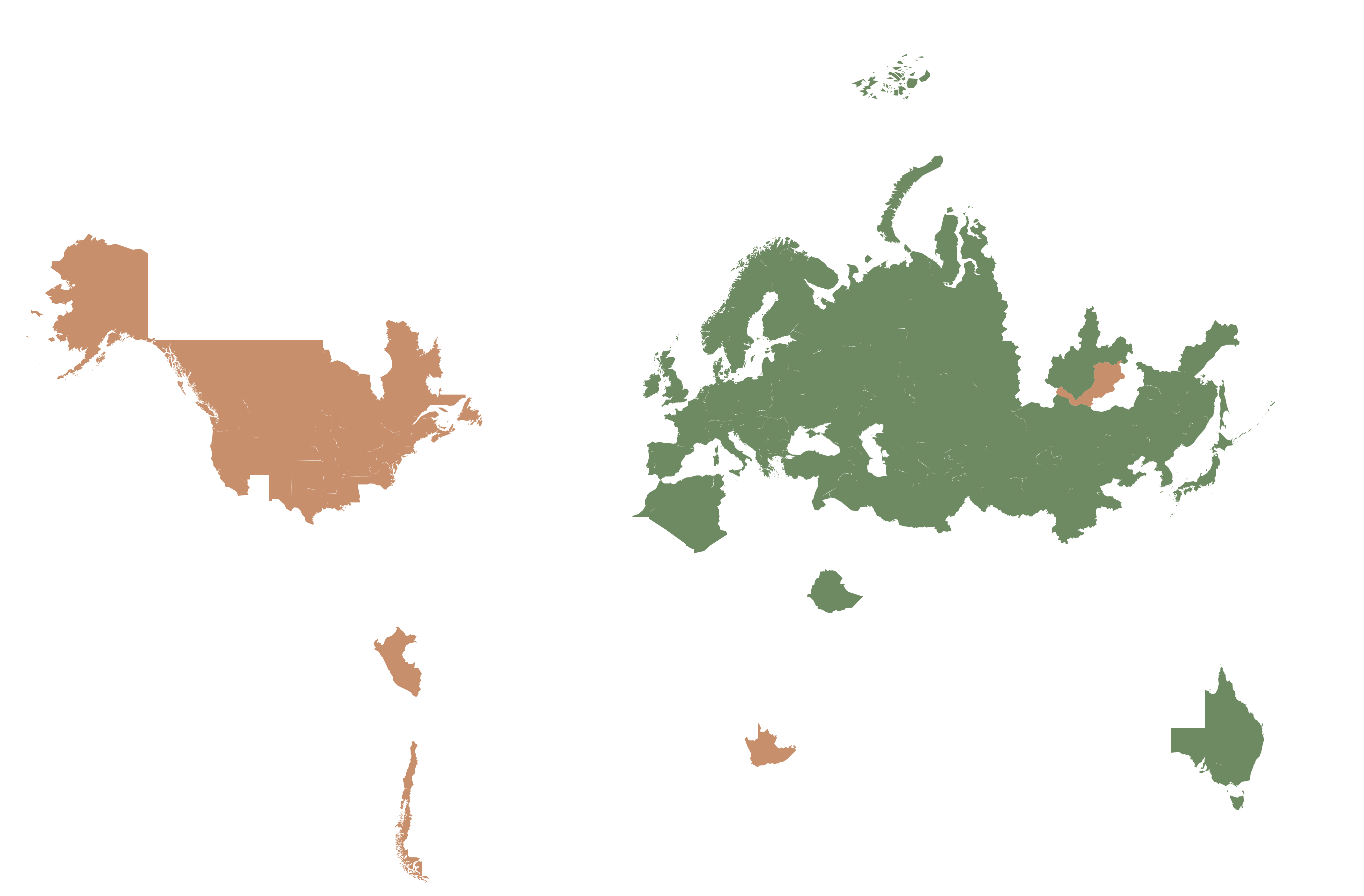
- Native
- Introduced
- Europe
History
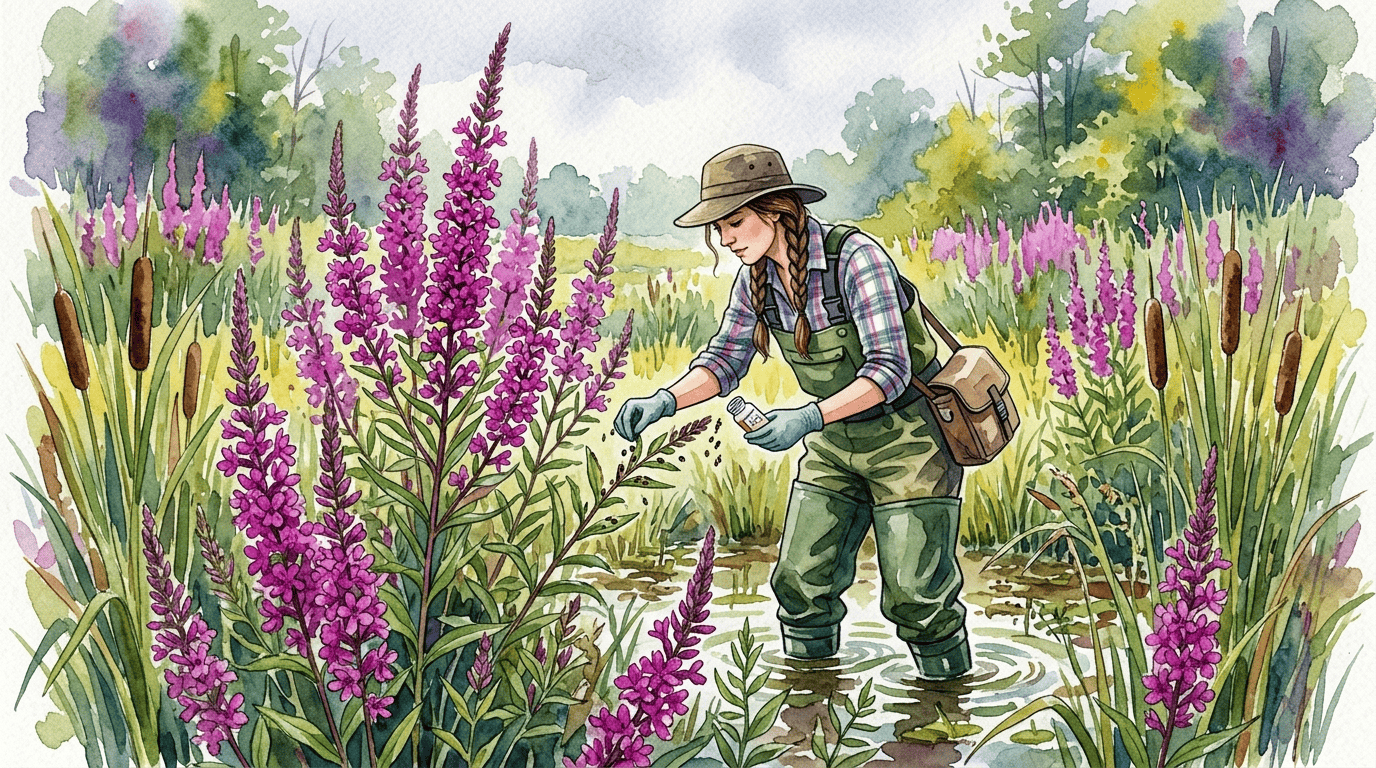
Lythrum salicaria, purple loosestrife, is a rhizomatous perennial native across Europe and temperate Asia, reaching two meters with long tapering spikes of magenta flowers. European apothecaries used the astringent roots and leaves for diarrhea and wounds, and Linnaeus described the species' unusual tristylous breeding system in 1753, later famously analyzed by Charles Darwin. Seeds arrived in North American ports in ship ballast in the early 1800s, and by the mid-twentieth century the plant had colonized wetlands from the Atlantic coast to the prairie provinces, displacing cattails and sedges and reducing waterfowl habitat.
Starting in 1992, biological control releases of four Galerucella leaf beetles from Europe have dramatically reduced purple loosestrife populations across much of its invaded range, a success often cited in biocontrol textbooks. Now dominates millions of acres of American wetlands from New England to the Pacific Northwest, crowding out cattails and native wetland plants that wildlife depend on.
Listed noxious in nearly every state and illegal to sell or plant in most.
Symbolism & meaning
What It Symbolizes
Purple Loosestrife is often read as a flower of beautiful destruction, its stunning magenta spires hiding a catastrophic ecological impact. It has dominated millions of acres of US wetlands, choking out native cattails, sedges, and the wildlife that once depended on them. It signals the painful contradiction of invasive beauty, a reminder that loveliness alone is no measure of belonging, and that some of the prettiest meadows are also the most wounded.
- Beautiful destruction — stunning flowers, catastrophic impact
- Wetland takeover — dominates millions of US wetland acres
Where the Name Comes From
The common name highlights its purple coloring. 'Lythrum' from Greek 'lythron' meaning gore, for the flower color; 'salicaria' from Latin 'salix' meaning willow, for willow-like leaves.
Related plants
Plants with similar care
 Chinese AbeliaAbelia chinensis
 Fragrant AbeliaAbelia mosanensis
 Large-Flowered AbeliaAbelia uniflora
 Glossy AbeliaAbelia x grandiflora
Frequently asked questions
How often should I water Purple Loosestrife?
In summer, water about every 7 days; in winter, about every 14 days. Adjust for heat, pot size and drainage.
How much light does Purple Loosestrife need?
Full sun: 6+ hrs direct. Watch the leaves — scorching or stretching means the light needs adjusting.
Is Purple Loosestrife toxic to cats or dogs?
Pets Safe (Dogs Safe · Cats Safe) Educational information, not medical or veterinary advice. If exposure is suspected, contact a doctor or veterinarian.
Is Purple Loosestrife easy to grow?
Yes — it is considered an easy, beginner-friendly plant.
When does Purple Loosestrife bloom?
It typically blooms Jul–Sep in the Northern Hemisphere.
YardMate
Identify any plant in seconds
Snap a photo — YardMate names the plant, diagnoses problems, and reminds you when to water.
Download on the App Store