 YardMate

Leatherleaf Mahonia
Mahonia bealei
Easy · Beginner friendlyAbout Leatherleaf Mahonia
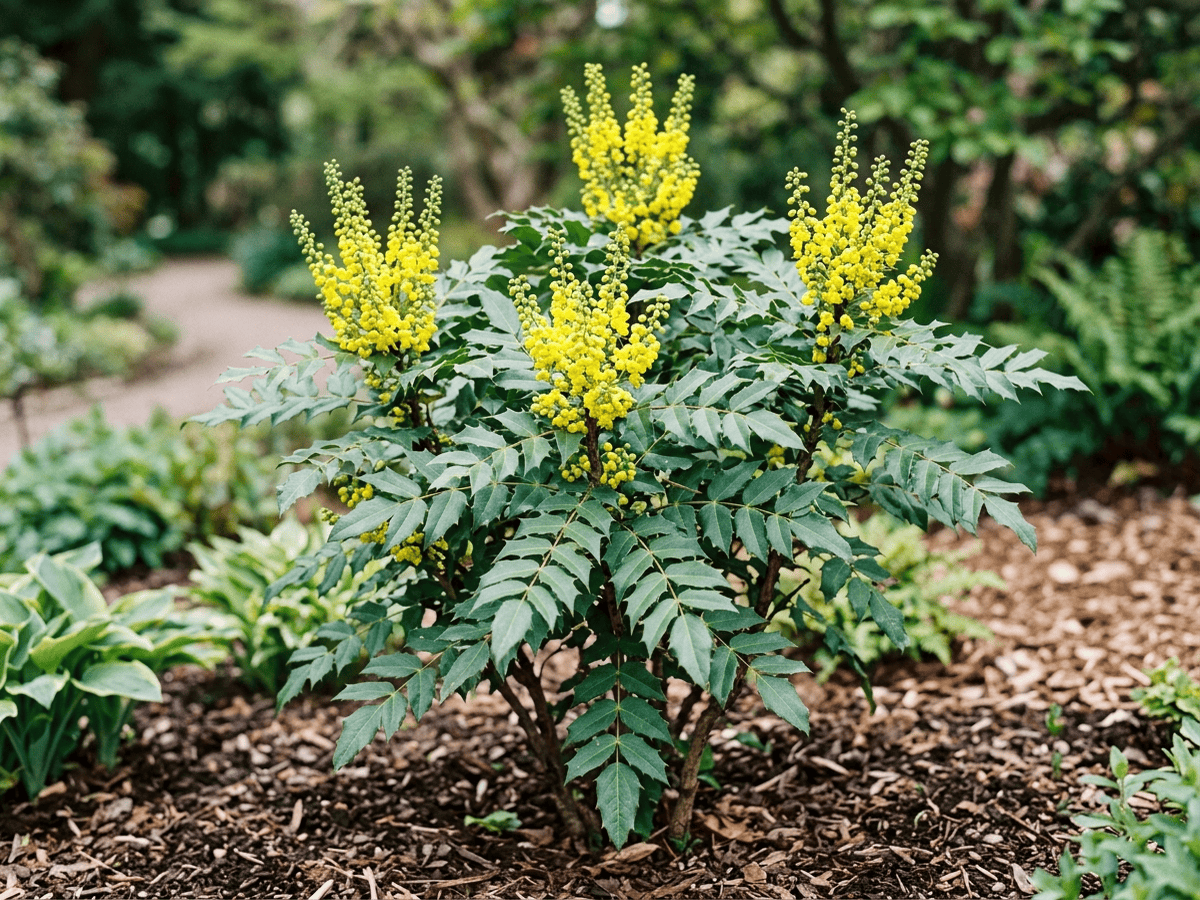
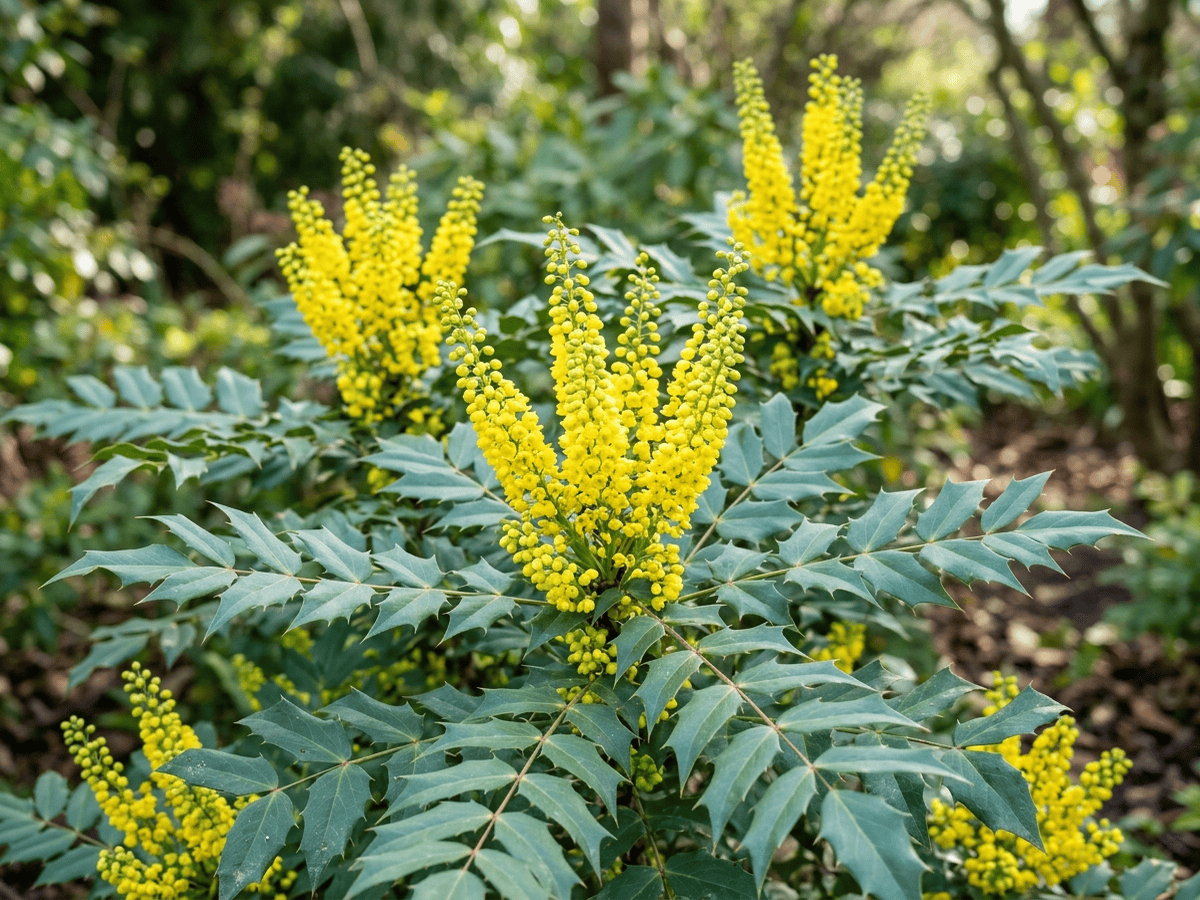
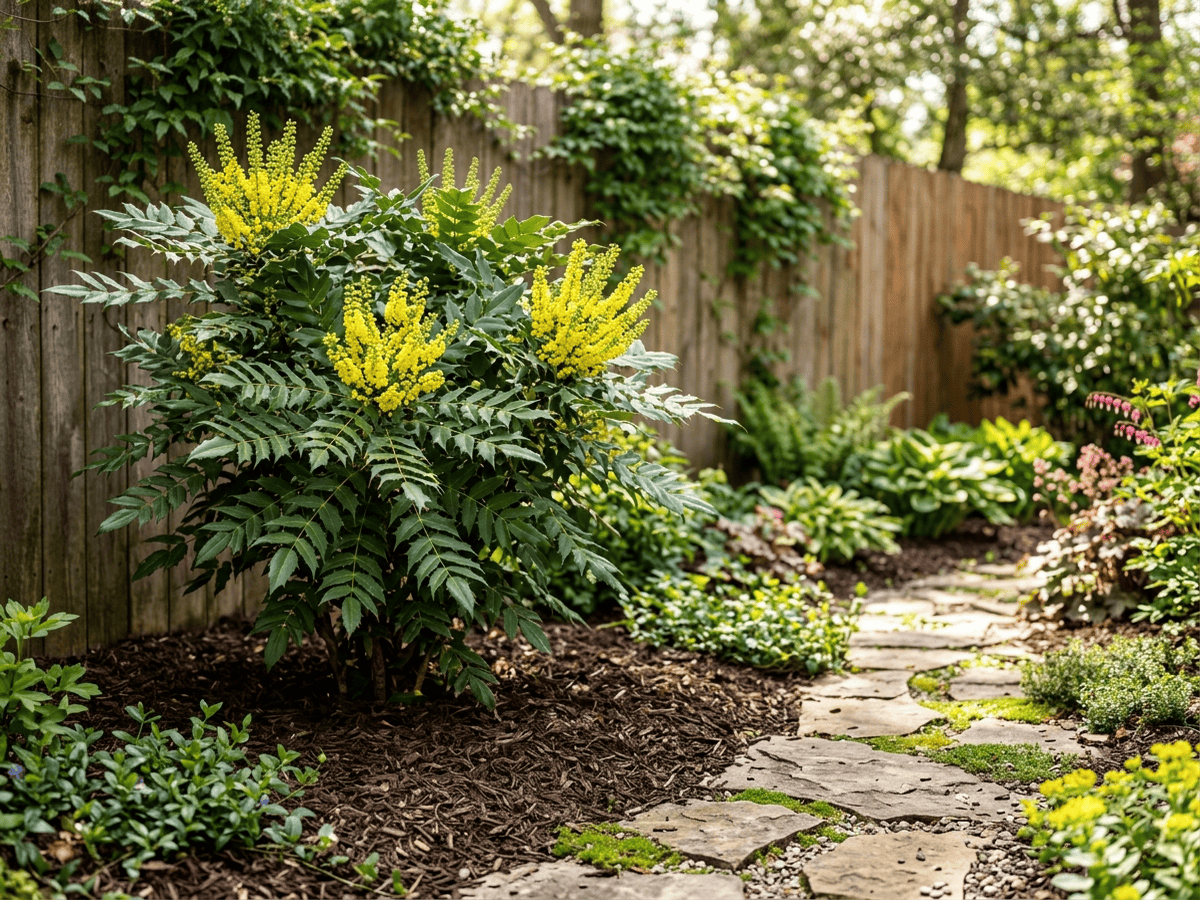
Leatherleaf Mahonia is a bold architectural evergreen shrub from China, growing 5-10 feet tall with dramatic compound leaves composed of large spiny blue-green leaflets arranged like holly. In late winter, upright clusters of fragrant lemon-yellow flowers appear at the branch tips, followed by grape-like clusters of dusty blue berries. The bold texture and winter bloom make it a standout plant for shade gardens across the southeastern United States. Its structural presence is unmatched among shade-tolerant shrubs.
- Fragrant
- Shade-tolerant
- Evergreen
- Architectural
How to care for Leatherleaf Mahonia
Watering
- Springevery 7 days
- Summerevery 5 days
- Fallevery 10 days
- Winterevery 21 days
Soil · Well-draining
- Top dressingPine bark mulch10%
- Main mixPotting soil + perlite 2:170%
- DrainageLECA / gravel20%
Never skip the drainage layer — standing water is the top cause of root rot.
FERTILIZER
Balanced Feed 14-14-14
An even feed covers all three needs at once, keeping leaves, roots and blooms moving together with nothing pushed out of balance.
- Nitrogen · Leaves
- Phosphorus · Roots + Blooms
- Potassium · Strength
- Springevery 30 days
At a Glance
- NativeEast Asia
- Height6–10 ft (1.8–3 m)
- Spread4–7 ft (1.2–2.1 m)
- Flower colorYellow
- Foliage colorDark-green, Green, Blue-green
- Fruit colorBlue
- SoilWell-drained, Loamy, Acidic
- LocationsYard
Bloom time
BLOOM CYCLE
Peak bloom
Jan–Mar
Fragrant lemon-yellow clusters January to March
Fragrance
STRONG FRAGRANCE
Sweet lily-of-the-valley fragrance in winter bloom.
Toxicity
Humans Slight · Pets Slight
berberine and mahonine
Slight
- Fruit
- Root
- Bark
- Ingestion
EXPOSURE Eating fruit, roots, and bark.
EFFECT Mild GI upset from berberine alkaloids.
NOTE Contains berberine (traditional medicinal use); mildly toxic in large amounts. Spiny leaves pose physical hazard.
Slight
- Fruit
- Leaf
- Ingestion
EXPOSURE Eating fruit and leaves.
EFFECT Mild GI upset.
NOTE Contains berberine (traditional medicinal use); mildly toxic in large amounts. Spiny leaves pose physical hazard.
Slight
- Fruit
- Leaf
- Ingestion
EXPOSURE Eating fruit and leaves.
EFFECT Mild GI upset.
NOTE Contains berberine (traditional medicinal use); mildly toxic in large amounts. Spiny leaves pose physical hazard.
Educational information, not medical or veterinary advice. If exposure is suspected, contact a doctor or veterinarian.
DISTRIBUTION


- Native
- Introduced
- East Asia
History
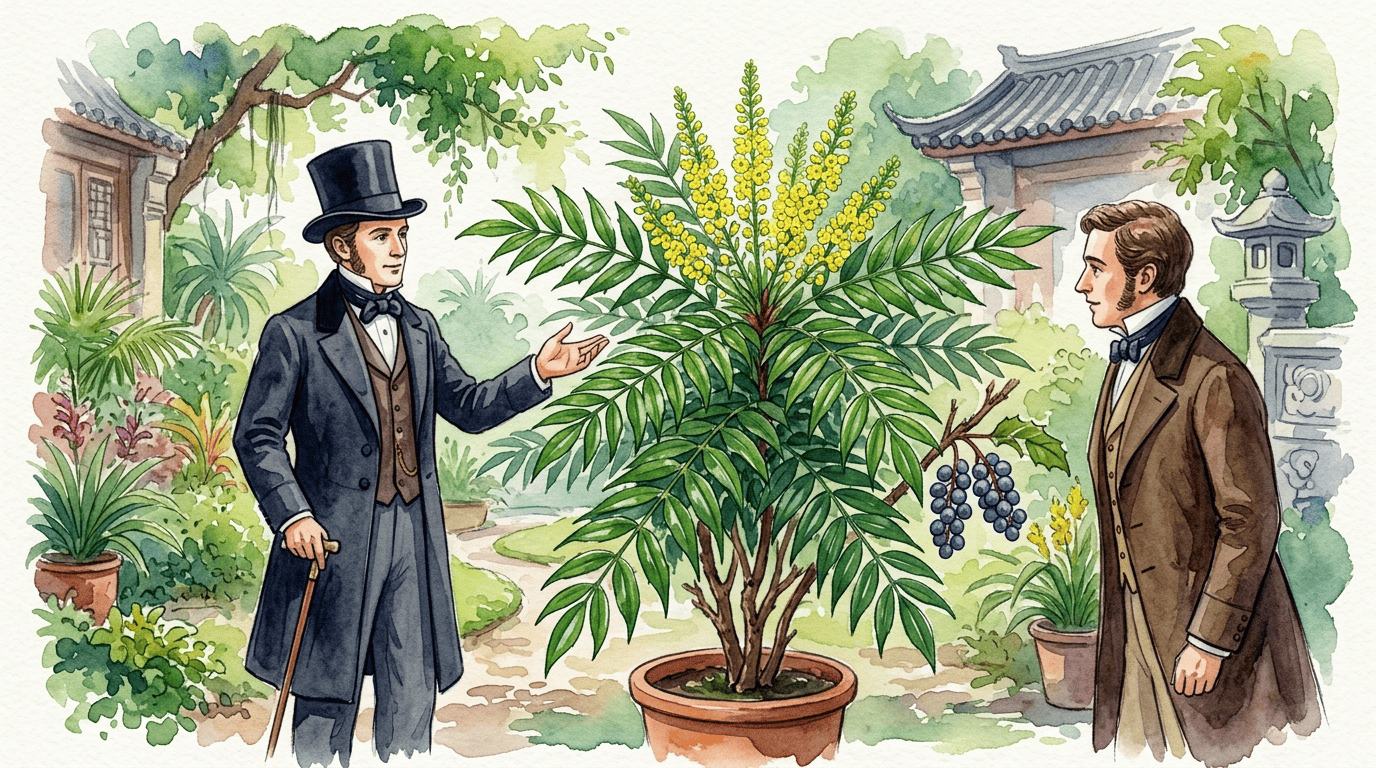
Mahonia bealei is native to western and central China (Hubei, Sichuan, Guizhou, Yunnan). Scottish plant collector Robert Fortune introduced it to Britain in 1849 from Chinese gardens, and French botanist Élie-Abel Carrière formally described it in 1854, naming it for Thomas Chaye Beale, a British merchant and amateur horticulturist based in Shanghai who cultivated many rare Chinese plants in his garden. The species has long glossy dark green compound leaves with 9-15 thick, spiny, leatherleaf leaflets.
In late winter (January-March) it produces upright racemes of bright lemon-yellow flowers with a powerful sweet fragrance—a rare winter treat. Blue-black grape-like berries follow. Widely planted in the southeastern United States from the 1960s onward, the species escaped cultivation via bird-dispersed seeds and is now classified as invasive in many southeastern and Gulf states, where it displaces native forest understory plants.
Mahonia eurybracteata 'Soft Caress' and M. x media 'Winter Sun' are increasingly recommended as sterile non-invasive alternatives. Named after Thomas C. The genus honors Bernard McMahon, the Philadelphia nurseryman who first cultivated plants from the Lewis and Clark expedition. Despite this, it remains valued for its unrivaled combination of bold texture, winter bloom, and shade tolerance.
Symbolism & meaning
What It Symbolizes
Leatherleaf Mahonia is a study in Strength — bold, spiny architectural foliage that holds its ground beneath dark evergreens where almost nothing else thrives. Its Generosity is most visible in winter, when fragrant yellow flowers open in cold months that offer pollinators little else. A shrub that gives most when the garden has the least to share.
- Strength — bold spiny architecture standing firm in shade
- Generosity — winter flowers when other plants offer nothing
Where the Name Comes From
'Mahonia' honors Bernard McMahon (1775–1816), Irish-American horticulturist; 'bealei' honors Thomas C. Beale, who introduced it from China.
Uses & Fun Facts
- Yellow winter flower racemes carry sweet honey scent
- Architectural holly-like leaves and blue berry clusters
- Late berries feed thrushes and overwintering songbirds
- Spiny foliage makes effective barrier in shade
Related plants
More Mahonia plants
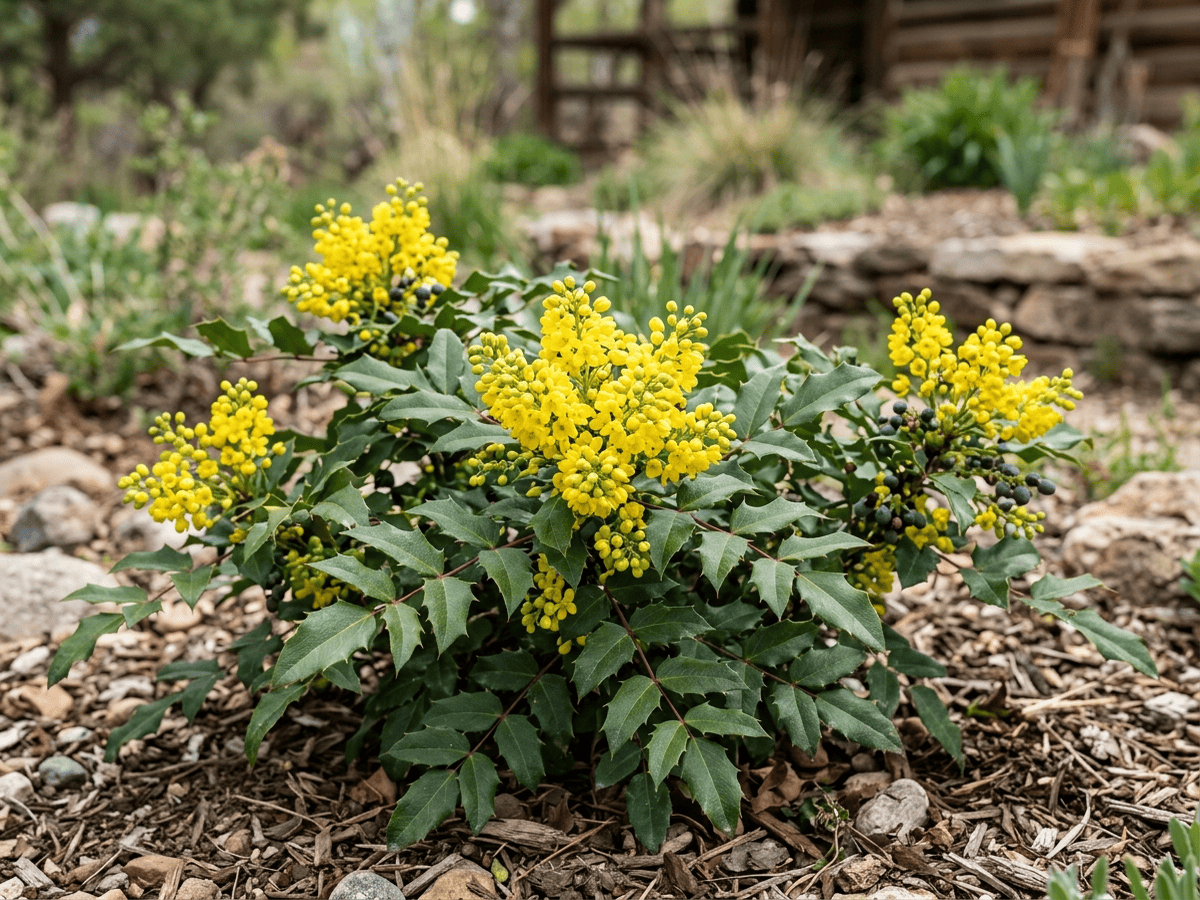
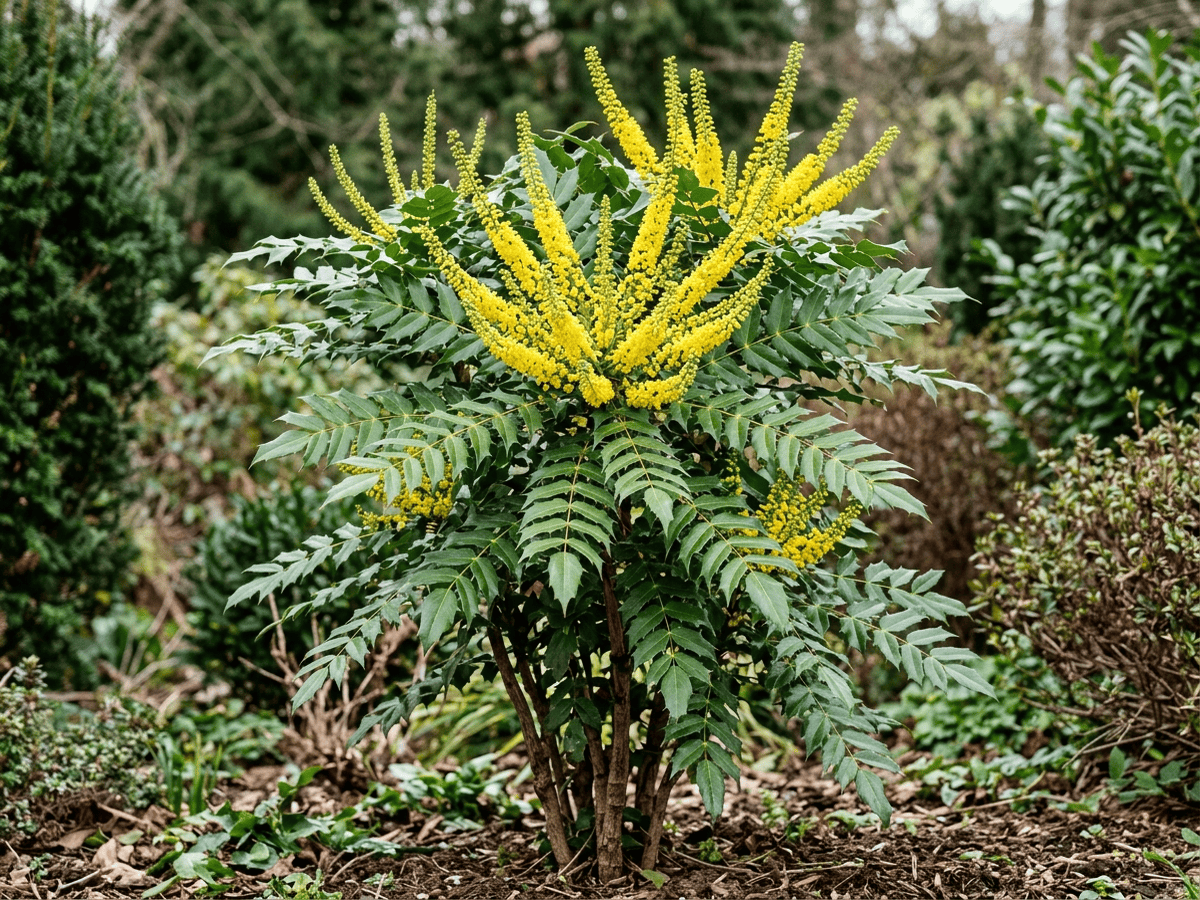
Plants with similar care
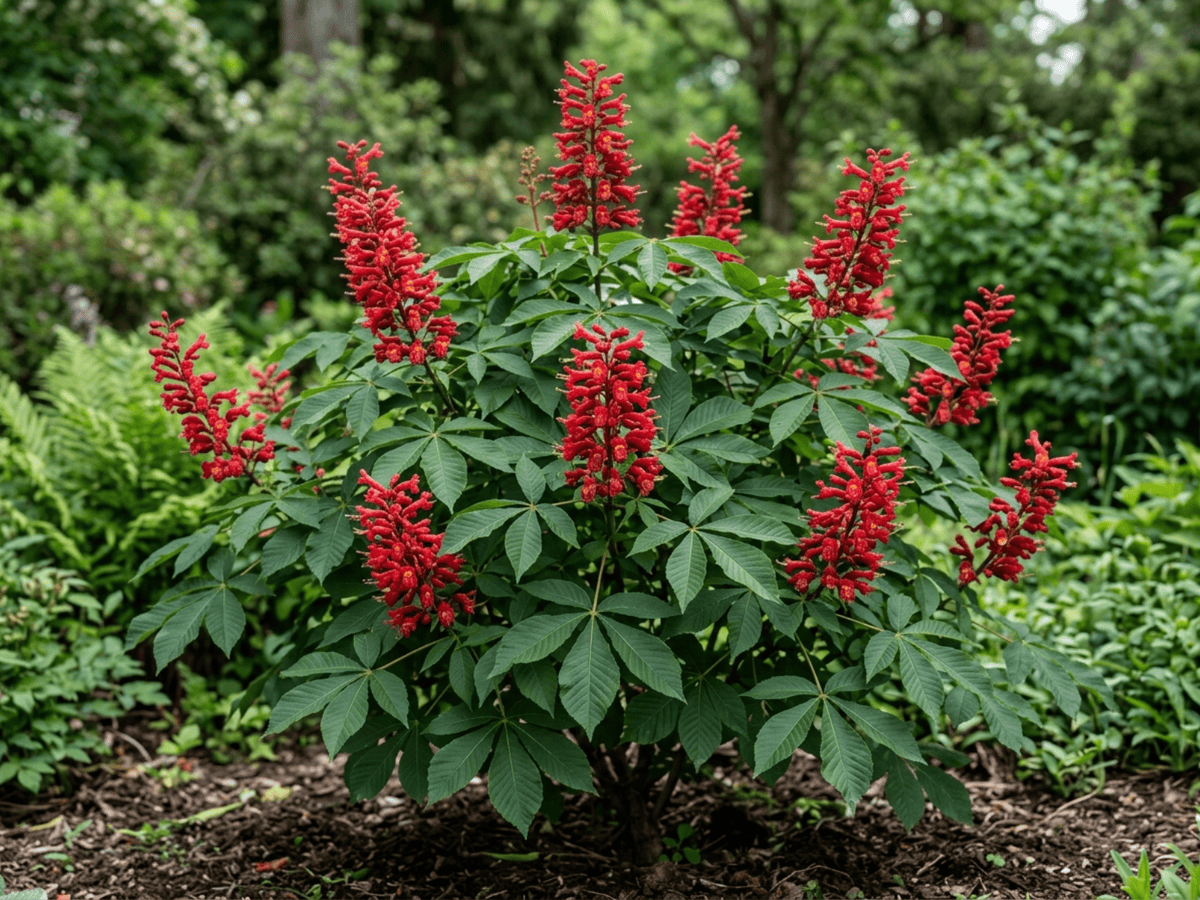 Red BuckeyeAesculus pavia
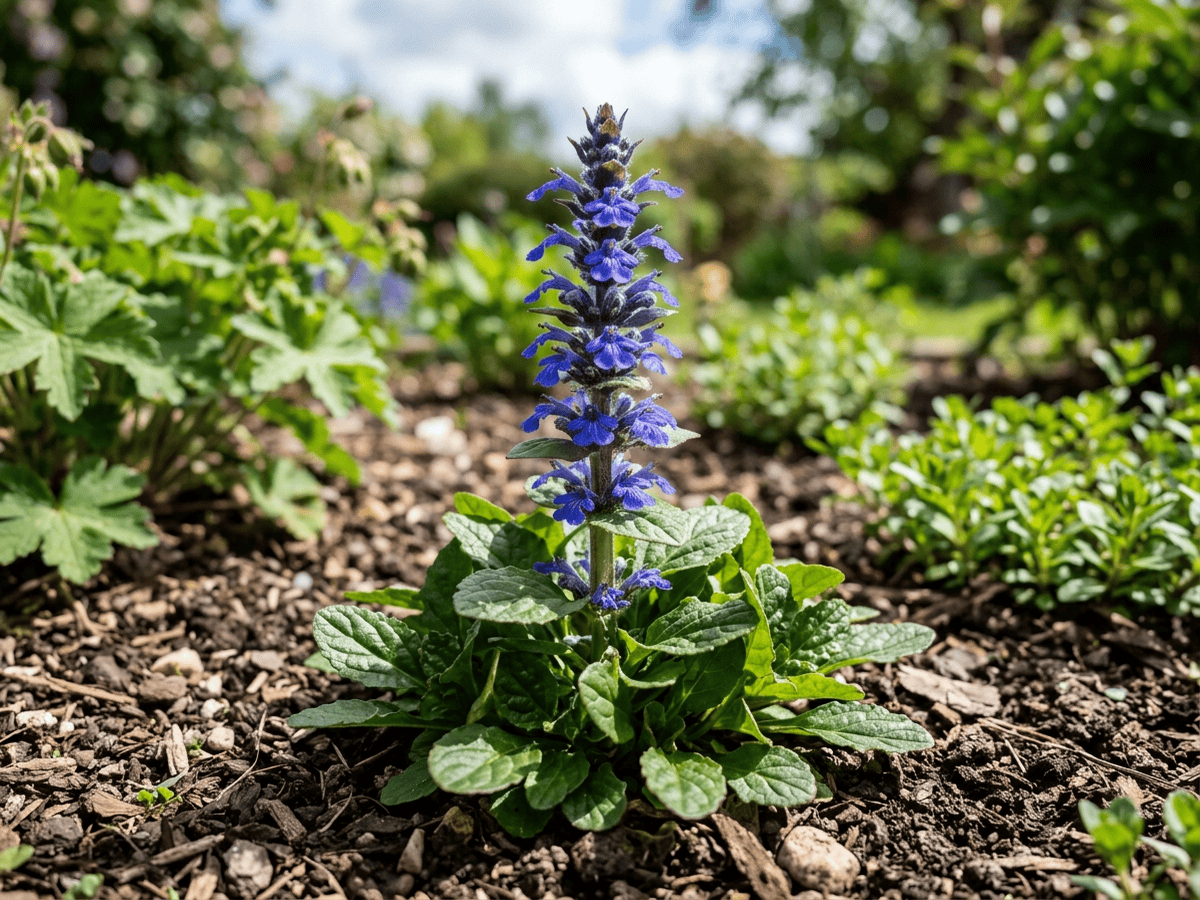 Blue BugleAjuga genevensis
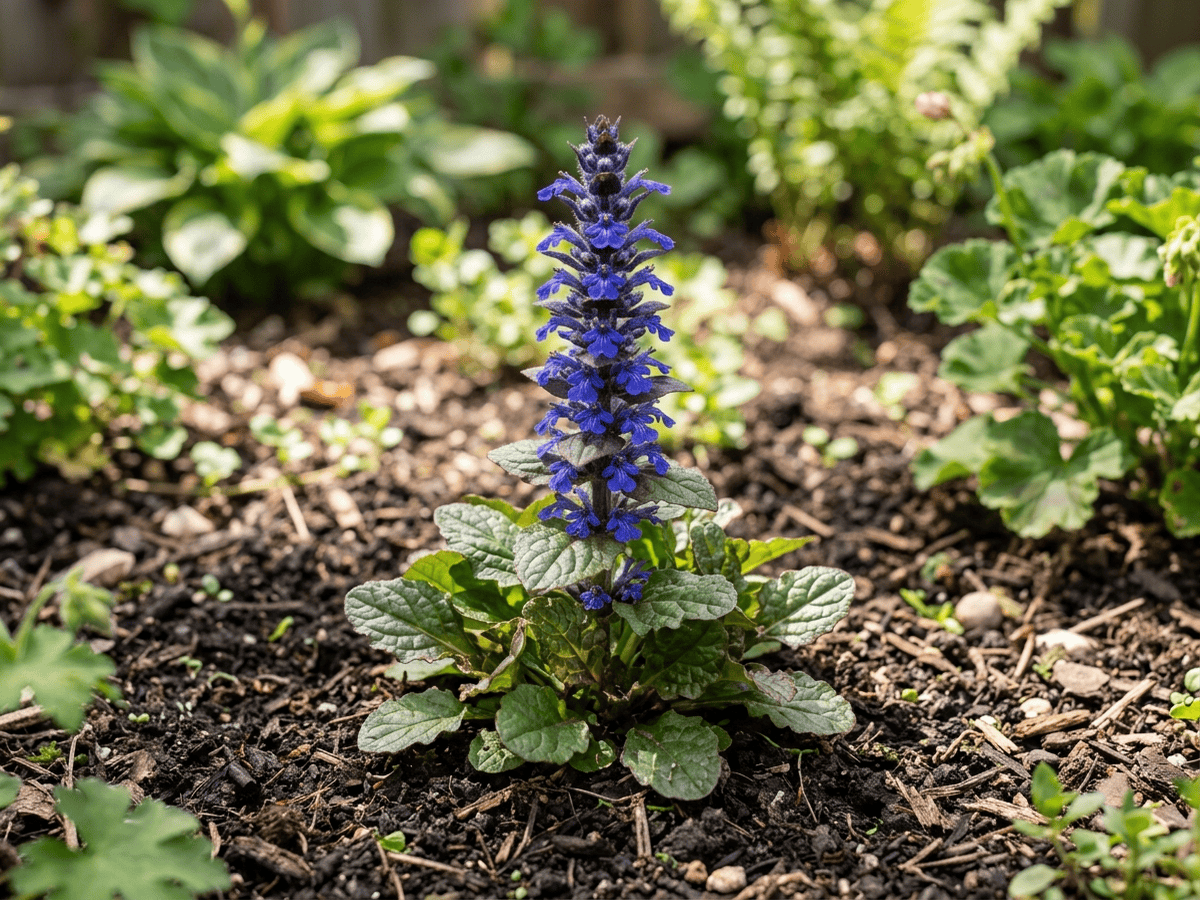 Pyramidal BugleAjuga pyramidalis
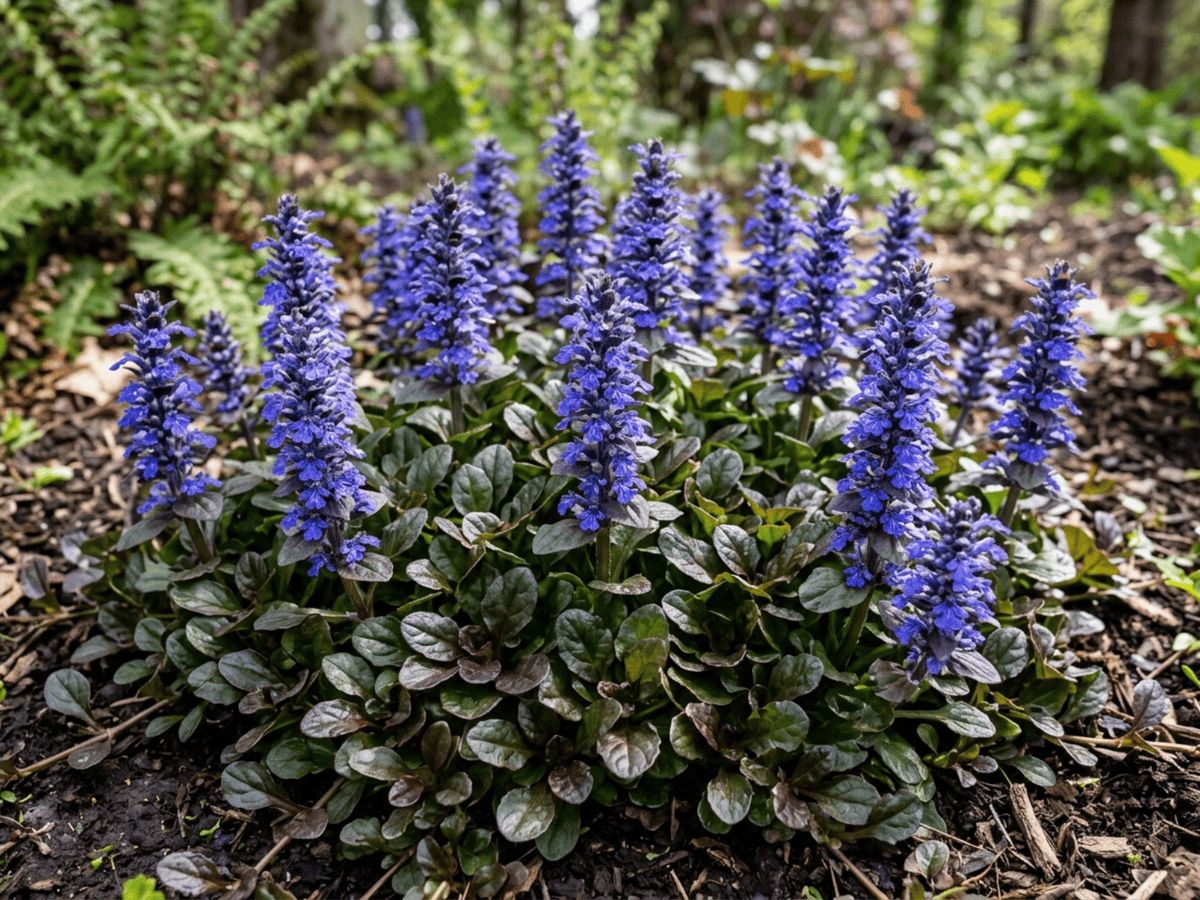 Carpet BugleAjuga reptans
Frequently asked questions
How often should I water Leatherleaf Mahonia?
In summer, water about every 5 days; in winter, about every 21 days. Adjust for heat, pot size and drainage.
How much light does Leatherleaf Mahonia need?
Part shade: 2–4 hrs direct. Watch the leaves — scorching or stretching means the light needs adjusting.
Is Leatherleaf Mahonia toxic to cats or dogs?
Pets Slight (Dogs Slight · Cats Slight) Educational information, not medical or veterinary advice. If exposure is suspected, contact a doctor or veterinarian.
Is Leatherleaf Mahonia easy to grow?
Yes — it is considered an easy, beginner-friendly plant.
When does Leatherleaf Mahonia bloom?
It typically blooms Jan–Mar in the Northern Hemisphere.
YardMate
Identify any plant in seconds
Snap a photo — YardMate names the plant, diagnoses problems, and reminds you when to water.
Download on the App Store