 YardMate

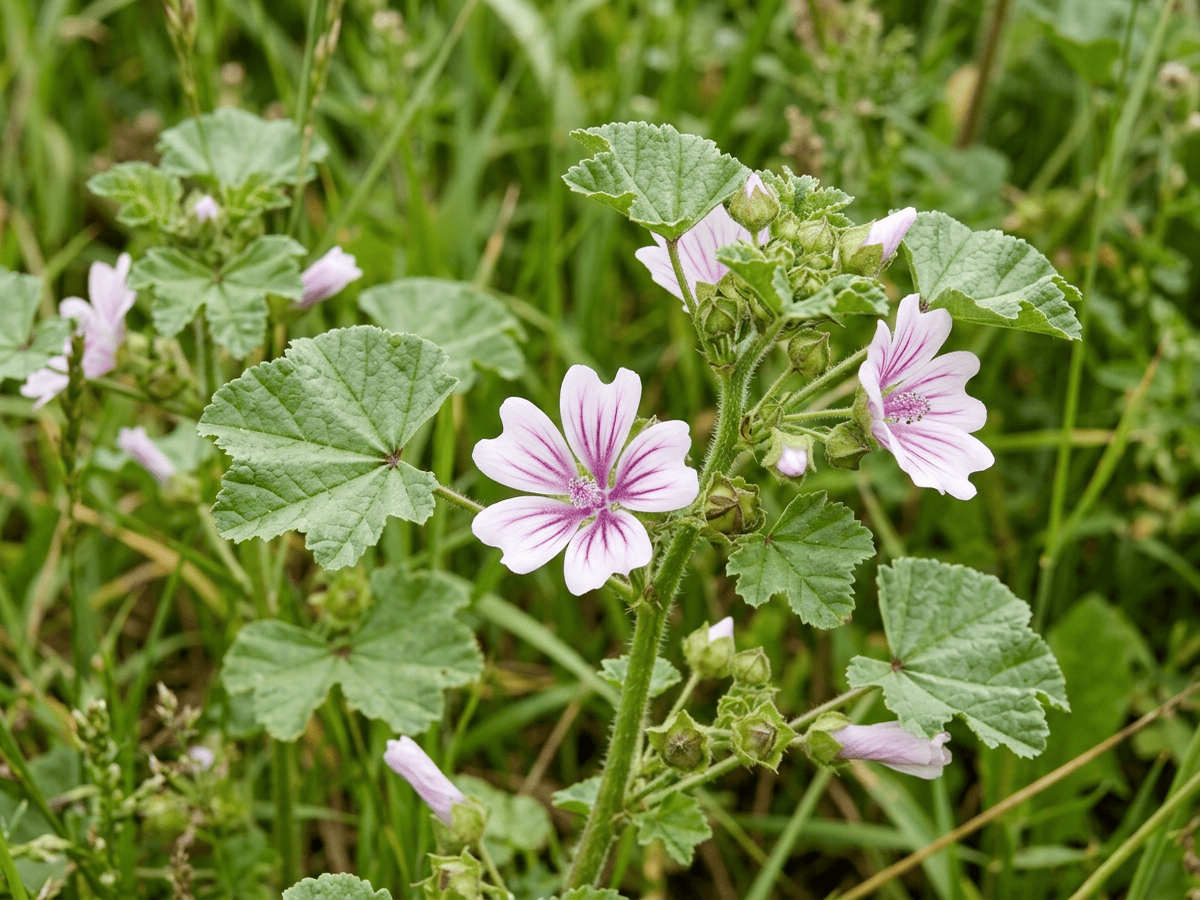


Dwarf Mallow
Malva neglecta
Easy · Beginner friendlyAbout Dwarf Mallow
Common Mallow or Cheeseweed is a European biennial or short-lived perennial naturalized throughout the US, forming low sprawling plants with rounded scalloped leaves and small pale lavender or white striped flowers on long stems from leaf axils. Distinctive wheel-shaped cheese-like fruits give the name. Invades lawns, gardens, driveways, and disturbed ground nationwide with deep persistent taproots.
- Edible
- Medicinal
How to care for Dwarf Mallow
Watering
- Springevery 7 days
- Summerevery 5 days
- Fallevery 10 days
- Winterevery 21 days
Soil · Rich & well-draining
- Top dressingCompost10%
- Main mixPotting soil + compost 3:180%
- DrainageGravel10%
Top up the compost layer each season.
FERTILIZER
This plant needs little to no feeding.
At a Glance
- NativeEurope, Western Asia
- Height0.5–2 ft (0.2–0.6 m)
- Spread1–2 ft (0.3–0.6 m)
- Flower colorWhite, Pink, Purple
- Foliage colorGreen
- Fruit colorGreen, Brown
- SoilLoamy, Well-drained
- LocationsYard
Bloom time
BLOOM CYCLE
Peak bloom
Jun–Nov
Pale lavender striped flowers summer through fall
Fragrance
LIGHT FRAGRANCE
The flowers have a very lightly sweet-scented scent.
Toxicity
No toxicity has been reported for this plant. Still, it is wise to keep pets from chewing on any houseplant.
Educational information, not medical or veterinary advice. If exposure is suspected, contact a doctor or veterinarian.
DISTRIBUTION

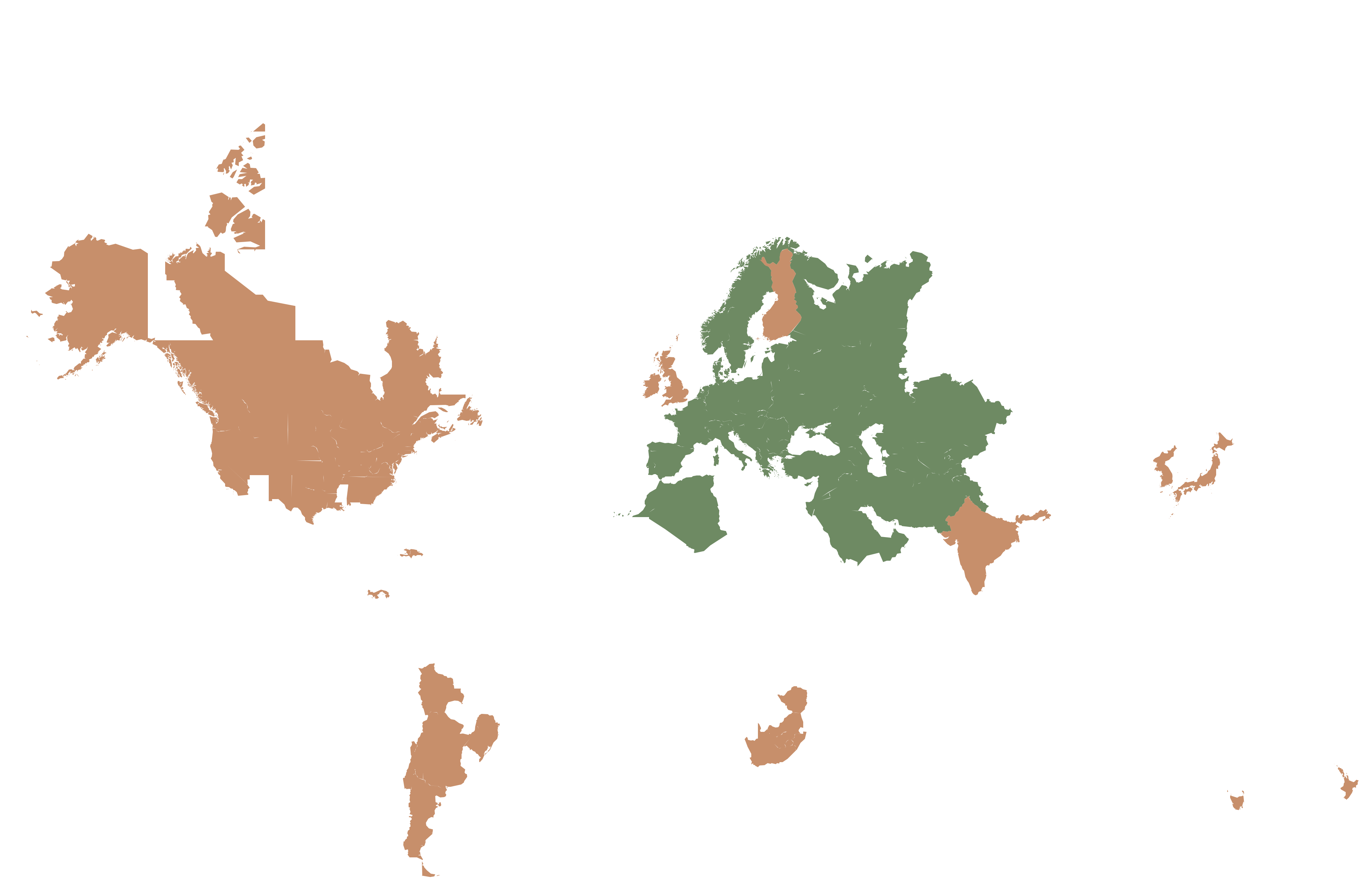
- Native
- Introduced
- Europe
- Western Asia
History

Malva neglecta is native to Europe and western Asia. Karl Friedrich Wallroth described it in 1824, though it had been confused with the similar M. sylvestris in earlier literature. The genus Malva (Greek malachē, 'soft') has been cultivated and eaten across the Mediterranean and Middle East since antiquity — the Romans called it olus judaicum ('Jewish vegetable').
Hebrew sources reference it as food during the siege of Jerusalem. Children across Europe, the Middle East, and eventually North America snacked on the flat round green seedpods, universally nicknamed 'cheeses' or 'biscuits' for their resemblance to miniature wheels of cheese. The leaves are mucilaginous and traditionally used like okra to thicken soups.
Cherokee adopted it for sore throats after European introduction. Traditional American folk medicine used leaf poultices and throat-soothing teas for centuries. Mucilage-rich leaves soothe skin and digestive irritation, reflected in modern herbal use.
Symbolism & meaning
What It Symbolizes
Dwarf Mallow expresses gentle persistence — its soft, almost decorative leaves conceal a deep tough taproot that resists casual weeding. The 'cheese weed' nickname comes from its distinctive wheel-shaped seedpods, like tiny cheeses arranged on a stem. Ecologically, it is a humble survivor of disturbed ground, charming enough that some gardeners let it stay just to watch the cheeses ripen.
- Gentle persistence — soft leaves conceal deep tough taproot
- Cheese weed — distinctive wheel-shaped cheese-like seed pods
Where the Name Comes From
'Malva' from Latin, possibly from Greek 'malake' meaning soft, for the soft mucilaginous leaves; 'neglecta' means neglected, for its weedy inconspicuous presence.
Uses & Fun Facts
- Tender leaves and round seedpod cheeses eaten in salads
- Traditional mucilaginous remedy for coughs and skin irritation
Related plants
Plants with similar care
 Chinese AbeliaAbelia chinensis
 Fragrant AbeliaAbelia mosanensis
 Large-Flowered AbeliaAbelia uniflora
 Glossy AbeliaAbelia x grandiflora
Frequently asked questions
How often should I water Dwarf Mallow?
In summer, water about every 5 days; in winter, about every 21 days. Adjust for heat, pot size and drainage.
How much light does Dwarf Mallow need?
Full sun: 6+ hrs direct. Watch the leaves — scorching or stretching means the light needs adjusting.
Is Dwarf Mallow toxic to cats or dogs?
No toxicity has been reported for this plant. Still, it is wise to keep pets from chewing on any houseplant. Educational information, not medical or veterinary advice. If exposure is suspected, contact a doctor or veterinarian.
Is Dwarf Mallow easy to grow?
Yes — it is considered an easy, beginner-friendly plant.
When does Dwarf Mallow bloom?
It typically blooms Jun–Nov in the Northern Hemisphere.
YardMate
Identify any plant in seconds
Snap a photo — YardMate names the plant, diagnoses problems, and reminds you when to water.
Download on the App Store